
Pair Brass Side Tables
Pair brass side tables bring symmetry and grounded weight to a room, offering functional surfaces framed in gleaming metal.
Pair Brass Side Tables
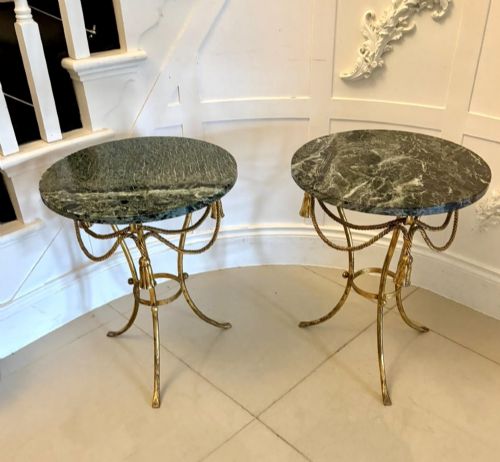
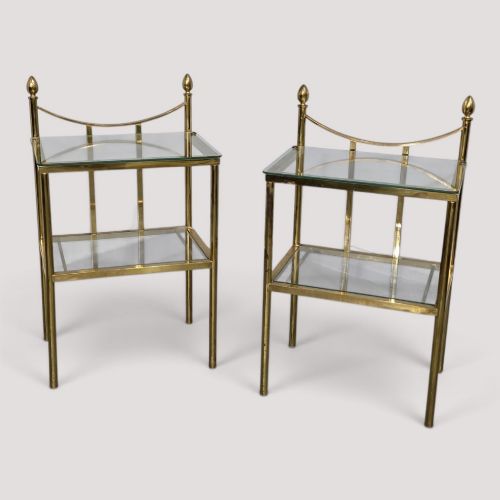
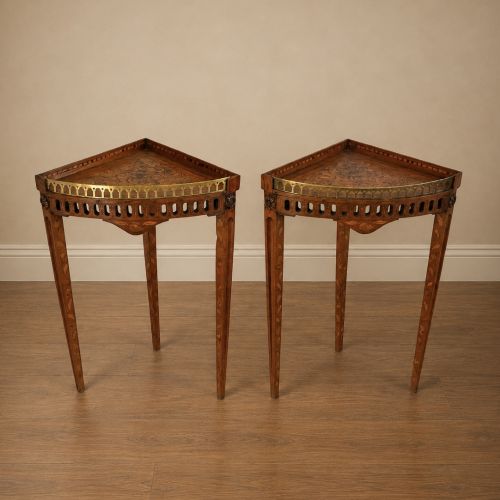
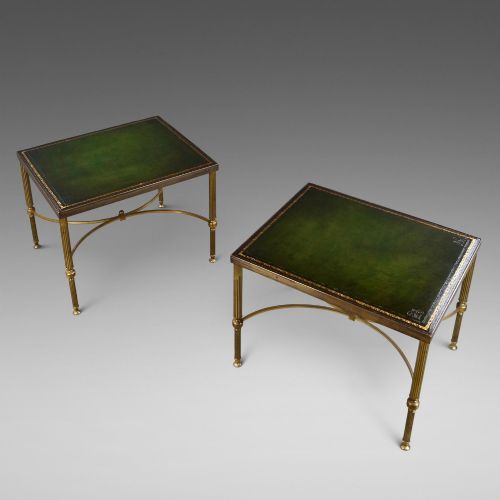
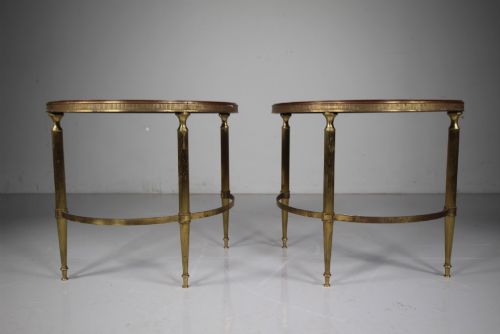
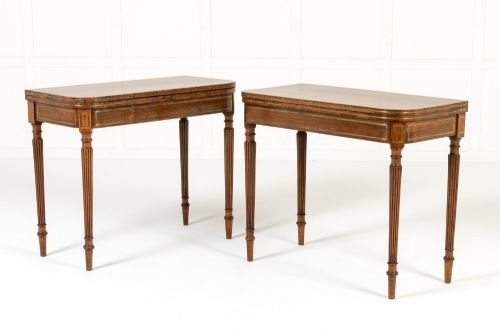
When you search for pair brass side tables, you encounter dual items designed for balance, spanning compact bedside surfaces to multi-tiered etageres. The pieces on this page draw heavily from the twentieth century, particularly the 1920s and 1930s, alongside nineteenth-century examples.
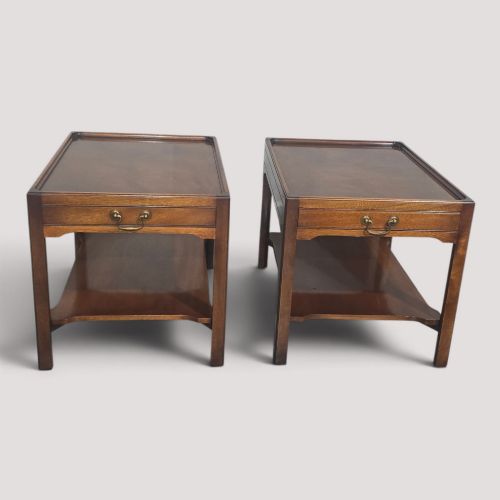
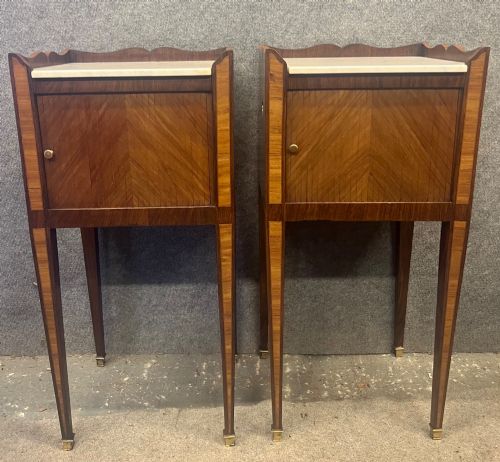
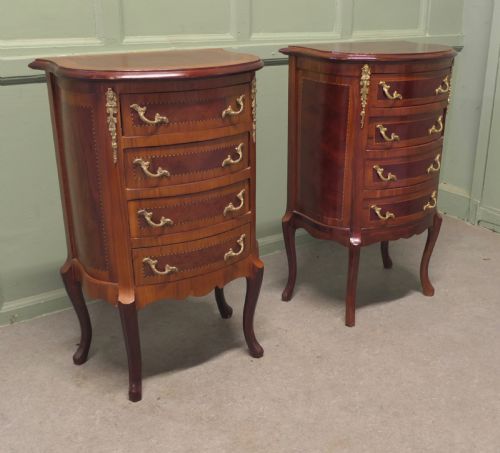
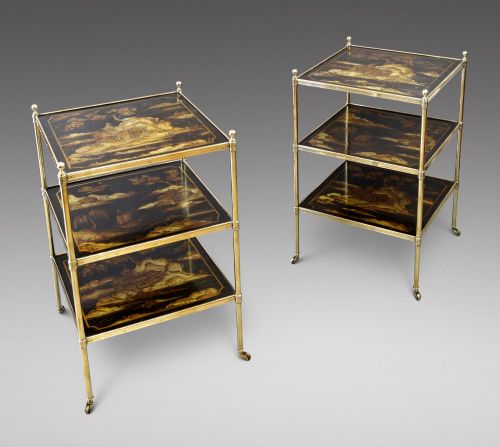
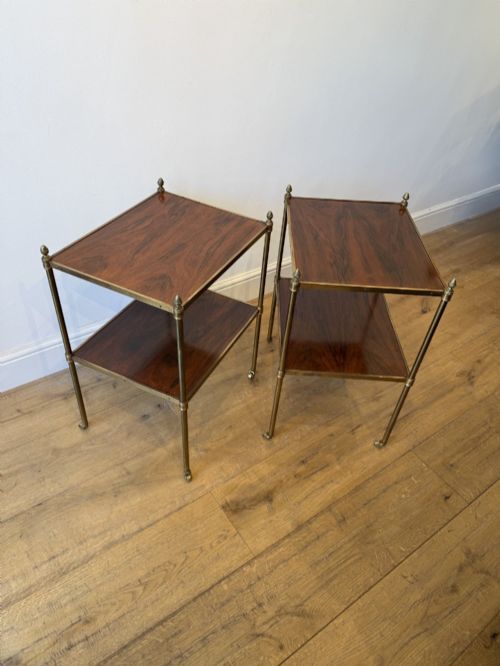
The physical forms vary widely across the selection, ranging from low demi-lune lamp tables to marble-topped bedside cabinets and glass-shelved display pieces. Many incorporate timber carcases in mahogany, rosewood, or kingwood, complemented by metal mounts, galleries, and legs.
What varies in quality
The standard of execution depends heavily on the crispness of metal casting and the depth of timber grain chosen for the carcase. Finer examples display meticulous marquetry and tightly fitted marble tops without gaps.
Proportion and structural rigidity set apart finer items, ensuring the matched pair maintains exact symmetry and solid weight. The integration of mounts to wood requires precision, distinguishing workshops of higher skill.
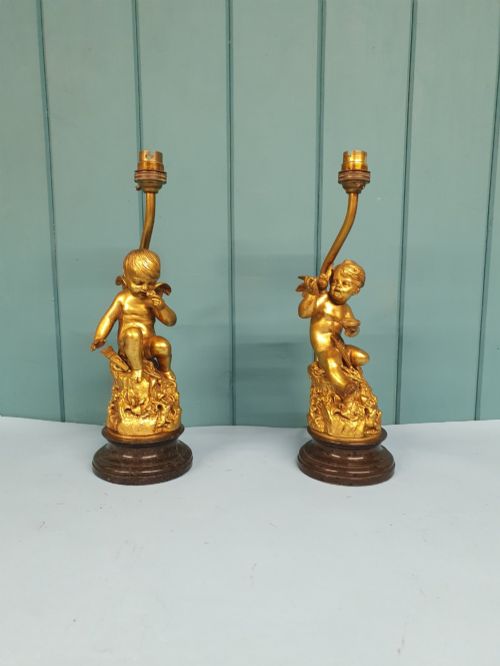
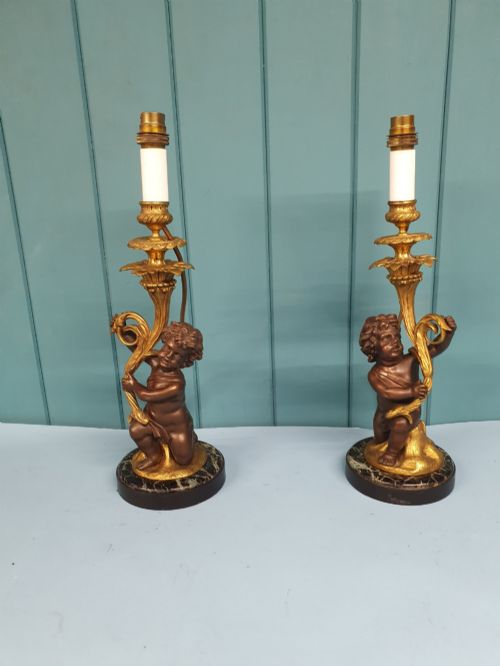
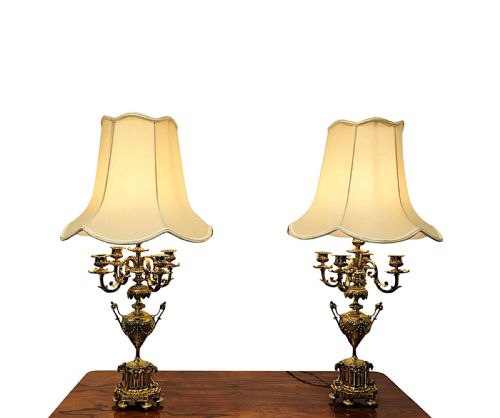
Among the metalwork, several pieces transform cast bronze cherubs and nineteenth-century candelabra directly into functional lamp bases.
Mallett
The Pair Brass Side Tables Glossary
- Etagere
- An open multi-tiered piece of furniture designed for display or holding small objects. These frames frequently combine metal supports with glass or wooden shelves.
- Ormolu
- Gilded bronze applied as a decorative mount to furniture pieces. This technique creates rich metallic highlights against dark timber surfaces.
- Marquetry
- Inlaid patterns of wood veneer assembled to form decorative pictures or geometric designs on furniture surfaces. Craftsmen select contrasting timbers to achieve tonal depth.
- Demi-lune
- Half-moon shape characteristic of console or side tables designed to sit flush against a wall. This profile saves floor space while providing a functional surface.
Pair Brass Side Tables: Frequently Asked Questions
What periods do these tables represent?
The inventory spans the nineteenth century through the 1920s and 1930s, encompassing Victorian, Edwardian, and Art Deco eras.
Stylistic influences stretch back further into Regency, Neoclassical, and Louis XV or Louis XVI designs recreated in later periods.
How are brass side tables typically used?
These pieces function primarily as bedside supports, lamp stands, or flanking surfaces beside seating arrangements.
Multi-tiered variations also serve to display decorative objects or house small collections within a room.
What timber types accompany the brass?
Common woods found alongside the metalwork include mahogany, walnut, rosewood, kingwood, and satinwood.
Marble surfaces also frequently appear paired with brass or gilt bronze frames, particularly in French designs.
Are matching pairs difficult to find?
Sustaining a true identical pair relies on the original manufacturing intent, as many items were produced as matched suites.
Slight variations in grain or casting can occur, marking the handmade nature of older furniture production.