


Mid Century Brass Tables
Mid century brass tables bring genuine decorative presence into a room, combining durable metal frames with glass or timber surfaces.
Mid Century Brass Tables
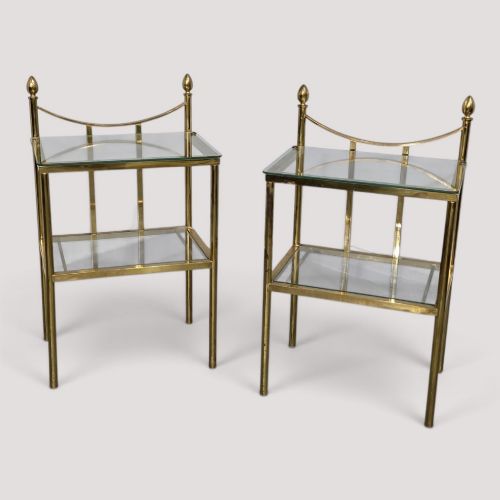
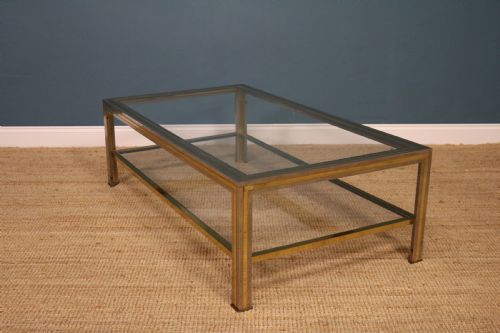
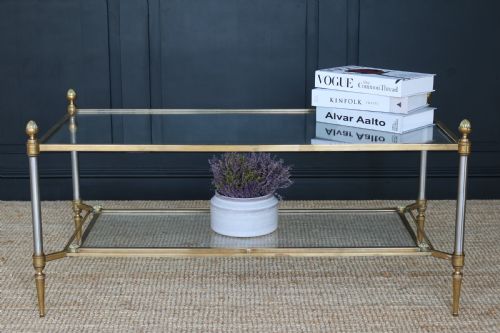
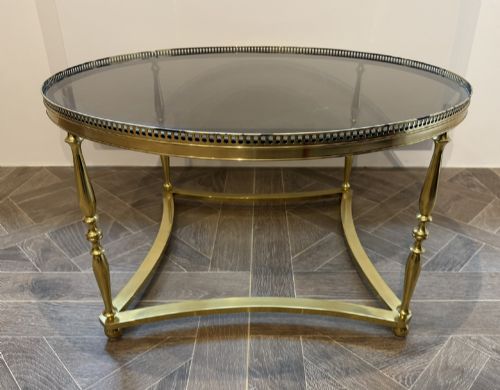
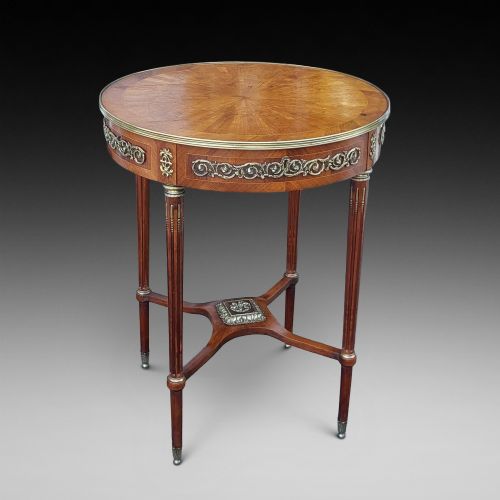
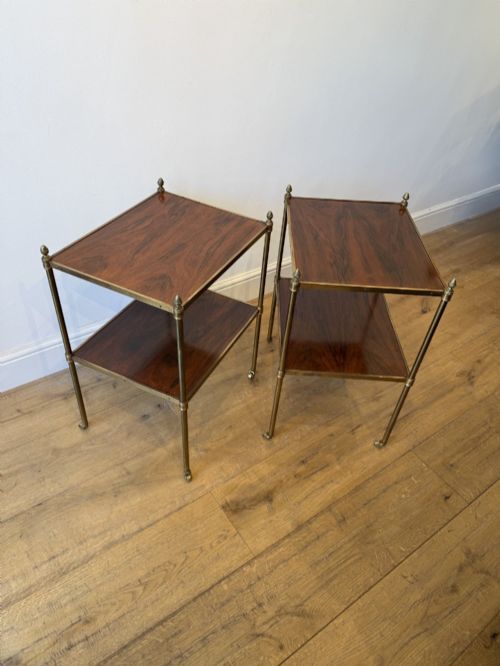
Mid century brass tables encompass coffee tables, lamp tables, and occasional tiers designed with metal frames. Buyers searching for mid century brass tables will encounter designs spanning the 1920s to the 1960s, reflecting periods such as Art Deco and Mid-Century Modern alongside earlier Victorian and Edwardian examples. Forms range from compact glass-topped lamp tables to larger coffee tables incorporating wood, marble, or leather elements.
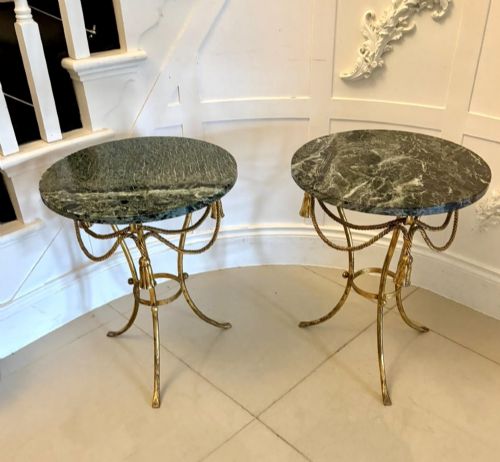
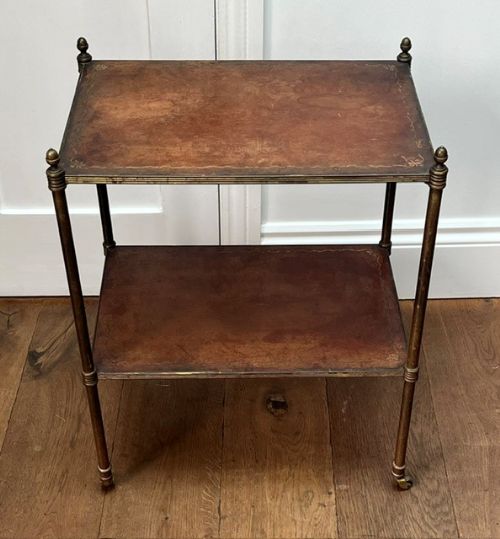
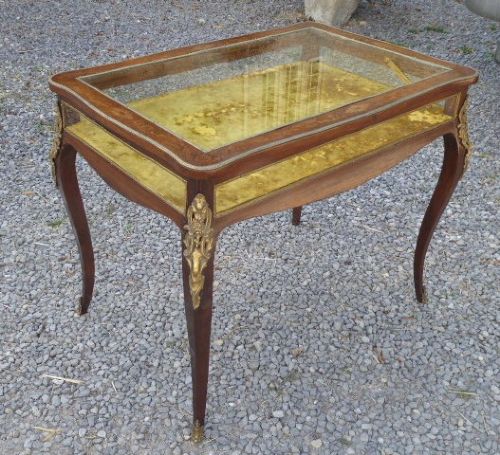
The selections on this page lean heavily toward Parisian and Hollywood Regency aesthetics, alongside twentieth-century interpretations in the manner of established makers. Alongside standard side and coffee tables, the inventory frequently includes related occasional furniture such as étagères and bijouterie tables sharing similar brass or gilt metal construction.
Materials and construction
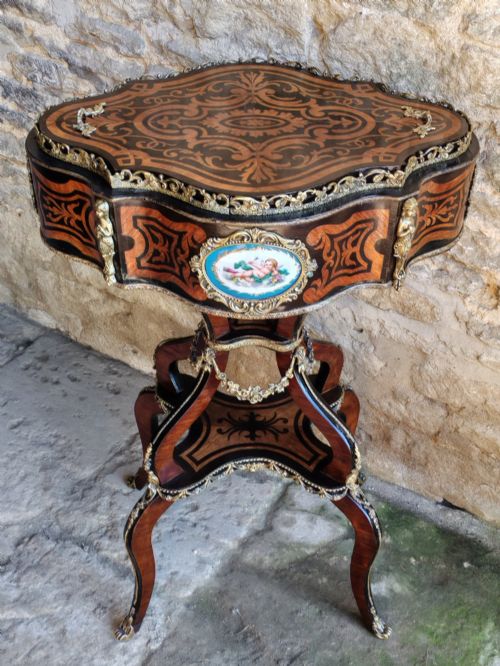
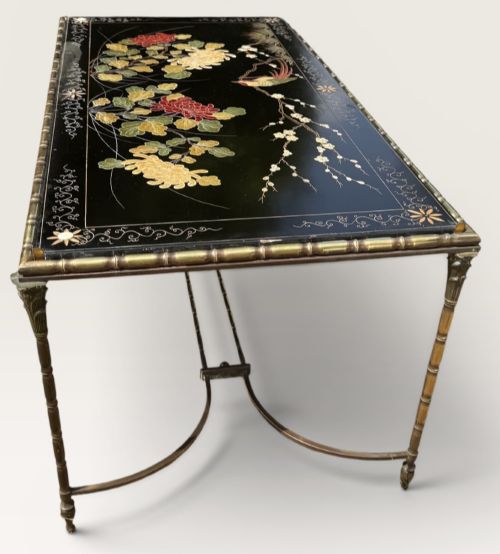
The pieces rely on brass, gilt brass, and lacquered metal frameworks paired with inset glass, marble, or polished hardwoods like mahogany, rosewood, and kingwood. Metal components are cast, seamed, or gilded to create reflective surfaces, while timber sections utilise marquetry or simple polished finishes.
Makers integrated structural glass and stone with metal supports, securing tops with specialised mountings or brass fittings. Details such as tooled leather insets, opaline glass elements, and intricate tier alignments demonstrate the physical composition of these tables.
One unexpected table frame doubles as an aquarium lighter, proving mid-century designers applied brass to almost any domestic object.
Qualities that distinguish the range
Quality reveals itself in the weight and finishing of the brass frame, the thickness of the glass or marble top, and the precision of the joinery where metal meets wood. Superior examples display crisp casting details, securely fitted panels, and materials chosen for their grain or mineral patterns.
Pieces associated with named workshops or specific design movements often exhibit more deliberate proportions and integrated decorative motifs compared to standard commercial productions. The integration of auxiliary materials like tooled leather or fine marquetry elevates a piece above simpler utilitarian forms.
Angelo Brotto for Esperia·Maison Jansen·Maison Bagues·Maison Ramsay·Chandy Charan and Co
The Mid Century Brass Tables Glossary
- Étagère
- A set of open shelves or tiers used for displaying small objects. These multi-level tables provide functional surface area in a compact footprint.
- Bijouterie table
- A glass-topped display table designed for showcasing small valuables, medals, or curiosities. The interior is often lined with fabric or leather.
- Gilt brass
- Brass coated with a thin layer of gold or gold-coloured finish. This treatment enhances reflectivity and protects the base metal from tarnishing.
- Marquetry
- Inlaid wood designs forming decorative patterns on a furniture surface. Craftsmen assemble contrasting veneers to create pictorial or geometric motifs.
- Occasional table
- A small, movable table designed for specific, intermittent use rather than primary seating or dining. Common forms include side tables and lamp tables.
Mid Century Brass Tables: Frequently Asked Questions
What defines a mid century brass table?
These tables utilise brass or gilt metal frameworks combined with glass, marble, or wood surfaces, originating primarily from the mid-twentieth century.
They reflect design movements such as Mid-Century Modern and Hollywood Regency, offering both functional utility and decorative impact.
How do I clean brass and glass tables?
Use a soft, dry cloth to remove dust from the brass frame, avoiding harsh chemical cleaners that strip lacquered finishes. Glass tops can be maintained with standard glass cleaner applied to a cloth rather than sprayed directly near the metal.
Regular gentle maintenance preserves the original surface sheen without wearing down the metallic coating.
Where should I place an etagere?
An étagère functions well in a living room or hallway where multi-tier display space is useful. Their open construction allows light to pass through, making them suitable for smaller corners.
Keep them away from direct heat sources to protect any timber elements or glued joints.
How do I distinguish 1920s brass from later pieces?
Earlier twentieth-century pieces often display Art Deco influences or heavier casting techniques associated with workshops from that era. Later mid-century items tend to feature cleaner lines and integration with chrome or minimalist frames.
Examining the construction methods and any maker stamps helps clarify the production period.