


Brass Marble Side Table
A brass marble side table brings together polished stone and cast metal in forms that range from compact bedside cabinets to grand console tables.
Brass Marble Side Table
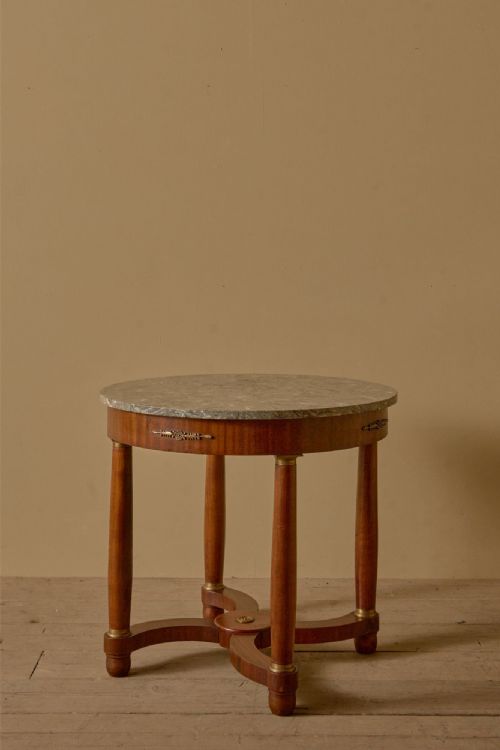
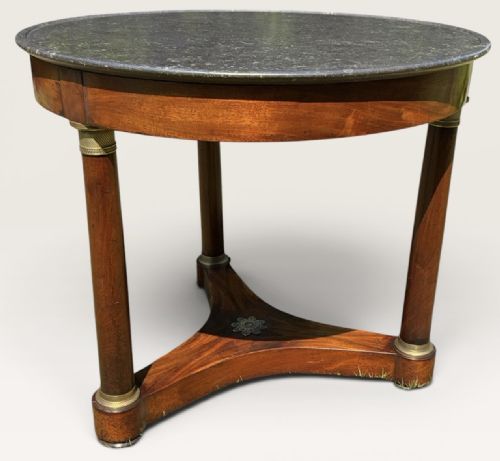
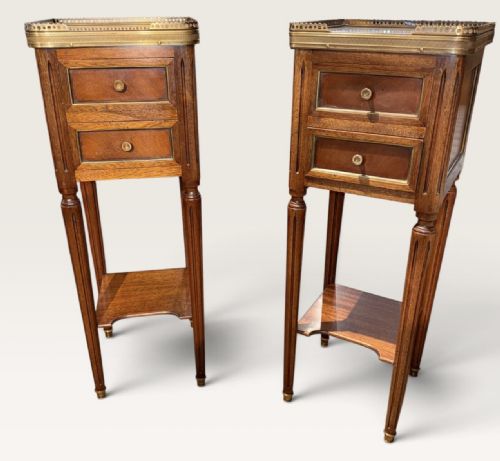
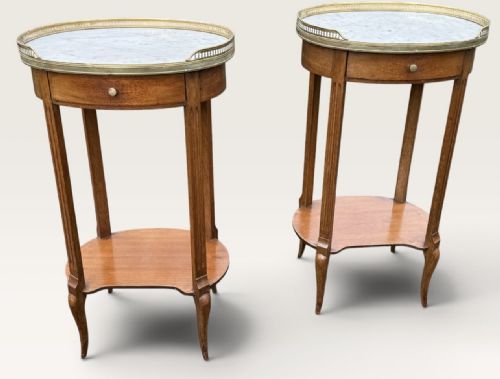
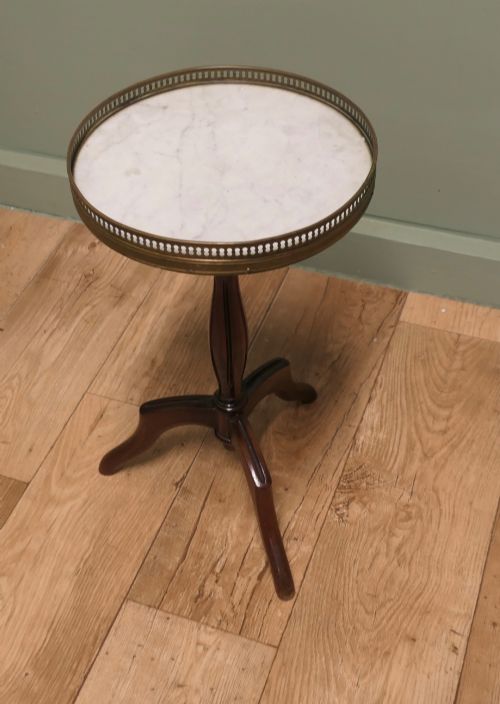
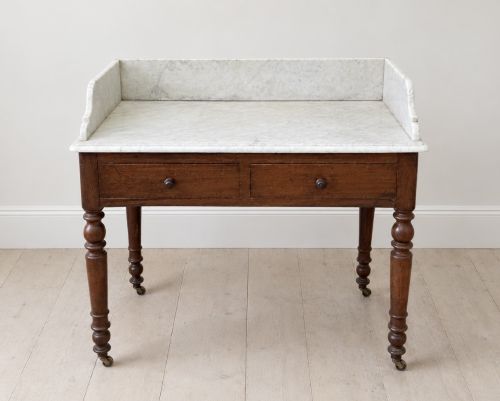
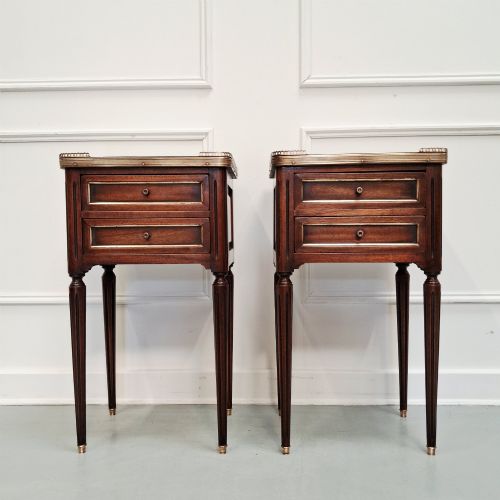
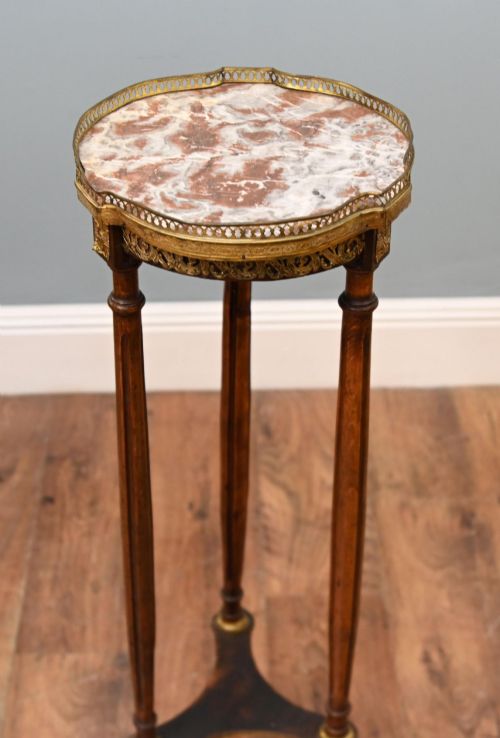
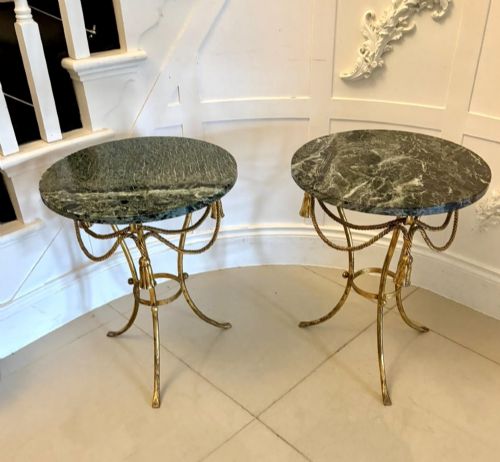
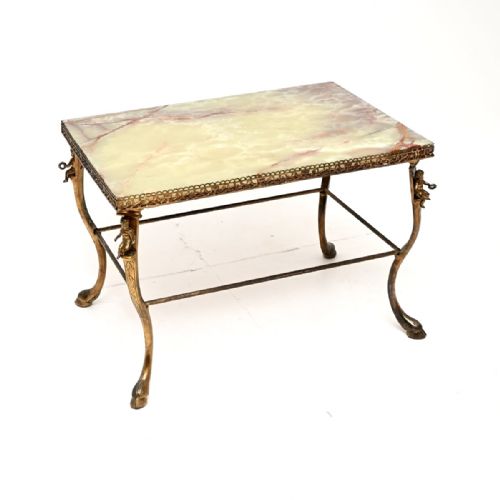
When searching for a brass marble side table, one encounters a variety of foundational forms designed for functional utility and decorative display. The inventory includes side tables, occasional tables, coffee tables, console tables, and bedside cabinets alongside specialised pieces like guéridons and bouillotte tables.
Originating predominantly from the nineteenth and early twentieth centuries, these examples showcase historical French and English design vocabularies. Pieces frequently draw on classical motifs and revival styles, bringing heavy stone slabs and metallic mounts into domestic interiors.
Materials and construction
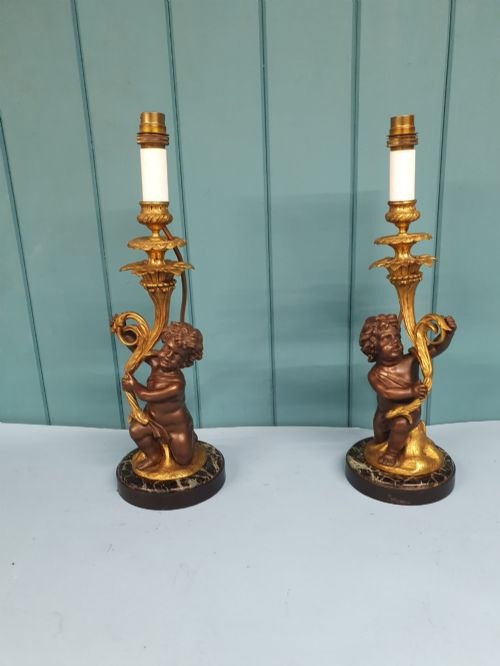
The construction relies on the structural pairing of natural stone tops with timber frames and metal mounts. Cabinetmakers utilised mahogany, rosewood, walnut, and kingwood for the primary carcasses, while foundries cast brass, gilt bronze, and ormolu into decorative mounts, galleries, and legs.
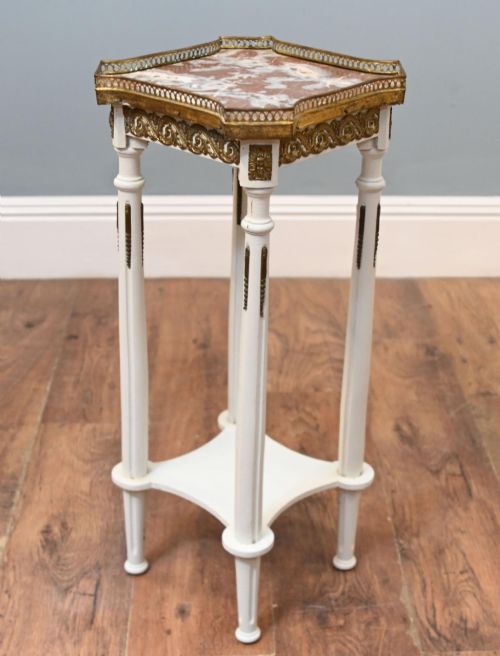
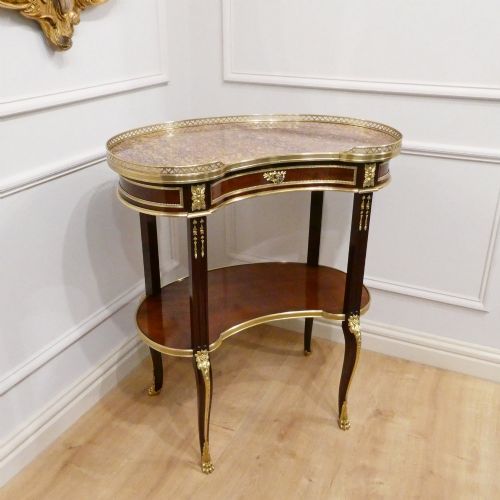
Marble tops, including white, rouge, verde, and specimen varieties, rest within wooden frames or atop metal pedestal structures. Many forms incorporate intricate marquetry, brass inlay, or studwork to complement the cold, smooth surface of the stone.
Brass Marble Side Table Retail Price Guide 2026
Typical asking prices for brass marble side table among the pieces listed under this phrase on Sellingantiques today, from the lower quarter to the upper quarter. They describe what is for sale here now, not the wider market.
Listings feature periods spanning from the Regency era and the 1800s through to the 1930s, alongside styles like Louis XVI and French Empire.
Assessing craftsmanship
The standard of a piece depends heavily on the precision of the metal casting and the quality of the stone integration. Finely chased ormolu mounts and crisply detailed brass galleries demonstrate superior workshop execution compared to simpler, mass-produced cast elements.
The selection and fitting of the marble top also dictate the tier of the piece. Specimen marble tops or thick slabs with seamless edge profiles and stable timber subframes reflect a higher level of historical craftsmanship.
James Shoolbred·Maison Millet·François Linke·Maison Ramsay
The Brass Marble Side Table Glossary
- Guéridon
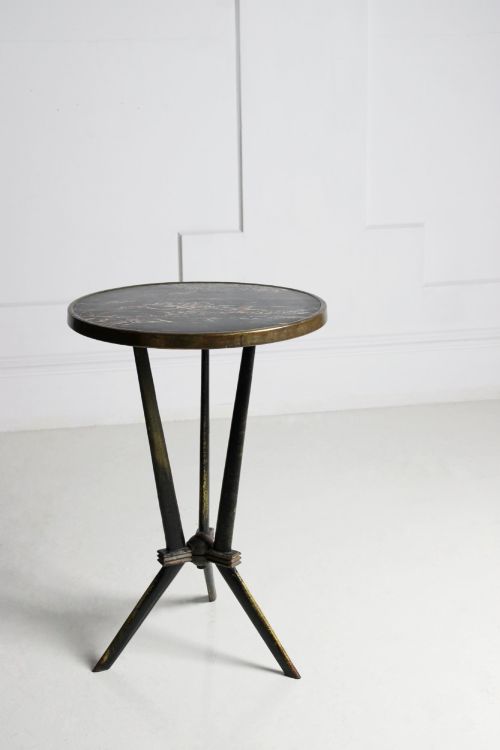
- A small circular table on a central pillar or tripod base, frequently topped with marble and mounted in brass.
- Bouillotte table
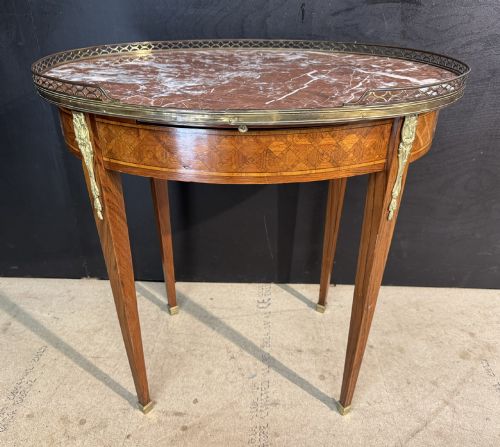
- A small occasional table featuring a raised galleried edge around the marble top, originally designed for card games.
- Ormolu
- Gilded bronze applied as a decorative mount to furniture and lighting, shaped through precision casting.
- Specimen marble
- A decorative surface composed of various coloured marbles arranged in geometric or pictorial patterns.
- Console table
- A table designed to be fixed against a wall, often supported by front legs or sculptural brackets.
Brass Marble Side Table: Frequently Asked Questions
How do I clean a marble top?
Use a soft cloth dampened with warm water and mild, non-acidic soap to wipe down the surface. Avoid harsh chemical cleaners that can etch or dull the polished stone.
Dry the marble thoroughly afterwards with a microfiber cloth to prevent water spots and maintain the natural shine of the material.
Are these tables heavy to move?
The weight depends largely on the thickness of the stone slab and the density of the underlying timber frame. Pieces featuring solid marble tops and cast brass mounts require care during relocation.
Lifting the stone top separately from the base, where possible, makes handling safer and prevents strain on the joints.
Can I use a bedside cabinet in a living room?
These compact closed storage forms adapt easily to various domestic spaces beyond the bedroom. They function effectively as small side tables next to seating or as lamp stands in hallways.
The enclosed cabinet space provides concealed storage for small items while the marble surface holds a lamp or decorative objects.
What is the difference between ormolu and brass?
Ormolu consists of a gold-mercury amalgam applied to a bronze base, resulting in a rich, warm metallic finish historically used on high-end furniture. Brass is an alloy of copper and zinc with a brighter, yellower tone used widely for structural mounts and galleries.
Master craftsmen chased and polished ormolu by hand, whereas standard brass elements often received simpler commercial finishing.