


Neoclassical Brass Tables
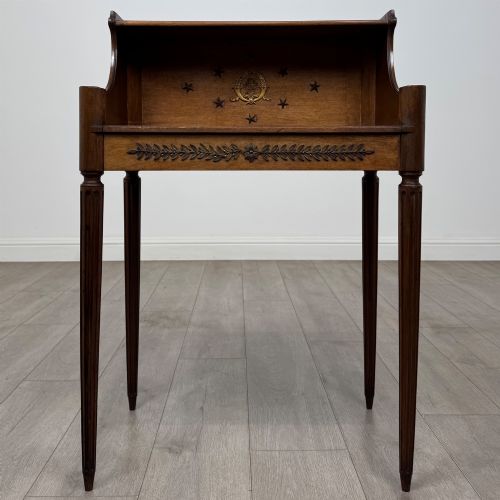
Neoclassical brass tables bring architectural order and bright metallic warmth to a room, drawing on classical motifs like columns and rams' heads.
Neoclassical Brass Tables
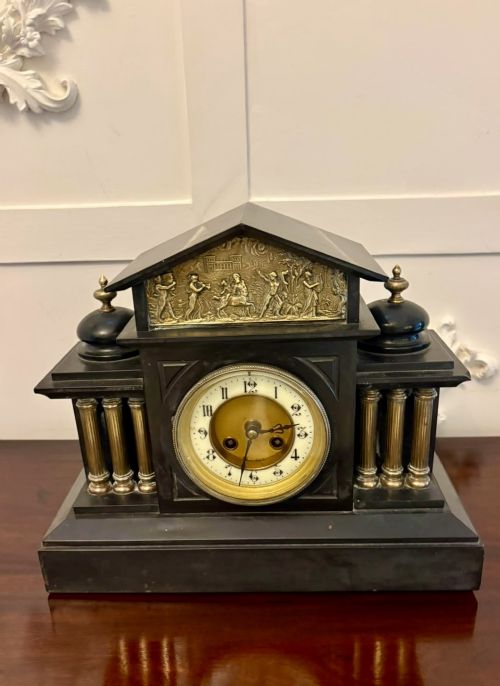
When you search for neoclassical brass tables, you encounter a selection of occasional furniture, side pieces, and coffee tables shaped by 19th-century and 20th-century revivals. The pieces on this page span styles from French Empire and Louis XVI to Victorian Neoclassical and Art Deco.
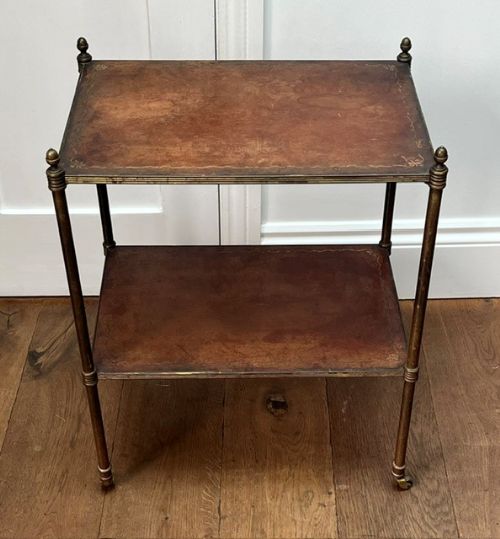
The form most frequently met is the compact side table or etagere, often paired with marble tops, mahogany, or tooled leather inserts. These designs lean heavily on classical vocabulary, translating ancient stone architecture into domestic metalwork.
Origins range across English, French, and Austrian workshops, reflecting a shared European fascination with classical antiquity. Makers and designers referenced in the evidence, such as Maison Jansen and Maison Ramsay, show how these classical forms persisted well into the twentieth century.
Materials and Construction
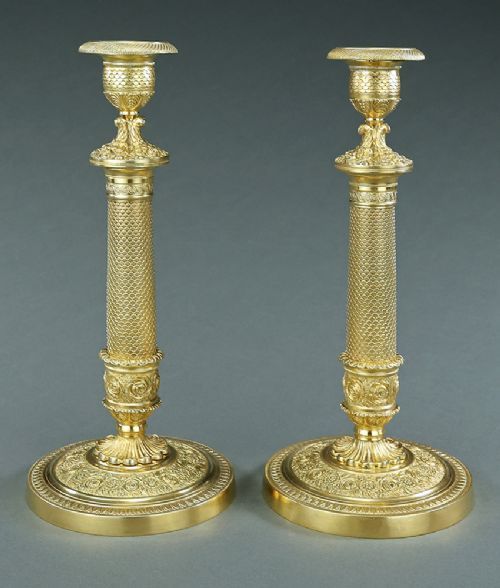
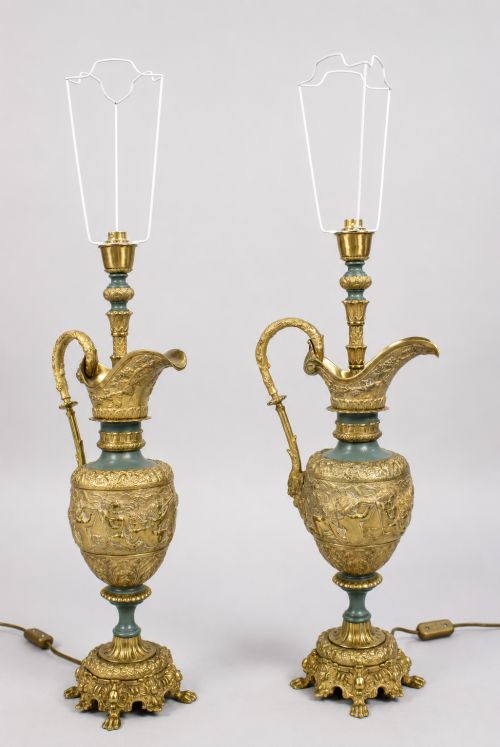
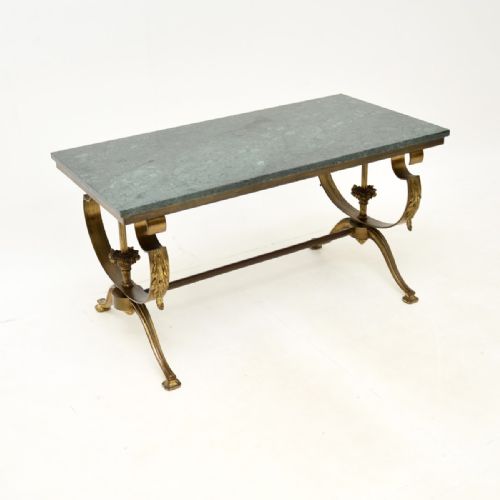
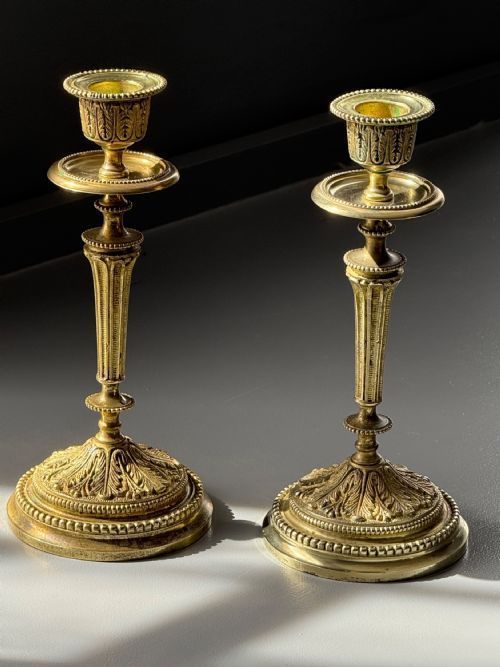
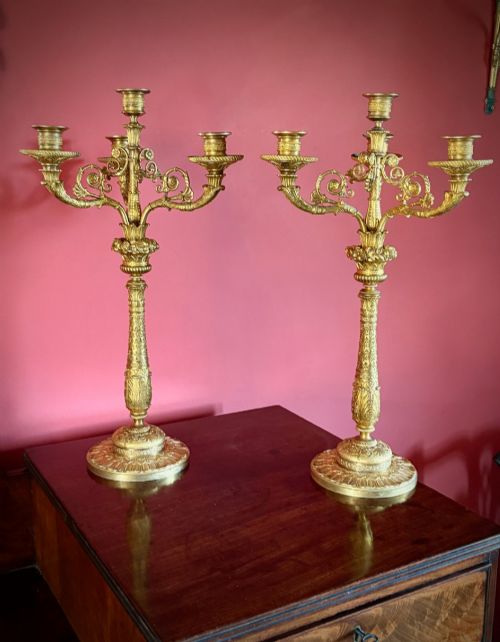
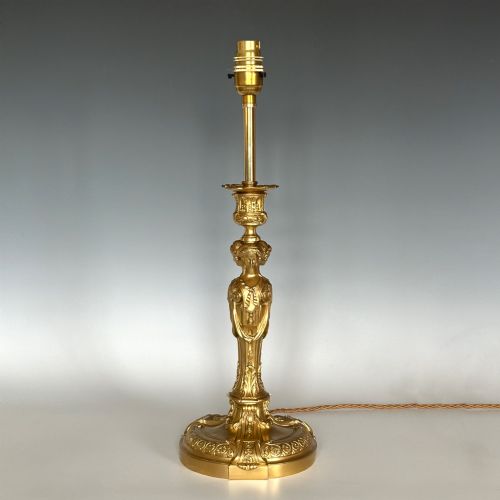
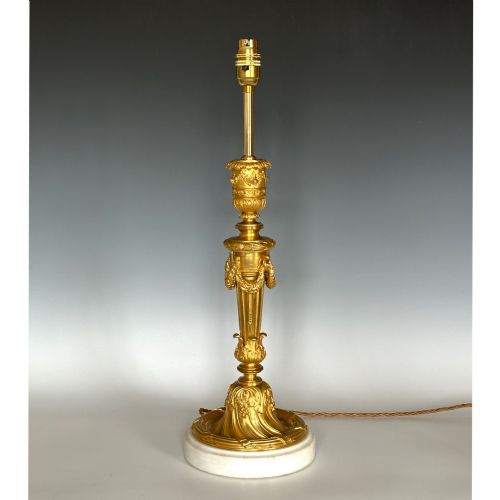
Makers utilised cast and lacquered brass, ormolu, and gilt bronze, pairing the metallic frames with contrasting natural surfaces like white and black marble, mahogany, and rosewood. The structural integrity relies on heavy metal casting, particularly for columns and capitals.
Several pieces quietly swap out human company for cast bronze lions' paws and brass rams' heads.
Assessing Quality
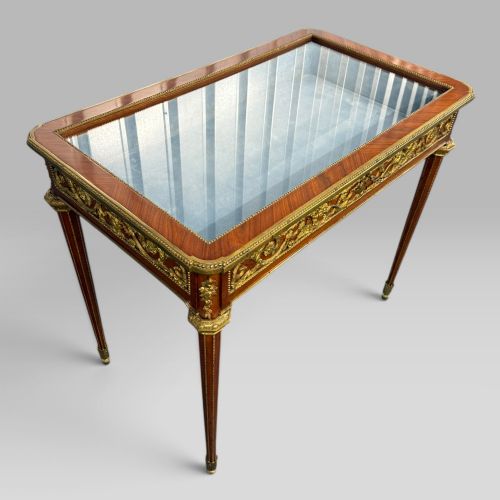
Quality reveals itself in the crispness of the brass casting and the depth of the gilding or ormolu. Finer examples display sharp architectural detailing on Corinthian columns and mounts, whereas simpler pieces show softer edges in the metalwork.
The choice of secondary materials dictates the tier of the piece, with solid marble tops and fine hardwoods like mahogany elevating the construction far above standard veneered or lesser timber carcases.
François Linke·Maison Jansen·Maison Ramsay·Mallett of London·Canaillor of Paris·Dugourc
The Neoclassical Brass Tables Glossary
- Ormolu
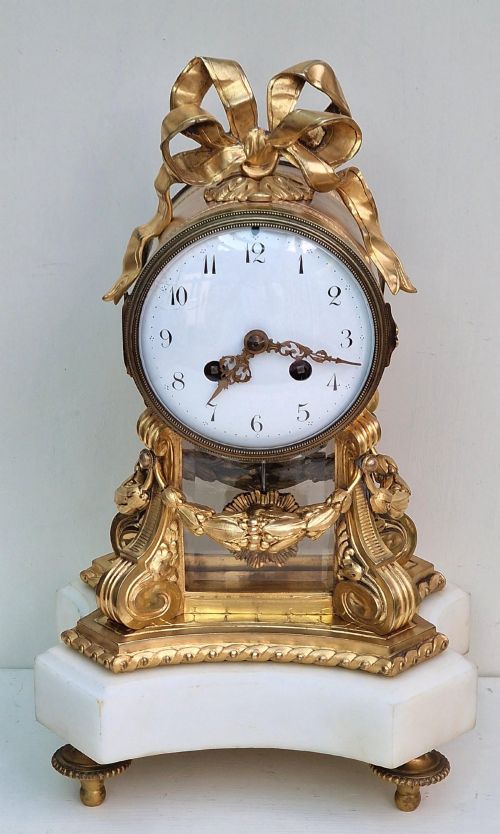
- Gilt bronze, where a finely ground high-carat gold mercury amalgam is applied to a bronze base. This technique creates a rich, durable golden surface seen on French Empire and Louis XVI pieces.
- Etagere
- A tiered piece of freestanding furniture designed for display or storage. These often feature brass frames with multiple glass, marble, or wood shelves.
- Bouillotte table
- A small, round occasional table with a raised gallery edge, traditionally used for card games. They frequently feature marble tops and brass or gilt bronze mounts.
- Gueridon
- A small French table supported by one or more columns, figures, or caryatids. They often incorporate classical motifs like rams' heads in cast brass.
- Corinthian column
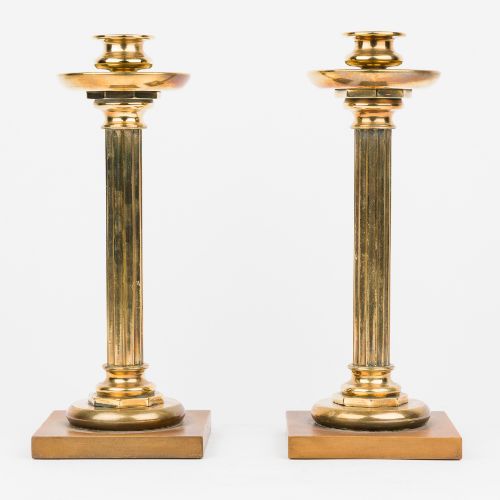
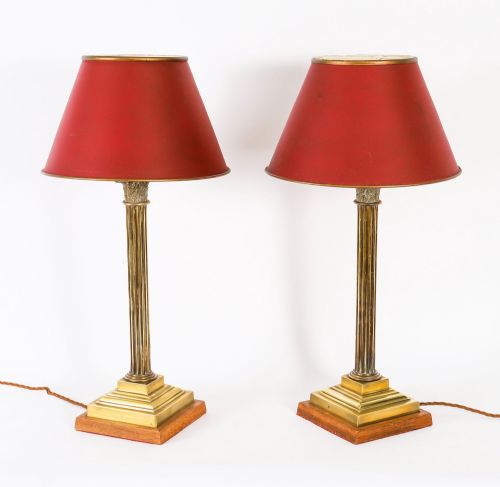
- An architectural support featuring ornate carved or cast capitals decorated with acanthus leaves. This motif appears frequently on the vertical shafts of lamps and tables.
Neoclassical Brass Tables: Frequently Asked Questions
What defines neoclassical brass tables?
These pieces draw inspiration from Greek and Roman architecture, incorporating symmetrical lines, columns, and gilt mounts.
They combine brass or ormolu frames with materials like marble and mahogany to create structured occasional furniture.
How do I style a brass etagere?
An etagere works well in a living room as a side table or display stand for books and small objects.
The reflective metal and marble surfaces add brightness and architectural contrast to traditional or modern interiors.
What is the difference between brass and ormolu?
Brass is an alloy of copper and zinc, used widely for structural parts and cast frames.
Ormolu specifically refers to gilt bronze, utilising a mercury-gilding technique that produces a deeper, richer golden finish on decorative mounts.
Are marble-topped tables heavy?
Yes, pieces featuring inset marble tops carry considerable weight due to the density of the stone slab.
This weight provides excellent stability for the slender brass or bronze columns supporting the structure.
How do I identify a Louis XVI style table?
Louis XVI style items typically feature straight tapered legs, geometric symmetry, and restrained classical ornamentation.
Look for cast bronze or brass rosettes, fluted columns, and architectural mouldings rather than the curved lines of the earlier Louis XV period.