




Brass Fluted Leg Tables
Brass fluted leg tables bring refined neoclassical elegance to a room, combining rich mahogany and marble with crisp metal detailing.
Brass Fluted Leg Tables
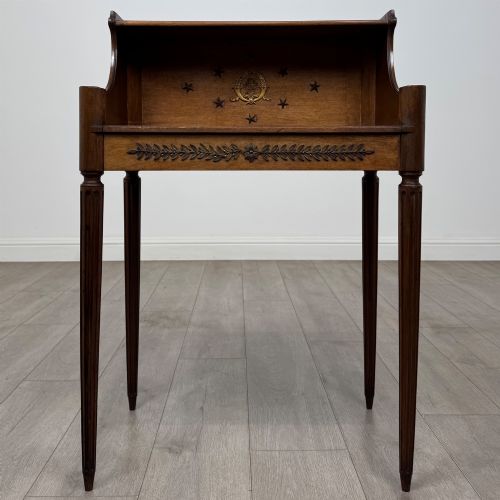
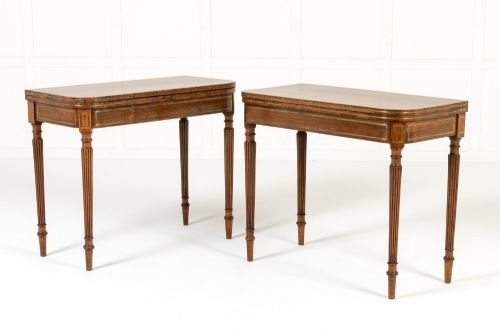
Brass fluted leg tables encompass a diverse array of forms designed for writing, card playing, and display, including side tables, occasional pieces, and centre tables. These pieces draw heavily on Regency, Victorian, and French Louis XVI traditions, often featuring refined proportions suited to sophisticated interiors.
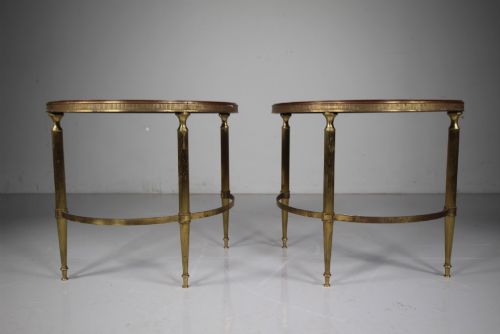
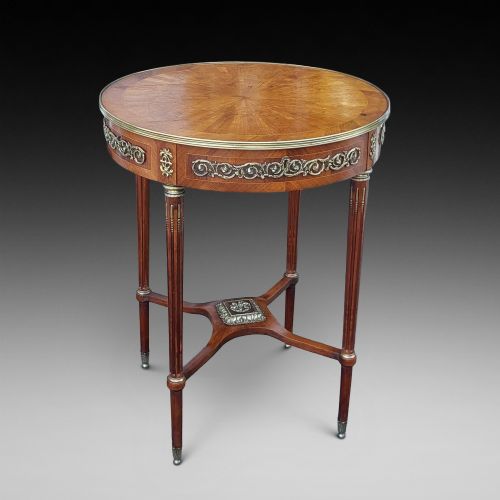
The version most frequently encountered on this page is the French side table or lamp table, typically rendered in mahogany with marble tops and distinctive metal mounts. They serve equally well beside a seating area or as a deliberate accent against a panelled wall.
Materials and Construction
Cabinetmakers constructed these tables using dense hardwoods such as mahogany, rosewood, and walnut as the primary structural bodies, frequently paired with white marble tops and leather inset surfaces. Ormolu and gilt bronze mounts provided decorative contrast, while brass detailing reinforced both structure and edge.
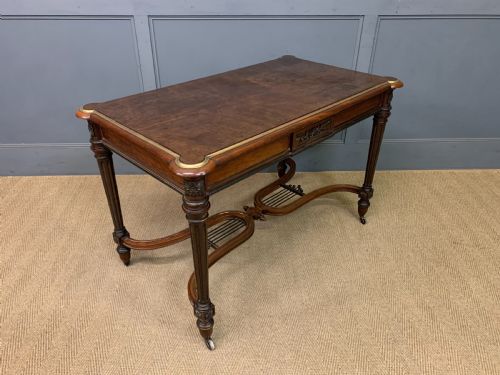
The characteristic fluting on the legs required precise hand-chiselling or turning to achieve uniform vertical channels, often accented with brass inserts. Joinery relied on traditional mortise and tenon methods, ensuring stability across delicate occasional forms and heavier library tables alike.
Listings feature 19th Century, Edwardian, and 1930s pieces in mahogany, marble, walnut, and ormolu.
Distinctions in Quality
The standard of a piece rests heavily upon the crispness of its metalwork and the depth of its timber grain. Finely chased ormolu mounts and deeply carved fluting separate workshop pieces of high ambition from simpler commercial productions.
Structural integrity also dictates value, particularly in folding card tables and heavier library desks where the movement of timber must be counteracted by expert joinery. Original marble tops, unblemished leather surfaces, and cohesive hardware elevate an example far above altered or heavily restored alternatives.
Gillows·A. Beurdeley·Henry Dasson·Johnstone Jeanes & Co
The Brass Fluted Leg Tables Glossary
- Ormolu
- Gilded bronze used for decorative mounts and accents. This technique was widely utilised by cabinetmakers during the eighteenth and nineteenth centuries to highlight key structural lines.
- Bouillotte table
- A small neoclassical occasional table with a raised gallery edge, traditionally used for card games. They frequently feature marble tops and brass or gilt bronze legs.
- Bureau plat
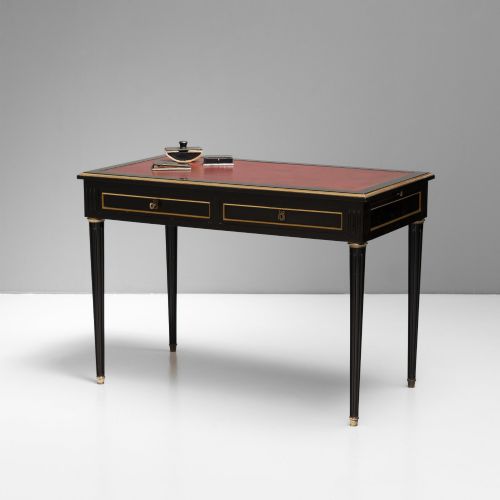
- A flat-topped writing desk fitted with drawers, often finished in leather and embellished with brass mounts. These pieces typically stand on slender fluted legs.
- Gueridon
- A small round occasional table supported by a central pillar or multiple uprights. The form originated in seventeenth-century France and evolved through various revival periods.
- Marquetry
- Decorative patterns formed by the insertion of different coloured veneers into a wood foundation. It requires immense precision from the craftsman.
Brass Fluted Leg Tables: Frequently Asked Questions
Where should I place a brass fluted leg table?
These tables adapt well to numerous domestic settings, functioning as lamp tables beside a sofa or as bedside chests in a master bedroom.
Smaller occasional and card tables also suit hallways or drawing rooms where surface space is required without visual bulk.
How do I care for the marble tops?
Marble requires gentle cleaning with warm water and a soft cloth to avoid scratching the polished surface. Acidic liquids should be kept away from the stone to prevent staining.
Regular dusting preserves the natural lustre of both the stone and the surrounding timber framework.
Are these tables suitable for daily use?
Many of these pieces were built for active domestic service, such as writing desks and card tables designed for regular handling. Sturdy construction ensures they withstand everyday placement of lamps and decorative objects.
Care should be taken with antique leather writing surfaces and polished wood finishes to prevent moisture damage.
How do I distinguish French styles from English ones?
French pieces often incorporate pronounced ormolu mounts, marble inserts, and lighter timbers like kingwood or satinwood under Louis XVI and Empire influences. English equivalents frequently lean towards solid mahogany or rosewood with restrained brass inlay.
Proportions and secondary woods also provide clear indicators of regional origin.