
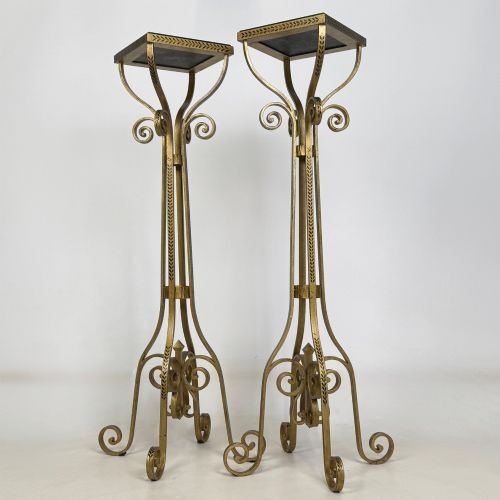


Art Nouveau Plant Pedestal
An art nouveau plant pedestal brings organic lines and striking materials directly into a room, holding your greenery with considerable flair.
Art Nouveau Plant Pedestal
When you search for an art nouveau plant pedestal, you look for stands and jardiniere combinations designed to elevate foliage and floral displays. The pieces on this page span the early twentieth century, taking forms such as tall stands, jardiniere sets, and occasional display tables.
You are most likely to meet examples from the Edwardian period, alongside Dutch and Amsterdam School variations. These objects range from carved wooden columns to brass and marble configurations created to showcase plants in domestic interiors.
How They Were Made
Maker construction relies heavily on timber, brass, and earthenware, often paired with marble tops or copper trays. Mahogany provides structural frames, while glazed ceramic and majolica supply colourful plant vessels.
Metalwork incorporates beaten brass and gilded iron, frequently shaped into organic motifs characteristic of the style. Potters utilised lustre glazes and specialised earthenware techniques to produce decorative jardiniere bodies.
The listings on this page span the Edwardian era and the 1900s to the 1920s, featuring materials from majolica earthenware to brass and marble.
What Varies in Quality
The distinction between ordinary and exceptional pieces rests in the ambition of the design and the integrity of the materials. Master potteries and skilled metalworkers produced complex forms with detailed glazes and engraved metalwork, whereas simpler workshops relied on standard turned wood.
Original matching sets command attention because many jardinieres and stands became separated over time. The quality of the carving, the weight of the brass, and the finish of the marble surface dictate the standing of each piece.
Clement Massier·Minton·Julius Dressler
The Art Nouveau Plant Pedestal Glossary
- Jardiniere
- An ornamental pot or receptacle for holding plants or flowers. These vessels often rest upon dedicated matching stands.
- Majolica
- A type of earthenware decorated with opaque coloured glazes over a tin-glazed surface. This technique produces vibrant colours suited to floral containers.
- Amsterdam School
- An architectural and design style originating in the Netherlands, known for expressive brickwork, organic forms, and traditional craftsmanship. Pieces in this style utilise metal and timber with distinctive proportions.
- Lustre glaze
- A pottery finish incorporating metallic oxides that create an iridescent sheen. This effect changes appearance depending on the light.
Art Nouveau Plant Pedestal: Frequently Asked Questions
How were these stands used originally?
Originally, these stands held potted palms, ferns, and floral arrangements in domestic reception rooms and hallways. Raising plants off the floor allowed better light access and protected delicate flooring from moisture.
Some designs incorporated trays to catch water runoff or provided lower shelves for additional display purposes.
Are the jardiniere and stand usually original to each other?
Many jardinieres and stands were sold as matched sets by potteries and metal workshops. Over decades of use, however, pots and bases often separated and found new partners.
Matching materials, glazes, and manufacturer marks help determine whether a combination remains as originally conceived by the maker.
What materials should I expect to find?
These pieces frequently feature mahogany and other hardwoods, paired with brass, marble, and wrought or gilded iron. Ceramic elements appear as glazed earthenware, majolica, and lustre-finished vessels.
Combinations of wood and metal, or stone and ceramic, typify the construction methods of the period.