


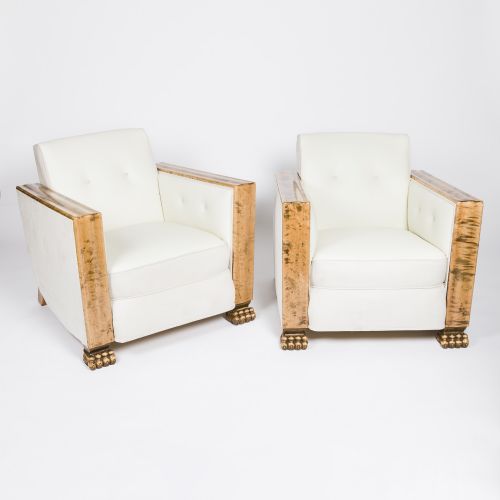


Pair Art Deco Pedestals
These pair art deco pedestals bring geometric line and striking grain to a room, offering elevated display surfaces for sculpture and lamps.
Pair Art Deco Pedestals
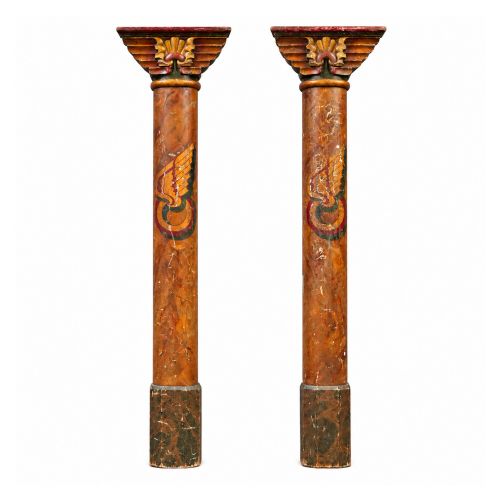
When you search for pair art deco pedestals, you enter a category defined primarily by matching sets designed to elevate objects of display. These pieces function as architectural columns, torcheres, and stands, providing symmetry within an interior scheme.
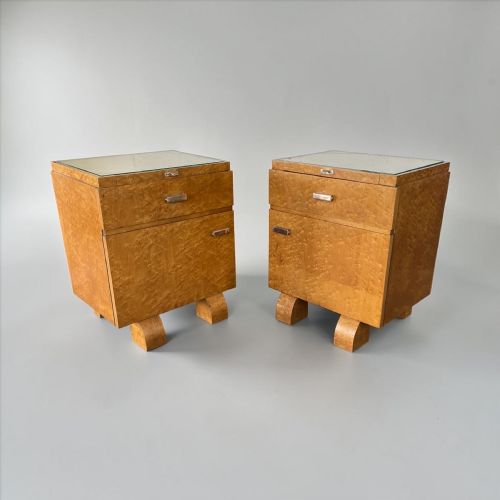
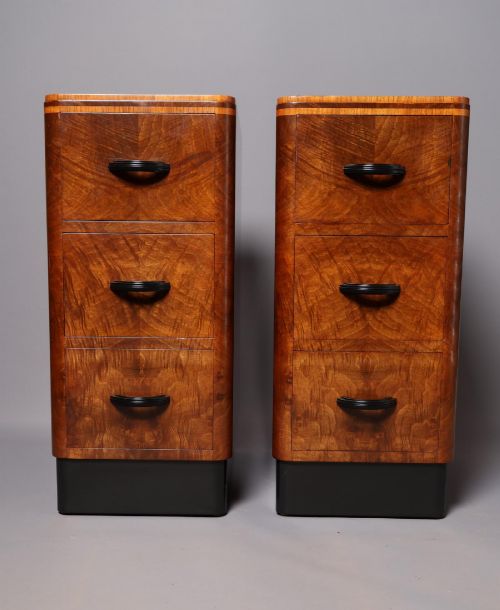
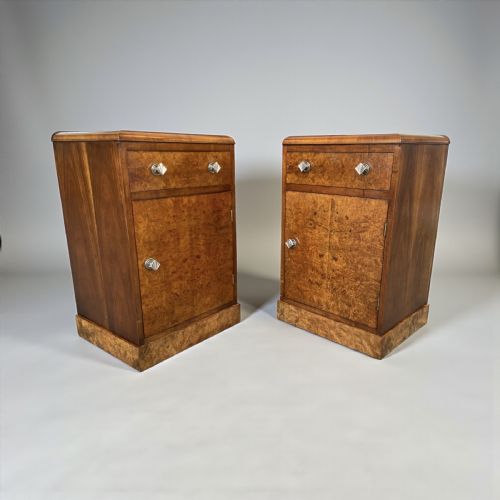
The evidence shows these stands appearing mostly from the interwar period, alongside related bedside cabinets and console tables that share the same clean geometry. Walnut, burr walnut, and birds eye maple dominate the forms, offering strong visual rhythm.
While the archive records garden urns and alabaster columns, the core of what you meet here centres on polished wood and mirrored surfaces designed for interior spaces. They anchor corners and frame doorways with distinct period character.
Materials and construction
Cabinet makers utilised choice veneers over solid timber carcasses, selecting figured walnut, birds eye maple, and satinwood for their natural decorative patterns. These veneers are laid carefully to create symmetrical grain matches across opposing faces.
Metal elements such as chrome, brass, and silver plating appear alongside glass and marble inserts, reflecting the industrial tastes of the period. Joinery remains hidden to maintain unbroken vertical planes and smooth geometric transitions.
Some tall columns began life holding up fairground carousel horses before finding peace in quiet domestic hallways.
Distinctions in quality
Quality rests in the selection of the veneer and the precision of the matching grain across both columns in the pair. Superior examples display rich, uninterrupted figuring that wraps logically around the angles of the form.
The integrity of the structural core and the finish dictate the lasting stability of the piece. Hand-applied polish that retains a warm lustre without obscuring the natural wood distinguishes the finer workshops from standard production.
Maurice Adams·Viners
The Pair Art Deco Pedestals Glossary
- Art Deco
- A design style spanning the 1920s and 1930s characterised by streamlined forms, geometric symmetry, and modern industrial materials. It replaced ornate historical revivals with clean lines.
- Birds Eye Maple
- A figured timber showing small, swirling dots that resemble tiny bird eyes within the grain. Cabinet makers prize this wood for its decorative surface pattern.
- Burr Walnut
- A specialised wood cut from walnut tree growths, producing intricate, swirling grain patterns. It provides rich texture on vertical furniture surfaces.
- Torchere
- A tall ornamental stand designed to support a lamp or candle. In this context, it functions as a display column.
Pair Art Deco Pedestals: Frequently Asked Questions
How do I style pair art deco pedestals?
Place them symmetrically in a hallway or flanking a fireplace to create balanced focal points. They work best when supporting simple bronzes, pottery, or modern lighting.
Keep the surrounding space clear so the geometric silhouettes remain visible. Let the grain patterns complement rather than compete with nearby furniture.
Are these pedestals structurally sound for heavy items?
Most are built with sturdy timber carcasses designed to support substantial decorative objects like bronze sculptures or large vases. The broad base provides natural stability for upright loads.
Check that the joints remain tight and the top surface sits level before placing heavy items on display. Distribute weight evenly across the centre of the top platform.
What is the difference between walnut and birds eye maple stands?
Walnut offers deep brown tones with bold, sweeping grain patterns that suit traditional and transitional rooms. Birds eye maple provides a much lighter, golden surface speckled with distinct swirling eyes.
Both materials were central to the period but create entirely different moods in an interior. Walnut tends to anchor a corner visually, while maple lifts and brightens the space.
How do I clean and maintain wood pedestals?
Dust regularly with a soft, dry cloth to prevent grit from settling into the polished surface. Avoid using silicone sprays or harsh chemical cleaners that can degrade historical finishes.
Apply a quality natural wax occasionally to nourish the veneer and maintain its subtle sheen. Keep them away from direct sunlight and strong heat sources to prevent wood movement.