


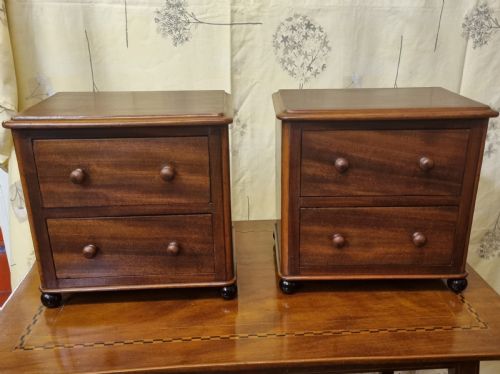
Pair Wooden Tables
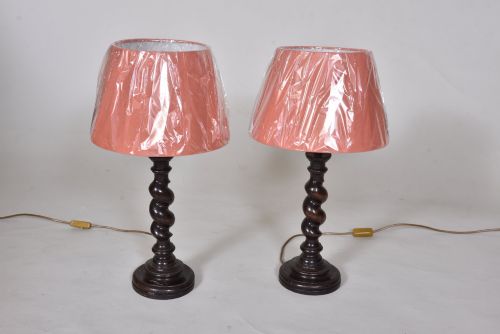
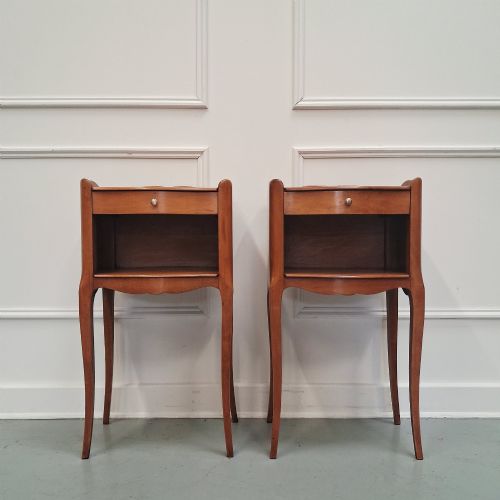
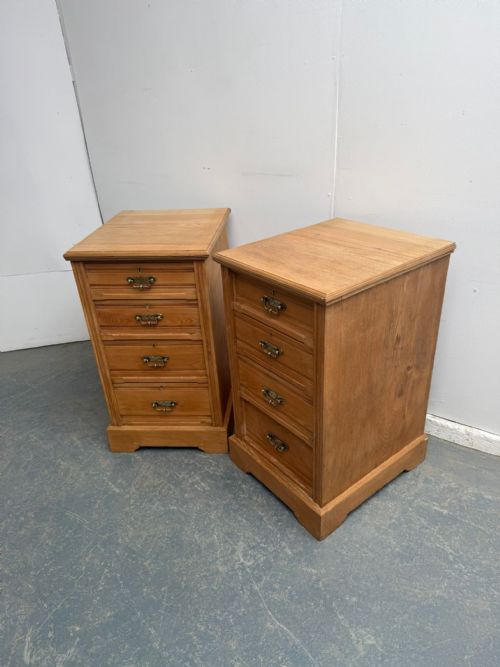
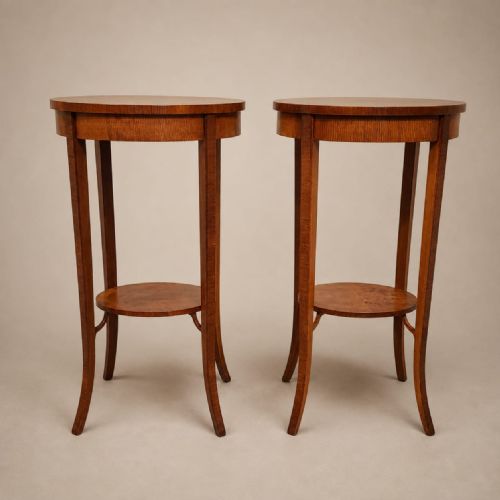
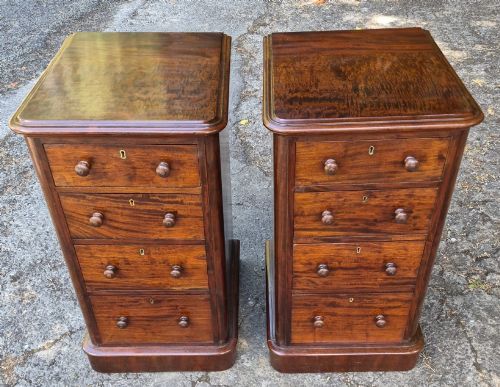
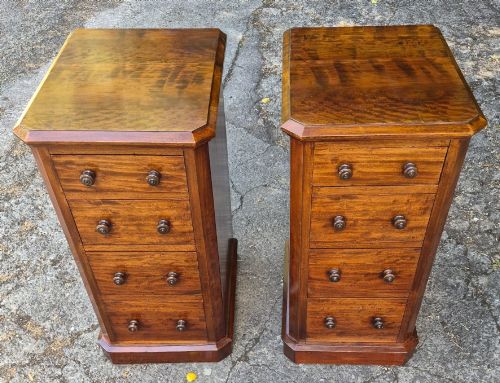
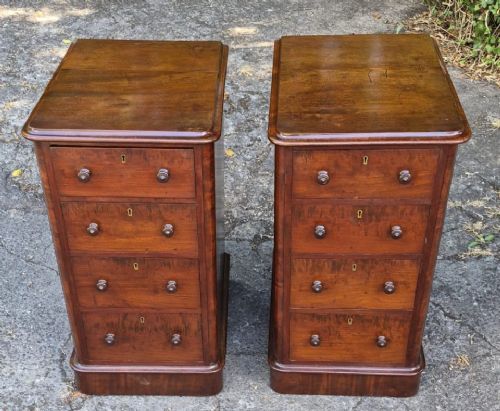
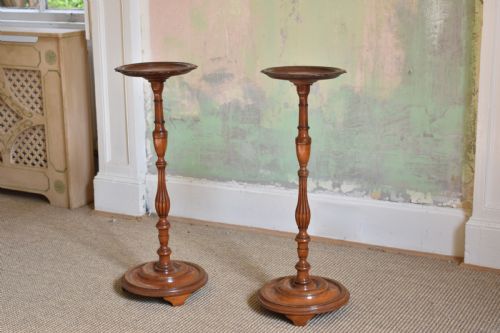
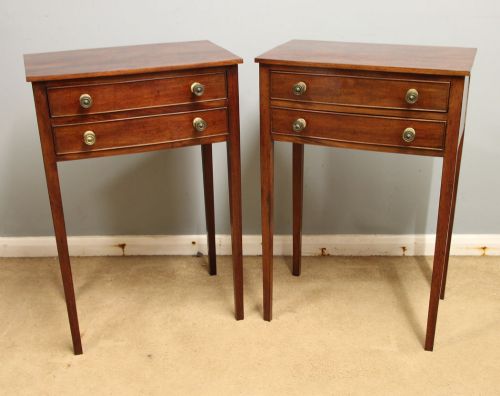
When you search for pair antique wooden tables, you find matching sets created for symmetry in period interiors, mostly configured as bedside chests, side tables or lamp stands.
Pair Wooden Tables
When buyers search for pair antique wooden tables, they are looking for matched sets intended to balance a room, whether placed flanking a bed, beside a sofa or beneath a mirror. The pieces available span several centuries, reaching from Georgian and 18th Century examples through Victorian and Edwardian periods up to the 1930s. The most common forms met on this page are bedside chests, side tables, lamp tables and console tables.
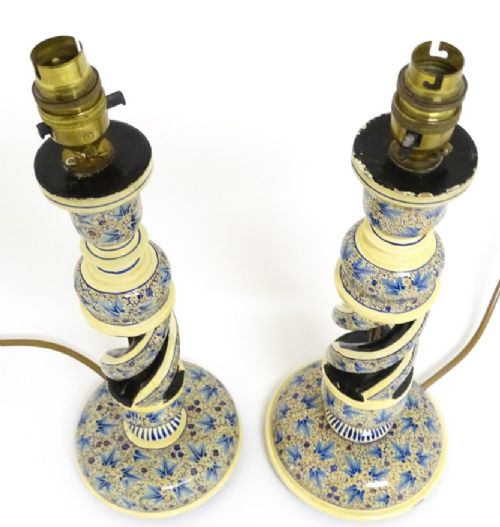
The materials and origins vary widely across these matched pairs, incorporating English mahogany and oak, French cherrywood, inlaid satinwood, walnut and carved woods. Alongside standard European forms, the selection includes Anglo-Indian campaign pieces, Kashmiri hand-painted items and Chinese hardwood barrels, demonstrating how pairs were commissioned or matched for specific decorative schemes.
How they were made
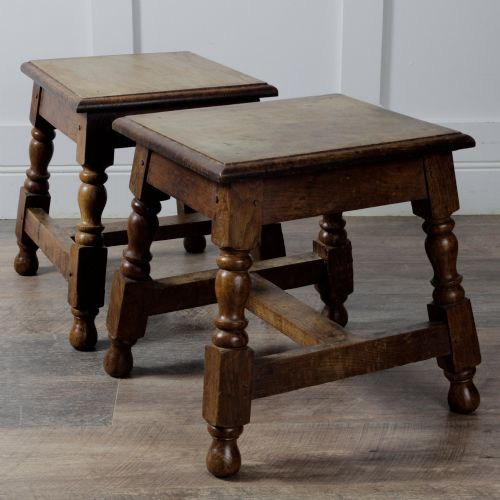
Cabinetmakers constructed these pairs using dense hardwoods such as mahogany, oak, walnut and ash, often applying marquetry inlay, satinwood banding or painted finishes to the exterior surfaces. Joints were typically hand-cut using traditional methods appropriate to the period, ensuring structural stability for daily use as lamp stands or bedside cabinets.
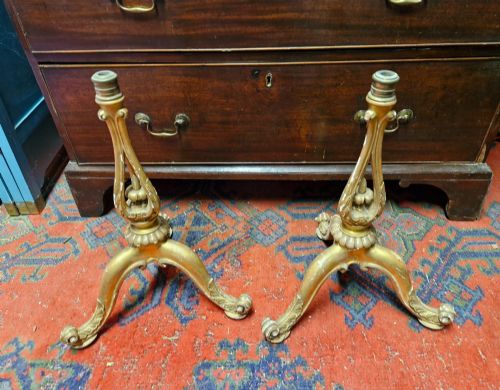
Surface treatments range from wax finishes that highlight the natural grain of the wood to hand-painted and gilded details seen on French, Spanish and Kashmiri decorative pieces. Brass mounts, galleries and handles were frequently added to secure items or enhance the formal appearance of the tables.
Listings feature mahogany, oak, walnut and satinwood across periods spanning from the 18th Century to the 1930s.
What varies in quality
The standard of a matched pair depends heavily on the consistency between the two individual items, particularly whether they started life together as a true pair or were assembled later as a matched set based on similar proportions and timber grain. Finer examples display superior timber selection, such as figured mahogany or burr wood, paired with meticulous hand-carving or precise marquetry inlay.
Construction details also dictate the tier of craftsmanship, where heavier secondary woods, hand-dovetailed drawer linings and original brass hardware indicate higher workshop origins. Lesser examples may exhibit simpler joinery, replacement elements or greater divergence between the two pieces in colour and wear.
Liberty & Co·Holland & Sons
The Pair Wooden Tables Glossary
- Marquetry
- Decorative veneer applied to furniture in patterns using different woods, metals or shells. This technique creates pictorial or geometric surface designs.
- Satinwood
- A durable, lustrous yellowish timber native to India and Ceylon, frequently used for fine cabinetmaking and inlay work during the Georgian and Edwardian eras.
- Campaign table
- Portable furniture designed for military officers on campaign, typically featuring folding stands and brass fittings for easy dismantling and transport.
- Console table
- A table designed to be fixed against a wall, frequently supported by decorative brackets or legs and topped with wood, marble or painted finishes.
- Gallery
- A raised decorative border, often made of pierced brass or carved wood, running along the edge of a table top to prevent objects from sliding off.
Pair Wooden Tables: Frequently Asked Questions
How do I know if the tables are a true pair?
Examine the timber grain, dimensions and construction methods of both pieces side by side to check for identical hand-cut joints and matching wear patterns. True pairs share the exact same workshop origins and materials.
Discrepancies in height, timber selection or secondary woods often indicate that two separate pieces were brought together later as a matched set.
What were bedside chests used for originally?
Bedside chests and cabinets provided concealed storage for chamber pots, nightwear and personal items before modern plumbing and fitted bedroom furniture became standard.
Over time, their height and proportions made them equally suitable for holding bedside lamps, books and decorative objects in period and contemporary homes.
How do I care for antique wooden tables?
Maintain polished or waxed wooden surfaces by applying a quality beeswax periodically and buffing gently with a soft cloth to nourish the timber grain. Avoid placing antique tables near direct heat sources or in strong sunlight.
Use coasters and mats to protect vulnerable finishes from moisture and heat damage caused by cups or lamps.
What is the difference between side tables and console tables?
Side tables are freestanding pieces designed to be accessed from multiple sides, often placed beside chairs or used as lamp stands in open room spaces.
Console tables are specifically designed to stand flat against a wall, frequently anchored with brackets or legs to serve as decorative display surfaces.