
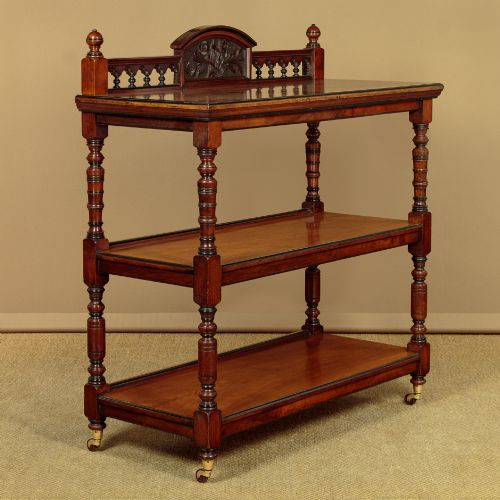


Walnut Buffet Table
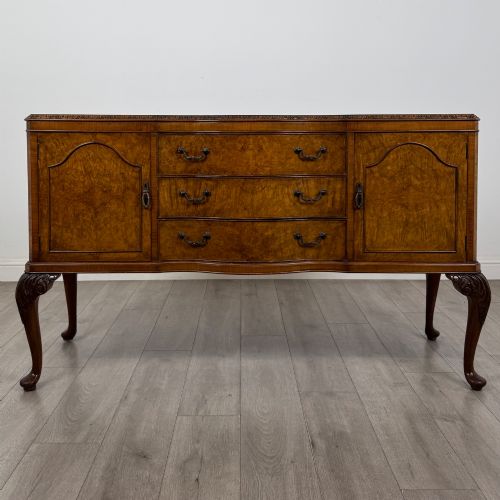
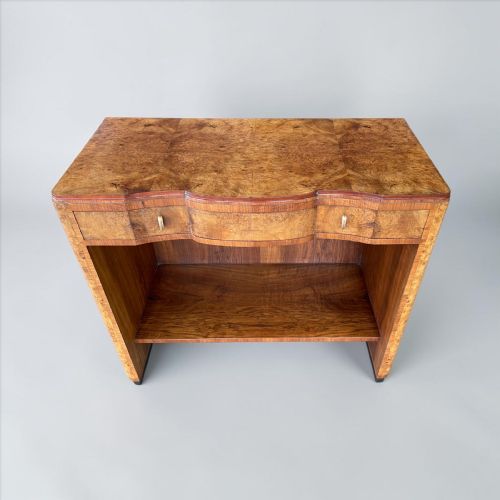
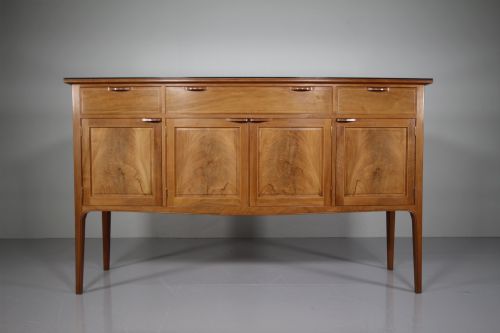
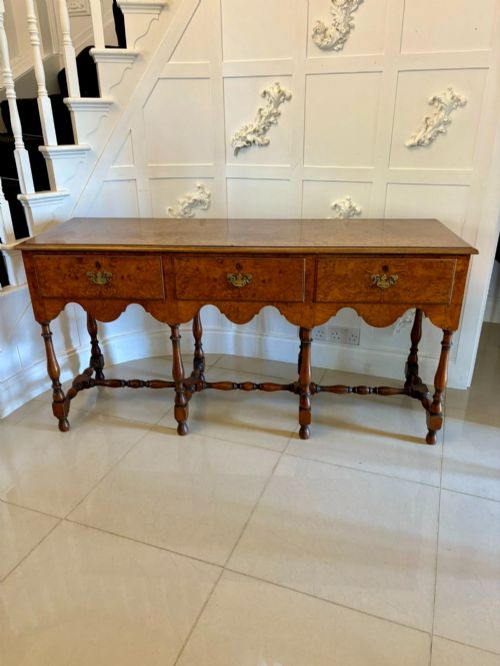
A walnut buffet table brings rich timber figure and practical serving space to a dining room, uniting Victorian gravity with Art Deco line.
Walnut Buffet Table
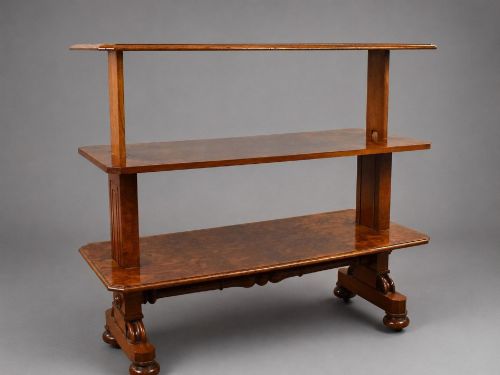
A walnut buffet table encompasses a range of serving furniture, from Victorian telescopic dumb waiters to Art Deco cabinets designed for hospitality. When searching for a walnut buffet table, buyers encounter nineteenth-century pieces alongside twentieth-century iterations from the nineteen-thirties.
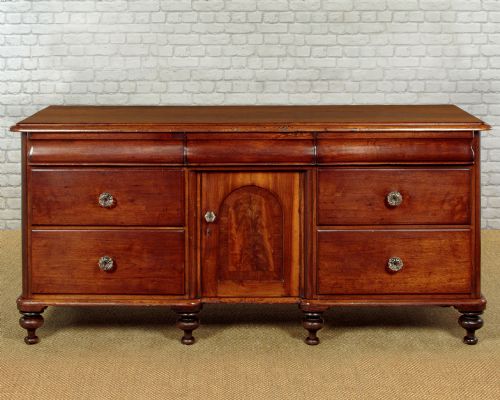
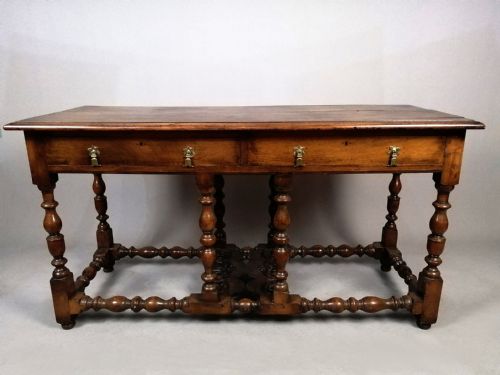
The selection includes sideboards, credenzas, and servers shaped by distinct eras like the Edwardian period and the Aesthetic Movement. French Renaissance revival designs and plain kitchen dressers sit alongside pieces influenced by the Cotswold School.
Victorian examples often take the form of multi-tiered dumb waiters with adjustable shelves, while later decades favour streamlined credenzas and console tables. This variety reflects changing domestic requirements for food service and display across two centuries.
Materials and Construction
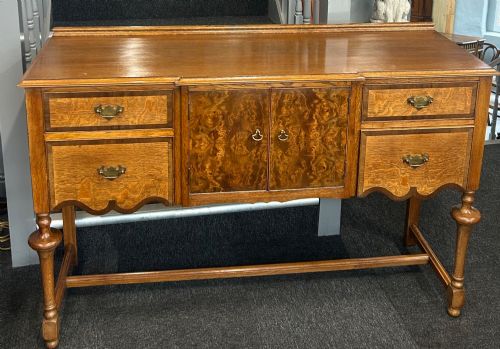
Cabinet makers utilised solid timber alongside figured walnut veneer to create striking grain patterns on drawer fronts and cupboard doors. Burr walnut appears frequently, prized for its mottled, circular figuring that catches the light.
Secondary timbers such as oak provide internal structural support, while decorative details frequently incorporate brass hardware and glass panels. Marble tops appear on specific serving tables, offering a cool, durable surface for food preparation and presentation.
Makers employed traditional joinery techniques, dovetailing drawer carcases and mounting heavier buffet tops on sturdy pedestals or turned legs. Metamorphic designs relied on clever mechanical adjustments, such as telescopic mechanisms on dumb waiters.
A telescopic dumb waiter allows shy hosts to adjust shelf heights quietly mid-meal without disturbing dinner conversation.
Judging Quality
Quality rests primarily on the selection of the timber and the crispness of any carved enrichment. Matched veneer book-matching across large cabinet doors indicates a maker who planned the visual impact before cutting the wood.
Construction methods tell their own story, separating utilitarian workshop output from pieces bearing maker stamps. Stamped signatures from notable workshops or individual craftsmen signal accountability and higher tier design execution.
The integrity of the surface finish and the survival of original brass handles or marble inserts dictate how successfully a piece has endured. Modifications or heavy secondary polishing diminish the tactile honesty expected from superior examples.
Maurice Adams·Edward Barnsley·Epstein·Bowman Brothers·Hille of London·Bath Cabinet Makers·Eadon and Son Sheffield
The Walnut Buffet Table Glossary
- Burr Walnut
- A timber derived from the irregular growth excrescences of walnut trees, yielding complex, swirling grain patterns. Cabinet makers prized this veneer for principal display surfaces.
- Dumb Waiter
- A tiered serving piece designed to hold dishes without requiring a human servant at the table. Victorian and earlier examples often feature rotating or adjustable shelves.
- Credenza
- A sideboard or buffet cabinet typically lacking high legs, intended for serving food and displaying silver. The form evolved during the nineteenth century.
- Veneer
- A thin layer of superior walnut applied over a secondary wood base. This technique allowed craftsmen to display dramatic grain figures without wasting scarce solid timber.
- Aesthetic Movement
- A late nineteenth-century design current that rejected heavy Victorian ornamentation in favour of simplicity and refined proportion. Pieces from this era often display clean lines and subtle carving.
Walnut Buffet Table: Frequently Asked Questions
How do I use a buffet table today?
These pieces serve well in dining spaces as drinks cabinets, serving stations for dinner parties, or display consoles in hallways. Their drawers and cupboards provide practical storage for linen, glassware, and tableware.
Larger credenzas accommodate lamps and decorative objects on top, while tiered dumb waiters offer compact vertical storage for smaller items.
What is the difference between a sideboard and a buffet?
A sideboard traditionally incorporates deep cupboards and drawers for storing dining room paraphernalia, often standing on taller legs. A buffet focuses more specifically on the surface area required for laying out food during service.
In practice, antique terminology often overlaps, and many listings use the terms interchangeably based on proportion and internal layout.
How do I care for walnut veneer?
Protect the timber by keeping pieces away from direct sunlight and rapid humidity changes, which can cause veneer to lift or crack. Dust regularly with a soft cloth and avoid modern aerosol polishes that contain silicones.
Applying a traditional beeswax polish occasionally helps nourish the wood and maintain a soft, natural lustre without building up heavy residue.
How can I tell a Victorian buffet from an Edwardian one?
Victorian examples generally display heavier proportions, darker finishes, and more elaborate carved decoration, including turned pedestals and heavy mouldings. Edwardian pieces tend to be lighter in scale, sometimes adopting revival styles with brighter walnut tones.
Examining internal construction, drawer linings, and secondary woods helps confirm the manufacturing era when exterior styling appears transitional.