
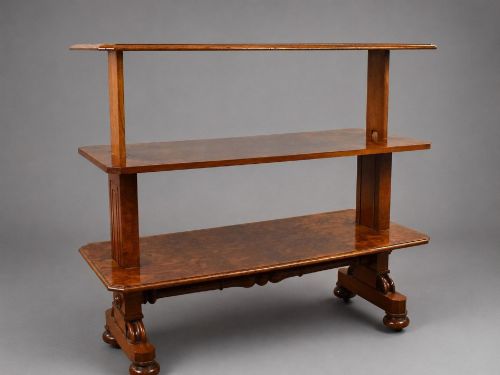
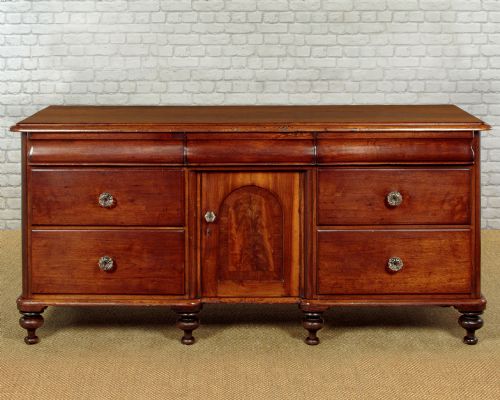
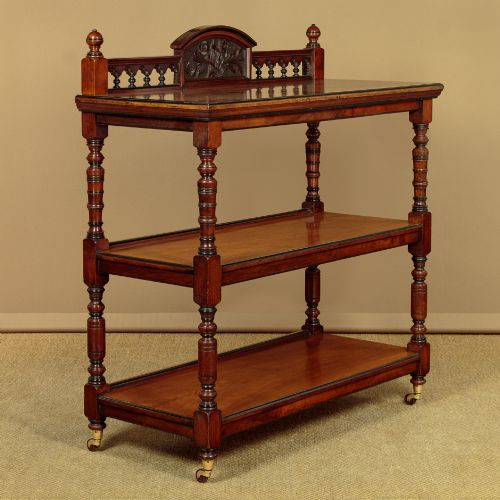
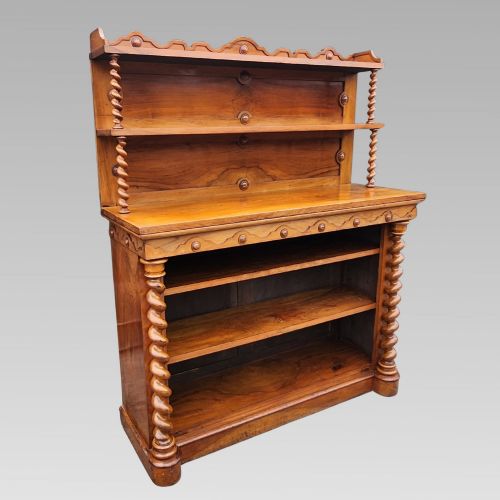


Victorian Walnut Server
A Victorian walnut server provides the ideal dining room centrepiece, combining practical storage with rich, figured timber.
Victorian Walnut Server
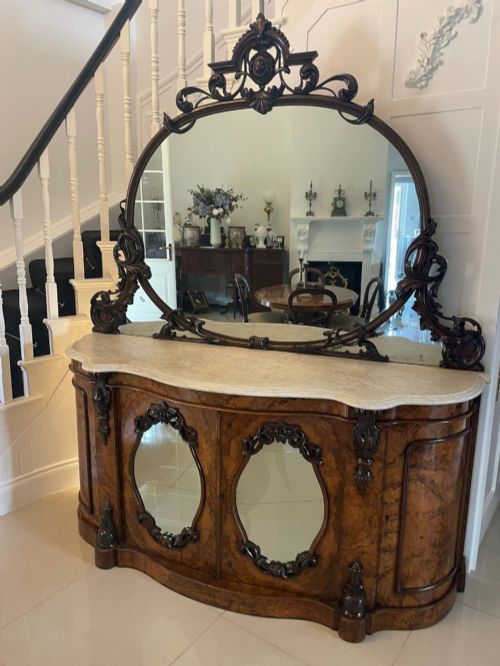
When you search for a Victorian walnut server, you encounter a diverse range of dining and drawing room furniture intended for food service, display, and storage. These pieces span the nineteenth century, with many examples originating around the 1880s.
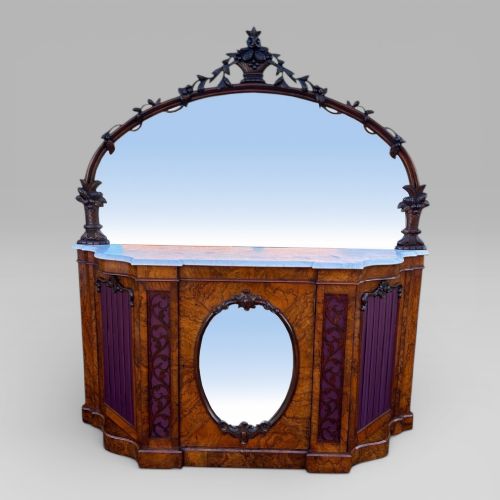
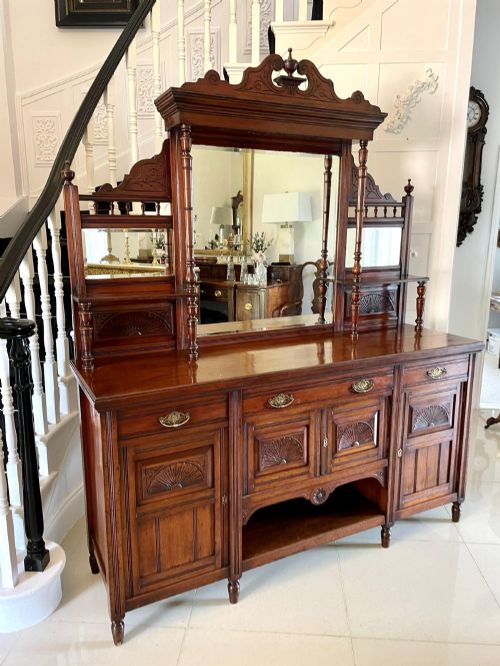
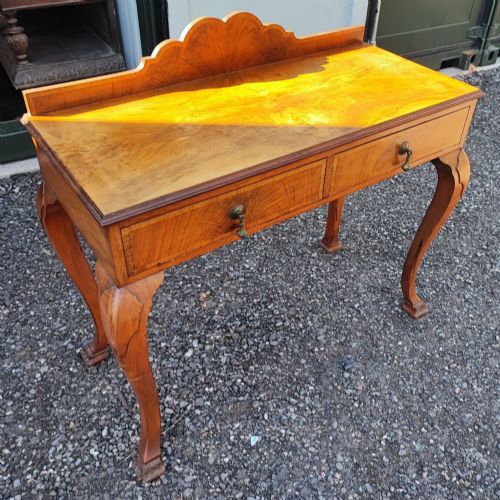
The selections on this page include mirror-backed credenzas, serving tables, burr walnut buffets, and metamorphic dumb waiters. Forms vary from compact sideboards to elaborate cabinets incorporating marble tops and inlaid mother-of-pearl.
Makers drew on varied stylistic influences, ranging from Gothic Revival and Renaissance Revival to the Aesthetic Movement and French Neoclassical designs. This variety ensures that each server meets different domestic requirements, whether for a grand dining room or a modest drawing room.
Distinctions in craftsmanship and design
The selection of timber dictates much of the visual impact, with highly figured burr walnut veneers commanding greater attention than plain grain. The complexity of the carving and the depth of the mirror-backed frames also separate standard pieces from exceptional examples.
Hardware and secondary materials reveal the original tier of manufacture. Integrated white marble slabs, intricate mother-of-pearl inlay, and fully operational mechanical tiers on dumb waiters denote superior workshops.
Victorian Walnut Server Retail Price Guide 2026
Typical asking prices for victorian walnut server among the pieces listed under this phrase on Sellingantiques today, from the lower quarter to the upper quarter. They describe what is for sale here now, not the wider market.
Listings feature walnut, burr walnut, marble, brass, glass, velvet, and mother-of-pearl across Victorian, Aesthetic Movement, and Gothic Revival styles.
The Victorian Walnut Server Glossary
- Burr walnut
- A timber harvested from walnut tree growths, producing highly swirling, decorative grain patterns. Cabinet makers prized this veneer for front panels on formal credenzas and buffets.
- Credenza
- A sideboard or display cabinet originating in Italy, popular in Victorian drawing rooms. These often feature mirrored backs and enclosed cupboards.
- Dumb waiter
- A tiered serving table or stand fitted with multiple shelves. Victorian examples frequently include telescopic or metamorphic mechanisms.
- Aesthetic Movement
- A late nineteenth-century design style focusing on art for art's sake. Pieces from this movement often display simpler lines and Japanese-inspired decorative motifs.
- Metamorphic
- Describing furniture that transforms from one form to another, such as a dumb waiter with adjustable or folding tiers.
Victorian Walnut Server: Frequently Asked Questions
What is a Victorian walnut server used for?
These pieces served multiple functions in nineteenth-century dining and drawing rooms, primarily for holding dishes, glassware, and cutlery during meals.
Beyond dining service, many incorporated display shelves, mirrors, and lockable cupboards to store precious household items.
How do I date a Victorian walnut server?
Dating relies on identifying stylistic markers, construction techniques, and secondary timbers used within the carcass. Pieces from earlier decades often reflect Renaissance Revival or pedestal forms, while 1880s examples frequently align with the Aesthetic Movement.
Secondary clues include the type of drawer construction, brass hardware, and whether the mirror back is detachable or integrated.
Where should I place a server in my home?
Dining rooms remain the traditional home for servers, sideboards, and buffets, offering convenient surfaces for serving food and storing tableware.
Smaller serving tables, dumb waiters, and music cabinets work well in living rooms, hallways, or drawing rooms as display surfaces.
How do I care for antique walnut furniture?
Walnut benefits from stable room temperatures away from direct sunlight and heat sources to prevent the burr veneer from drying out or splitting.
Routine dusting with a dry, soft cloth preserves the polished surface without the need for heavy modern polishes.