
Walnut Shelf Unit
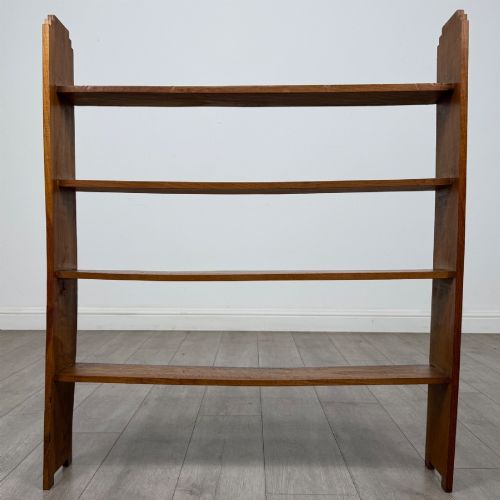
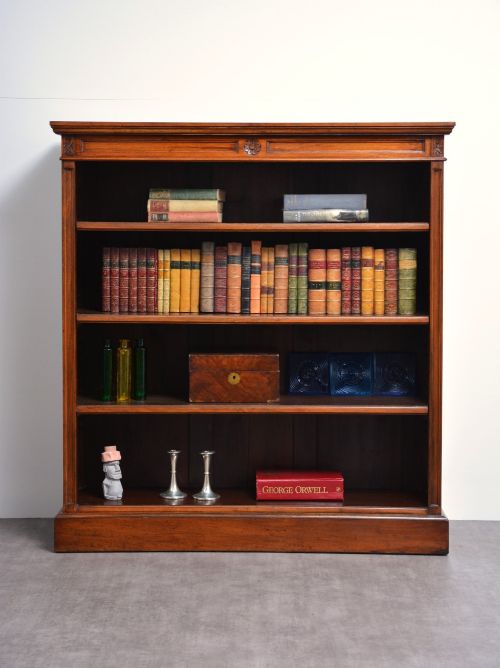
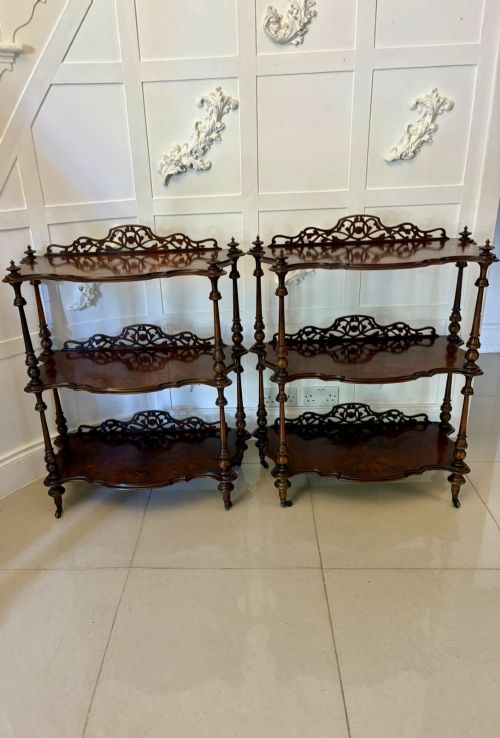
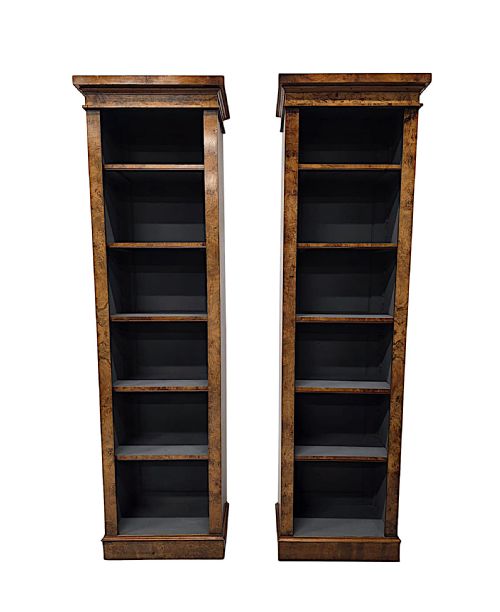
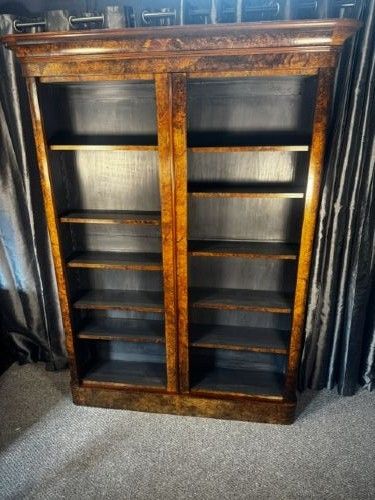
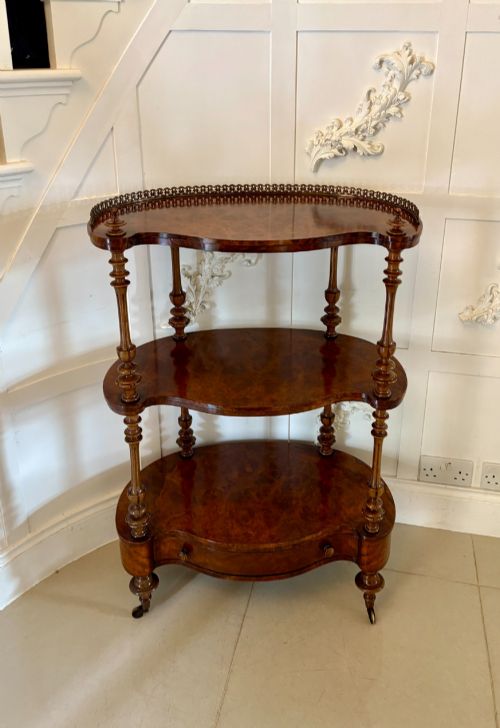
These walnut shelf unit designs span open bookcases, tiered whatnots and wall-mounted etageres, offering practical display and storage built from rich timber.
Walnut Shelf Unit
A walnut shelf unit serves multiple interior functions, appearing primarily as open bookcases, tiered whatnots, wall shelves and etageres across the Victorian, Edwardian and Art Deco periods. Buyers search for these pieces to provide practical storage while introducing warm timber tones and decorative joinery into a room.
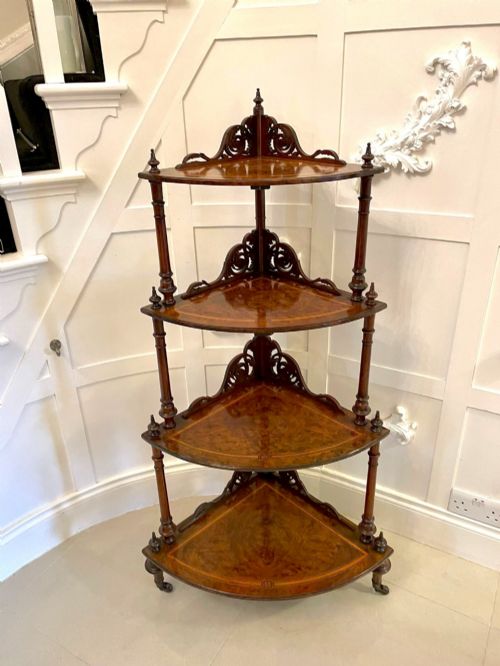
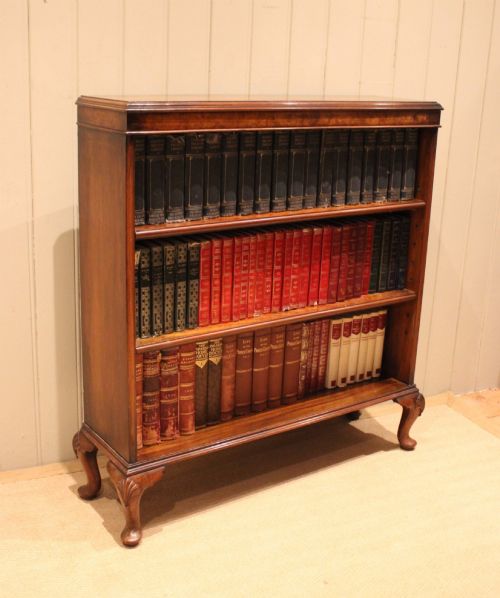
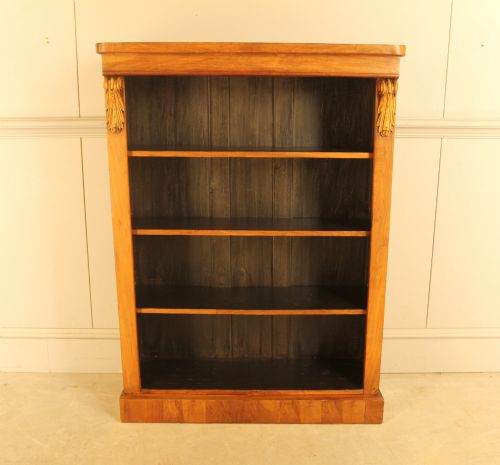
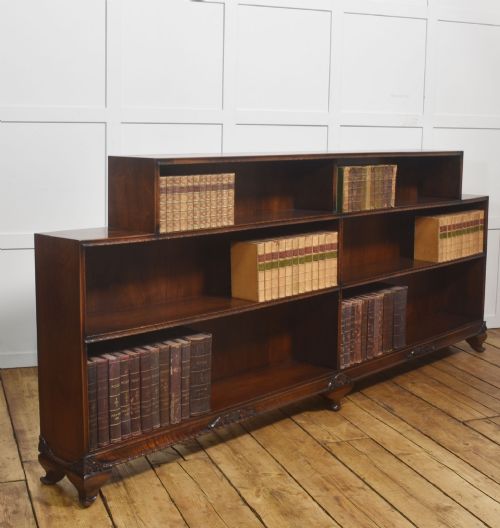
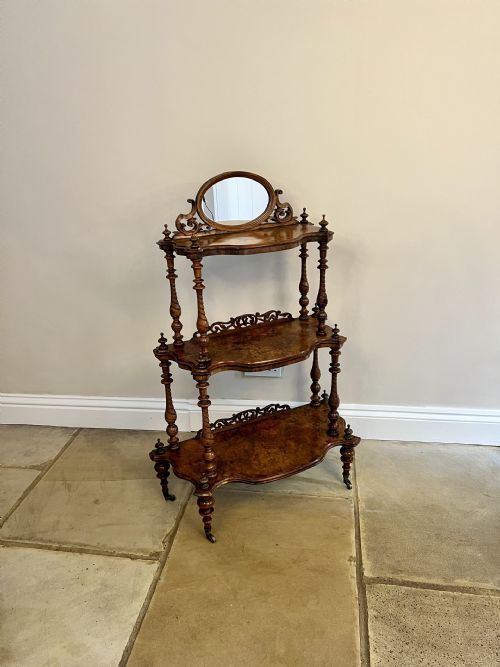
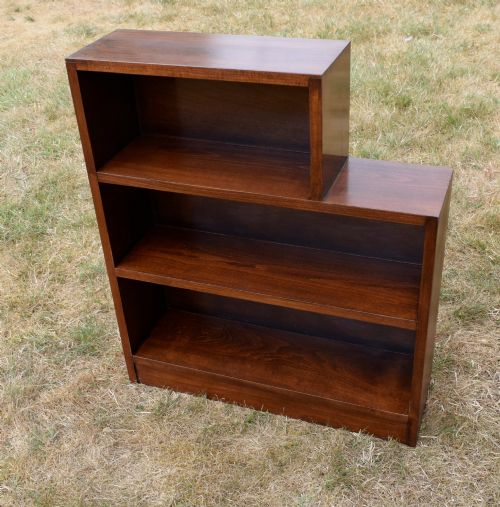
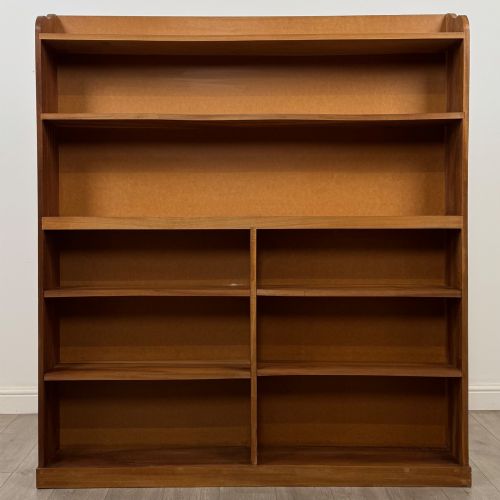
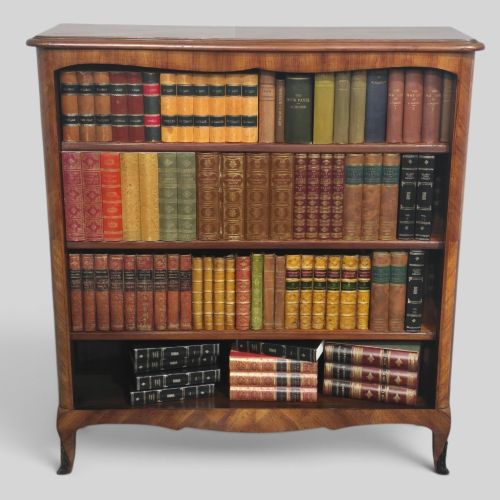
The most common formats on this page are low open bookcases with adjustable shelving and multi-tiered Victorian whatnots designed for corners or freestanding display. These forms originate from workshops spanning the nineteenth and early twentieth centuries, drawing on styles such as Queen Anne Revival, French Provincial and geometric Art Deco steps.
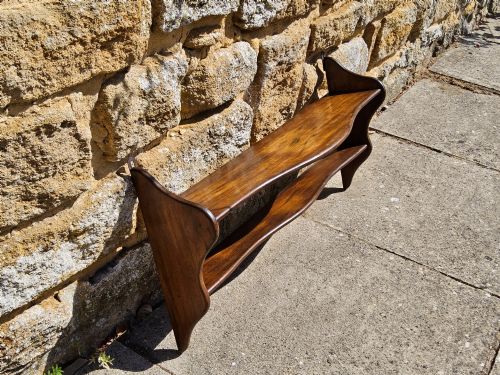
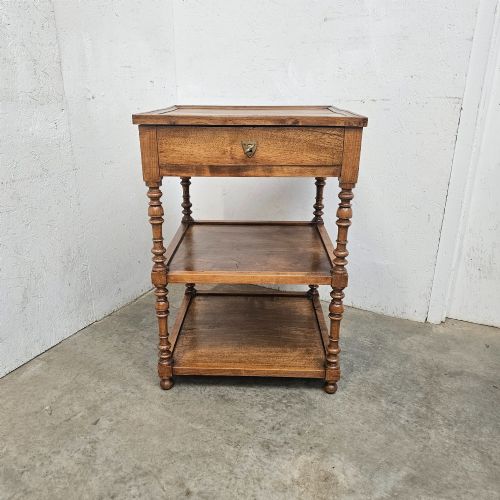
Smaller examples include wall-hung cabinets and diminutive etageres incorporating turned legs and mirrored glass panels. Larger examples feature breakfront profiles, multiple sections and drawers integrated beneath the open tiers.
Materials and Construction
Cabinet makers utilised solid timber alongside figured walnut and burr walnut veneer applied to secondary woods like pine, creating rich grain patterns across flat surfaces and shaped panels. Brass fittings appear as structural accents, hinges and gallery rails on specific French and Victorian designs.
Construction techniques involve traditional joinery, turned wooden supports and adjustable shelf mechanisms housed within upright pilasters or side panels. Glass elements and carved detailing supplement the core timber framework on select tiered whatnots and hanging wall units.
Listings on this page span the 19th Century, Victorian, Edwardian, and 1930s periods, incorporating walnut, burr walnut, pine, brass, and mirror glass.
Judging Quality and Execution
Quality rests upon the selection of the veneer, where dense burr figures and symmetrical grain matching elevate a standard bookcase into an exhibition piece. The depth of carving, the crispness of turned leg supports and the integration of serpentine or breakfront contours separate standard production from superior craftsmanship.
Structural integrity depends on the precision of the adjustable shelf mechanisms and the rigidity of multi-tiered whatnots under weight. Superior examples maintain stability across complex tiered tiers and cascading corner formats without relying on excessive modern reinforcement.
The Walnut Shelf Unit Glossary
- Burr Walnut
- A timber obtained from the warted growths on walnut trees, prized by cabinet makers for its swirling, highly figured grain patterns. It is typically sliced into thin veneers for decorative surfaces.
- Whatnot
- A multi-tiered piece of freestanding furniture designed for displaying ornaments, books or small objects. Originating in the eighteenth century, Victorian examples frequently feature three or more open shelves supported by turned columns.
- Etagere
- A set of open shelves or tiered stands used for display. French interpretations often incorporate brass mounts and slender turned legs.
- Breakfront
- A piece of furniture whose central section projects forward from the flanking outer sections. This architectural arrangement adds depth and visual rhythm to larger bookcases.
- Adjustable Shelves
- Shelving supported by movable pins or rack strips that allow the height between tiers to be altered. This system provides functional adaptability for varying book sizes.
Walnut Shelf Unit: Frequently Asked Questions
What is the difference between a whatnot and a bookcase?
A bookcase is primarily designed for holding books within enclosed or open upright compartments, often featuring adjustable wooden shelves for varying volumes. A whatnot consists of multiple open tiers intended for displaying decorative objects, porcelain and smaller ornaments.
While both fall under shelving units, bookcases focus on literature storage, whereas whatnots emphasise tiered display surfaces accessible from multiple angles.
How do I care for burr walnut veneer?
Burr walnut veneer requires stable indoor humidity levels away from direct sunlight and heat sources to prevent the wood from drying out or warping. Dust the surface regularly with a soft, dry cloth and apply occasional high-quality beeswax to nourish the grain.
Avoid liquid cleaners and excessive moisture, which can penetrate the veneer seams and weaken the historical adhesives beneath.
How do I date a Victorian walnut shelf unit?
Dating relies on observing stylistic markers, construction methods, hardware types and timber treatment. Mid-nineteenth-century pieces often display heavy burr walnut veneers, elaborate carved details and turned supports characteristic of high Victorian craftsmanship.
Later Victorian and Edwardian examples lean toward simpler lines or specific revival styles, such as Queen Anne cabriole legs or geometric Art Deco stepped silhouettes.