




Victorian Dumbwaiter
A victorian dumbwaiter provides tiered shelving for serving or display, combining practical storage with mechanical ingenuity.
Victorian Dumbwaiter
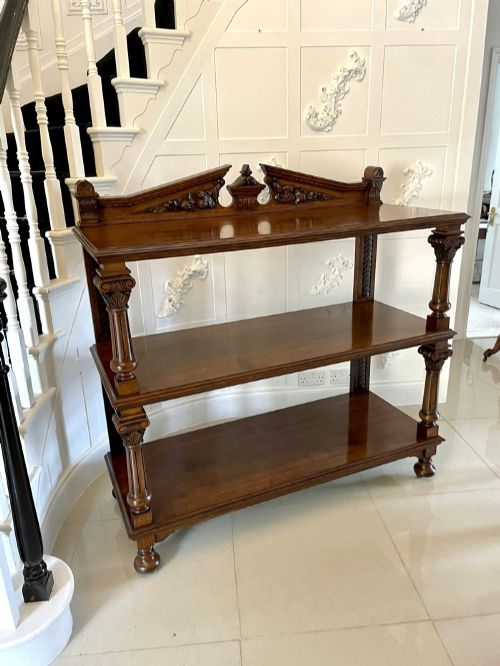
A victorian dumbwaiter serves as a tiered stand or buffet designed to hold food, books, or tableware. Pieces searchably span the nineteenth century and into the early twentieth century, incorporating styles such as William IV, Regency, and Edwardian alongside standard Victorian work.
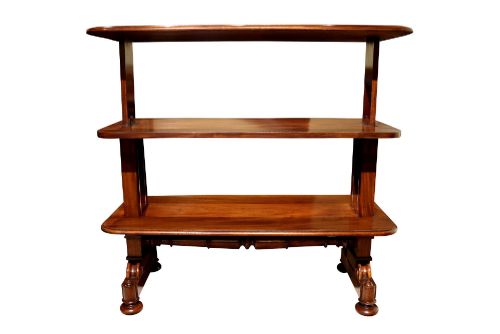
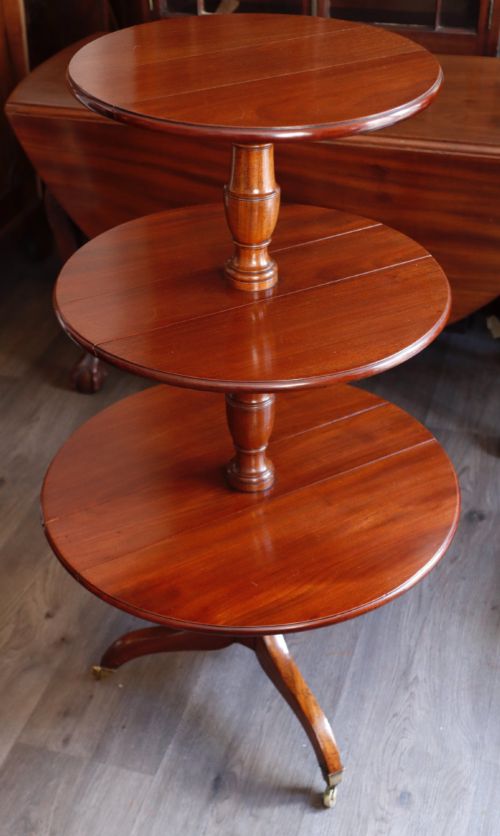
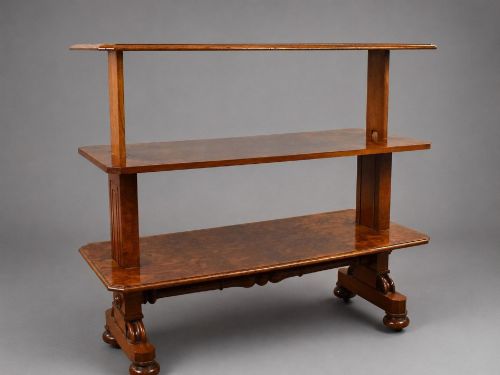
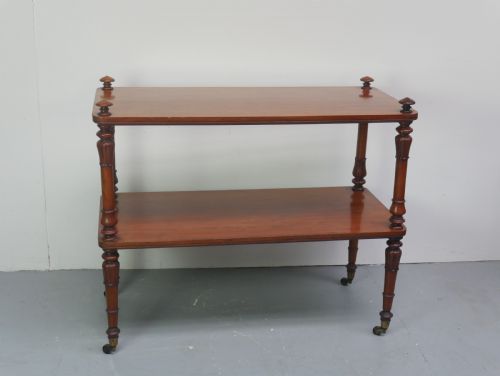
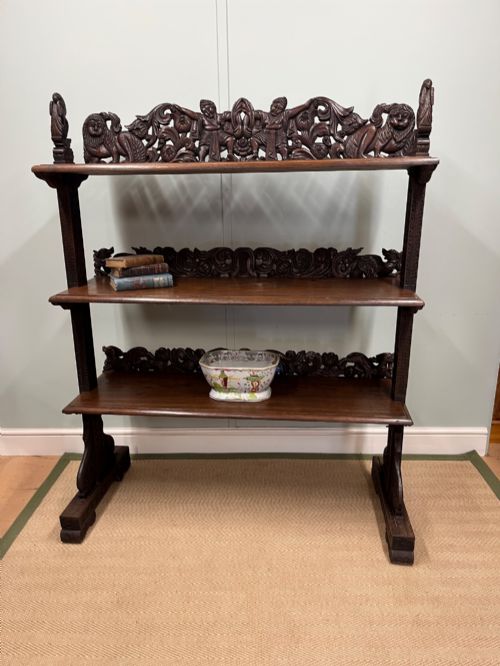
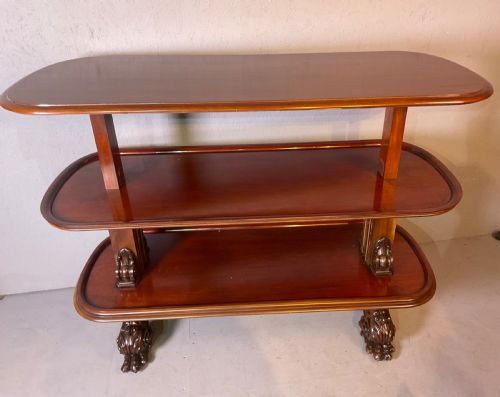
The most common formats on this page are three-tier mahogany or walnut buffets, alongside revolving tables, folding stands, and complex rise-and-fall or metamorphic designs. Forms range from simple tripod pedestals to large carved oak servers with multiple tiers and castors.
Materials and construction
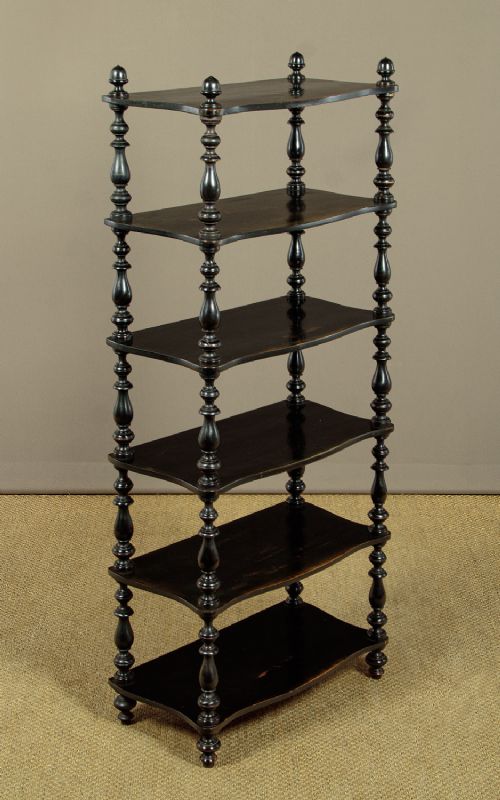
Timbers dominate the construction, with solid and veneered mahogany, walnut, burr walnut, oak, teak, and rosewood appearing alongside ebonised finishes and brass mounts. Craftspeople utilised turning, carving, and joinery to build tiered platforms supported by pedestals, columns, or folding frames.
Mechanical elements define the more complex examples, including rise-and-fall ratchets, telescopic actions, and revolving mechanisms like lazy susans. Castors frequently appear on the feet to allow the heavy tiered stands to move easily across dining rooms.
Listings feature woods such as mahogany, walnut, burr walnut, oak, rosewood, teak, and padauk.
Evaluating quality and execution
Quality rests on the selection of timber, the crispness of any carved detail such as green man motifs, and the smooth operation of moving parts. Superior examples show refined proportions, substantial weight, and secondary woods chosen with care.
Maker attribution and advanced mechanics elevate a piece significantly. Items featuring working rise-and-fall mechanisms, telescopic shafts, or documented stamps separate standard utility servers from high-end cabinet work.
Maple & Co·Oetzmann & Co·Donald Ross
The Victorian Dumbwaiter Glossary
- Dumb waiter
- A tiered piece of furniture used for holding food or utensils without the aid of servants. These movable stands range from simple revolving tables to large multi-tiered buffets.
- Metamorphic
- Furniture designed to change shape or function through folding, rising, or expanding mechanisms. In dumbwaiters, this allows tiers to adjust in height or collapse for storage.
- Buffet
- A sideboard or tiered serving station used in dining rooms. Many listings use this term interchangeably with dumbwaiter.
- Rise and fall
- A mechanical action enabling tiers to be adjusted vertically via a central screw or ratchet shaft. This lets the user alter the height between shelves.
Victorian Dumbwaiter: Frequently Asked Questions
What is a victorian dumbwaiter used for?
These pieces functioned primarily as auxiliary servers in dining rooms, holding dishes, wine bottles, and glassware near the table.
Over time, owners also utilised them in libraries or parlours as book stands, plant pedestals, or general display shelving.
How do rise and fall dumbwaiters work?
A central threaded column or ratchet mechanism allows the individual tiers to be raised or lowered to different heights.
This adjustable action accommodated varying sizes of bottles and serving dishes depending on dining needs.
What woods were used for these?
Mahogany forms the majority of the surviving pieces, often paired with walnut, burr walnut, oak, and rosewood.
More unusual survivals incorporate teak, padauk wood, or ebonised finishes with brass mounts.
Are all dumbwaiters revolving?
No, only specific designs feature a rotating top or revolving tiers, often referred to as lazy susans.
Many examples consist of fixed stationary shelves supported by a central pedestal or tripod legs.