
Antique Victorian Server
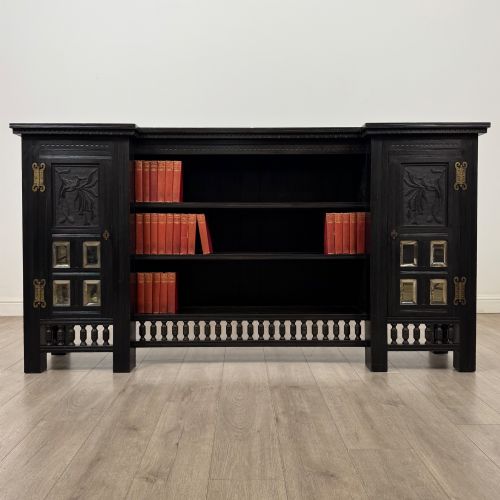
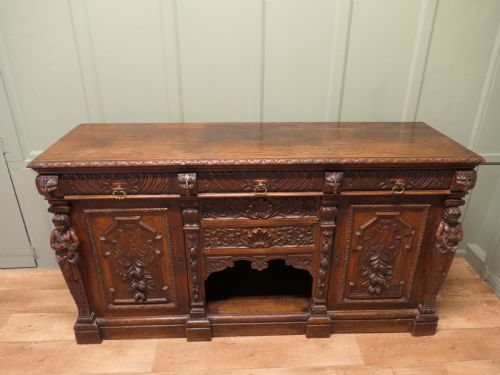
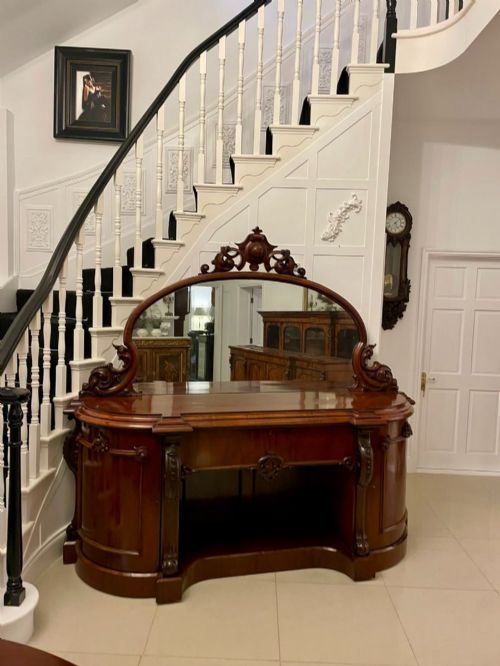
An antique victorian server provides sturdy storage and display surface for dining rooms, typically taking the form of a mahogany or oak sideboard, buffet, or chiffonier.
Antique Victorian Server
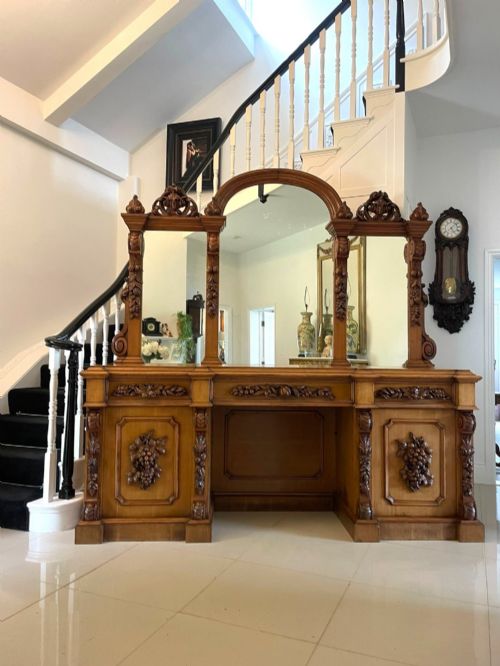
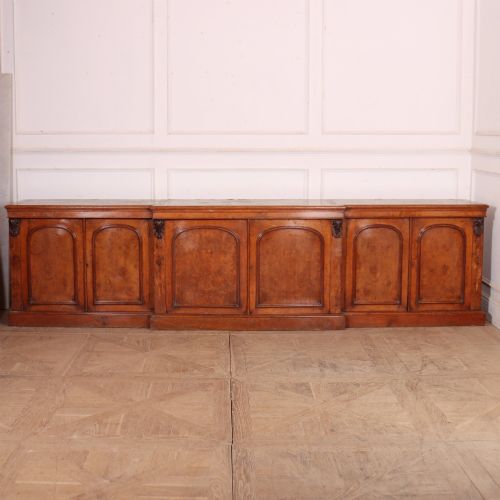
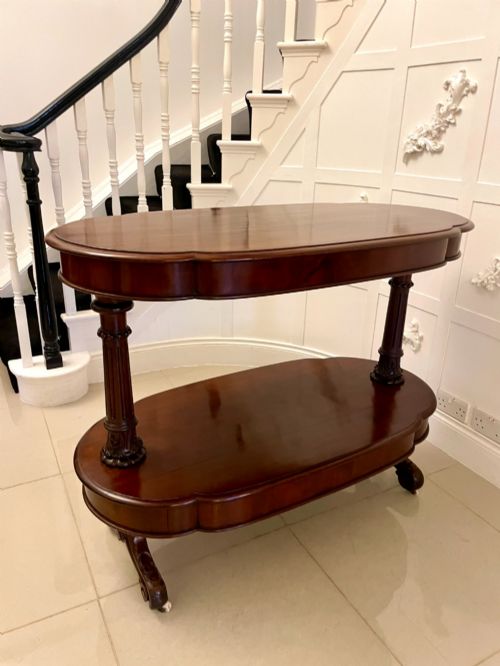
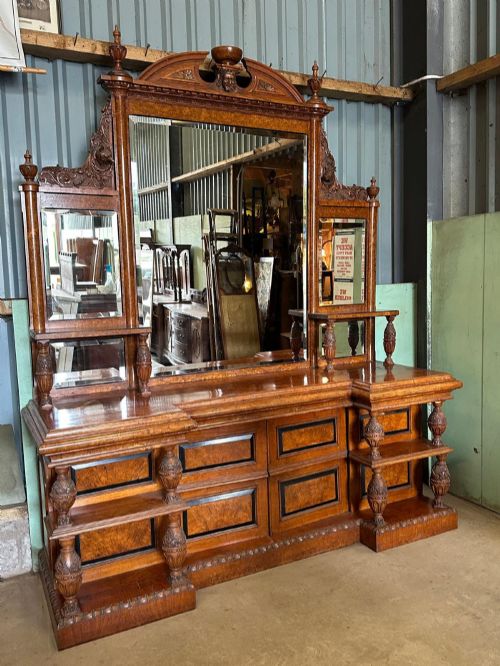
An antique victorian server encompasses a variety of dining and reception room furniture designed for holding food, tableware, and serving dishes during the nineteenth century. Buyers searching this phrase commonly encounter large wooden cupboards, chiffoniers with mirror backs, and tiered dumbwaiters originating from the Victorian period.
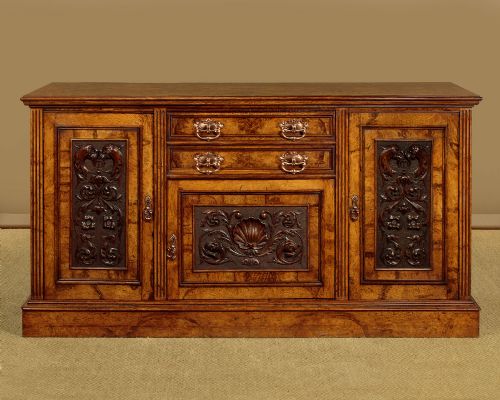
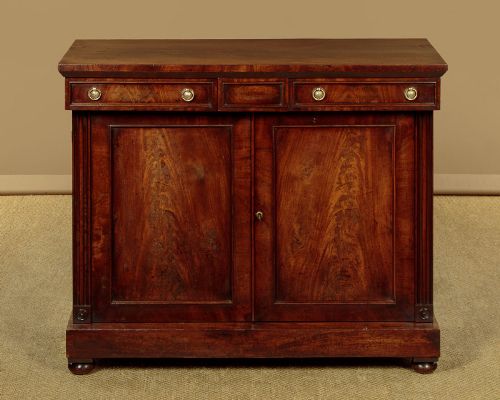
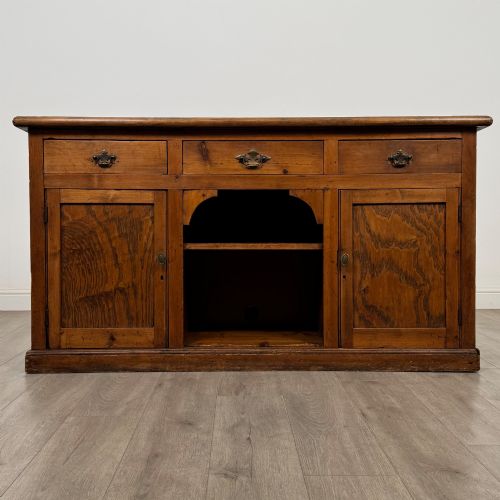
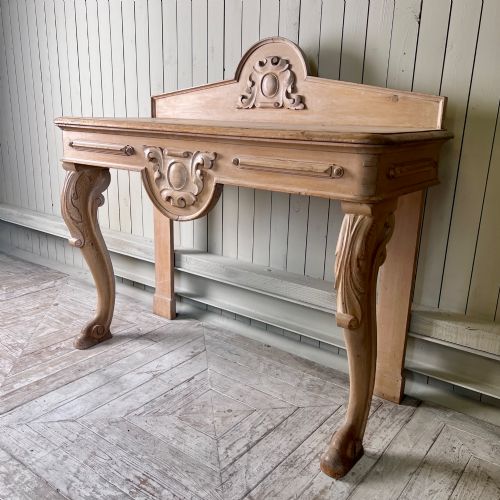
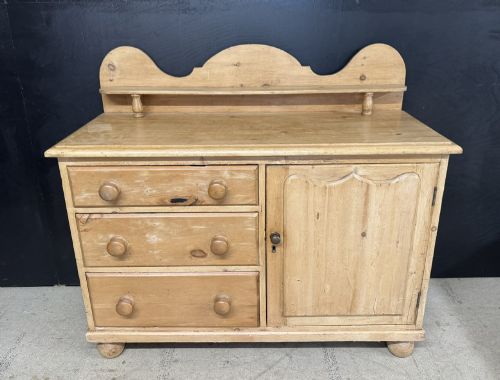
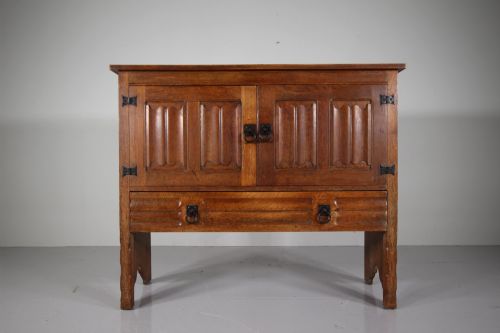
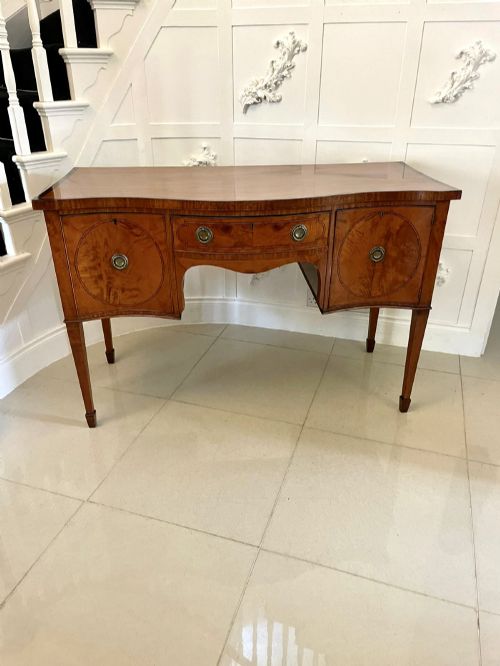
The selection ranges from robust oak pieces carved in the Gothic Revival taste to figured mahogany and burr walnut sideboards with panelled doors. Many examples incorporate drawers and lower cabinets, while smaller console tables and serving pieces offer similar utility in narrower proportions.
Makers and workshops of the era produced these servers to anchor the dining room, often pairing functional storage with decorative marquetry, gallery backs, or marble tops. The selection reflects diverse regional cabinet-making traditions spanning English, Scottish, and Anglo-Indian workshops.
How They Were Made
Cabinet-makers relied heavily on solid timber frameworks, selecting dense hardwoods like mahogany, oak, and walnut to construct the main bodies of servers and sideboard bases. Decorative veneers such as flame mahogany, satinwood, and pollard oak were frequently applied to drawer fronts and door panels to create figured grain patterns.
Structural embellishments relied on hand-carved ornamentation, including floral motifs, scrolling corbels, and architectural mouldings typical of nineteenth-century revival styles. Brass hardware, mirrored glass panels, and marble table tops completed the assembly of higher-status dining furniture.
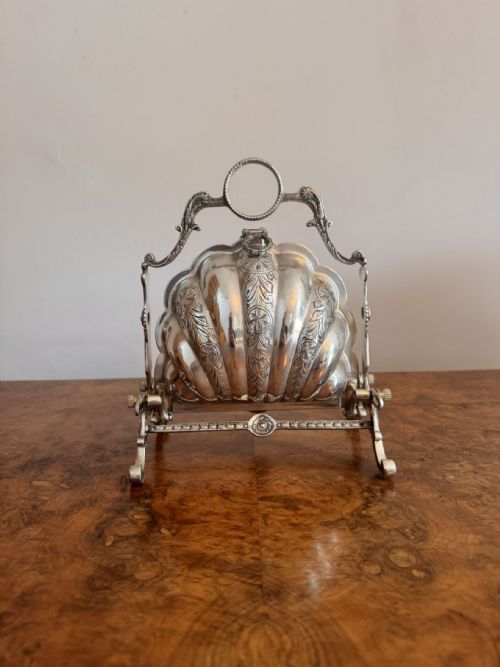
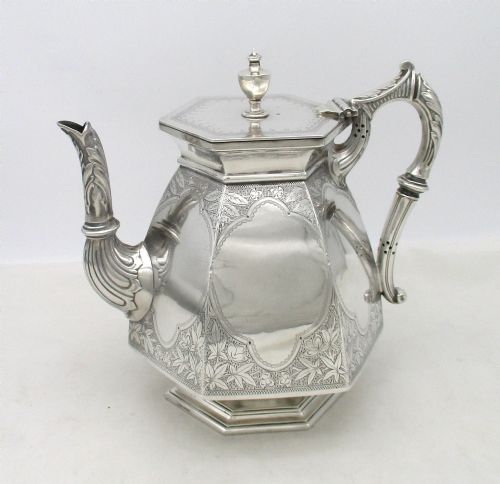
Victorian dining culture required specialised servers for everything from fish slices and asparagus tongs to entire heated copper food warmers.
What Varies in Quality
The choice of timber and veneer grading sets baseline standards, where carefully matched flame mahogany or figured pollard oak distinguishes finer commissions from plain utility pieces. Superior execution shows in the depth and crispness of hand-carved elements rather than shallow machine moulding.
Internal construction details separate workshop tiers, notably the use of solid secondary woods for drawer linings, hand-cut dovetail joints, and robust framing that prevents warping over time. Signed pieces bearing stamps or labels from known cabinet-makers command distinct recognition for documented craftsmanship.
Hewetsons London·Henry Wilkinson·Oetzmann And Co
The Antique Victorian Server Glossary
- Chiffonier
- A low Victorian cupboard or sideboard, usually fitted with doors enclosing shelves and frequently surmounted by a mirrored back or superstructure.
- Dumbwaiter
- A multi-tiered serving piece or stand utilised for holding dishes and silverware near the dining table without requiring servant attendance.
- Flame mahogany
- A veneer cut from the fork of the mahogany tree, producing a distinctive flickering flame-like pattern prized by nineteenth-century cabinet-makers.
- Gallery back
- A raised wooden or brass rail attached to the rear edge of a serving table or sideboard to prevent items from sliding off.
- Marquetry
- The art of applying pieces of veneer to a structural structure to form decorative patterns and pictorial designs.
Antique Victorian Server: Frequently Asked Questions
What is an antique victorian server used for?
These pieces served primarily in nineteenth-century dining rooms to hold serving dishes, cutlery, and glassware during meals. They functioned as supplementary workspace for hosts before fitted dining room cabinetry became standard.
Today, they adapt readily to modern interiors as sideboards for media storage, hallway credenzas, or dining room display surfaces.
How do I identify a Victorian server?
Look for characteristic nineteenth-century proportions, deep timber tones, and traditional joinery such as hand-cut dovetails inside drawers. Common stylistic markers include Gothic Revival carvings, burr walnut veneers, and mirrored splashbacks.
Dates generally fall between the accession of Queen Victoria in 1837 and the turn of the twentieth century, often reflected in the registration marks or maker stamps.
What woods were used for servers?
Mahogany remained the dominant timber throughout the Victorian era, frequently utilised in solid form or as flame veneers. Oak appeared widely in Gothic Revival and country pieces, alongside walnut, satinwood, and pine.
Cabinets often combined a primary display wood with secondary timbers like pine or oak for interior framing and drawer construction.
Where should I place a server?
Servers traditionally anchor the main wall of a dining room, positioned opposite or adjacent to the dining table for easy access during meals. Their narrow depth also suits hallways, drawing rooms, and large landings.
Ensure adequate floor space for opening cupboard doors and drawers, and keep wooden surfaces away from direct heat sources to protect historic finishes.