


Edwardian Tier Buffet
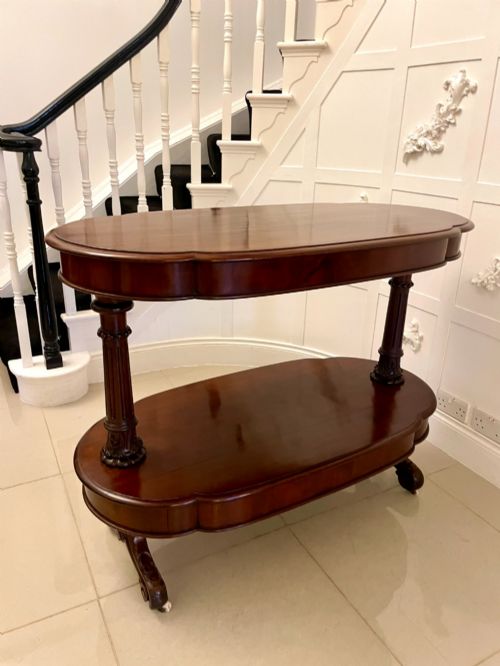
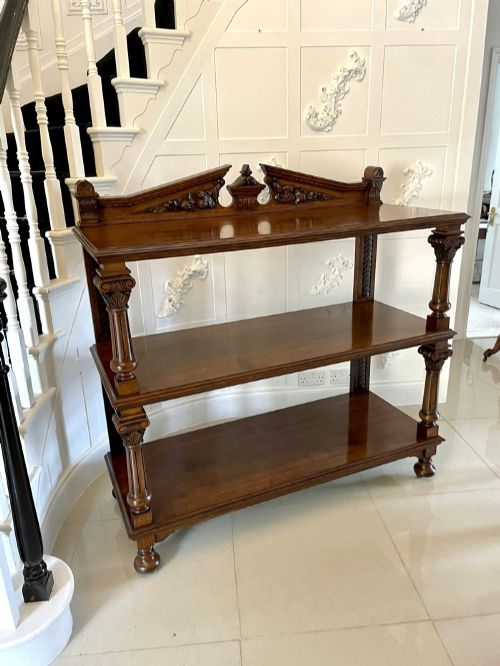
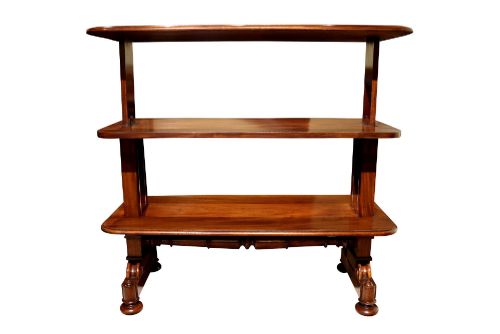
These edwardian tier buffet pieces are tiered serving furniture designed for dining rooms, offering practical tiered surfaces and substantial storage for heavy tableware.
Edwardian Tier Buffet
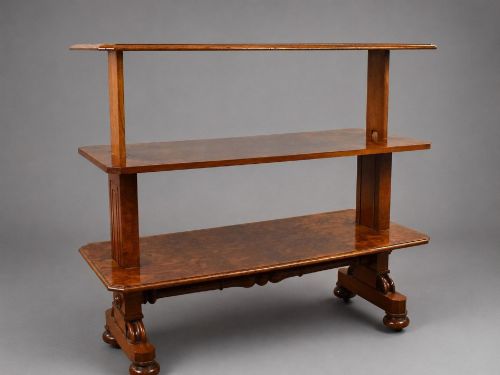
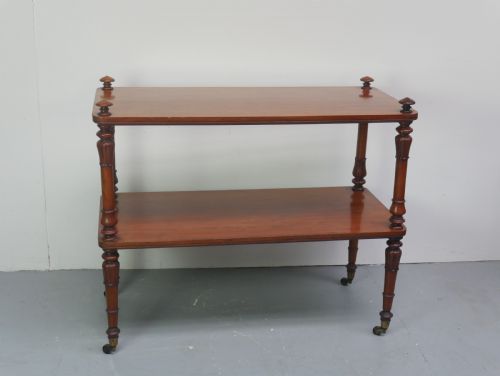
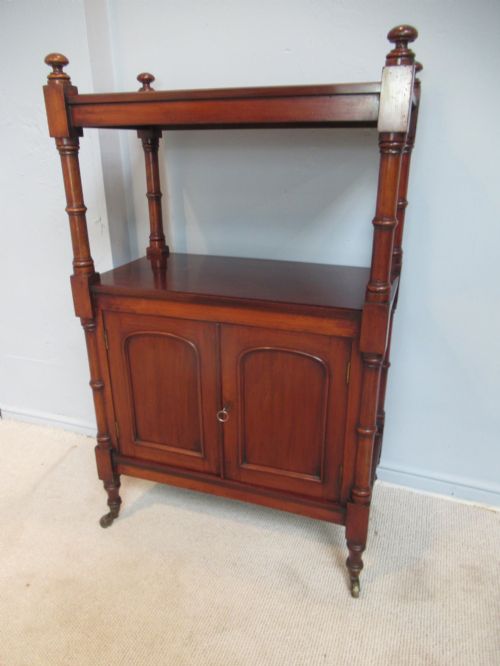
When searching for an edwardian tier buffet, buyers encounter multi-tiered serving tables, dumbwaiters, and sideboards originating from the nineteenth and early twentieth centuries. These pieces span multiple styles including Victorian, William IV, and Georgian influences alongside Edwardian examples.
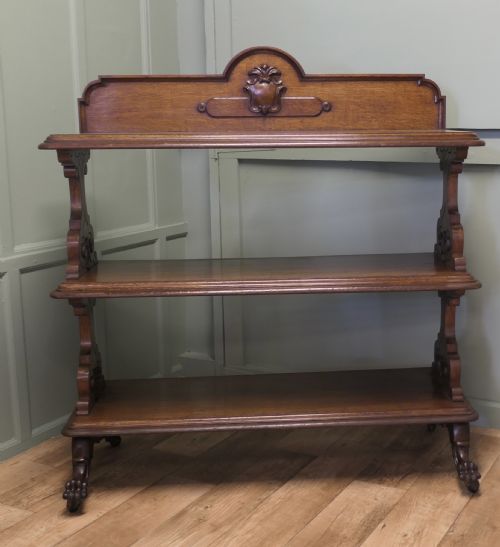
The form typically comprises stacked wooden shelves supported by turned or carved columns, sometimes featuring adjustable mechanisms, folding actions, or lower cupboards. Buyers most frequently meet mahogany, oak, and walnut variations equipped with shelves for serving and display.
How they were made
Cabinet makers constructed these pieces primarily from solid and veneered timbers such as mahogany, oak, walnut, burr walnut, and pollard oak, occasionally incorporating brass hardware and ceramic elements. Timber selection dictated both the visual grain pattern and the structural strength required to support heavy tiered shelves.
Joinery techniques included mortise and tenon framing for upright supports, alongside specialised mechanical fittings for telescopic shafts, rising tiers, and folding joints. Carved ornamentation, such as the notable Green Man motifs and Gothic Revival details, was executed by hand directly into the dense hardwood structures.
Keep an eye out for carved wooden Green Man faces hiding among the foliage on the oak buffet structures.
What varies in quality
Quality separates pieces through the selection of timber figures, such as highly figured burr walnut or pollard oak veneers against plain utility boards. Superior examples exhibit crisp, deep hand-carving on columns and friezes rather than shallow or mechanical decoration.
The sophistication of internal mechanisms defines the upper tier of production, particularly smooth action in telescopic columns, rise and fall shelves, and folding hinges. Structural integrity in the joints and the original patination of the polished timber finish further separate standard items from finer workshops.
The Edwardian Tier Buffet Glossary
- Dumbwaiter
- A multi-tiered freestanding serving piece used in dining rooms to hold dishes, food, and beverages without requiring servant attendance. These items often feature rotating or stacked circular shelves.
- Etagere
- A piece of furniture consisting of a set of open shelves for displaying small objects or serving items. The form relies on slender vertical supports.
- Pollard oak
- Oak timber taken from trees that have been pollarded, producing a heavily knotted and decorative grain pattern. Cabinet makers valued this wood for high-status veneered panels.
- Telescopic
- A descriptor for adjustable vertical shafts allowing tiers to be raised or lowered via central screw or ratchet mechanisms. This engineering allowed versatile serving heights.
Edwardian Tier Buffet: Frequently Asked Questions
What is an edwardian tier buffet used for?
These pieces served historically in dining rooms for holding extra dishes, serving food, and displaying silverware or glassware during large meals.
Today, buyers use them in dining spaces, hallways, or living rooms as display surfaces, bookcase trolleys, or practical side serving tables.
What woods were commonly used?
Makers utilised dense hardwoods including mahogany, oak, and walnut as the primary structural and visual materials for these tiered serving pieces.
Finer examples frequently incorporated decorative veneers such as burr walnut or pollard oak to add distinctive grain figures to the surfaces.
Are folding tier buffets stable?
Folding tier buffets utilise hinged brackets and pivoting joints designed to allow the shelves to collapse flat for storage when not in use.
While they provide convenient flexibility, their stability relies on tight hinge pins and secure locking mechanisms when fully extended.