
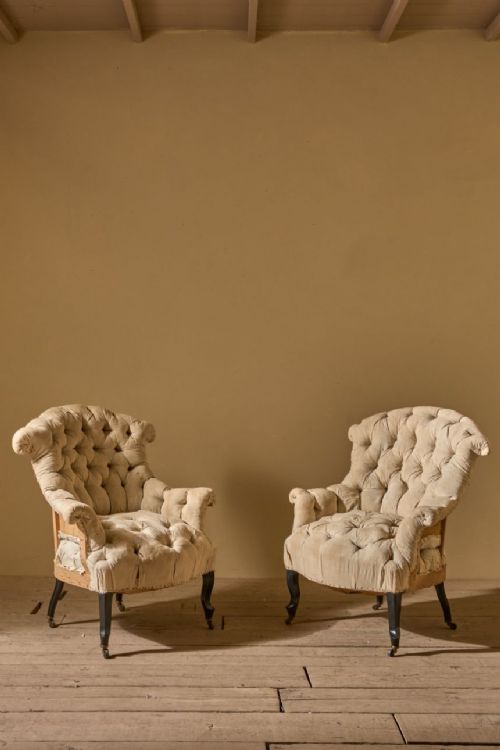
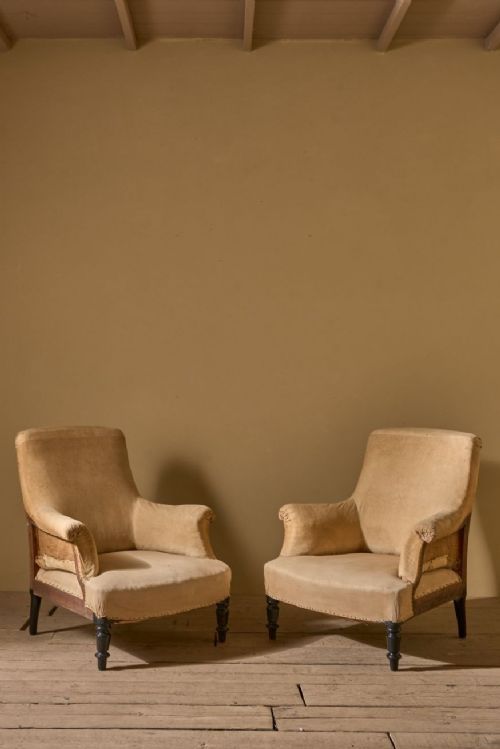
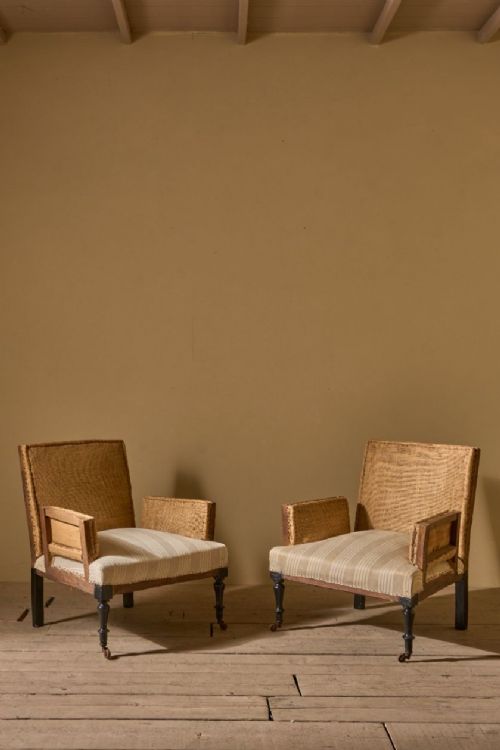
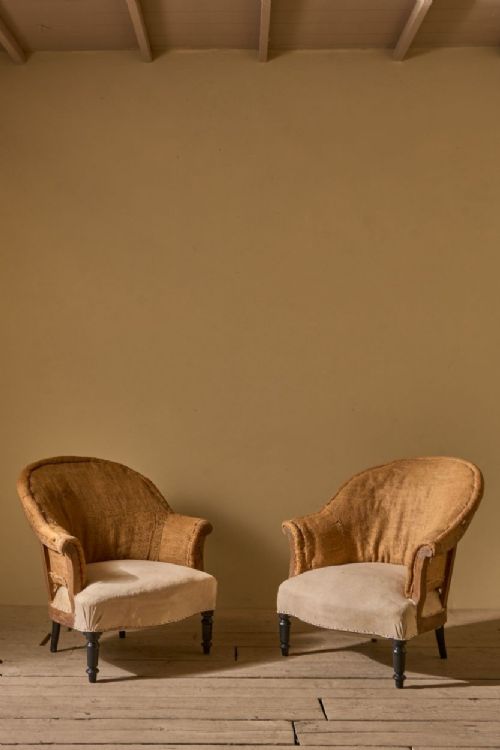

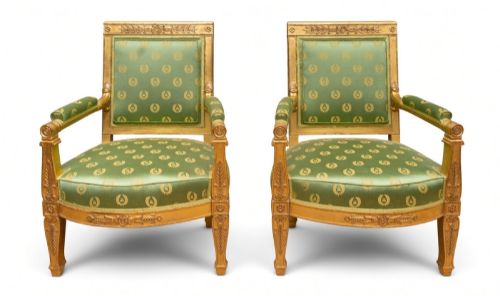
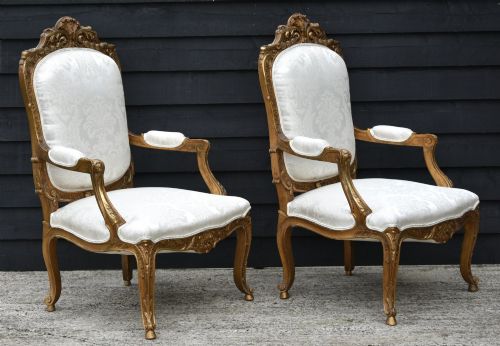
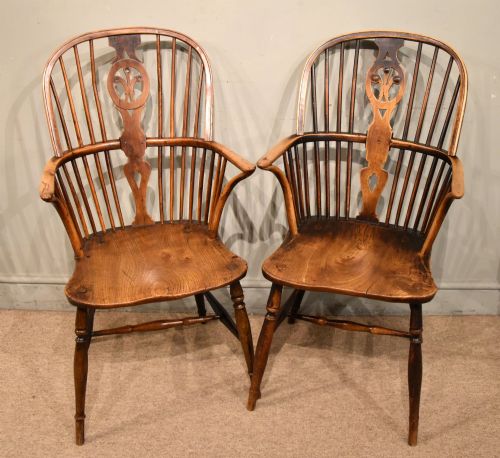
Pair 19th Century Armchairs
When furnishing a reception room or library, a pair 19th century armchairs brings architectural presence and balanced seating to the space.
Pair 19th Century Armchairs
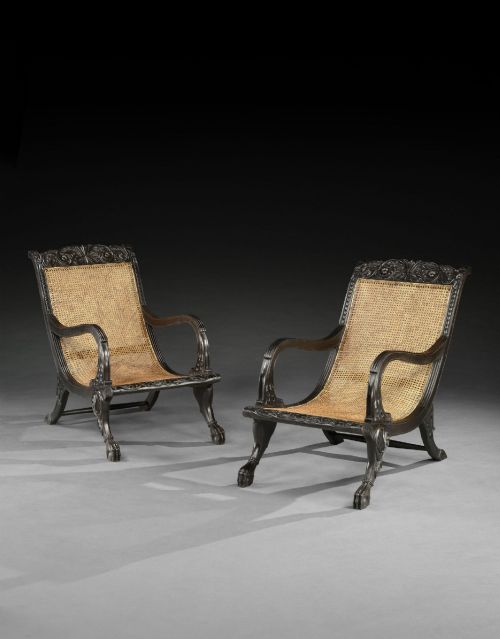
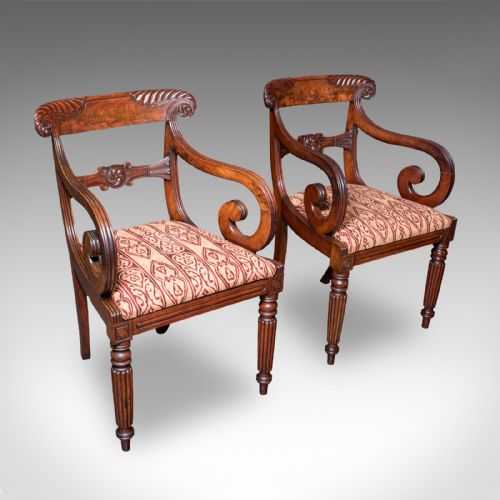
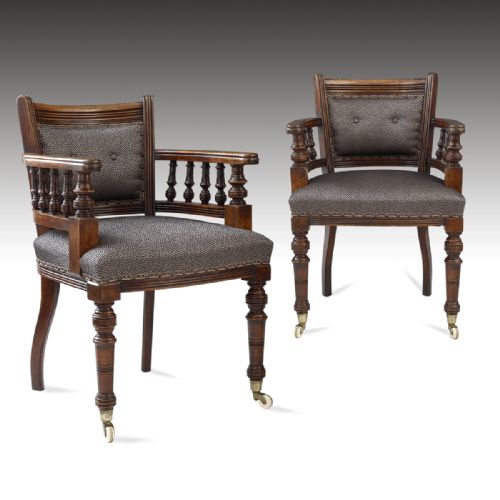
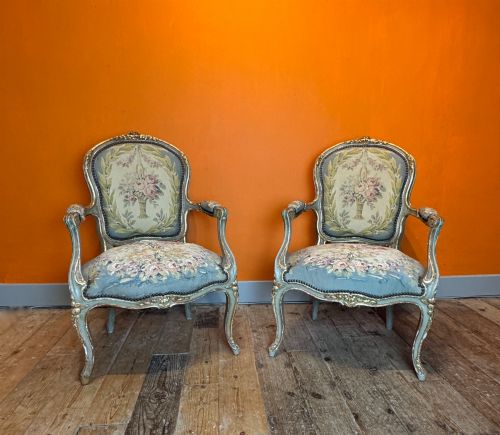
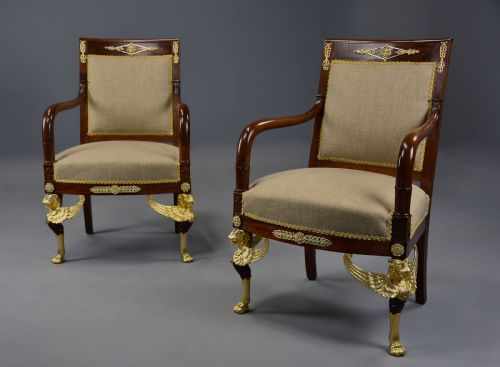
A pair 19th century armchairs encompasses seating built across the Victorian, Regency, and Georgian periods, spanning dining, salon, library, and easy chair configurations. These matching duos frequently emerge from English workshops or French ateliers, displaying stylistic markers from Gothic Revival to Louis XVI and Empire revivals.
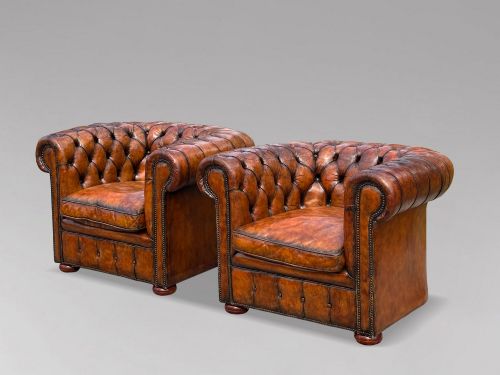
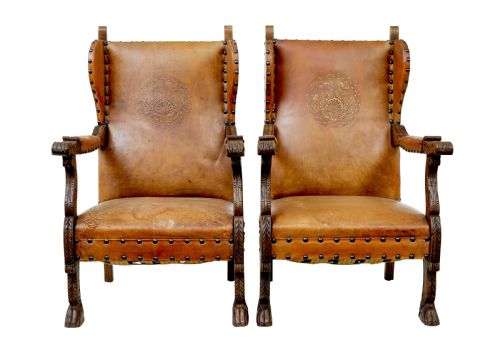
The selection ranges from robust oak Windsor and Captain's chairs to carved walnut library seats, upholstered Chesterfield club chairs, and giltwood salon furniture. Buyers encounter formal French gilt armchairs alongside sturdy English mahogany desk chairs and low bedroom models.
Makers often adapted historical designs for contemporary comfort, producing button-backed loungers, reclining armchairs, and corner seating suited to domestic interiors of the era.
Materials and Construction
Cabinetmakers utilised dense timbers such as mahogany, walnut, oak, elm, and exotic woods like ebony, goncalo alves, and satinwood to construct robust frames. These wooden elements were frequently carved, painted, parcel-gilt, or ebonised to achieve the desired aesthetic.
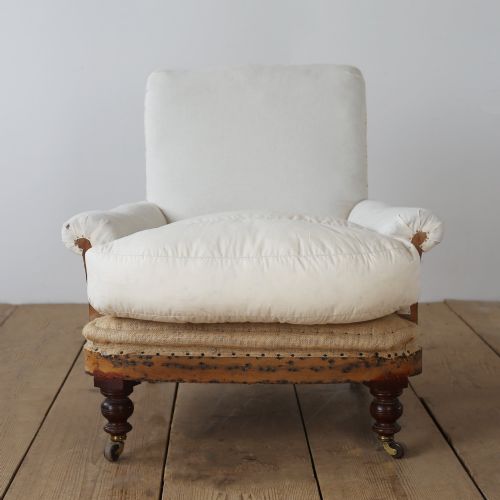
Upholstery techniques combined traditional stuffing with durable covers in leather, linen, fabric, embossed leather, and tapestry. Structural joinery relied on turned spindles, pegged joints, and carved arm supports integrated into the main frame.
Listings feature woods spanning mahogany, walnut, oak, elm, satinwood, and exotic ebony.
Evaluating the Seating
Quality rests upon the crispness of the timber carving, the integrity of the frame construction, and the preservation of original finishes or patinas. Superior examples maintain structural tightness in the joints and retain their period upholstery materials or appropriate historical replacements.
The distinction between standard commercial seating and exceptional salon or throne chairs lies in the depth of hand-carving, the selection of figured or exotic woods, and the harmony of the matched pair.
Howard and Sons·Jacob-Desmalter·John Gee
The Pair 19th Century Armchairs Glossary
- Fauteuil
- An open-framed upholstered armchair originating in France, typically featuring exposed carved wooden armrests and legs.
- Giltwood
- Timber treated with a thin layer of gold leaf or gesso, commonly found on formal salon and throne chairs.
- Windsor
- A traditional wooden chair constructed with a solid saddle-seat into which turned legs and back spindles are wedged.
- Gothic Revival
- A nineteenth-century design movement incorporating medieval architectural motifs such as pointed arches and tracery into furniture.
- Patina
- The surface sheen and mellowing developed by wood and leather over decades of handling and use.
Pair 19th Century Armchairs: Frequently Asked Questions
How do I spot a matched pair?
Examine the timber grain, carving depth, and exact dimensions to confirm the two chairs were built together.
Minor variations in hand-carved details or upholstery wear help distinguish genuine pairs from later assembled matches.
Where were these chairs used?
Original placements varied from formal reception rooms and drawing rooms to libraries, bedrooms, and dining spaces.
Library and desk chairs offered support for reading, while gilded salon chairs functioned as decorative seating.
How do I care for leather upholstery?
Maintain historical leather by avoiding direct sunlight and applying appropriate conservation conditioning to prevent cracking.
Original embossed or dyed surfaces require gentle dusting rather than liquid cleaning agents.
Are nineteenth-century chairs comfortable?
Comfort levels depend on the internal stuffing and springing, which range from firm horsehair padding to deep buttoned upholstery.
Library and club variants were built specifically for extended lounging, whereas formal salon chairs prioritise upright posture.