


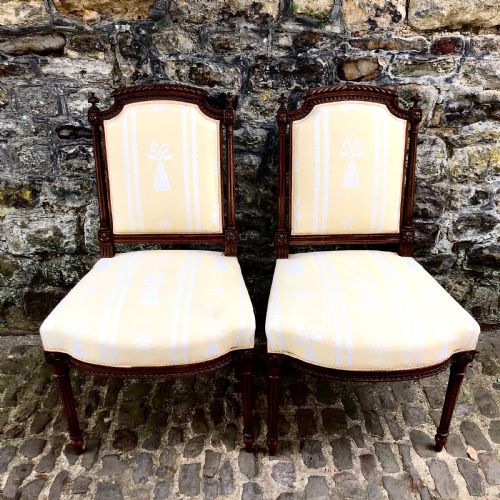

French Empire Revival Chairs
French empire revival chairs bring classical grandeur and striking ormolu mounts straight into a modern interior.
French Empire Revival Chairs
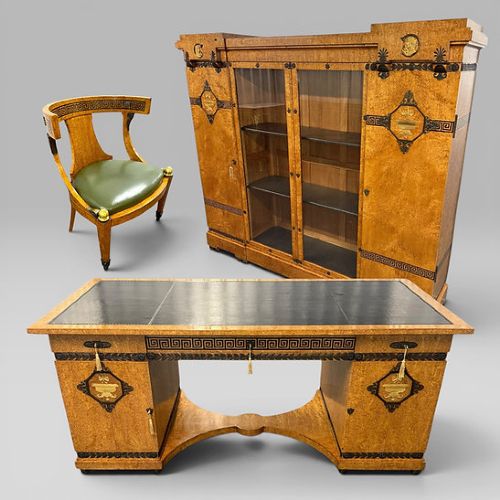
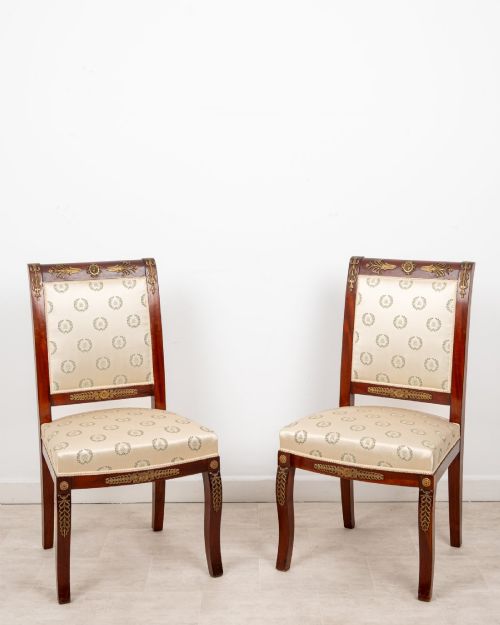
French empire revival chairs are seated furniture pieces echoing classical antiquity through formal lines and substantial proportions. When you search for french empire revival chairs, you encounter side chairs, armchairs, office sets, and parlour suites dating from the nineteenth and early twentieth centuries.
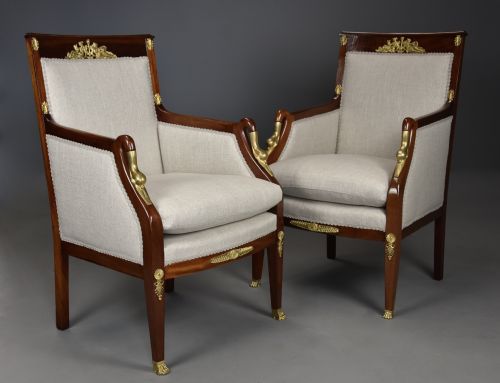
Mahogany and walnut form the primary timbers of these pieces, frequently accompanied by decorative pairings of side chairs and tub armchairs. Most examples span the nineteenth century up to nineteen-twenty, encompassing French neoclaseical, regency revival, and second empire stylistic influences.
The aesthetic draws heavily on monumental architectural motifs, translating grand seating forms into domestic proportions suitable for parlours and studies. These chairs often appear in pairs or larger suites, maintaining a formal presence across diverse periods of revival production.
Materials and Construction
Cabinetmakers constructed these frames using dense hardwoods like mahogany and walnut, providing a stable foundation for intricate carving and heavy mount applications. Wood selection determined the underlying tone and structural integrity of each armchair or side chair.
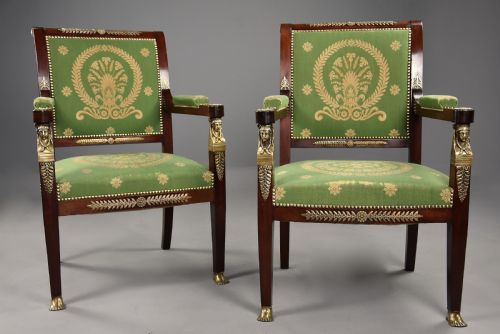
Ormolu and gilt bronze mounts were cast and applied to accentuate structural joints, crest rails, and front legs with classical imagery. Textile, leather, and fabric upholstery finished the seats, securing the interaction between polished timber and metallic ornament.
Some chairs sport mounts so shiny they double as emergency mirrors for hurried guests.
Assessing Quality and Execution
Quality separates pieces through the precision of the timber framing and the crispness of the cast ormolu mounts applied to the surface. Finer examples display deeply chased gilt bronze details that integrate cleanly with the mahogany or walnut structure.
The weight and selection of the primary wood dictate the longevity of the frame, while the upholstery materials reflect the original commission tier. Suites and pairs featuring matching grain patterns and unified decorative schemes generally represent more ambitious workshop production.
Mercier Frères
The French Empire Revival Chairs Glossary
- Ormolu
- Gilded bronze applied as a decorative mount on furniture frames. This technique creates high-contrast metallic highlights against dark mahogany timbers.
- Fauteuil
- An open-arm armchair featuring upholstered backrests and arm pads with exposed wooden framing. This form prioritises formal reception use.
- Second Empire
- A nineteenth-century design period associated with the reign of Napoleon the Third. It embraces eclectic historical revivals including grand imperial styling.
- Regency Revival
- A stylistic movement drawing upon early nineteenth-century British and continental classical designs. It shares closely related neoclassical motifs with empire revival furniture.
- Tub Armchair
- A rounded seating form where the backrest curves continuously into low arms. This configuration offers enclosed comfort while retaining strict classical symmetry.
French Empire Revival Chairs: Frequently Asked Questions
How do I spot an original empire revival chair?
Examine the timber construction beneath the upholstery and look for period-appropriate joinery methods typical of the nineteenth century.
Check the quality of the ormolu mounts to ensure they are cast bronze rather than modern plated substitutes.
Where should I place these chairs at home?
These seating pieces suit formal living rooms, studies, or hallways where their architectural presence can anchor the room.
Pair an armchair with a matching desk or position side chairs against a wall to highlight their classical silhouettes.
Are these chairs comfortable for daily use?
Most empire revival chairs feature upright, supportive backs designed for formal posture rather than lounging.
Upholstered variants provide adequate seating for dining or parlour use when paired with appropriate table heights.
What timber types are most common?
Mahogany and walnut dominate the surviving examples, selected for their deep colouration and structural density.
Secondary woods often support these primary timbers within hidden frame components and interior joinery.