
Button Back Armchair Pair
A button back armchair pair brings matched comfort and formal symmetry into a room, spanning grand Victorian library seats and French salon pieces.
Button Back Armchair Pair
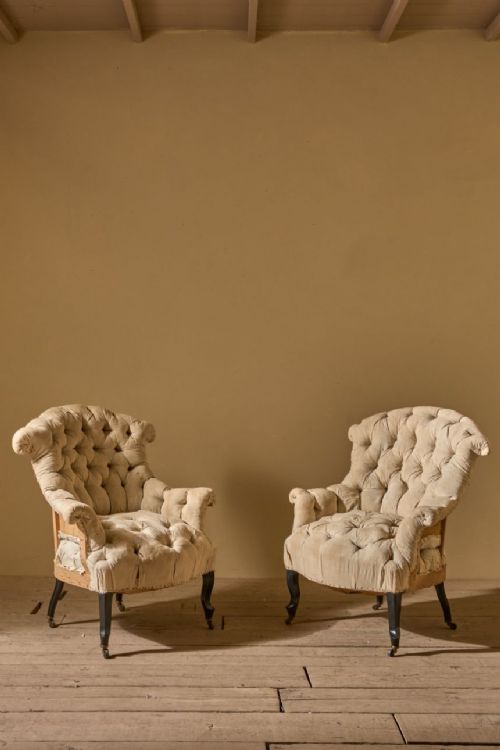
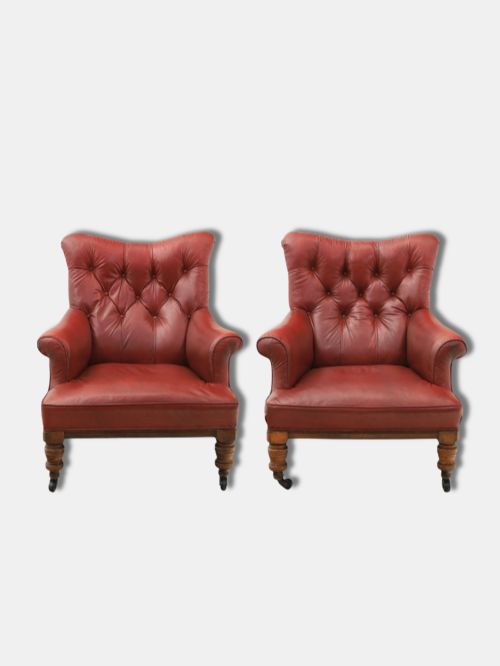
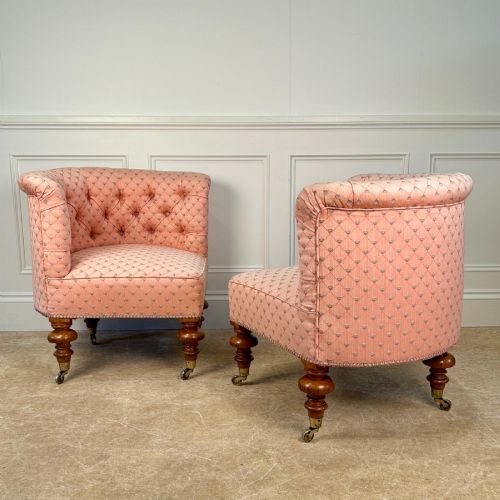
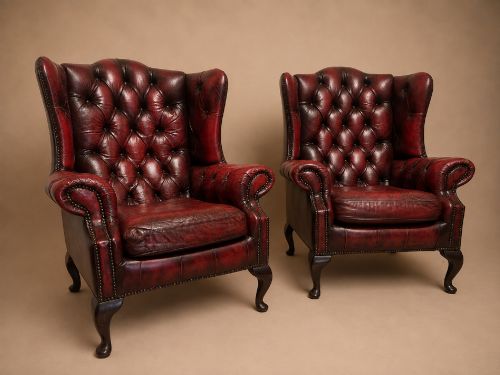
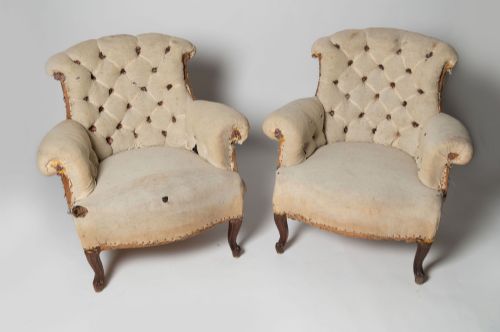
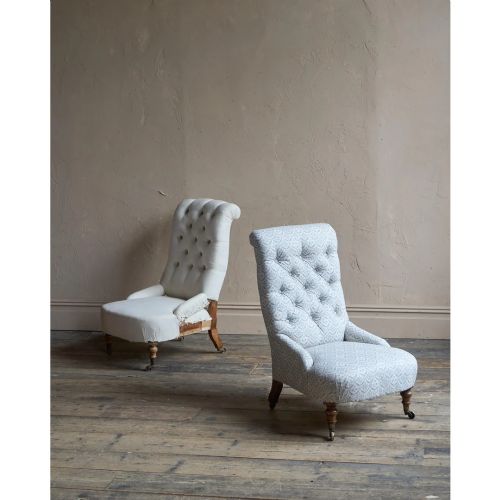
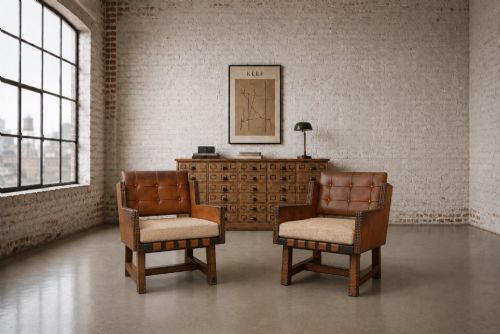
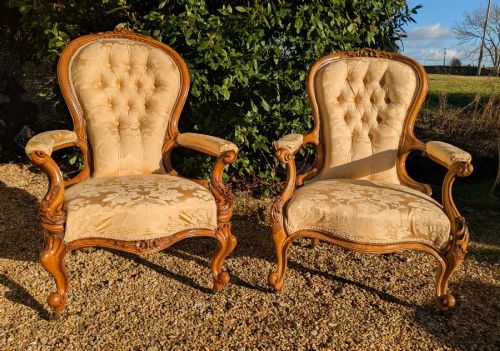
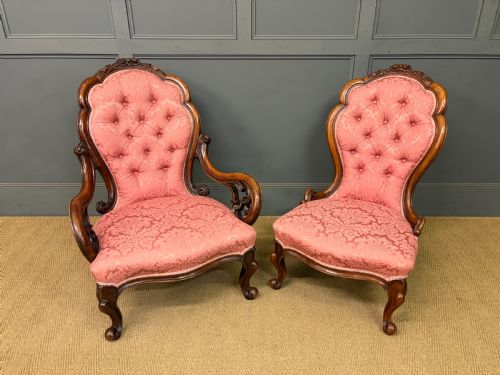
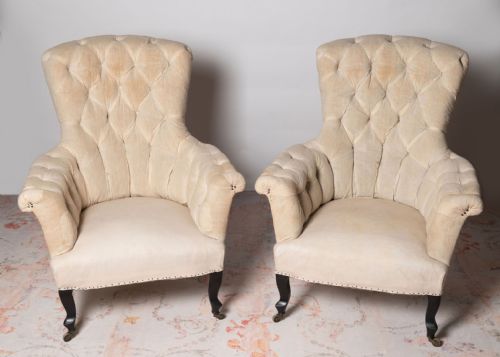
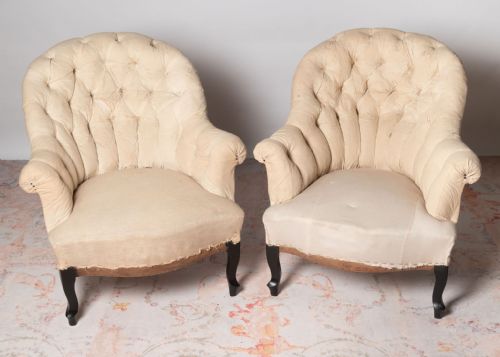
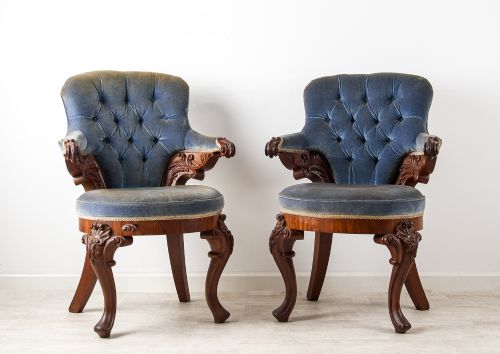
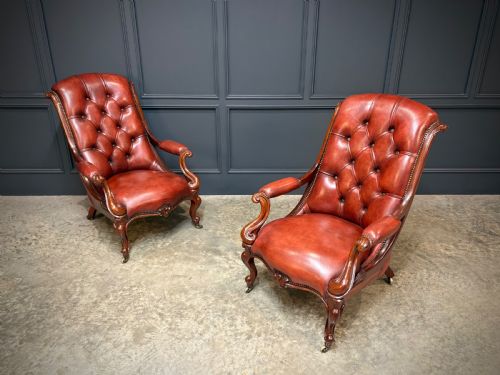
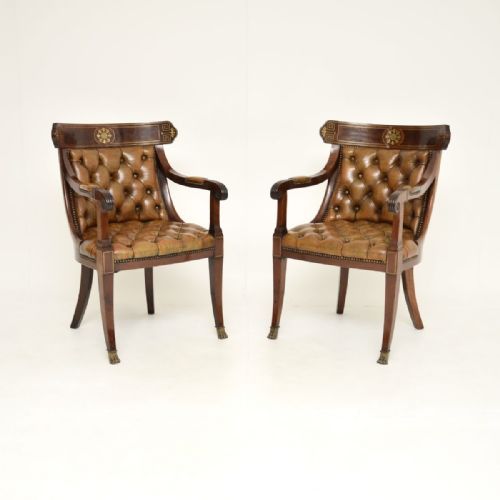
A button back armchair pair unites two matching seats defined by deep tufting across the upholstered backrest, creating a formal yet inviting presence. When searching for this phrase, buyers encounter everything from compact Victorian nursing and bedroom chairs to substantial library armchairs and French Napoleon III salon seating.
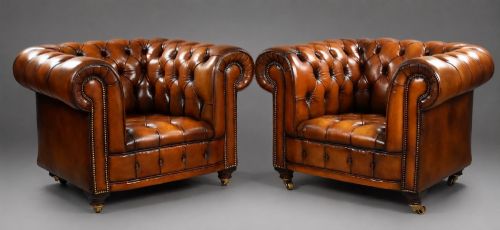
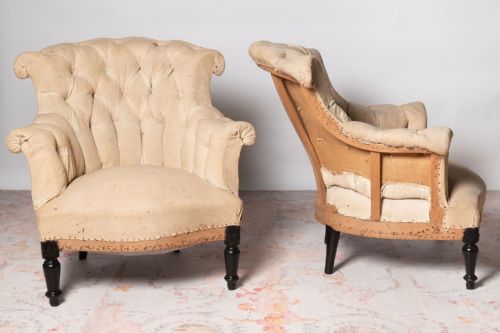
The selection ranges across the nineteenth century into the early twentieth century, featuring distinct regional forms such as French channel-curved frames, English Chesterfield wing chairs, and low-slung club chairs. Matched pairs are particularly sought after for balancing a fireplace or anchoring opposing corners of a drawing room.
How they were made
Makers utilised dense timbers for the underlying frames, selecting mahogany, walnut, rosewood, oak, and other structural woods to support the substantial weight of springs and padding. Visible show-wood frames often display intricate carving, barley twist turnings, or gilded finishes, particularly on French pieces.
Upholstery techniques relied on deep buttoning, where individual tufts are pulled tight and secured to create geometric diamond patterns that hold the padding firmly in shape. Covering materials span supple leather, oxblood Rexine, rich velvet, damask, and woven fabric fastened with traditional tacks.
What varies in quality
Quality rests in the architectural integrity of the wooden frame and the precision of the joinery beneath the upholstery. Finer examples exhibit hand-carved details, robust show-wood structures, and balanced proportions that maintain stability across both chairs in the pair.
The calibre of the upholstery work distinguishes standard production from exceptional craftsmanship. Uniformity in the button tufting, the resilience of the internal springing, and the selection of premium leather or heavy textiles separate everyday seating from pieces originating from renowned workshops.
Howard and Sons·Gillows·Holland and Sons
The Button Back Armchair Pair Glossary
- Buttoning
- The technique of indenting upholstery at regular intervals using cord or thread tied to secure the internal stuffing. This creates the characteristic tufted surface seen on nineteenth-century seating.
- Show-wood
- Exposed wooden framing around the back and arms of an upholstered chair. Craftsmen polished or carved this timber to display the grain and decorative style.
- Fauteuil
- An open-armed French armchair with padded armrests and an exposed wooden frame. These chairs typically date from the nineteenth century and emphasise decorative elegance.
- Rexine
- A durable, leather-cloth fabric introduced in the early twentieth century. It was frequently utilised as a practical upholstery alternative on club and Chesterfield armchairs.
- Spoon-back
- An upholstered chair back shaped like the bowl of a spoon, featuring a concave depression. This design gained popularity during the Victorian era for ergonomic support.
Button Back Armchair Pair: Frequently Asked Questions
How do I match a pair?
Authentic pairs share identical frame dimensions, timber types, and upholstery layouts reflecting the original maker's hand.
Differences in wood grain or minor variations in carving indicate pieces that were matched together later rather than built as a pair.
Where should I place them?
These armchairs suit formal drawing rooms, libraries, and master bedrooms where symmetrical placement creates visual balance.
Positioning them opposite a fireplace or flanking a central window allows both chairs to function as a cohesive seating group.
How do I date the chairs?
Dating relies on identifying the structural timber, leg turning styles, and upholstery methods characteristic of specific decades.
Victorian pieces often feature heavy walnut or mahogany frames with deep tufting, while Edwardian and later examples introduce lighter woods and alternative coverings like Rexine.
Are leather or fabric better?
Leather provides durability and a traditional library aesthetic that develops a rich patina over decades of use.
Fabric and velvet options introduce softer textures and wider colour palettes suited to intimate sitting rooms and bedrooms.