
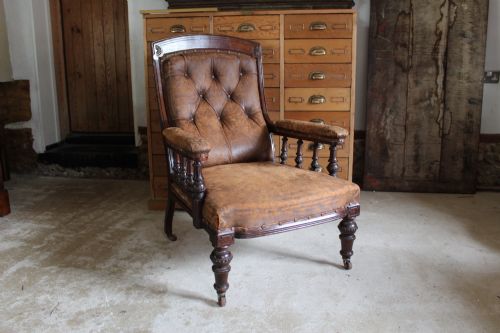


Walnut Gentleman Armchair
The walnut gentleman armchair offers generous proportions and rich timber tones, making it a foundational seating choice for a period interior.
Walnut Gentleman Armchair
A walnut gentleman armchair is a sturdy, upholstered seat designed with proportions suited to male occupants of the nineteenth century. These pieces appear primarily in Victorian iterations, spanning the middle and late decades of that era.
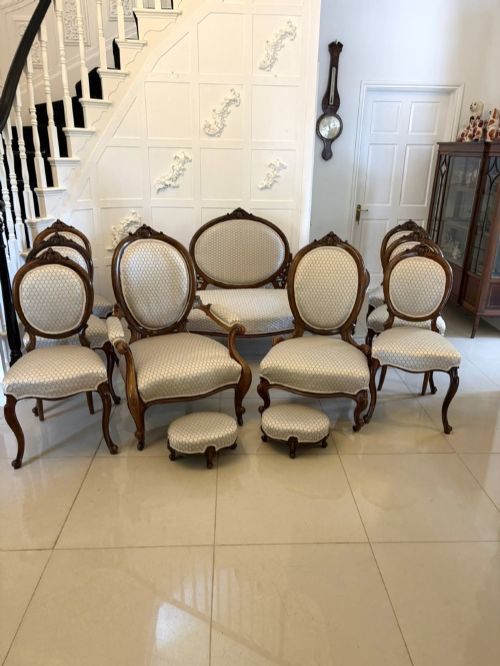
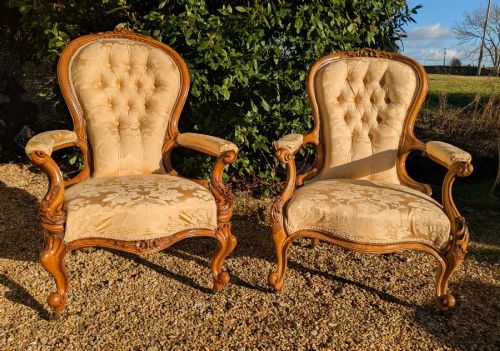
Buyers will most frequently encounter nineteenth century examples featuring open arms, spoon backs, and carved show wood frames. The selection includes individual fireside chairs alongside matched pairs intended for drawing room suites.
Origins stretch across the Victorian period, with occasional pieces adopting Edwardian refinement or earlier seventeenth century influences. Forms range from low parlour chairs to library seating with leather upholstery.
Materials and Construction
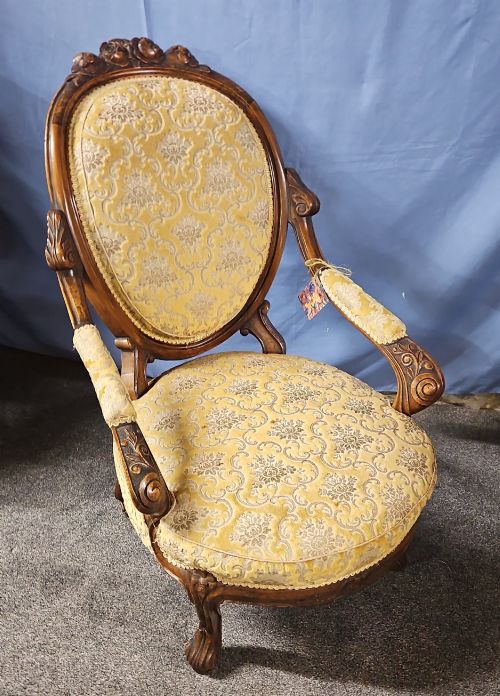
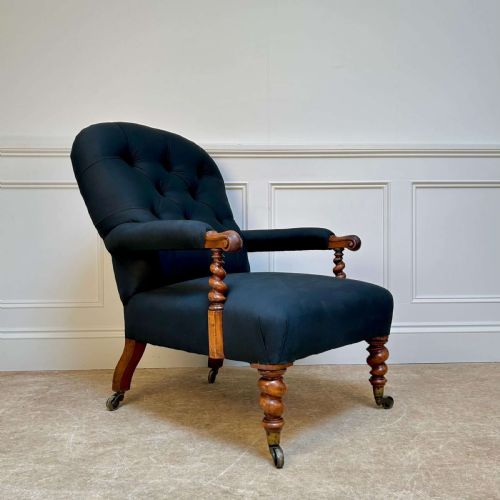
Makers utilised solid walnut for the show wood frames, taking advantage of the timber's dark grain and ability to hold crisp carved detail. Frames often incorporate turned legs and scrolled supports joined securely to bear daily weight.
Upholstery techniques relied on textile covers such as velvet or buttoned fabric stretched over internal padding. Brass tacks and ceramic castors frequently complete the lower framework of these nineteenth century seats.
Listings span from the seventeenth century through Victorian and Edwardian eras, predominantly featuring walnut, velvet, and leather.
Craftsmanship and Proportion
The distinction between standard examples and superior pieces rests upon the depth of the hand carving on the walnut frame. Crisp floral motifs and well-defined scrollwork indicate skilled workmanship in the workshop.
Proportion and structural integrity also dictate distinction, where balanced arm heights and firm joinery elevate a chair above simpler commercial output. Original show wood frames retaining their deep polish demonstrate better preservation over time.
Hindley & Sons
The Walnut Gentleman Armchair Glossary
- Spoon back
- An upholstered chair back shaped in a concave oval resembling the bowl of a spoon. This design emerged during the Victorian period to fit the human spine.
- Show wood
- Timber framing left visible around the upholstered portions of a chair. It allows the grain and carving of the walnut to display fully.
- Button back
- An upholstery style where depressions are formed in the padding by stitching buttons at regular intervals. This method secures the filling and creates a tufted texture.
- Open armchair
- A seat featuring un-upholstered wooden arms attached to the frame. These allow more room for bulky nineteenth century garments.
- Salon suite
- A matched set of seating furniture intended for a formal drawing room. They share identical wood framing and textile upholstery.
Walnut Gentleman Armchair: Frequently Asked Questions
Were these chairs used in pairs?
Makers often produced gentleman armchairs alongside slightly smaller companion chairs intended for female occupants. These pairs formed part of larger drawing room suites.
Today, single chairs appear frequently, though matched pairs remain available for formal seating arrangements.
What fabric was used originally?
Original upholstery frequently consisted of velvet, patterned textile, or leather depending on the intended room. Libraries often received durable leather, while drawing rooms utilised plush buttoned fabrics.
Most surviving pieces have been re-upholstered over time to ensure structural integrity and clean presentation.
How do I date a walnut armchair?
Dating relies on stylistic shifts within the Victorian period, moving from early carved walnut frames to later Edwardian refinements. Details like turned legs and buttoned upholstery help narrow the decade of production.
Construction methods inside the frame further assist in separating mid-nineteenth century work from later revivals.