
Walnut Library Armchair
When you seek a walnut library armchair, you are looking at substantial timber seating built for reading rooms and studies during the nineteenth and early twentieth centuries.

Walnut Library Armchair
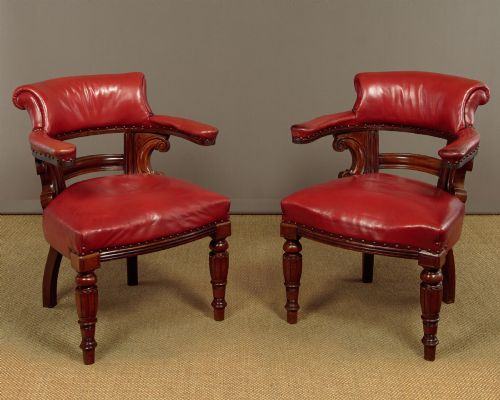
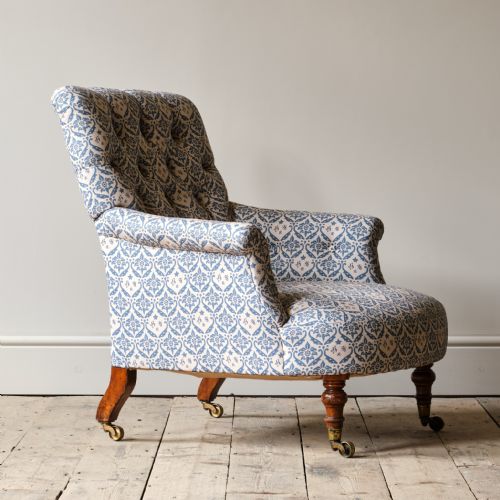
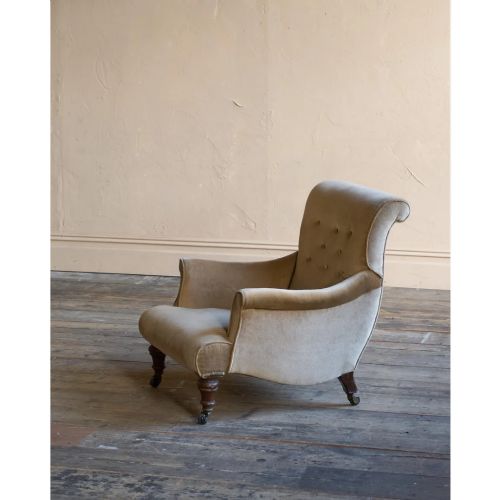
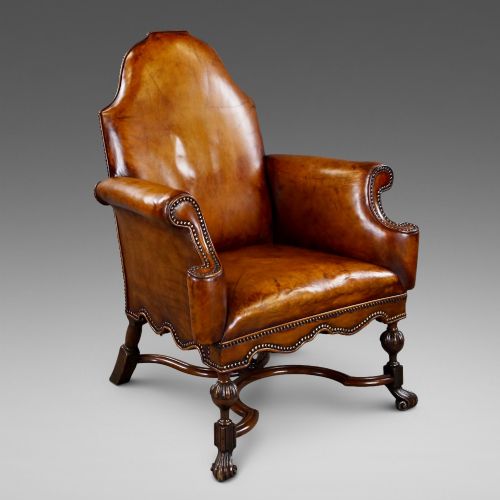
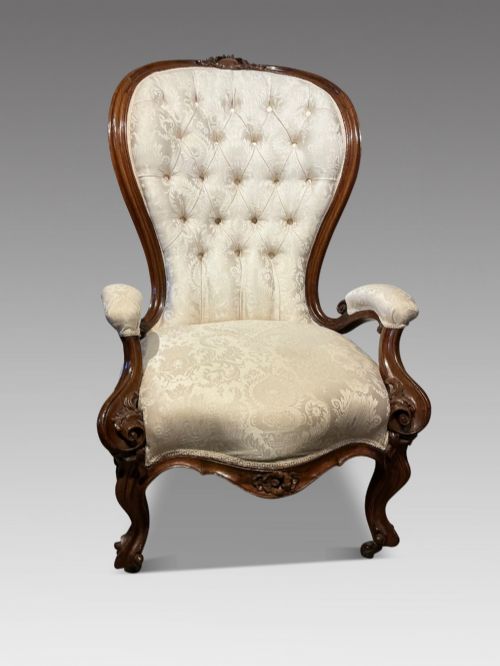
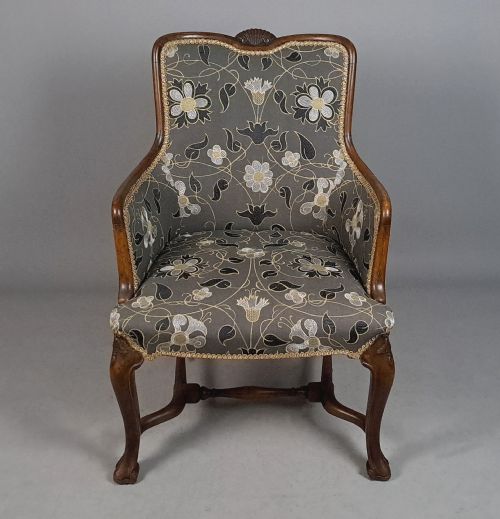
A walnut library armchair is a sturdy, upholstered seat designed for private studies, libraries, and reading rooms, combining heavy timber framing with deep padding. These pieces emerge predominantly from the Victorian and Edwardian eras, alongside revivals spanning the eighteenth through to the early twentieth century.
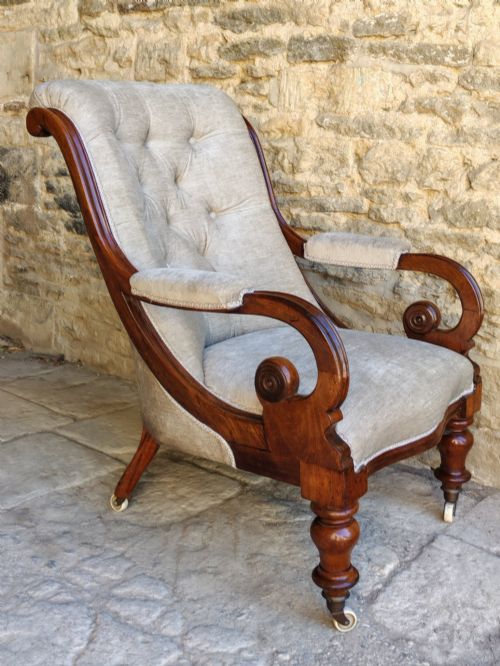
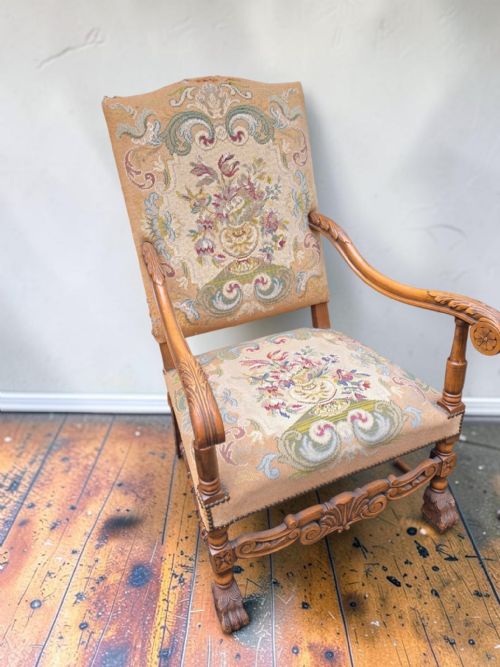
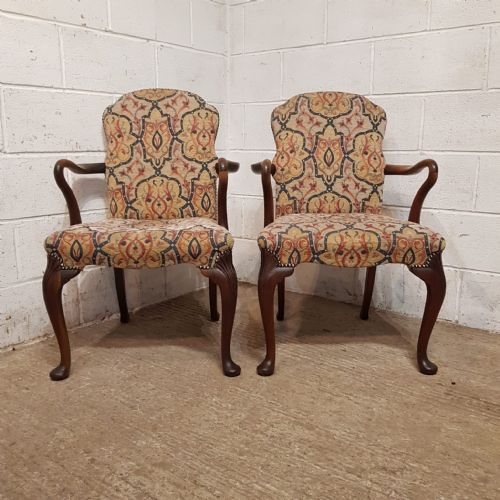
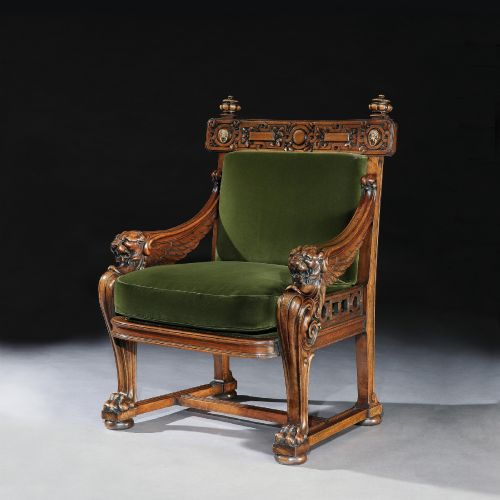
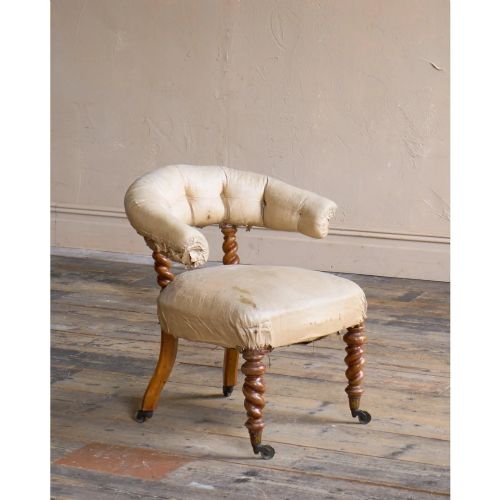
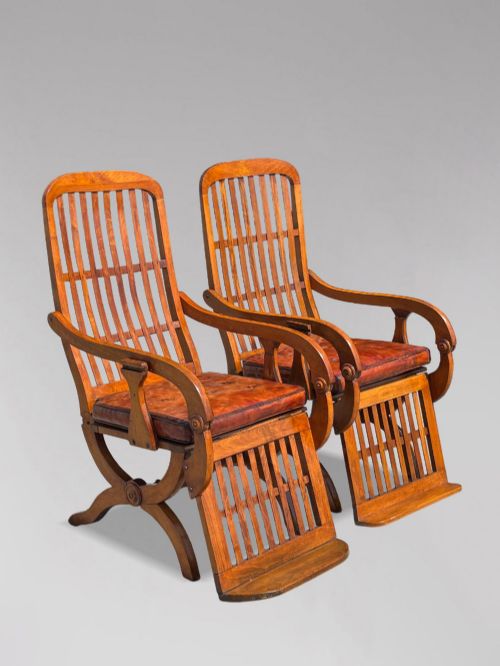
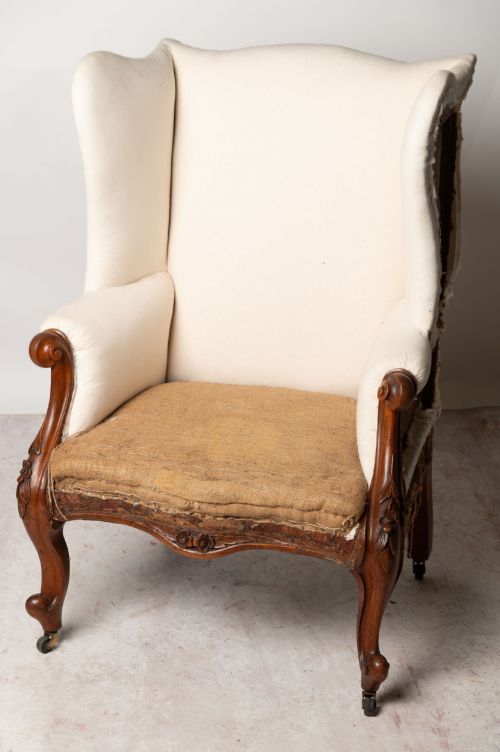
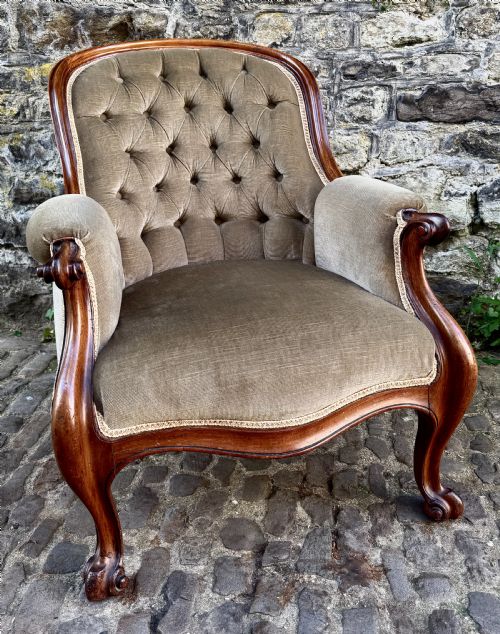
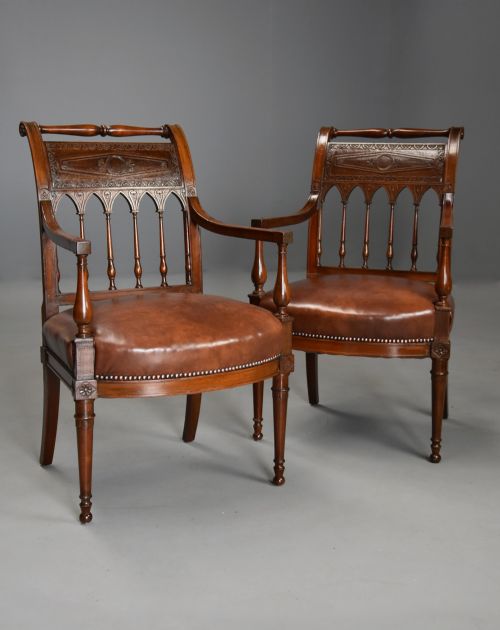
The form appears in several distinct shapes on this page, ranging from low-backed desk chairs and swivel captains chairs to high-backed wing chairs and open-armed Gainsborough models. Many examples reflect historical revivals, showing Queen Anne, William and Mary, or French stylistic influences applied to English domestic seating.
Makers and retailers such as Howard and Sons, Hindley and Sons, and Gillows frequently supplied these chairs, often pairing practical desk functions with generous proportions. Surviving examples demonstrate how reading furniture evolved from rigid formal seating into comfortable domestic retreats.
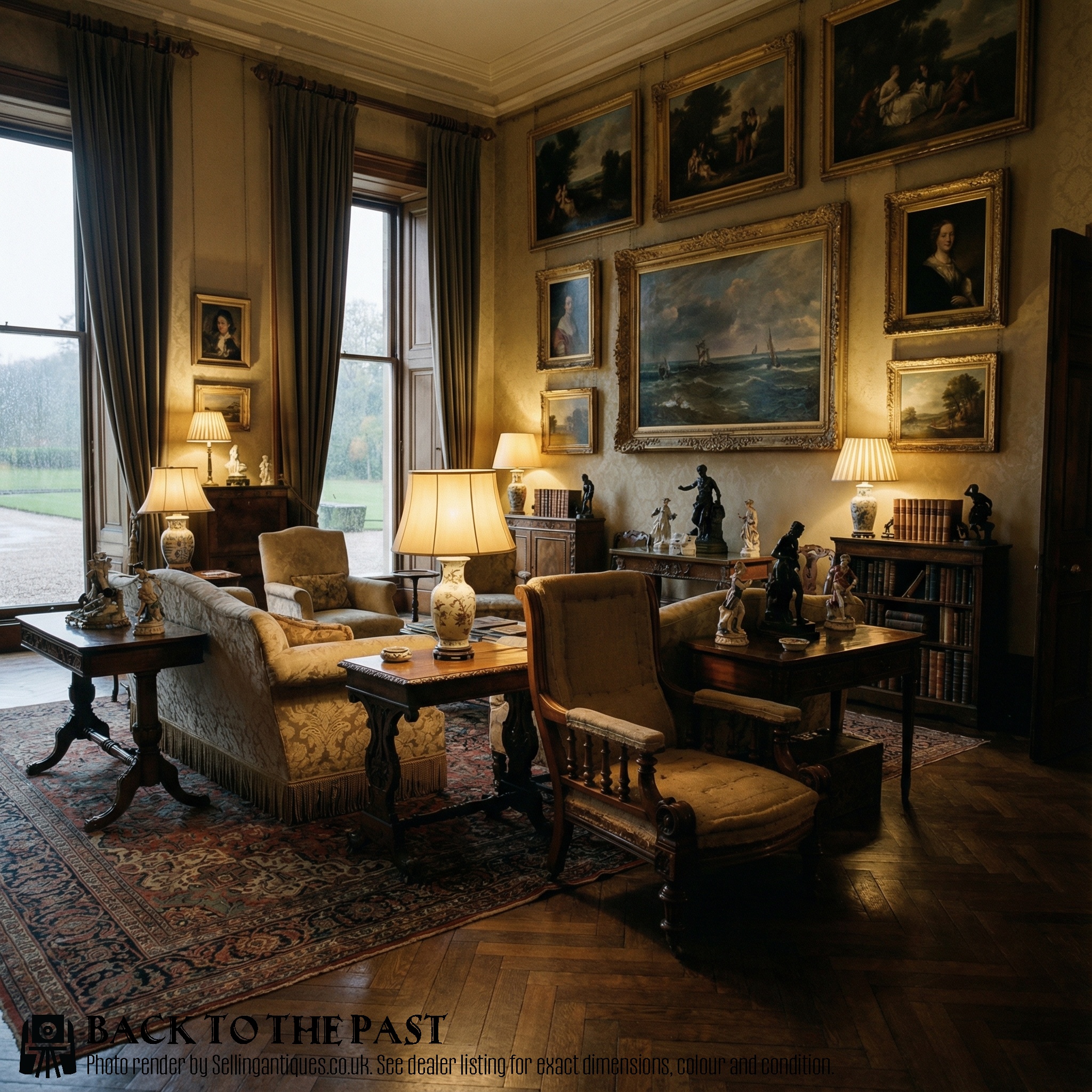
Materials and construction methods
The primary structural timber is walnut, selected for its rich grain and capacity to hold deep carved details along the arms and cabriole legs. Workshops utilised solid framing joined securely to support heavy daily use in studies and libraries.
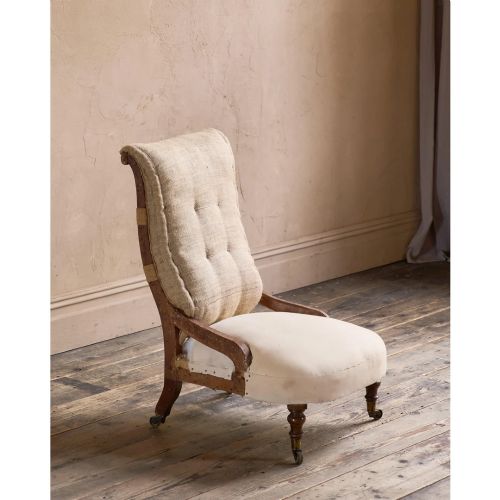
Upholstery materials include traditional leather, velvet, tapestry, and plain textiles, secured over foundational stuffing with brass tacks, hessian, and calico linings. Metal elements such as brass castors appear on legs to facilitate movement across study floors.
Walnut Library Armchair Retail Price Guide 2026
Typical asking prices for walnut library armchair among the pieces listed under this phrase on Sellingantiques today, from the lower quarter to the upper quarter. They describe what is for sale here now, not the wider market.
Materials documented across current stock include solid walnut, supple leather, rich velvet, hand-stitched tapestry, and supportive brass castors.
Qualities that distinguish the range
The distinction between standard commercial seating and top-tier workshop production lies in the weight of the timber and the depth of the carving. Superior chairs exhibit crisp hand-carved details along the knuckles and legs, whereas simpler pieces rely on plain turned members.
Upholstery execution and underlying webbing dictate longevity and comfort, with master workshops employing meticulous hand-stitched spring work and high-grade hides or tapestries. The presence of documented maker stamps or attributed workshop design significantly elevates the standing of an individual chair.
Howard and Sons·Hindley and Sons·Gillows·Whytock and Reid·Johnstone and Jeanes
The Walnut Library Armchair Glossary
- Fauteuil
- An open-armed upholstered armchair originating in France, usually featuring exposed timber framing around the back and elbows.
- Gainsborough chair
- A wide, low-backed upholstered armchair with open arms designed for writing desks and reading tables.
- Cabriole leg
- A furniture leg that curves outward at the knee and tapers inward at the ankle, commonly ending in a pad or claw foot.
- Wingback
- An armchair featuring protective side panels attached to the arms to deflect drafts away from the seated reader.
- Monopodia
- A carved furniture support taking the form of a single animal leg, often terminating in a lion paw.
Walnut Library Armchair: Frequently Asked Questions
How do I identify a genuine period library armchair?
Examine the timber underneath for signs of age, hand-cut joinery, and traditional secondary woods like beech or pine. Period pieces display natural wear patterns around the high-contact points of the arms and legs.
Compare the proportions and carved details against documented examples from specific decades like the Victorian era. Original upholstery foundations, when intact, also reveal period stuffing methods and materials.
What is the difference between a desk chair and a library chair?
Desk chairs often feature swivel mechanisms, lower backs, or more compact frames designed to tuck beneath writing surfaces. Library chairs prioritize deep seating, generous armrests, and high or wing backs suited for extended reading.
Many nineteenth-century examples bridge both categories, serving equally well at a partners desk or beside a fireplace. Look at the seat height and depth to determine primary intended use.
Are these chairs suitable for daily modern use?
Most walnut library armchairs were engineered for heavy domestic or institutional service and remain structurally robust. Their solid timber frames easily withstand regular seating when joints remain tight and stable.
Upholstery condition dictates whether immediate restoration is necessary before placing a chair into daily rotation. Professional conservation preserves internal webbing while ensuring modern comfort standards.
Why is walnut preferred over mahogany for these chairs?
Walnut offers a warm, variegated grain and a slightly softer density that permitted intricate, sharp carving during periods like the Queen Anne and Victorian revivals. Its lighter visual weight suited domestic library spaces without sacrificing structural strength.
Cabinetmakers utilised walnut extensively before mahogany gained dominance in the mid-eighteenth century, returning to it during later nineteenth-century revival movements. This wood choice frequently helps date the stylistic inspiration of a piece.