

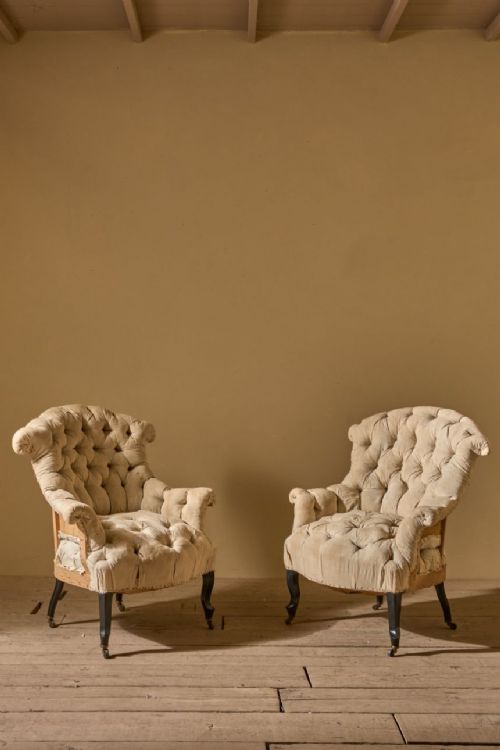
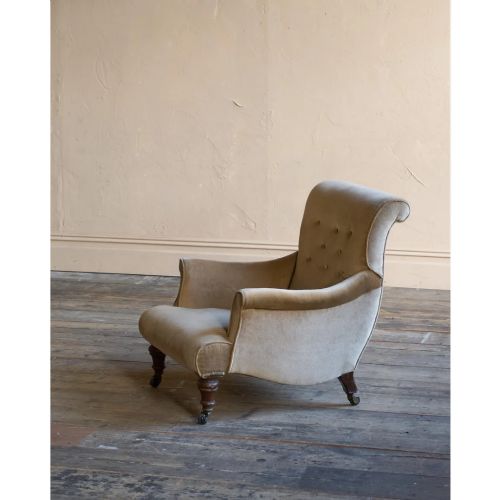


Beige Tufted Easy Chair
A beige tufted easy chair offers deep comfort and traditional nineteenth-century seating, bringing tactile textile texture and sprung support into a room.
Beige Tufted Easy Chair
A beige tufted easy chair is a nineteenth-century armchair upholstered in neutral fabrics and textiles featuring buttoned back and seat designs. These armchairs originate from Victorian England and France, encompassing Napoleon III styles alongside neat occasional chair forms.
Buyers browsing this selection most frequently encounter nineteenth-century French and English pieces, including pairs of chairs and matching stools. The forms range from buttoned back designs to fishtail armchairs and walnut frames dating from around eighteen-fifty to eighteen-eighty.
How these chairs were made
Makers constructed the structural frames of these armchairs using sturdy timbers such as mahogany, walnut, and general wood. These robust foundations were then shaped into traditional armchair and occasional chair silhouettes.
Upholsterers applied fabric, textile, and velvet coverings over interior padding, securing the signature tufted appearance with deep buttoning. Details like brass accents occasionally completed the framework and finishing touches.
Beige Tufted Easy Chair Retail Price Guide 2026
Typical asking prices for beige tufted easy chair among the pieces listed under this phrase on Sellingantiques today, from the lower quarter to the upper quarter. They describe what is for sale here now, not the wider market.
Several listings feature matching stools, proving that nineteenth-century relaxation was firmly a two-tier arrangement for the feet.
What varies in quality
Quality in these armchairs rests upon the definition and execution of the wood carving within the timber or walnut frame. Finer examples display crisper detailing and more substantial structural integrity across the nineteenth-century styles.
The sophistication of the upholstery work also dictates the tier of the piece, distinguishing standard output from superior artisan production. The choice of textile, velvet, or fabric and the precision of the tufting determine the visual refinement.
The Beige Tufted Easy Chair Glossary
- Tufted
- Upholstery technique where buttons are pulled deep into the padding to create a geometric pattern of indentations. This method secures the internal filling while adding texture to the fabric surface.
- Napoleon III
- A mid-nineteenth-century French design movement known for eclectic revivals and deep buttoned upholstery. Pieces from this period often emphasise comfort alongside decorative woodwork.
- Armchair
- A comfortable seat fitted with supports for the arms on either side. Nineteenth-century variants frequently incorporate sprung seats and low profiles for relaxed seating.
- Walnut
- A dense, dark timber utilised by makers for nineteenth-century furniture frames. Its grain provides a rich visual contrast against lighter neutral upholstery.
Beige Tufted Easy Chair: Frequently Asked Questions
What is a beige tufted easy chair?
A beige tufted easy chair is a nineteenth-century armchair defined by its neutral upholstery and buttoned back construction. These pieces draw from Victorian and Napoleon III design traditions.
They combine wooden frames of walnut or mahogany with soft fabric, textile, or velvet coverings. Such seating provides a distinct period aesthetic centred on comfort.
How were these armchairs used historically?
These armchairs served as comfortable lounging or occasional seats in nineteenth-century domestic drawing rooms and parlours. Their generous padding and supportive buttoned backs were designed for prolonged periods of rest.
Pairs of these chairs and matching stools were often arranged to facilitate conversation. They brought both functional seating and decorative textile warmth to interior spaces.
How do I style a beige tufted easy chair?
Living with a nineteenth-century armchair involves placing it within a room where its neutral fabric tone complements existing furnishings. The understated colour palette allows the piece to integrate easily into both traditional and contemporary interiors.
Pairing the chair with wooden side tables or matching nineteenth-century stools enhances its historical character. Allowing adequate space around the armchair highlights its buttoned upholstery and frame silhouette.
How are different periods identified?
Identifying the period of these armchairs relies on examining the characteristics of the wooden frame and upholstery style. Nineteenth-century examples often exhibit specific stylistic cues associated with Victorian or French Napoleon III design.
Details such as walnut timber usage, specific arm shapes, and buttoning configurations help narrow down the date of manufacture. Comparing these elements against documented nineteenth-century forms clarifies the timeline.