
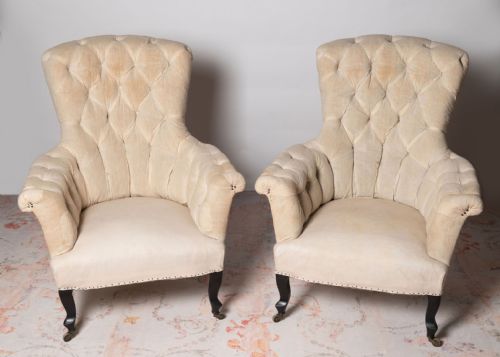
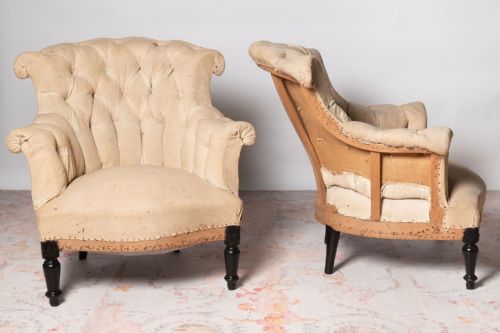
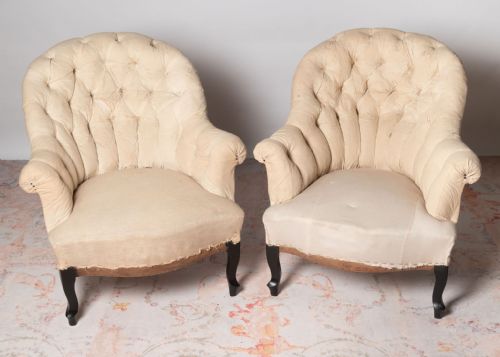
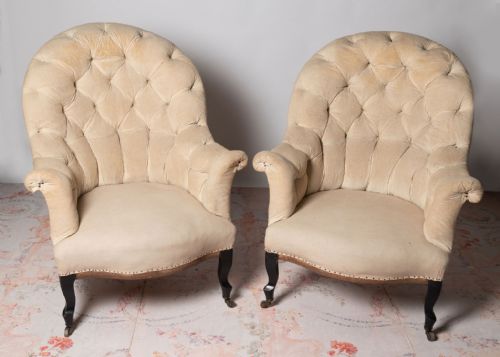
Cream Buttoned Armchairs
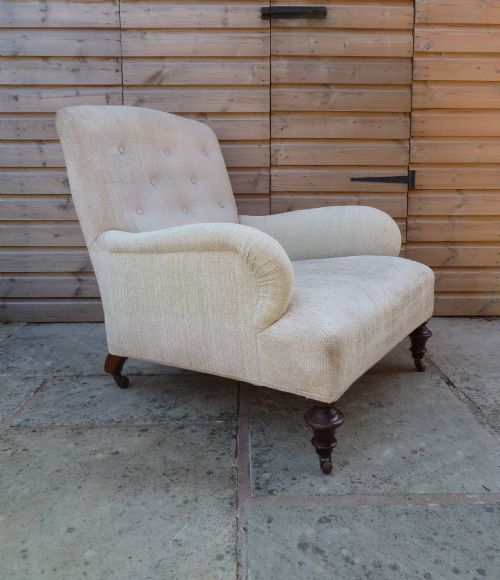
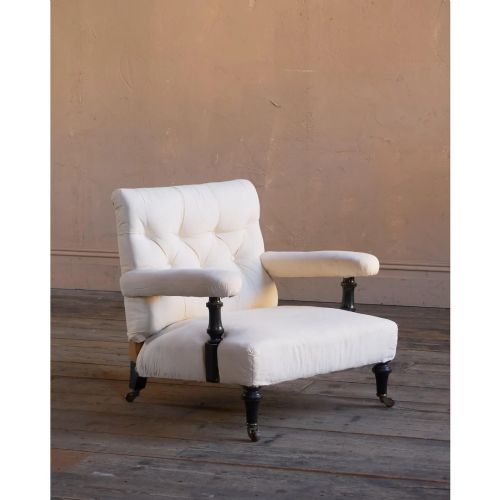
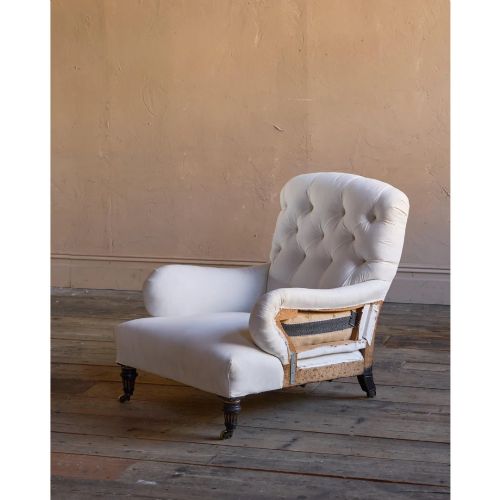
Cream buttoned armchairs bring tactile depth and period comfort to a room, spanning Victorian and French styles.
Cream Buttoned Armchairs
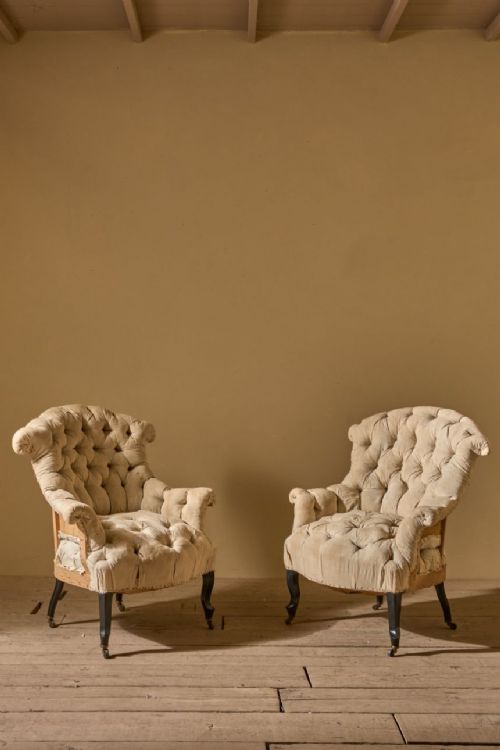
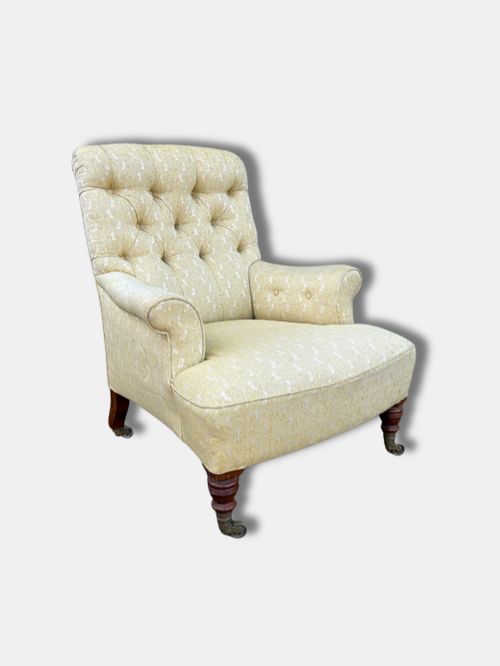
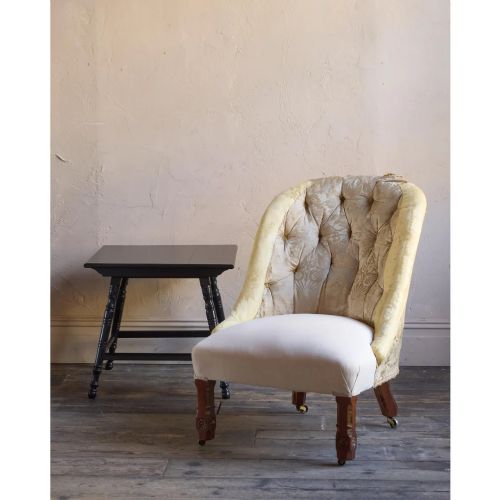
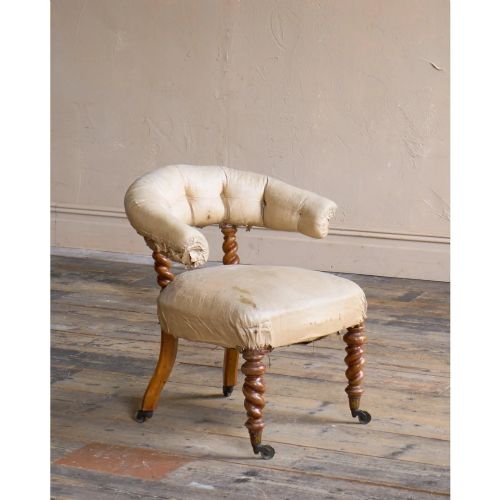
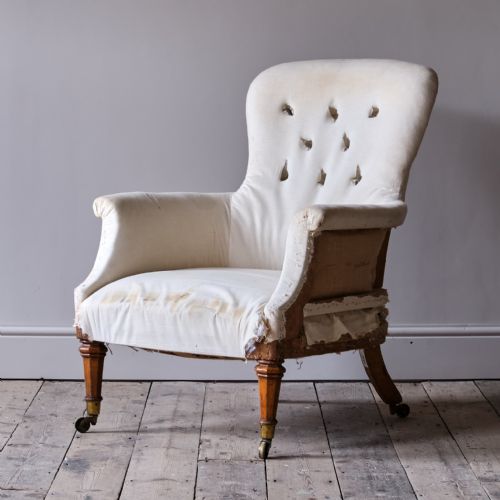
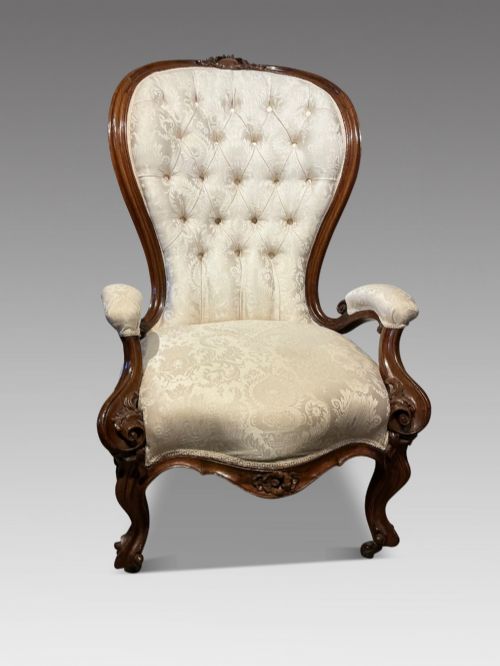
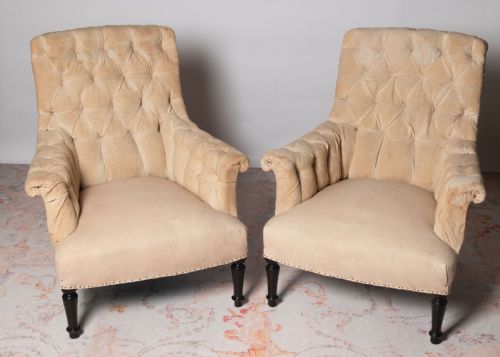
Cream buttoned armchairs encompass diverse seating forms from the nineteenth century, including Victorian, Regency, and French Napoleon III designs. Buyers encounter armchair variations ranging from reading chairs and salon chairs to low slipper chairs and substantial country house models.
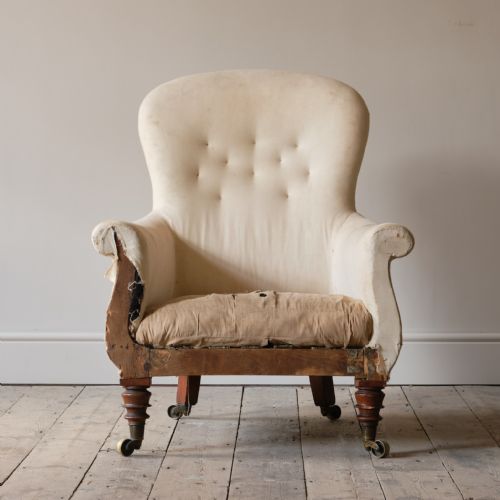
The materials span mahogany, walnut, and timber frames upholstered in fabrics such as calico and ivory textiles. Frames often incorporate brass castors or metal components supporting deep-buttoned upholstery.
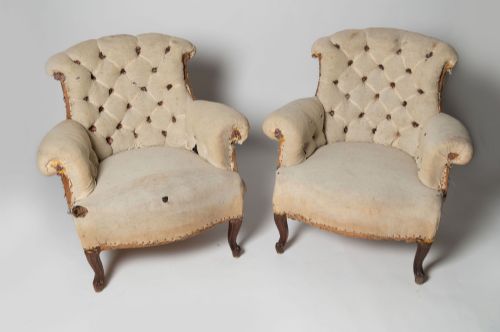
French pieces and English workshop productions dominate the selection, showing distinct regional tailoring and proportions. High curved backs and fishtail forms appear frequently among the continental examples.
Quality Factors
Proportion and scale dictate the visual presence of each seat, distinguishing grand library pieces from modest bedroom chairs. Refined woodwork on walnut or mahogany frames separates standard joinery from superior cabinet work.
The precision of the buttoning and the tailoring of the fabric indicate the original maker's skill. Retained manufacturer stamps and original brass hardware elevate the standing of surviving pieces.
Listings feature nineteenth-century pieces incorporating brass, mahogany, walnut, and timber materials across Victorian and French aesthetics.
Howard and Sons·C. Hindley and Sons·Mellier and Co·Hamptons and Sons
The Cream Buttoned Armchairs Glossary
- Buttoning
- Upholstery technique securing stuffing with recessed buttons to create a padded, patterned surface. This method provides structural tension and distinct visual depth.
- Cabriole leg
- Furniture leg featuring a double curve resembling animal limbs, popular in Victorian cabinet making. The design arches outward and tapers inward to a foot.
- Calico
- Plain-woven unbleached textile frequently utilised as an inner upholstery foundation or primary covering. It offers a neutral base for tailored seating.
- Castor
- Small wheel fitted to furniture legs to facilitate movement across floor surfaces. Brass examples frequently appear on nineteenth-century English armchairs.
Cream Buttoned Armchairs: Frequently Asked Questions
What periods do these armchairs date from?
The selections span the nineteenth century, encompassing Regency, Victorian, and Edwardian eras alongside French Napoleon III designs.
Specific dates within listings range from eighteen-thirty through to the early nineteen-hundreds.
How do English and French styles differ?
English pieces often feature sturdy mahogany or walnut frames with distinct maker stamps and brass castors.
French chairs frequently display high curved backs, fluid woodwork, and specific forms like the fishtail silhouette.
What wood types support the upholstery?
Frames utilise structural timbers including solid mahogany, walnut, and ebonised wood.
Joinery supports deep buttoned padding covered in calico, ivory fabric, or general upholstery textiles.
Are maker stamps found on these seats?
Certain nineteenth-century English pieces retain maker marks, stamps, or paper labels from prominent upholstery firms.
Stamps help identify workshop origins on pieces produced by established London cabinet makers.