
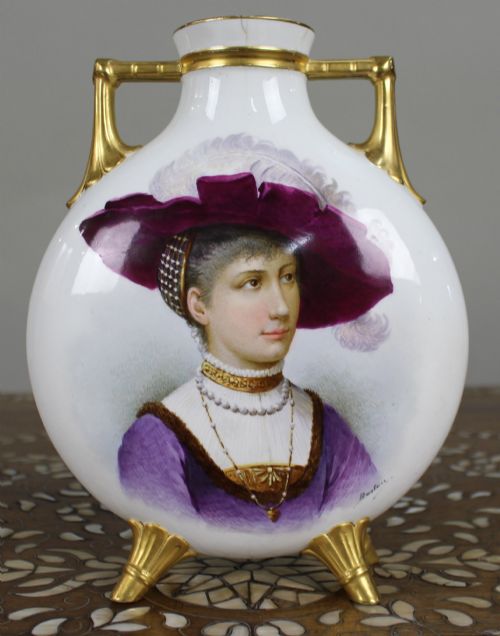
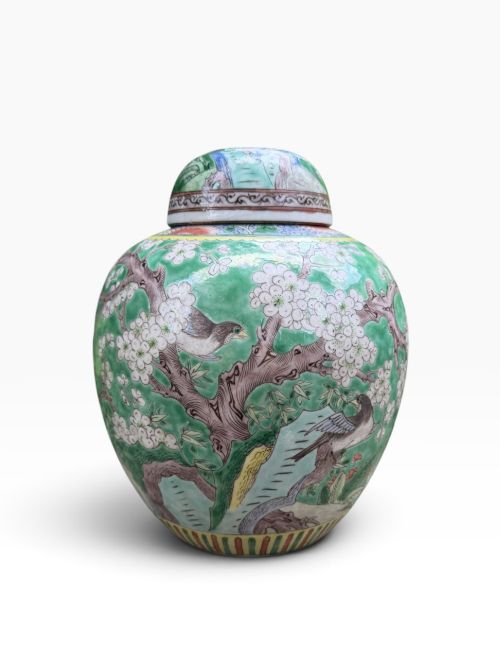
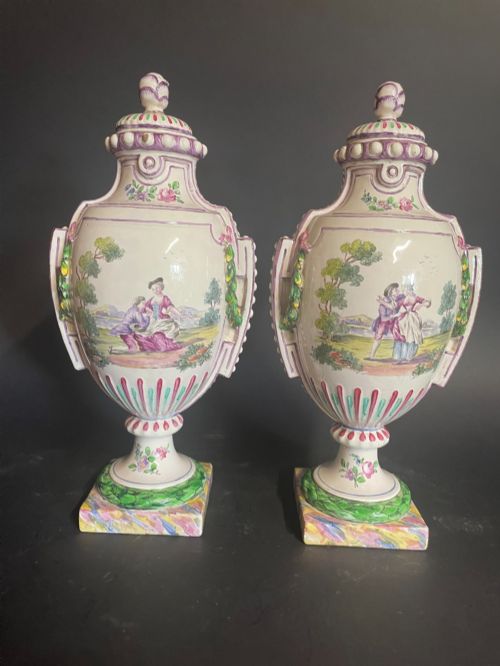
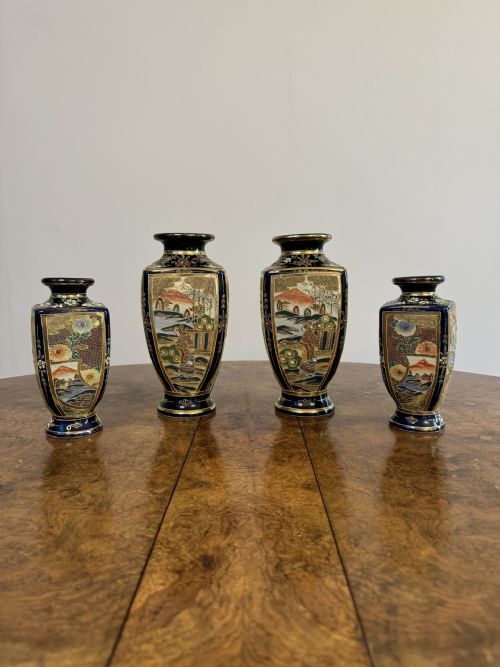

Painted Porcelain Decorative Vases
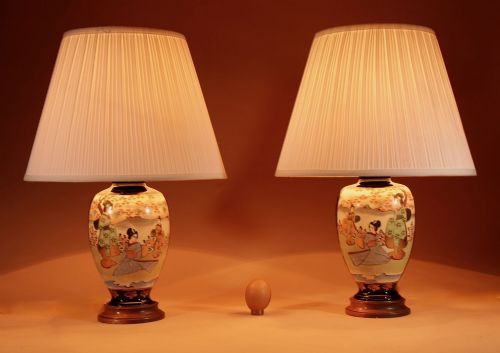
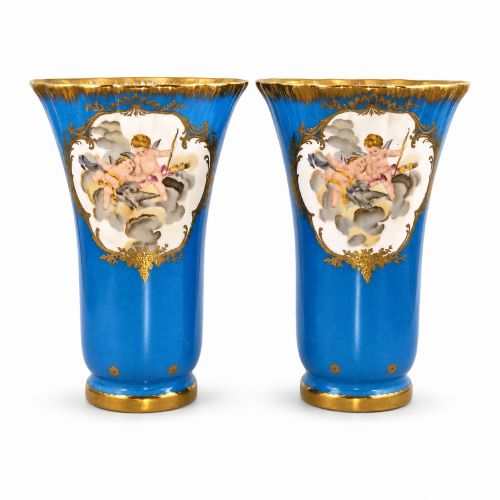
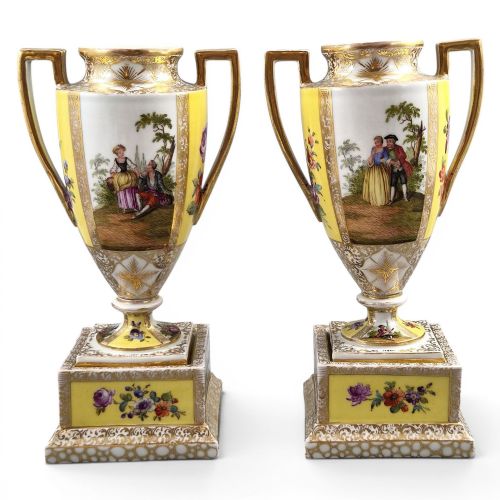
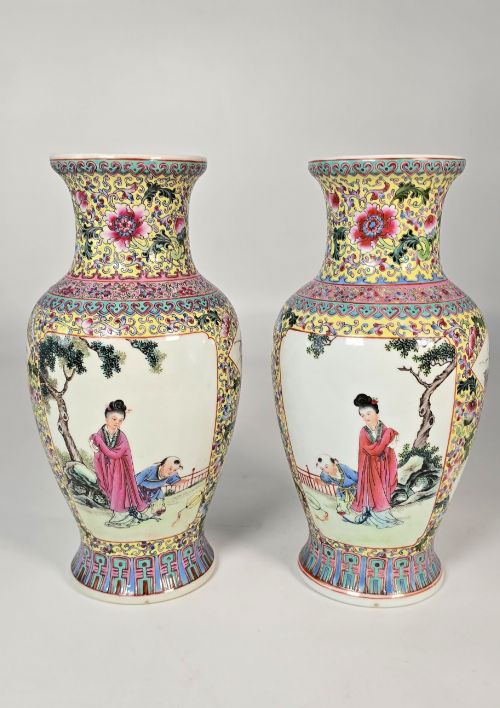
These painted porcelain decorative vases bring intricate hand-painted detail and rich ceramic form into a room.
Painted Porcelain Decorative Vases
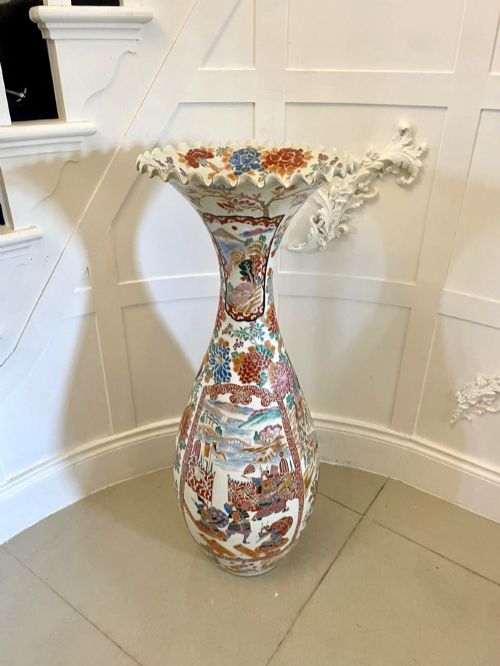
Painted porcelain decorative vases encompass a diverse range of ornamental vessels, including floor-standing pieces, moon flasks, ginger jars, and campagna urns. When searching this phrase, a buyer encounters everything from nineteenth-century Japanese imari and satsuma wares to European porcelain from factories such as Royal Worcester, Coalport, and Sèvres.
The selection on this page leans heavily toward nineteenth-century production, spanning Victorian, Edwardian, and Meiji period outputs. Forms range from miniature cabinet pieces and paired table vessels to monumental floor vases and garnitures.
Origins stretch across British, continental European, and East Asian traditions, incorporating styles from Rococo Revival and Regency to Qing Dynasty and Japanese Imari. Buyers find pieces designed explicitly for display, cabinet collections, or interior focal points.
Materials and manufacture
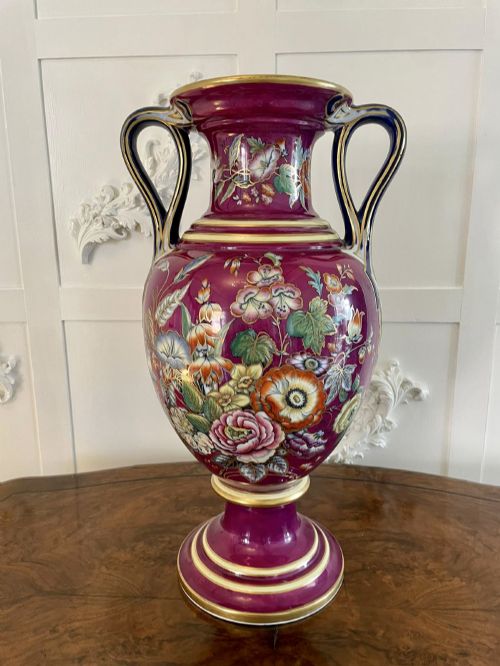
Production relies primarily on porcelain and earthenware bodies shaped into vases, urns, and jars, frequently finished with a smooth glaze. Enamel and hand-painting provide the polychrome surface decoration, depicting floral motifs, figures, and landscapes.
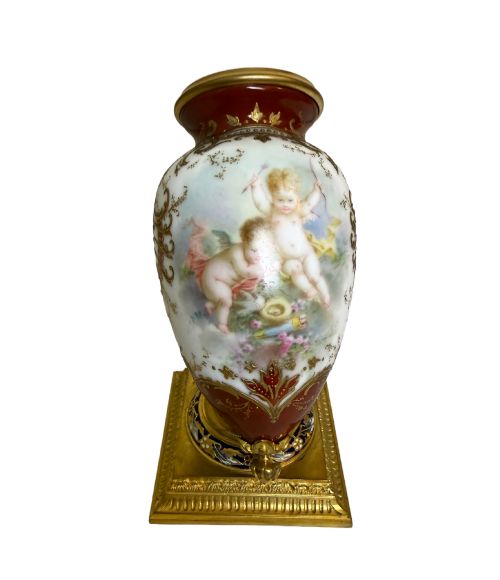
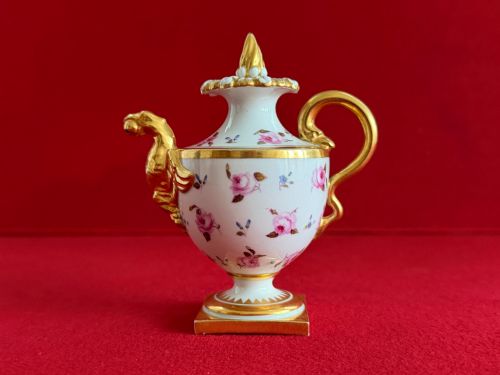
Gilding, gold leaf, and gilt bronze mounts elevate the finish of many pieces, particularly on European revival and cabinet vases. Specialist techniques such as lustre glazes and transfer printing appear alongside entirely hand-painted compositions.
Listings feature porcelain, earthenware, and gilt bronze across nineteenth-century styles including Regency, Rococo Revival, and Meiji.
Assessing quality and execution
Quality rests significantly on the precision of the hand-painting, the finesse of the brushwork, and the complexity of the enamel or gilt application. Pieces decorated by named artists or produced by leading houses exhibit superior artistic control and detailed execution compared to standard commercial output.
The weight, clarity, and potting of the ceramic body also determine value, alongside the presence of matching pairs or complete garnitures. Intricate supplementary elements, such as applied handles, hand-tooled gilt bronze mounts, or original covers, enhance the overall integrity of the piece.
Flight Barr And Barr·Barr Flight And Barr·Samson Paris·Helena Wolfsohn·Royal Worcester·Coalport·Minton·Doulton
The Painted Porcelain Decorative Vases Glossary
- Garniture
- A set of matching vases or vessels designed to be displayed together on a mantelpiece or sideboard. These sets typically comprise three or more matching pieces.
- Moon flask
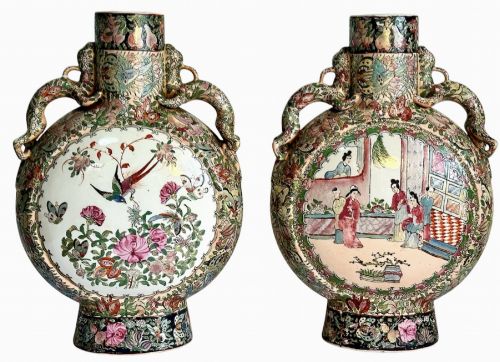
- A flat-backed, round-bodied vase shape reminiscent of a pilgrim flask, often featuring decorative side handles. This form appears frequently in Chinese and European porcelain.
- Imari
- A traditional Japanese style of porcelain decorated in underglaze blue, iron red, and gold. It gained immense popularity in Europe during the export periods.
- Campagna urn
- A bell-shaped classical urn form mounted on a pedestal foot, widely produced by British porcelain factories in the nineteenth century. The shape mimics ancient Roman marble excavation finds.
- Blush ivory
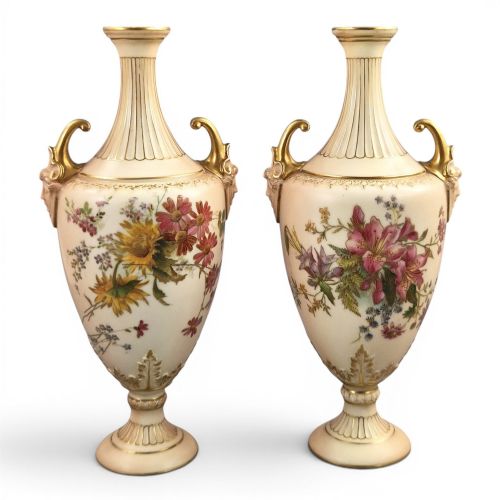
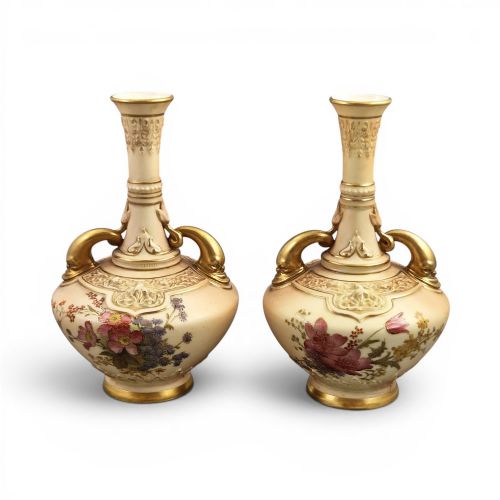
- A specific cream-coloured porcelain body developed by Royal Worcester, typically decorated with soft floral hand-painting and gilt highlights. It defines much of the late Victorian and Edwardian output.
- Ewer
- A large jug with a flared spout and an ornate handle, often produced as a decorative display pair alongside matching vases.
Painted Porcelain Decorative Vases: Frequently Asked Questions
What is a garniture?
A garniture is a matched set of three or more vases or jars produced to sit together as a decorative arrangement on a mantel or cabinet.
These sets were a focal point in period interiors, offering symmetry and cohesive colour schemes across a room.
How do I identify Imari porcelain?
Imari porcelain is characterised by a distinct palette combining underglaze cobalt blue, vibrant iron red, and generous gilding over a white porcelain ground.
Originating in Japan, this style heavily influenced European ceramic design throughout the nineteenth century.
Where were moon flasks used?
Moon flasks were designed primarily as decorative cabinet or table pieces rather than for holding large quantities of water.
Their flat bodies and stable bases made them ideal for displaying intricate painted scenes in restricted spaces.
What is blush ivory porcelain?
Blush ivory is a matte cream-coloured porcelain finish perfected by British factories like Royal Worcester during the late nineteenth century.
It provided a soft background for delicate hand-painted floral studies and raised gold detailing.