

Ormolu Writing Desk
When you search for an ormolu writing desk, you enter a world of nineteenth-century French cabinet-making where gilt mounts meet rich exotic timbers.
Ormolu Writing Desk
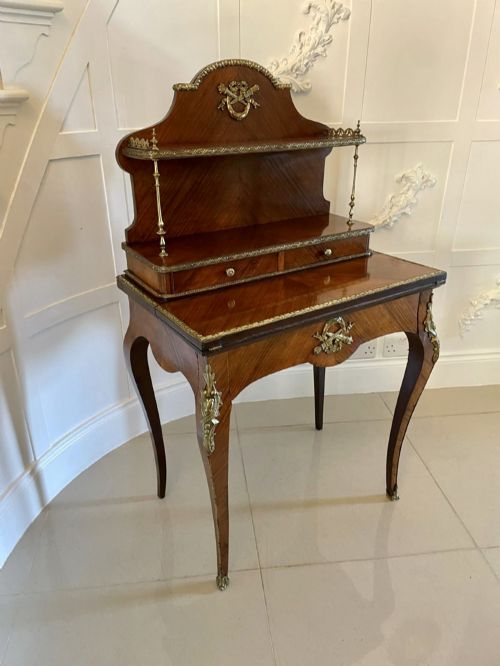
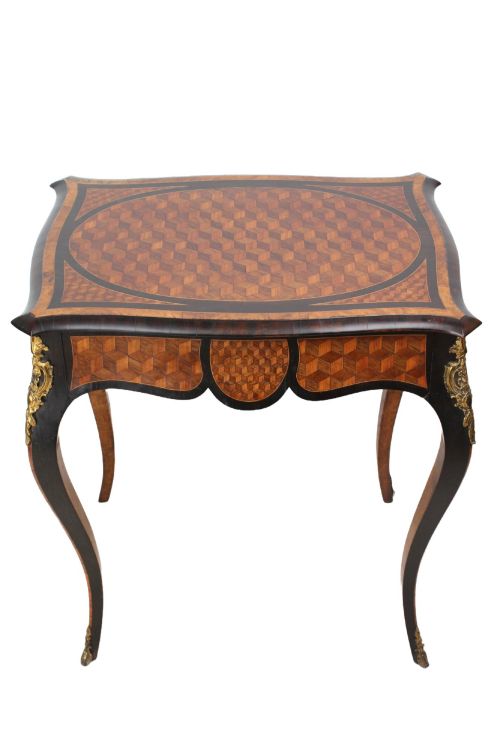
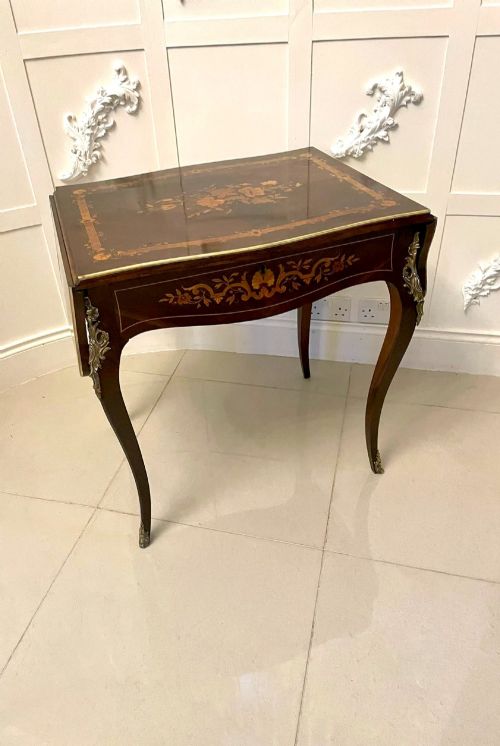
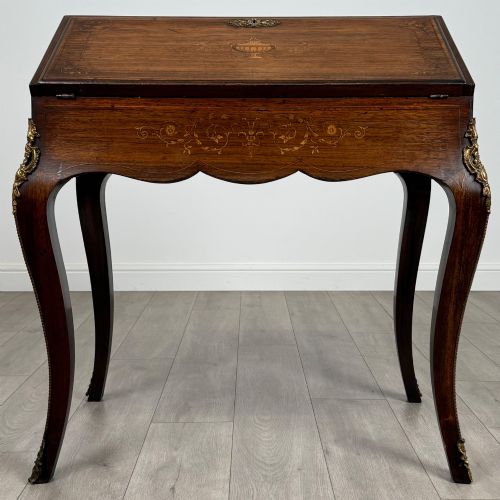
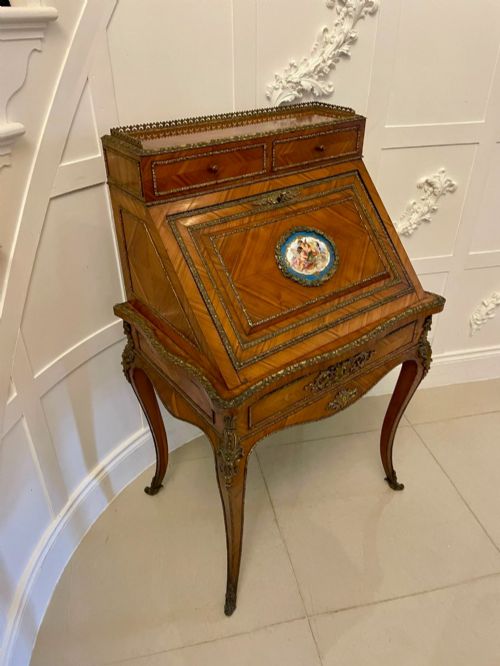
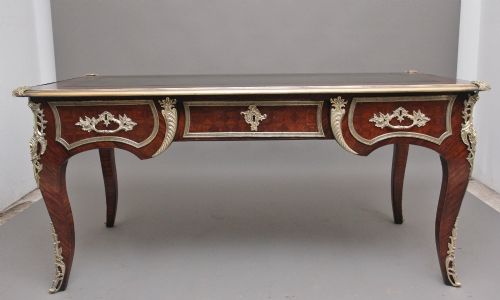
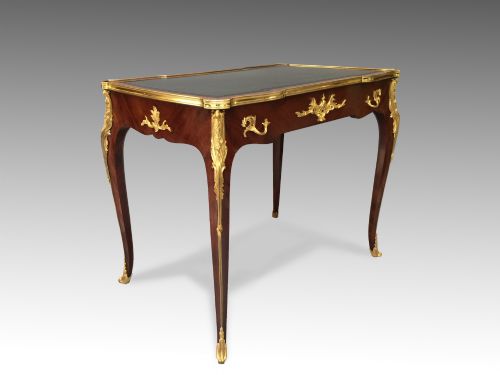
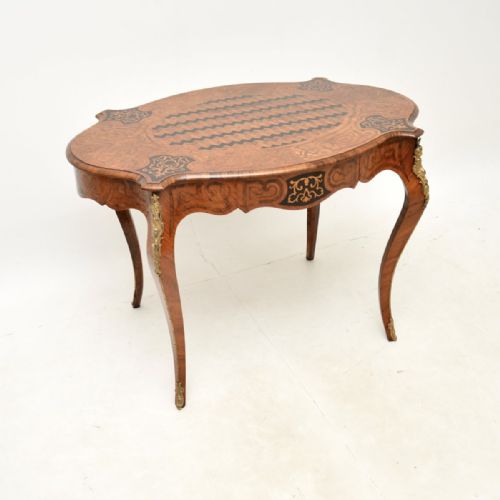
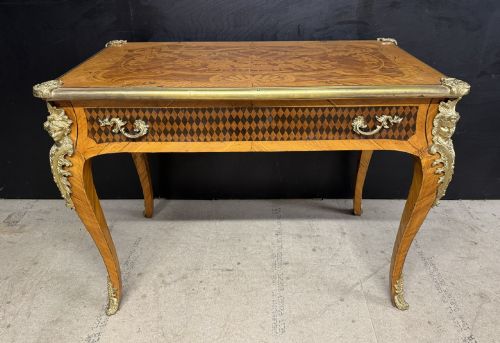
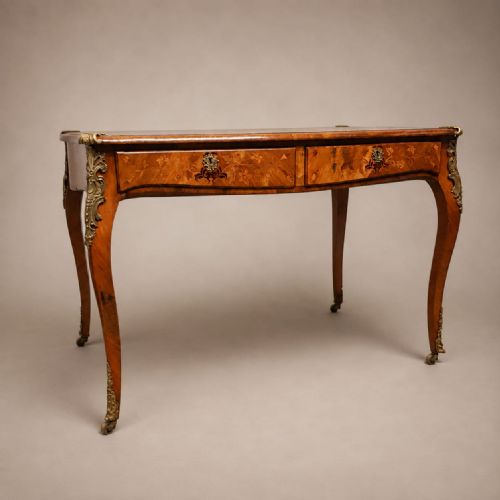
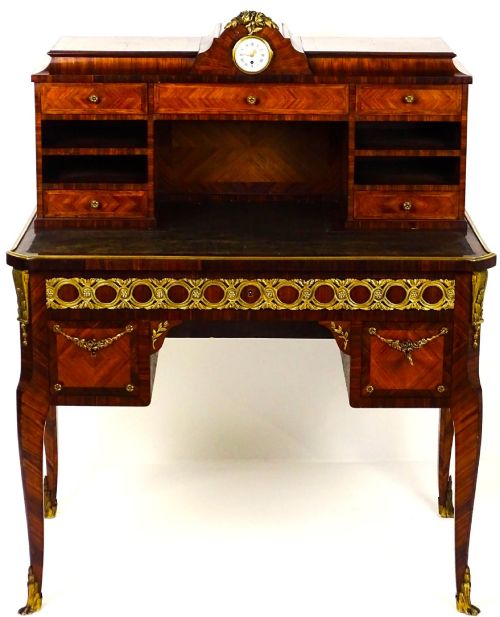
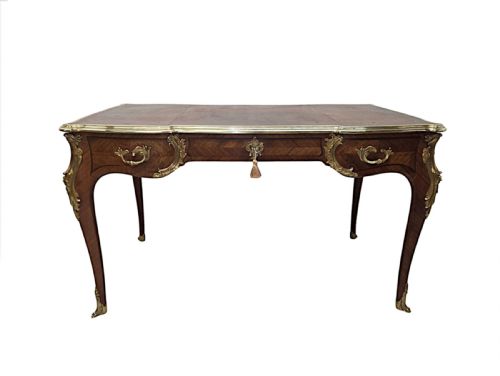
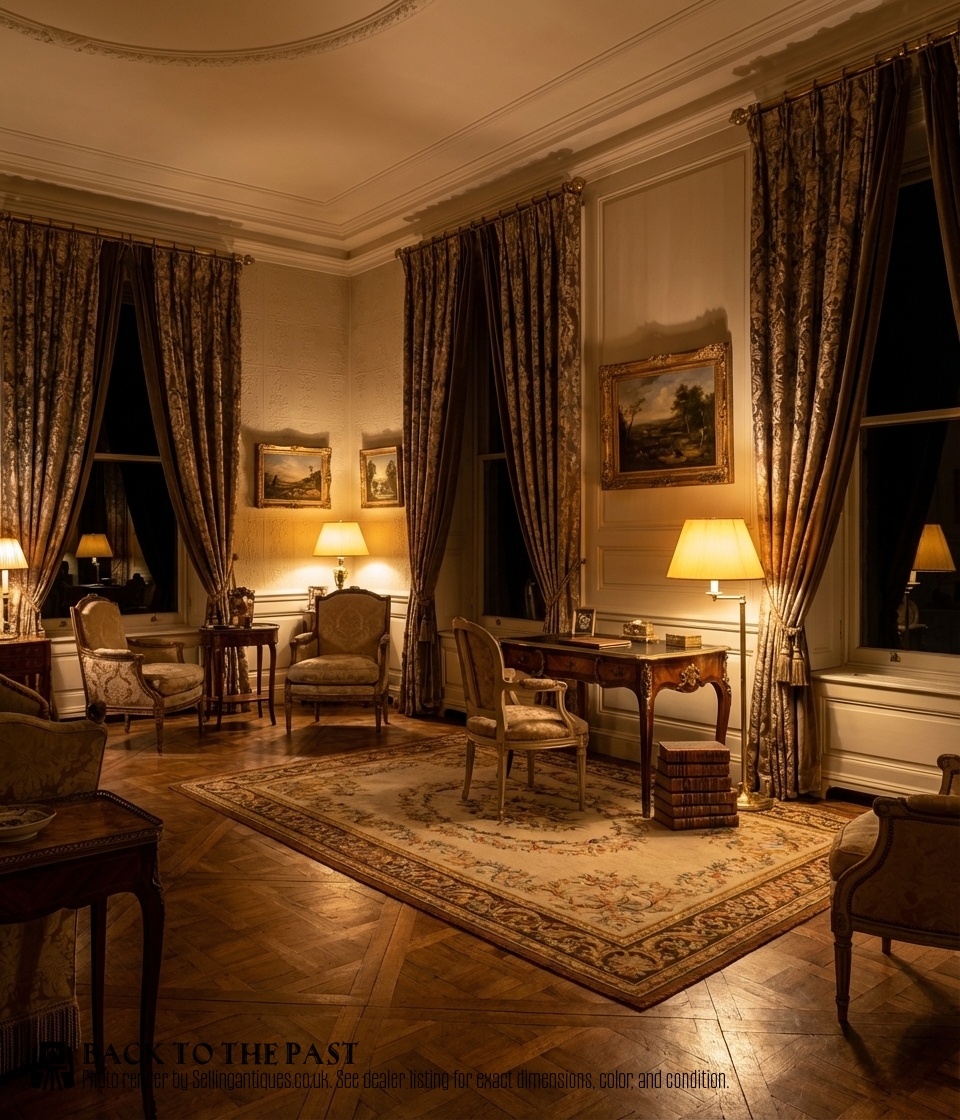
An ormolu writing desk encompasses a variety of nineteenth-century forms including bureau plats, cylinder desks, and freestanding writing tables. These pieces originated primarily in France during periods inspired by the reigns of Louis XV and Louis XVI, as well as the Victorian era. The most common version met on this page is a nineteenth-century French bureau plat or writing table finished with marquetry or parquetry.
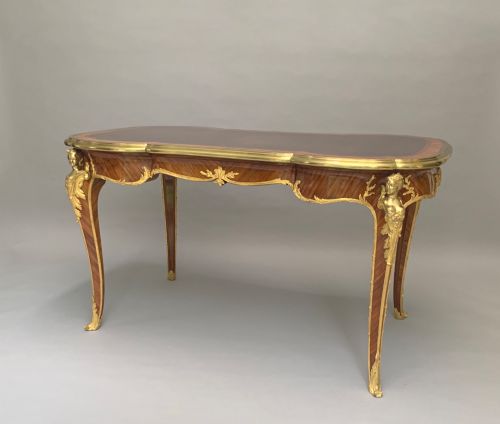
Makers and retailers such as François Linke, Edwards & Roberts, and Paul Sormani produced notable examples of these desks. The designs draw heavily on French Rococo and Neoclassical revivals, often featuring serpentine fronts and cabriole legs. Buyers encounter variations ranging from compact ladies writing desks to large institutional writing tables.
How they were made
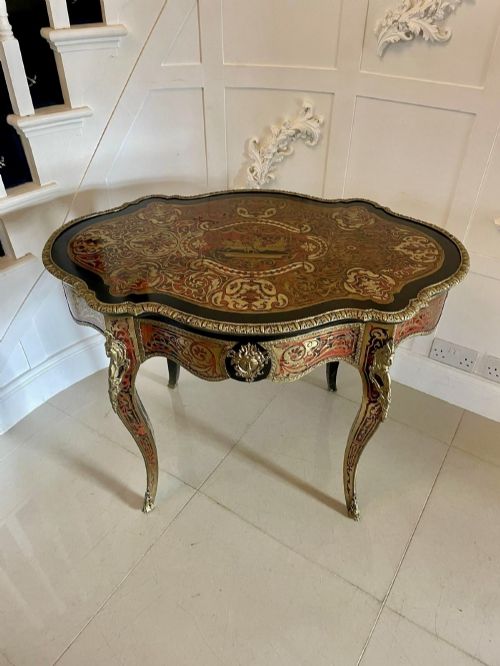
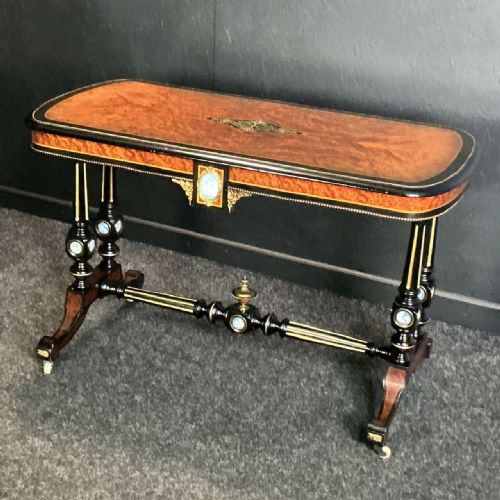
Cabinet-makers constructed the carcases of an ormolu writing desk using native and exotic woods such as kingwood, rosewood, walnut, and mahogany. Many examples utilise intricate parquetry or floral marquetry veneers laid out in geometric or pictorial patterns. Surfaces frequently incorporate inset tooled leather writing panels alongside original marble tops.
Gilt bronze or ormolu mounts were cast, chased, and applied to corners, drawers, and legs to accentuate the contours of the furniture. Brass details and porcelain plaques also appear alongside the ormolu to enrich the decorative scheme. Joinery methods relied on traditional cabinet-making techniques appropriate for nineteenth-century workshops.
Ormolu Writing Desk Retail Price Guide 2026
Typical asking prices for ormolu writing desk among the pieces listed under this phrase on Sellingantiques today, from the lower quarter to the upper quarter. They describe what is for sale here now, not the wider market.
Some nineteenth-century ladies desks feature hidden compartments designed to keep secret correspondence safe from prying eyes.
What varies in quality
The standard of an ormolu writing desk is determined by the crispness of the gilt bronze casting and the precision of the timber veneers. Finer pieces display deeply chased ormolu mounts with sharply defined details and hand-selected grain in the kingwood or rosewood. Inferior examples exhibit softer casting in the metalwork and simpler, repetitive veneer patterns.
Attribution to documented makers such as François Linke or retailer stamps like Edwards & Roberts elevate the standing of a desk. The integration of secondary elements, such as original tooled leather inserts and well-fitted drawer construction, separates standard production furniture from high-atelier work.
JAS Shoolbred·Francois Linke·Edwards & Roberts·Paul Sormani·Maison Krieger·CH. Jeanselme & Co·Alphonse Tahan
The Ormolu Writing Desk Glossary
- Ormolu
- Gilt bronze ornamentation applied to furniture and decorative objects. This technique involves coating cast bronze with a layer of gold.
- Bureau Plat
- A freestanding writing table fitted with one or more drawers in the frieze. These desks were designed to stand away from the wall in the centre of a room.
- Marquetry
- Decorative veneer work formed by fitting together pieces of various coloured woods and other materials into a pictorial design. Master craftsmen utilised this technique on desk tops and drawer fronts.
- Parquetry
- Geometric veneer patterns arranged in repetitive motifs such as cubes, lozenges, or squares. It provides a structured decorative surface on nineteenth-century carcase furniture.
- Bonheur Du Jour
- A small, light ladies writing desk featuring a tiered superstructure with shelves, drawers, or a small cupboard above the writing surface. These pieces gained popularity during the nineteenth-century revival periods.
Ormolu Writing Desk: Frequently Asked Questions
What is an ormolu writing desk used for?
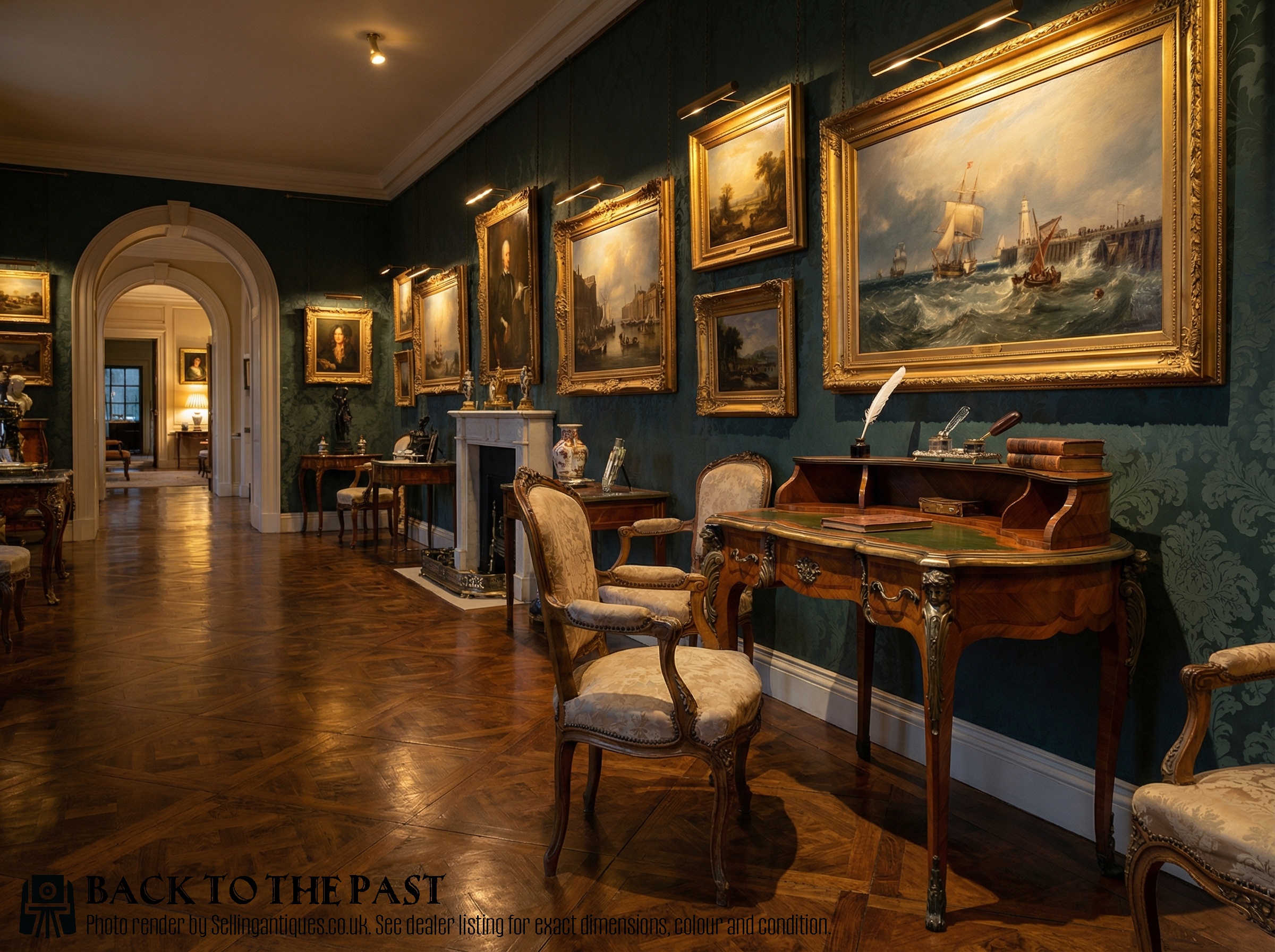
These desks served as functional writing surfaces and status objects in nineteenth-century drawing rooms and studies. Owners utilised the leather-inset tops for correspondence and record-keeping while displaying wealth through the gilt bronze mounts.
Today, they function as striking central pieces in a room, offering practical surface area alongside historic cabinet-making character. Many collectors continue to use them as working desks or display tables.
How do I identify the period of a desk?
Dating relies on combining the timber choices, revival styles, and construction techniques visible in the piece. Nineteenth-century French makers frequently drew upon Louis XV and Louis XVI designs, reinterpreting them with Victorian sensibilities.
Maker signatures, retailer stamps, and casting characteristics of the ormolu further narrow down the decade of manufacture. Examining the secondary woods inside the drawers provides additional clues to the workshop origin.
How do I care for ormolu and wood?
Preserving the surface requires maintaining a stable indoor environment away from direct sunlight and extreme humidity fluctuations. The timber veneers benefit from occasional applications of appropriate furniture wax to prevent drying.
The gilt bronze mounts should be cleaned very gently with a soft, dry cloth to avoid damaging the delicate ormolu finish. Aois excessive polishing, which can wear away the historic gold layer on the bronze.
Where should I place a bureau plat?
Because a bureau plat is finished on all four sides, it is traditionally placed in the centre of a room rather than pushed against a wall. This allows the intricate marquetry and ormolu mounts on the back and sides to be fully visible.
Ensure the placement protects the leather writing surface and polished timber from direct heat sources and strong window light. Providing adequate surrounding space highlights the proportions of the cabriole legs and mounts.