


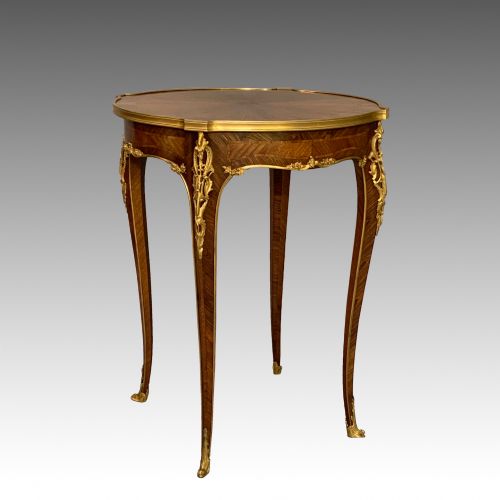
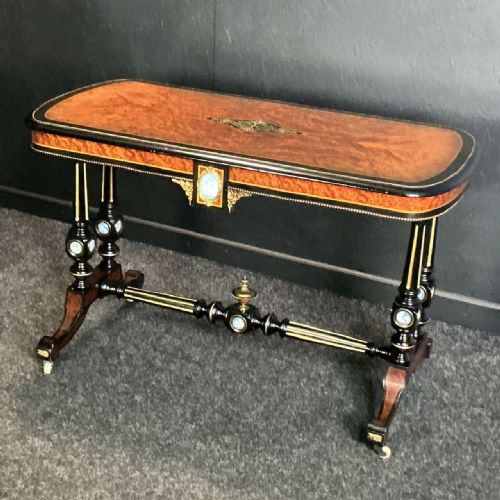
Ormolu Marquetry Side Table
An ormolu marquetry side table brings French decorative arts into a room through contrasting veneers and cast bronze mounts.
Ormolu Marquetry Side Table
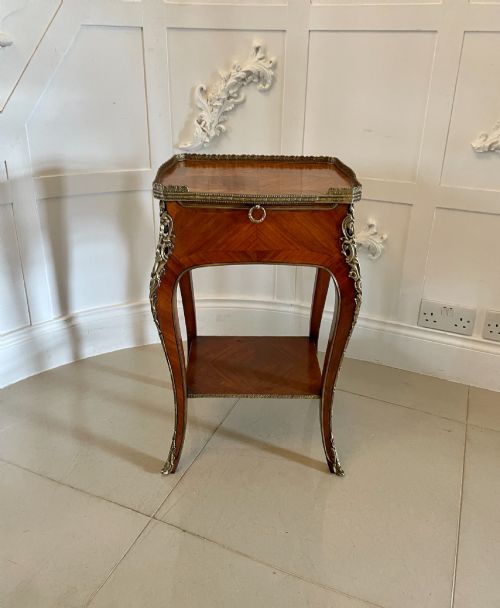
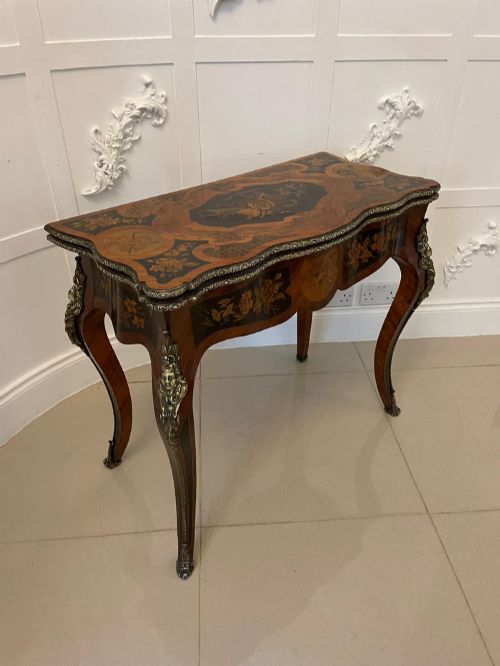
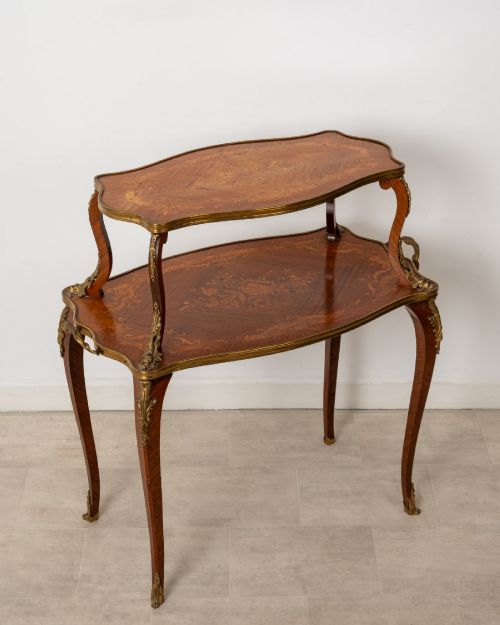
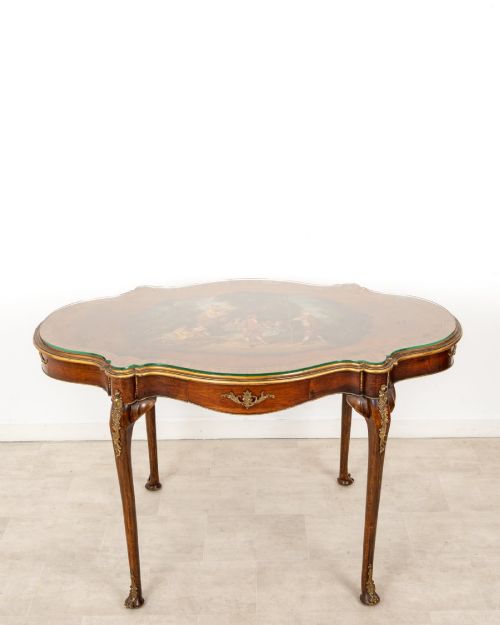
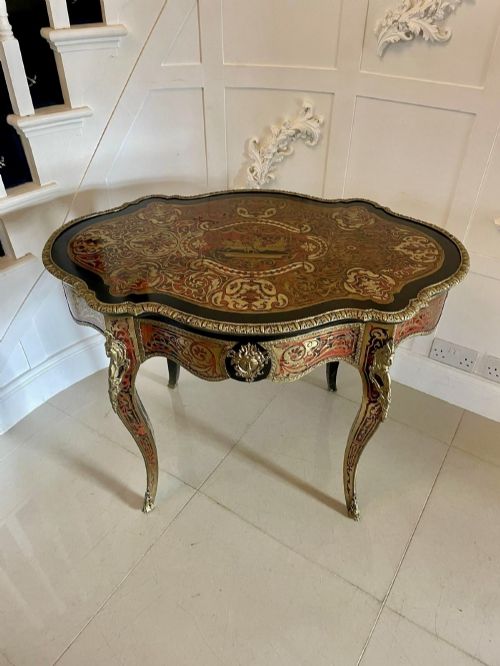
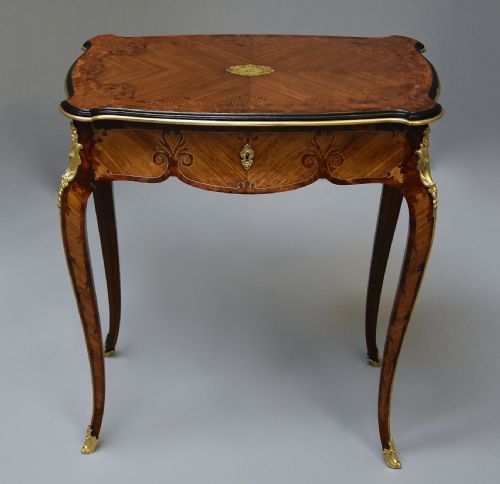
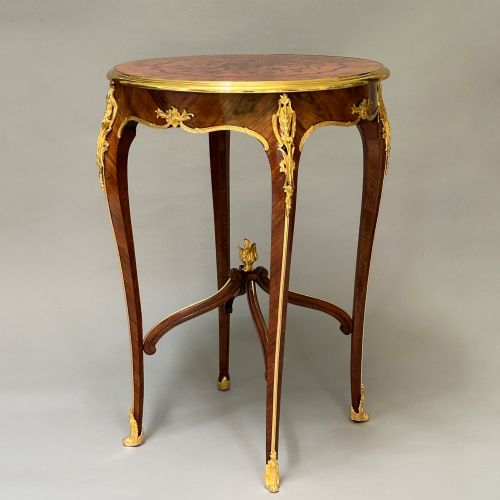
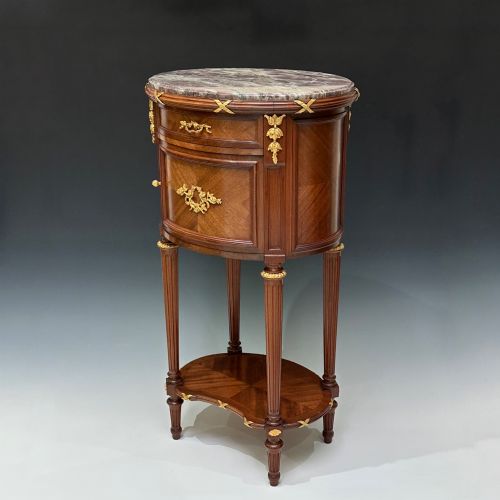
An ormolu marquetry side table combines inlaid wood veneers with cast gilt bronze mounts, following French revival styles from the nineteenth and early twentieth centuries. These pieces appear as freestanding centre tables, lamp tables, bedside cabinets, and writing desks produced in the French taste.
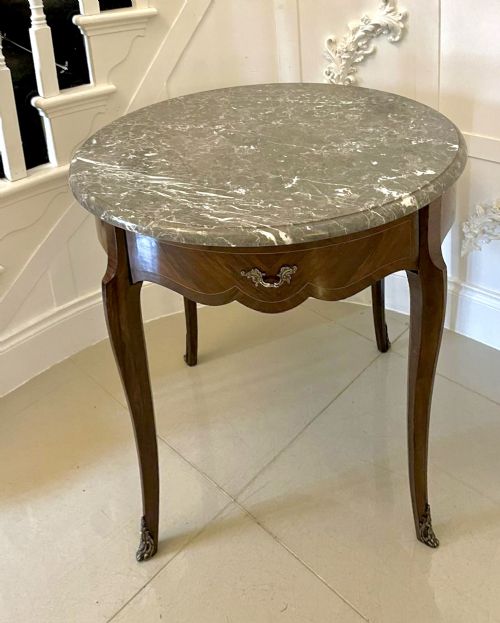
The materials reflect a preference for exotic timbers like kingwood, rosewood, and walnut, often shaped with serpentine outlines or set with marble tops. Pieces from this selection span periods from the mid-nineteenth century through the 1930s, showing consistent adherence to Louis XV and Louis XVI design vocabularies.
Materials and Construction
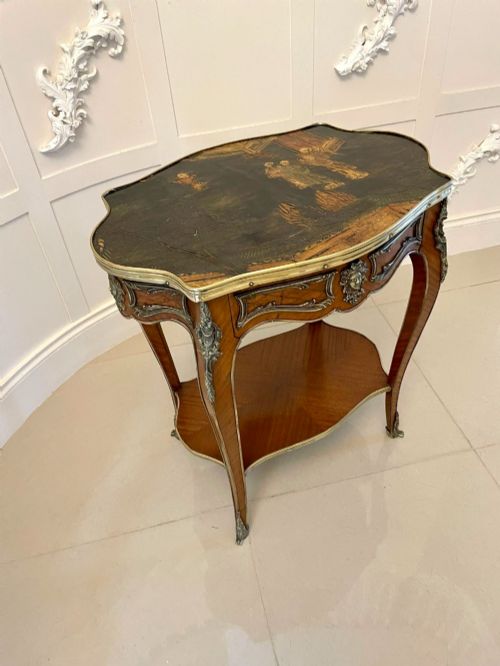
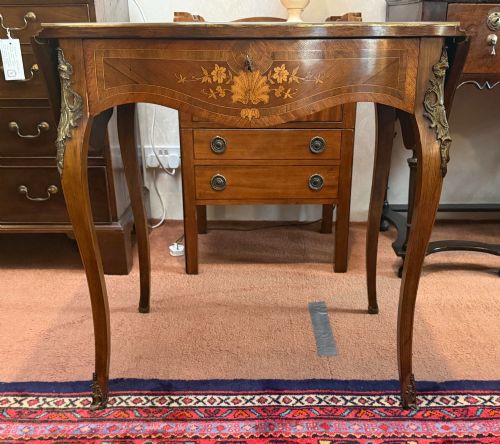
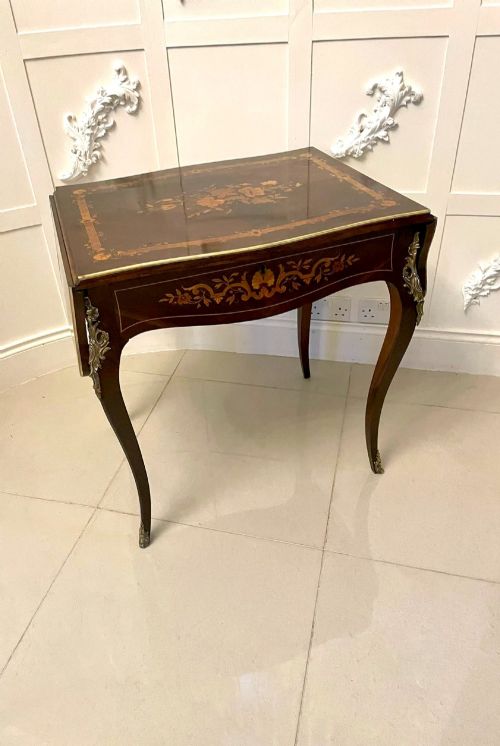
Cabinetmakers constructed these tables using dense hardwoods as a carcase, overlaid with precision-cut veneers arranged in floral or geometric marquetry patterns. Ormolu mounts, cast in brass or bronze and fire-gilt, were secured to corners, legs, and apron edges to highlight the structural contours.
Surfaces were frequently finished with French polish to emphasise the grain of woods such as satinwood, kingwood, and walnut. Marble tops, where fitted, were channelled or bevelled to rest securely within wooden framing.
Listings in this category frequently combine kingwood veneers with cast ormolu mounts across various nineteenth-century side table forms.
Craftsmanship and Proportion
The refinement of an ormolu marquetry side table depends on the crispness of the bronze chasing and the complexity of the veneer work. Superior examples display finely articulated mounts and intricate inlay that follows the subtle curves of the timber carcase.
Structural integrity and the retention of original fire-gilding separate standard production pieces from finer workshop outputs. The balance between the gilt bronze mounts and the underlying wood defines the success of the design.
François Linke·Joseph-Emmanuel Zwiener
The Ormolu Marquetry Side Table Glossary
- Ormolu
- Gilt bronze mounts used for decorative enrichment on furniture. The technique involves applying a gold amalgam to bronze before heating.
- Marquetry
- The art of applying pieces of veneer to a structure to form decorative patterns and pictorial designs. Different coloured timbers create tonal depth.
- Kingwood
- A dense, heavy timber with rich dark brown and golden violet streaks. It was widely used in high-end French cabinetmaking.
- Parquetry
- Geometric mosaic woodwork used for floors and tabletops. It differs from marquetry by relying on angular repeating shapes.
- Vernis Martin
- A type of simulated Japanese lacquer developed in France. It was applied to furniture panels in translucent layers.
Ormolu Marquetry Side Table: Frequently Asked Questions
What periods do these tables represent?
The pieces on this page largely date from the nineteenth century through the early twentieth century. They draw heavily on earlier French royal aesthetics.
Craftsmen during the Victorian and Edwardian eras revived these historical styles using traditional cabinetmaking techniques and exotic timbers.
How were these tables used originally?
Such tables served as decorative surfaces for lamps, display items, or writing within formal reception rooms. Bedside variants functioned as enclosed storage for personal belongings.
Freestanding centre tables were placed prominently in rooms to be viewed from all sides, often featuring finished backs and sophisticated mechanisms.
How do I care for ormolu and marquetry?
Keep wooden surfaces away from direct sunlight and excessive heat fluctuations to prevent veneer lifting. Dust regularly with a dry, soft cloth.
Avoid abrasive cleaners on the gilt bronze mounts, as harsh chemicals can strip the original finish. Professional conservation is recommended for deep cleaning.
What distinguishes Louis XV style tables?
Louis XV style pieces are defined by asymmetrical curves, serpentine outlines, and naturalistic floral marquetry. The legs typically curve outward in a cabriole shape.
This aesthetic contrasts with the straighter, more symmetrical lines found in later Louis XVI revival pieces.