





Oriental Side Stands
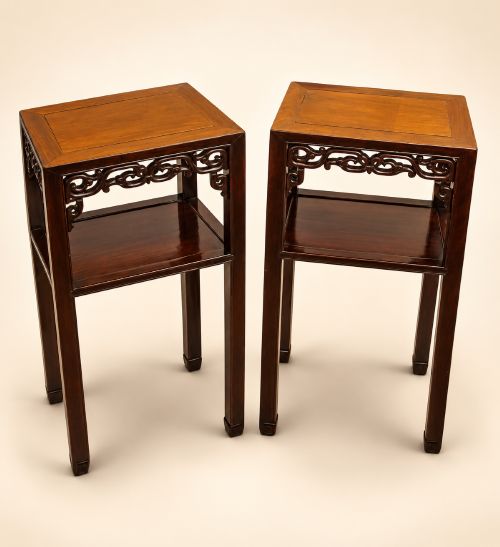
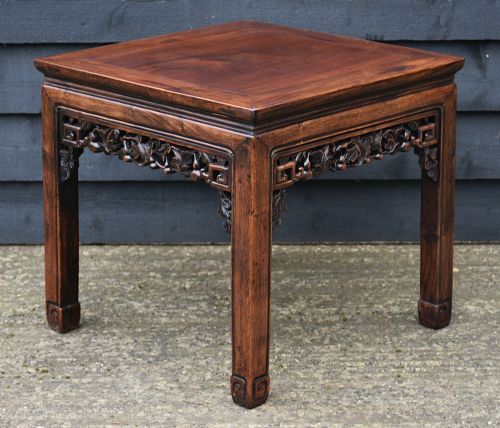
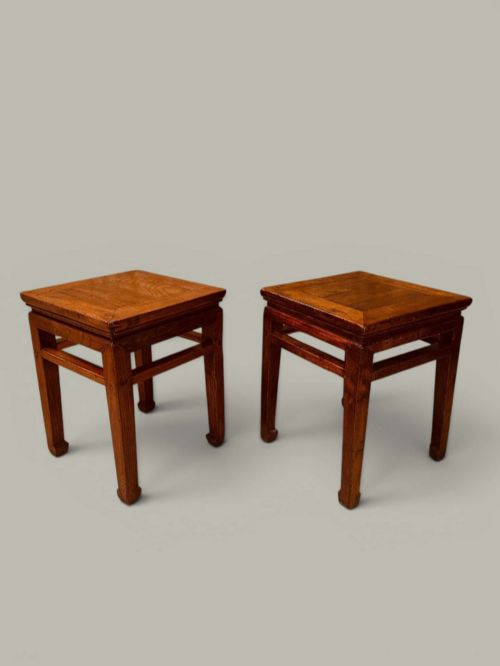
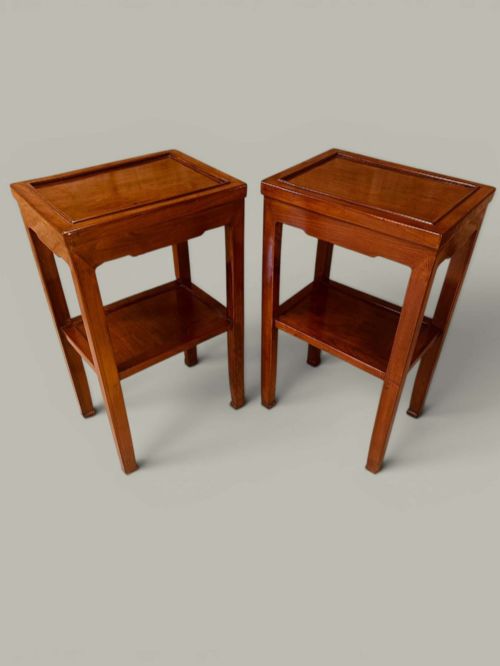
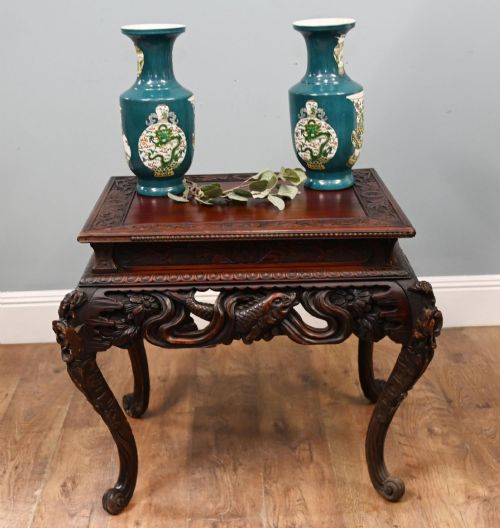
These oriental side stands bring dense hardwood carving and lacquer into a room, serving as low tables, jardiniere stands, and lamp tables.
Oriental Side Stands
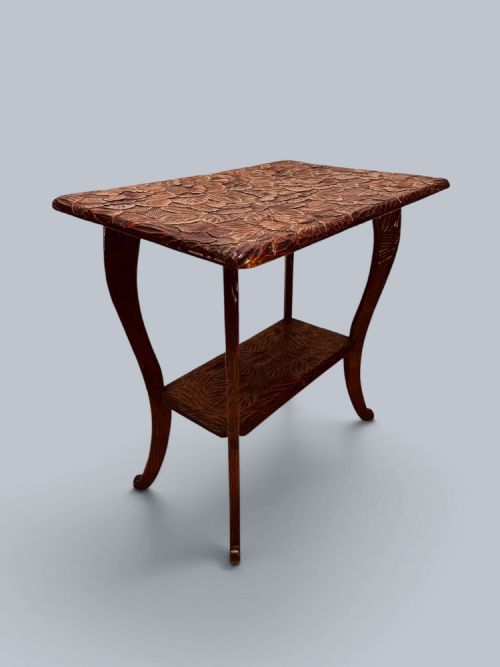
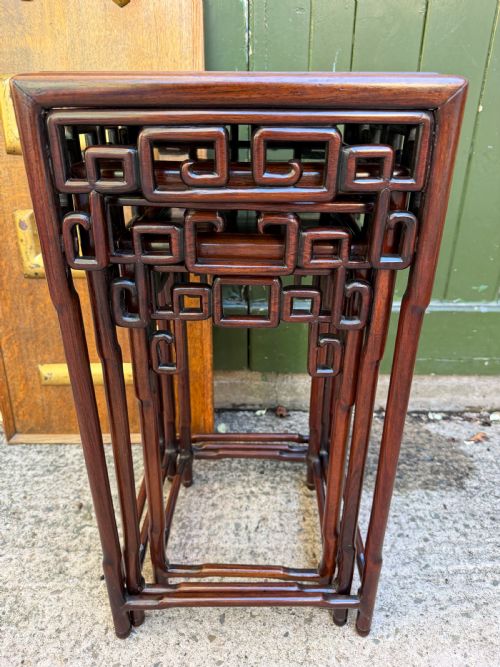
When you search for oriental side stands, you enter a field defined largely by late nineteenth and early twentieth century production, spanning the Victorian era through the nineteen-thirties. The examples on this page encompass side tables, plant stands, occasional tables, nests of tables, and jardiniere stands.
Originating predominantly from Chinese workshops, Anglo-Indian makers, and Japanese influence, these pieces bridge diverse stylistic traditions including Qing Dynasty export work and British Chinoiserie. You will encounter low square tables, tall pedestal stands, and multi-tiered etageres designed to hold lamps, porcelain, or plants.
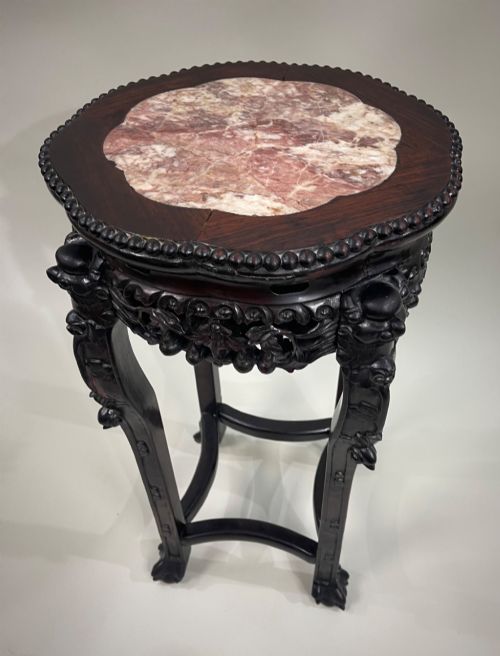
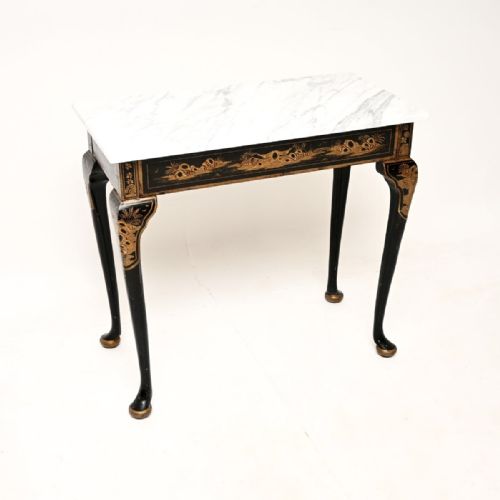
The assortment relies heavily on forms intended for utilitarian display within domestic interiors, whether through a simple elm side table or a marble-topped pot stand. Their scale accommodates smaller spaces while offering intricate decorative carving or lacquered surfaces.
Materials and construction
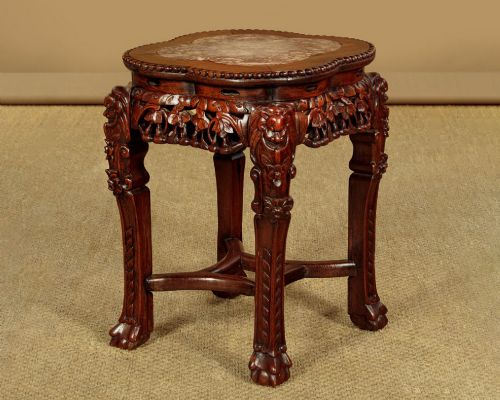
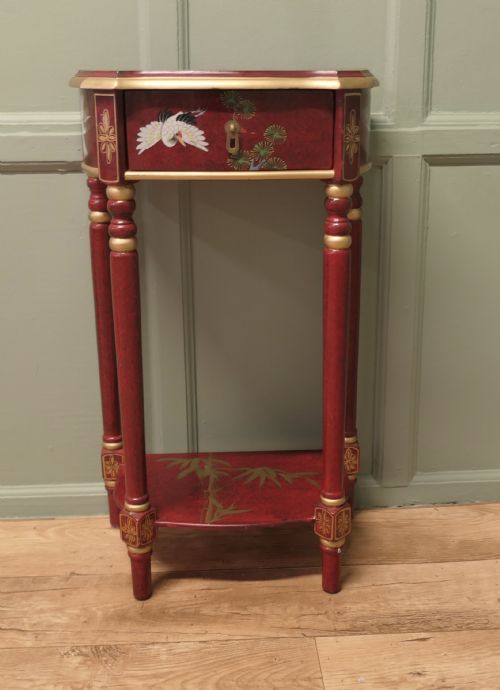
The construction of these pieces centres on dense regional timbers, notably rosewood, huanghuali, elm, teak, walnut, and generic hardwoods, frequently paired with inset panels of variegated marble. Workshops utilised traditional joinery alongside surface treatments such as red or black lacquer, bone inlay, mother of pearl, and brass wire.
Carving serves as the primary decorative technique, executed with deep relief on aprons, legs, and borders to depict floral motifs, figures, or geometric patterns. Certain items incorporate specialist methods like cloisonne enamelling or silk embroidery secured within rotating wooden frames.
Oriental Side Stands Retail Price Guide 2026
Typical asking prices for oriental side stands among the pieces listed under this phrase on Sellingantiques today, from the lower quarter to the upper quarter. They describe what is for sale here now, not the wider market.
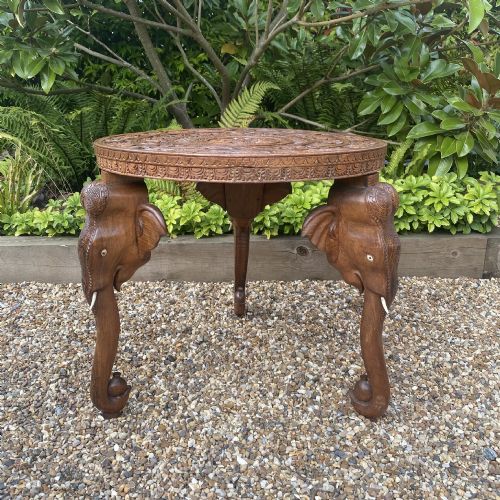
Carved wooden elephants double as sturdy side tables, complete with decorative brass trappings to support your evening cup of tea.
Distinctions in craftsmanship
Quality rests upon the crispness of the carving and the stability of the timber joints, where dense hardwoods like hongmu and rosewood hold finer detail than softer woods. The integration of inset elements, such as fitted marble tops or precise bone and mother of pearl inlay, demonstrates the maker's precision.
The distinction between standard production and superior examples lies in the depth of the relief work, the symmetry of matched pairs, and the selection of timber with rich natural grain. Superior pieces maintain structural rigidity without relying on excessive secondary reinforcement.
Liberty & Co·Gabriel Viardot
The Oriental Side Stands Glossary
- Hongmu
- A dense, dark Chinese hardwood often translated as red wood, utilised in Qing Dynasty furniture for its durability and weight. It takes a high natural polish without heavy staining.
- Jardiniere stand
- A low or elevated table specifically constructed to support a heavy ceramic plant pot or flower bowl. These often feature inset marble tops to prevent water damage from damp pots.
- Chinoiserie
- European artistic interpretation of Chinese and East Asian decorative styles, popular during the eighteenth and nineteenth centuries. It manifests in lacquered surfaces and painted motifs.
- Etagere
- A set of open display shelves supported by columns or slender legs, designed to exhibit small decorative objects. They appear in bamboo, lacquer, and carved hardwood.
- Cloisonne
- An enamelwork technique where metal wire forms small compartments on a base, which are then filled with coloured paste and fired. It occasionally accents the tops of wine and side tables.
Oriental Side Stands: Frequently Asked Questions
What is an oriental side stand used for?
These pieces function as compact surfaces for lamps, decorative vases, and small objects within a room. Their varied heights allow them to sit beside seating or operate as standalone display pedestals.
Historically, low variants held ceremonial items or heavy planters, while taller versions elevated lighting or porcelain displays to eye level.
How do I identify Chinese hardwood furniture?
Examination of the underside and joints reveals heavy, dense timber that often requires no secondary finish. Traditional joinery relies on interlocking pieces rather than visible metal fixings.
Many pieces from the late nineteenth century utilise hongmu or rosewood, displaying tight grain patterns and deep, hand-chisel carved decoration.
What periods do these stands come from?
The selection spans the late nineteenth century through the early decades of the twentieth century, including the Victorian and Edwardian eras. Qing Dynasty influences remain strong in pieces manufactured for both domestic and export markets.
Dates generally cluster around eighteen-eighty to nineteen-thirty, capturing both traditional workshop output and Anglo-Indian colonial production.
Are marble tops original to these tables?
Inset marble slabs are a standard feature on jardiniere stands and low tables intended to hold damp pots or heavy ornaments. The stone provides a cool, durable surface that resists water and heat.
Variants feature variegated rouge or grey marble fitted flush into the wooden frame during the initial construction phase.