



Brown Hardwood End Tables
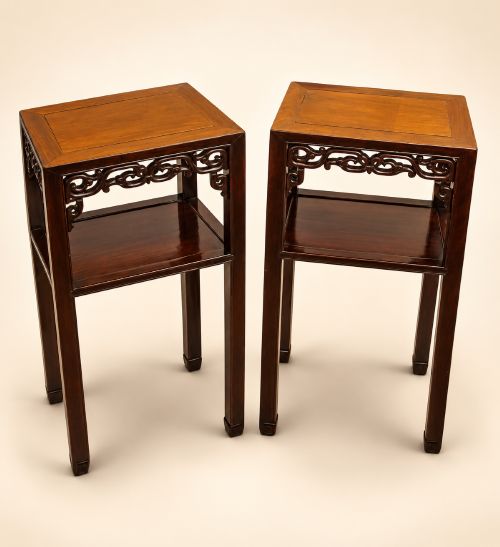
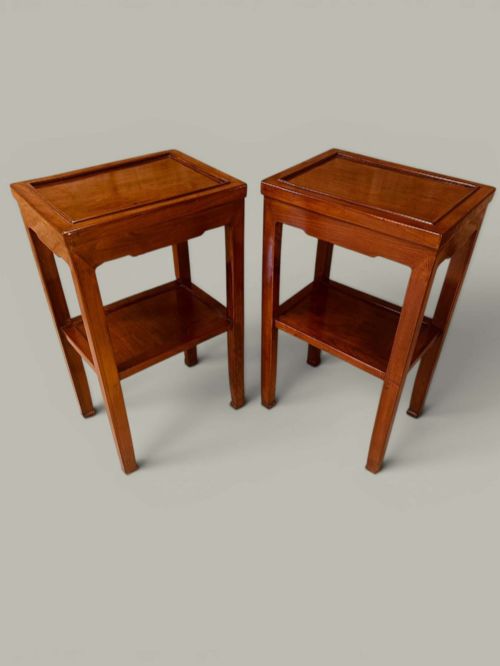
These brown hardwood end tables bring dense rosewood, teak, and huali surfaces into sitting rooms to hold lamps and books.
Brown Hardwood End Tables
When you search for brown hardwood end tables, you encounter low tables, side pieces, and nesting sets originating from Asian and Anglo-Indian workshops. These items serve beside seating to hold small objects and lighting.
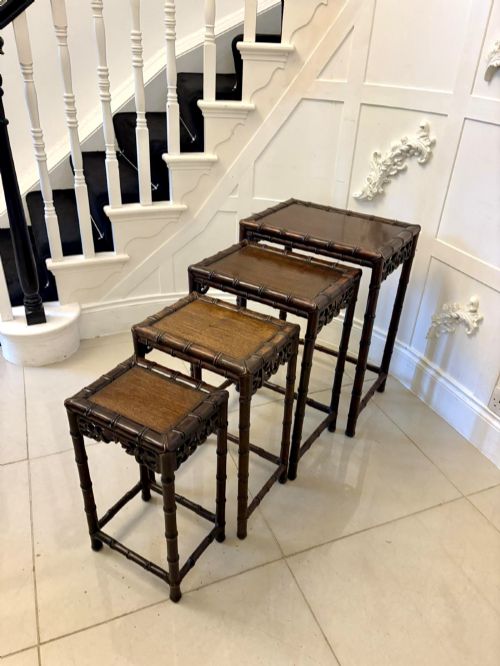
The pieces on this page span the nineteenth century through the early twentieth century, including Victorian examples alongside Qing Dynasty exports. Nesting tables and occasional side tables dominate the selection.
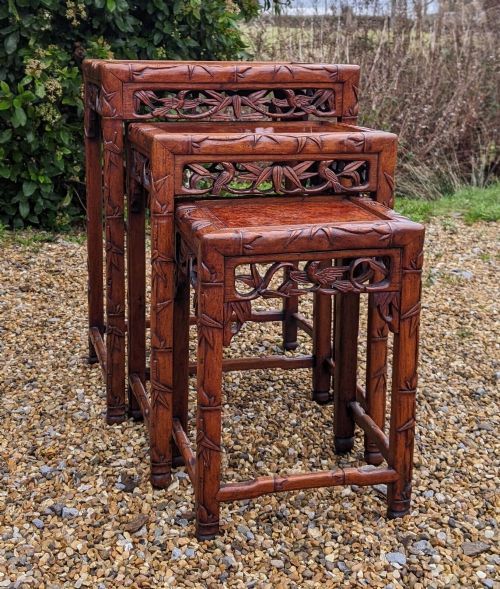
Forms range from simple rectangular tops to scroll-end kang tables and multi-tiered nesting sets. Each piece utilises dense timber chosen for durability and deep natural tone.
How they were made
Workshops utilised dense timbers such as rosewood, teak, huali, and partridge wood for structural integrity and rich grain patterns. Craftsmen shaped these resistant materials with hand tools, applying traditional joinery methods without metal fasteners.
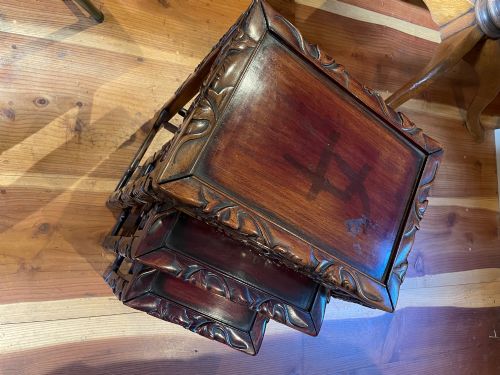
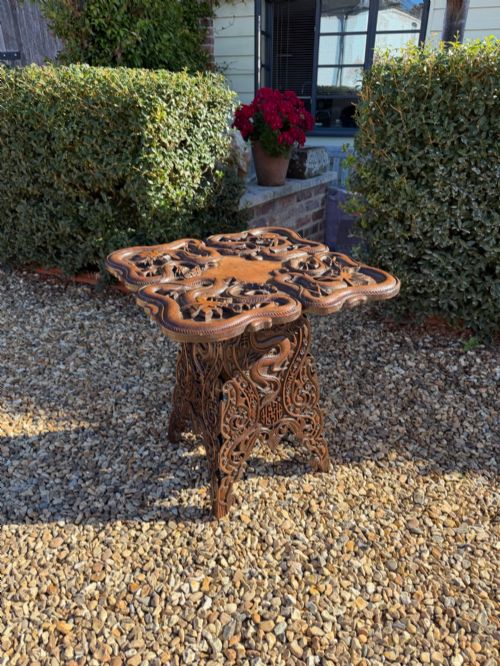
Carving and inlay feature prominently across the inventory, with artisans working bone inlay into wood surfaces or carving intricate leaf motifs and scroll ends directly into the solid hardwood. Finishing involved polishing the timber to highlight natural figures without obscuring the grain.
Brown Hardwood End Tables Retail Price Guide 2026
Typical asking prices for brown hardwood end tables among the pieces listed under this phrase on Sellingantiques today, from the lower quarter to the upper quarter. They describe what is for sale here now, not the wider market.
Camel tables bring decorative beasts into the room to carry your tea.
What varies in quality
The standard of carving distinguishes exceptional pieces from simpler utilitarian tables. Crisp, deep relief work on aprons and legs requires superior skill compared to shallow, mechanical scoring.
Timber selection and grain matching determine the visual weight of each piece. Tables constructed from figured huali or rosewood with consistent colour display greater harmony than mismatched boards.
The Brown Hardwood End Tables Glossary
- Kang table
- A low domestic table originating in China, traditionally placed upon a heated brick platform or used for serving tea. These pieces feature distinct scroll ends.
- Nest of tables
- A graduated set of smaller tables designed to slide neatly beneath one another when not in use. They maximise surface area while occupying minimal floor space.
- Huali
- A prized Chinese hardwood noted for rich colour and decorative grain. It forms the primary material for many Qing Dynasty tables.
- Anglo-Indian
- A style describing furniture made in India by local craftsmen for British colonial patrons, combining traditional Indian carving with European forms.
- Partridge wood
- A dense exotic timber named for its distinct speckled grain pattern resembling partridge feathers. It provides a durable surface for occasional furniture.
Brown Hardwood End Tables: Frequently Asked Questions
What is a kang table used for?
A kang table serves as a low surface for holding tea vessels, books, or decorative objects. In modern settings, they function effectively as coffee tables or low end pieces.
Their compact height and scroll ends suit placement beside low seating arrangements where standard tables appear too tall.
How do nesting tables work?
Nesting tables consist of multiple scaled pieces that stack together into a single footprint. You pull out individual tables as needed for guests or drinks.
This design offers practical versatility in smaller rooms without sacrificing surface area during gatherings.
How do I care for hardwood end tables?
Maintain hardwood surfaces by dusting with a dry cloth and avoiding harsh chemical polishes. Keep timber away from direct heat sources and strong sunlight to prevent splitting.
Occasional application of natural wax preserves the lustre of rosewood, teak, and huali grain.