
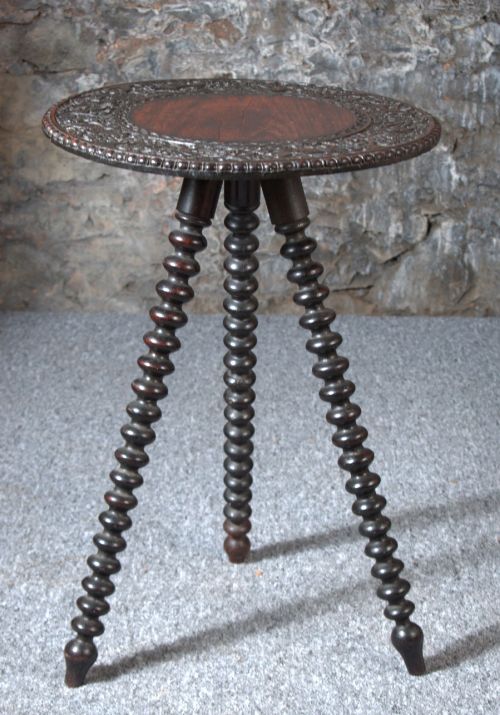


Hardwood Lamp Table
A hardwood lamp table brings solid timber grain and steady height to a corner, functioning as a practical perch for illumination or display.
Hardwood Lamp Table
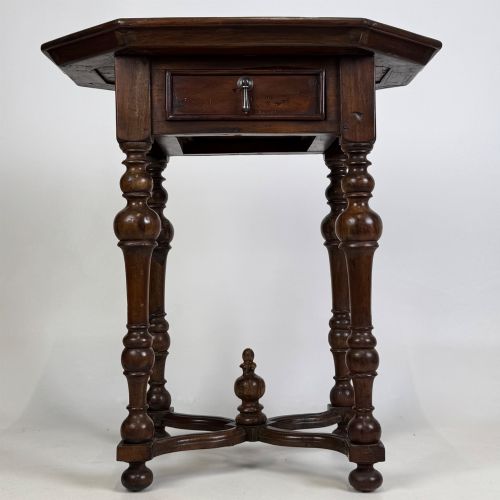
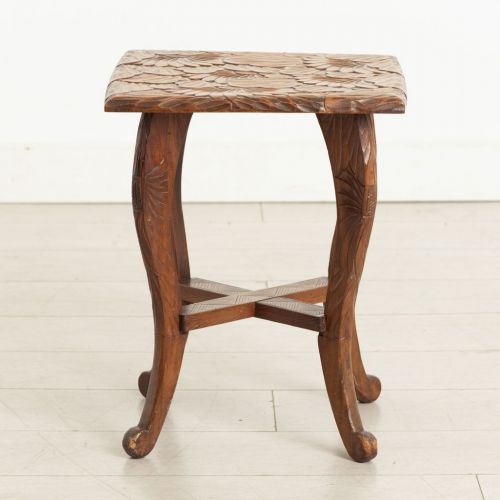
A hardwood lamp table is typically encountered as a compact stand originating from nineteenth or early twentieth century workshops, spanning Victorian designs to Qing Dynasty exports. These surfaces serve as occasional tables, jardiniere stands, or low coffee tables positioned beside seating.
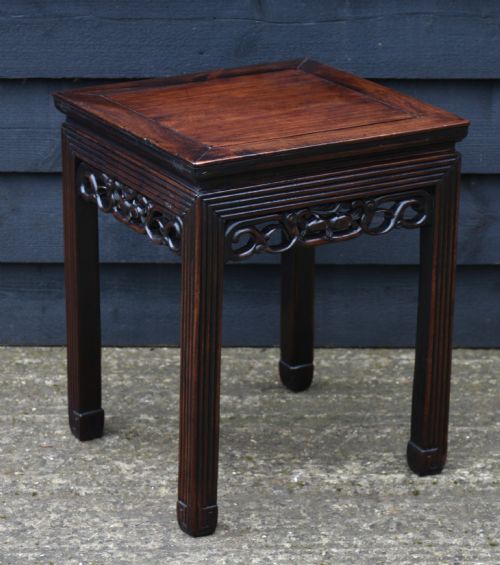
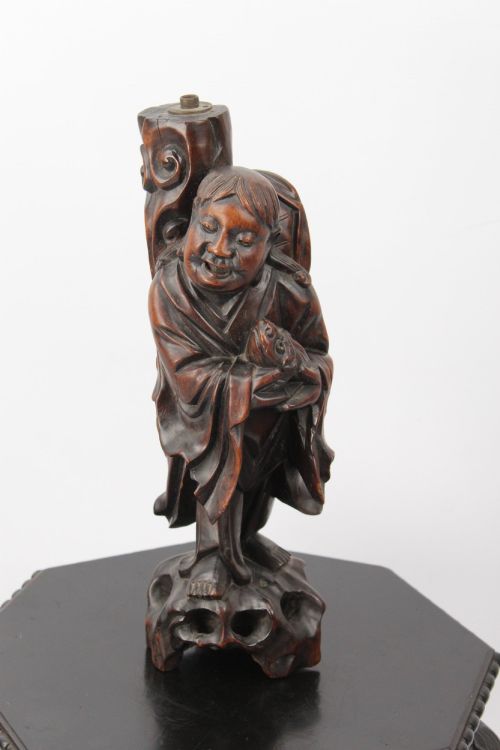
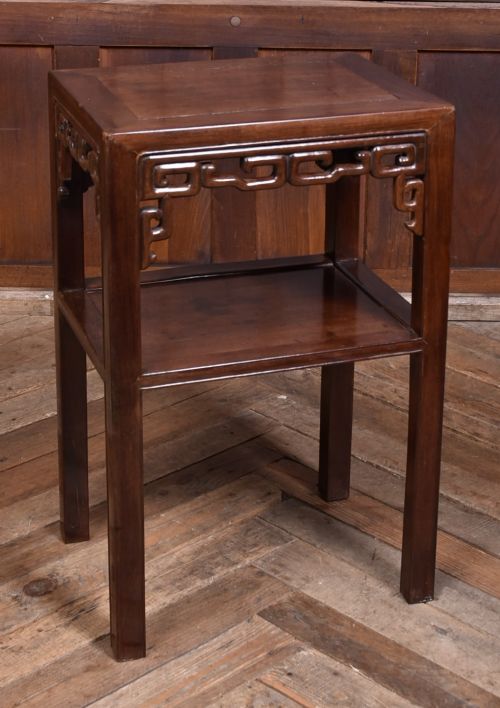
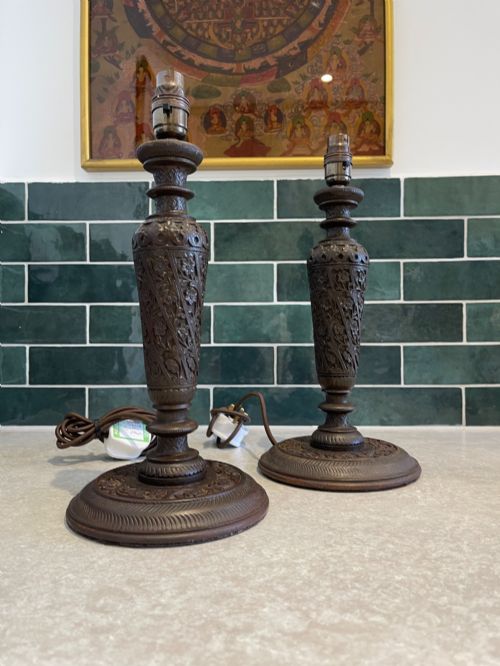
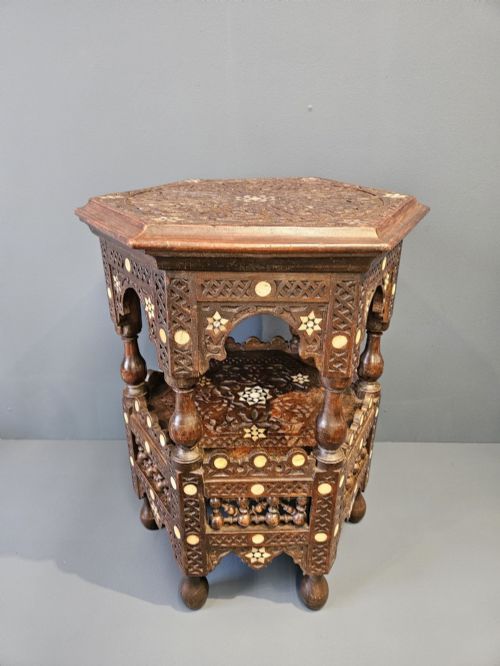
The selection ranges from Chinese rosewood and huali tables with carved motifs to Anglo-Indian padouk and Moorish octagonal stands. Buyers frequently meet pieces adapted from vase stands and lantern supports into household furniture.
Materials and Construction
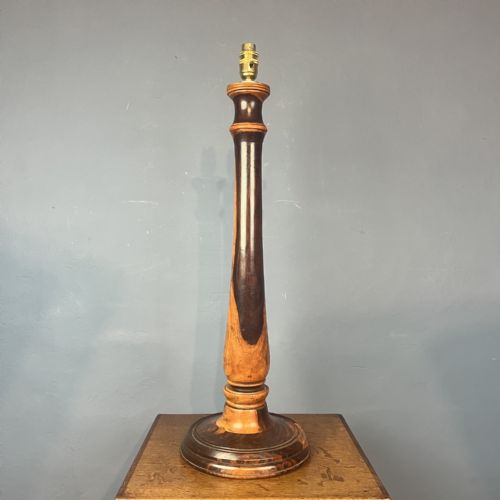
Makers utilised dense timbers such as rosewood, padouk, teak, and elm, relying on their natural weight and tight grain to support heavy ornaments without warping. Surfaces often incorporate inset marble panels, brass fittings, or intricate hand-carved dragon and floral motifs.
Joinery techniques prioritised rigid frames suitable for supporting tabletop lamps, using mortise and tenon joints across square, circular, and multi-sided table formats.
Several heavy nineteenth-century plant stands now lead a second life holding modern smart bulbs.
Evaluating Quality
Quality rests in the depth and crispness of the hand-carved ornamentation, where sharper relief and undercut detailing indicate greater labour from the maker. The selection of timber grain, particularly in rosewood and padouk pieces, dictates the visual impact of the top.
Structural integrity depends on the tightness of the joints and the precise fitting of inset marble tops, distinguishing workshop pieces from mass-produced items.
Liberty of London
The Hardwood Lamp Table Glossary
- Padouk
- A heavy, durable tropical timber with a reddish hue used in Anglo-Indian and Burmese furniture. It darkens gracefully over time with exposure to light.
- Jardiniere stand
- A tall, narrow occasional table designed to hold potted plants or heavy vases. These stands frequently double as lamp tables in modern interiors.
- Tilt top
- A tabletop mounted on a hinge mechanism that allows the surface to pivot vertically when not in use. This mechanism appeared on nineteenth-century occasional tables for easy storage.
Hardwood Lamp Table: Frequently Asked Questions
What is a hardwood lamp table used for?
These tables provide a stable surface for lighting, holding reading lamps, pocket items, or decorative items beside chairs and sofas.
Their compact footprints allow them to fit into narrow corners and alcoves where larger furniture cannot go.
How do I identify a Qing Dynasty table?
Look for dense timbers like rosewood or huali, traditional mortise joinery, and carved motifs depicting dragons, foliage, or Daoist symbols.
Many of these pieces arrived in Europe as export furniture during the nineteenth and early twentieth centuries.
Are marble top tables fragile?
The inset marble slabs are heavy and solid, set securely into wooden rebates to support lamps and heavy ornaments safely.
Care should be taken during relocation to ensure the supporting wooden frame bears weight evenly.
Where were Anglo-Indian tables made?
Workshops in regions such as Bombay and Kashmir produced these tables for export, combining British furniture forms with local carving traditions.
They typically utilise padouk or teak timbers, featuring dense floral or geometric inlay.