

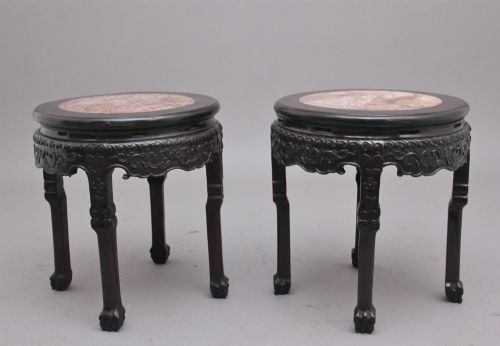
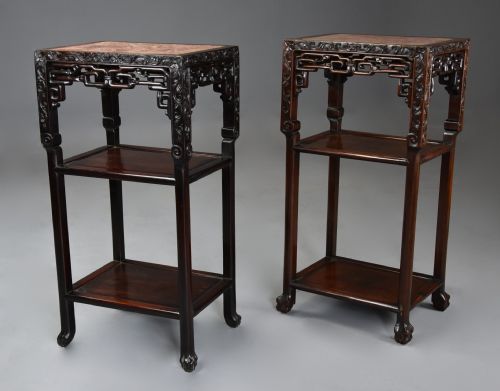

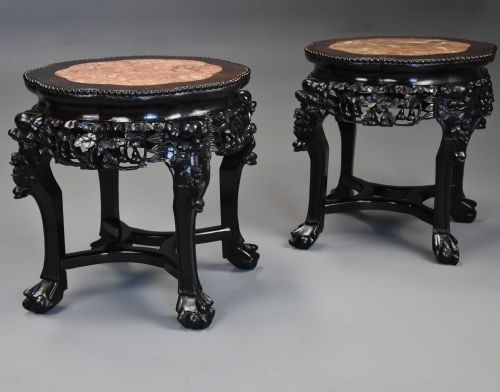
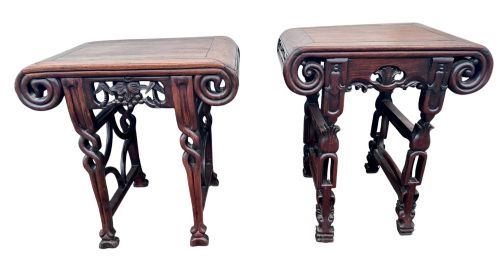


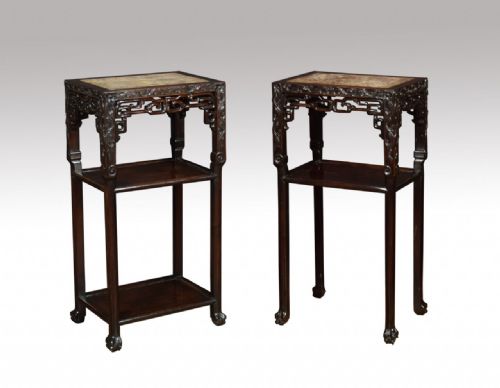

Pair Chinese Plant Stands
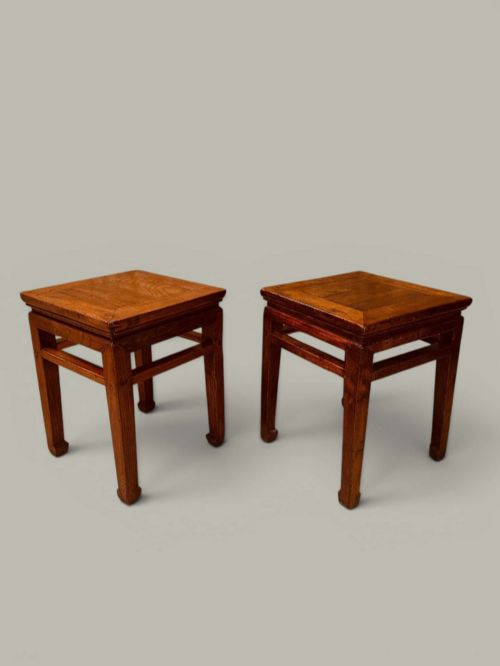
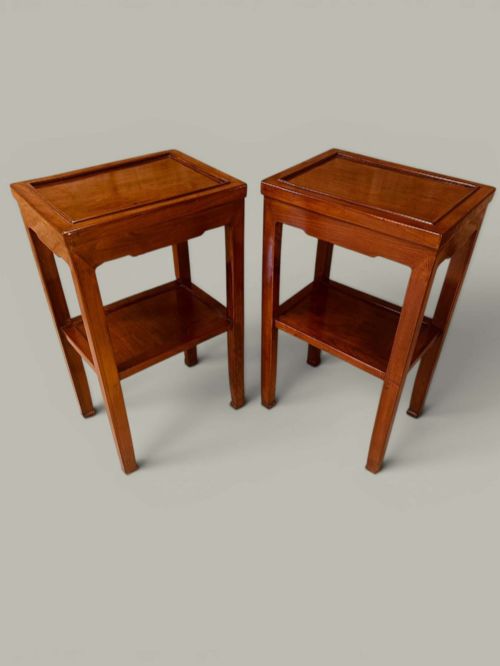
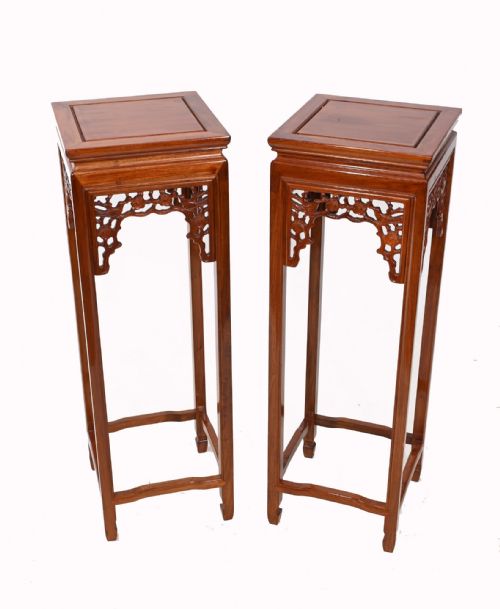
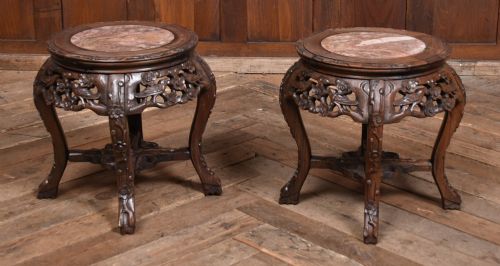
Pair chinese plant stands bring structured height and carved detail to interiors, offering a practical surface for greenery and urns.
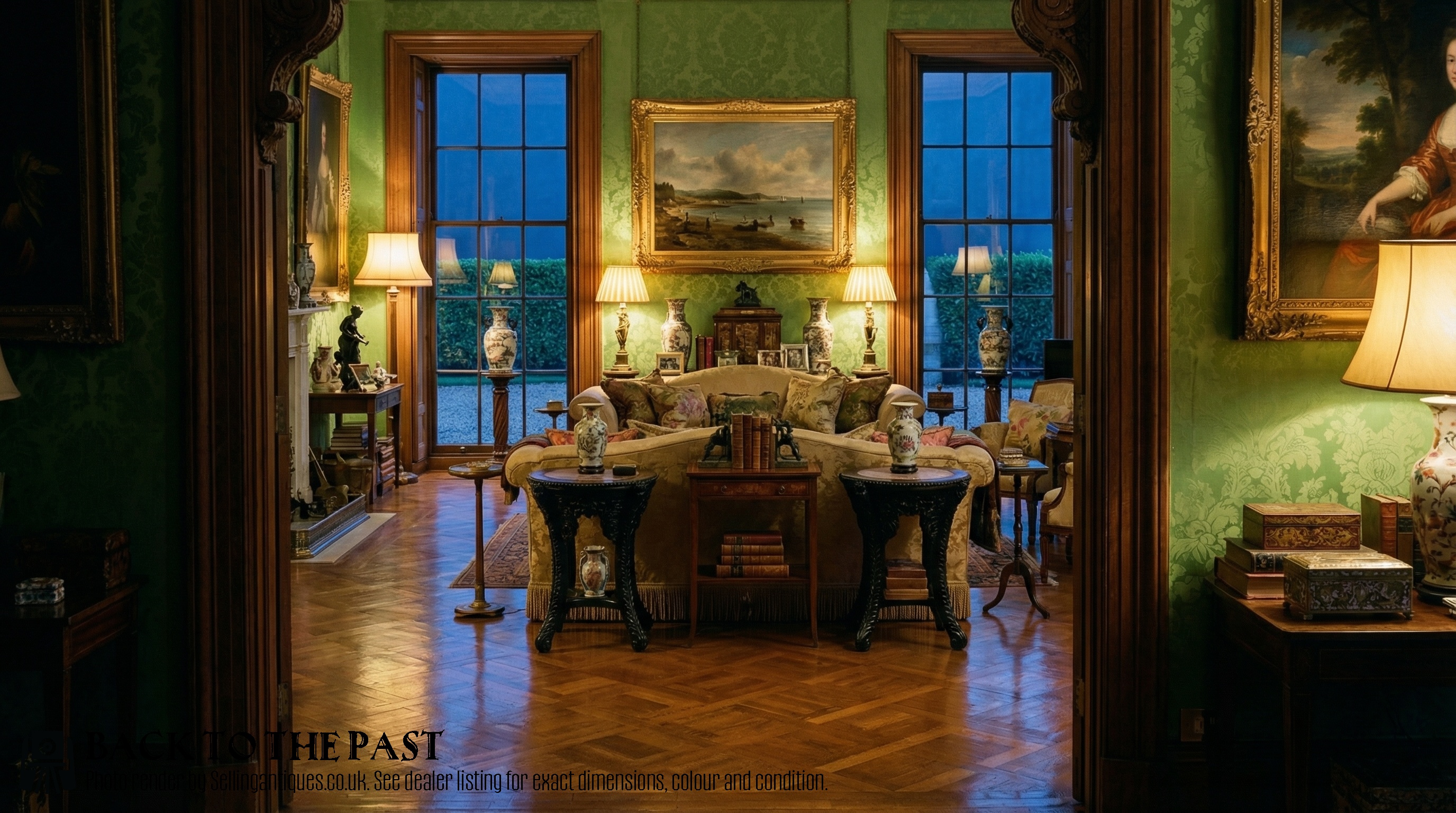
Pair Chinese Plant Stands
These items serve primarily as supports for flora, pottery, and decorative objects within a room. When exploring pair chinese plant stands, a buyer encounters forms ranging from low stools to tall pedestals.
The selections span the nineteenth century and extend into the early twentieth century, reflecting periods such as the Qing Dynasty and the Victorian era. Alongside traditional plant stands, the selection includes garden seats, side tables, and occasional tables.
Originating largely from Asian and Chinese traditions, these pieces often function interchangeably as lamp tables or urn supports. The matched configurations provide symmetry for interior placement.
Materials and construction methods
Construction relies heavily on dense hardwoods such as hongmu, huali, padouk, and rosewood, which provide the structural strength needed for carved designs. Artisans frequently integrated inset panels of rouge marble, porcelain, or burr wood into the top surfaces.
Decorative techniques involve intricate hand-carving, lacquer work, and mother-of-pearl inlay. Cloisonne enamel and painted elements appear on specific side tables and pedestals to add surface pattern.
Pair Chinese Plant Stands Retail Price Guide 2026
Typical asking prices for pair chinese plant stands among the pieces listed under this phrase on Sellingantiques today, from the lower quarter to the upper quarter. They describe what is for sale here now, not the wider market.
Distinctions in craftsmanship
Depth and crispness of the hand-carving separate standard items from superior examples. The precision in joining heavy tropical hardwoods dictates structural longevity.
Quality also manifests in the selection of inset materials, such as finely figured marble or intact porcelain panels. Grain definition within the rosewood or huali further elevates the visual merit of the woodwork.
The Pair Chinese Plant Stands Glossary
- Hongmu
- A traditional Chinese term denoting dense, red-brown hardwoods used for fine furniture. Artisans prized this timber for its ability to hold intricate relief carving.
- Huali
- A fragrant hardwood variety from the rosewood family utilised in Qing Dynasty seating and tables. It displays a distinctive grain pattern.
- Cloisonne
- An enamel technique where metal wire forms compartments on a base before paste filling and firing. This method adorns specific tables and stands.
- Padouk
- A durable exotic timber known for its deep reddish hue and stability. It appears frequently in nineteenth-century Oriental tables and jardiniere supports.
- Clobbered
- A process where older porcelain receives overglaze decoration and a second firing. This alteration changes the original visual appearance of garden seats and vessels.
Pair Chinese Plant Stands: Frequently Asked Questions
What were pair chinese plant stands used for originally?
These supports held heavy porcelain jardiniere pots, urns, and exotic plants within traditional interiors. They elevated greenery to catch natural light and protected interior floors from damp earth.
Over time, owners adapted them as side tables for lamps and decorative objects. Their sturdy hardwood frames suited daily utility in reception rooms.
How do I style pair chinese plant stands at home?
Place matching stands symmetrically on either side of a fireplace, doorway, or large piece of furniture. Their varied heights allow for layered displays of ceramics or trailing plants.
Mixing tall pedestals with low stools creates visual rhythm across an interior. The dense wood tones complement both contemporary and traditional room schemes.
How are different periods identified?
Nineteenth-century pieces often display heavy Qing Dynasty carving styles and dense hongmu or rosewood construction. Pieces marked by later decades incorporate transitional elements from the Republic period and early twentieth-century production.
Surface treatments like mother-of-pearl inlay or inset marble help differentiate specific regional workshops. Construction joints and timber weight offer further clues to age.
What is the difference between a plant stand and a garden seat?
Plant stands typically feature elevated legs and flat or recessed tops designed specifically for supporting vessels. Their construction prioritises height and delicate perimeter carving.
Garden seats adopt barrel forms and heavier ceramic or wooden construction intended for versatile seating or display. These drum-shaped items frequently feature pierced coin motifs and vibrant glazes.