






Rouge Marble Table
These pieces turn a distinctive deep-red stone top into a functional surface, offering both European polish and Chinese craftsmanship.
Rouge Marble Table
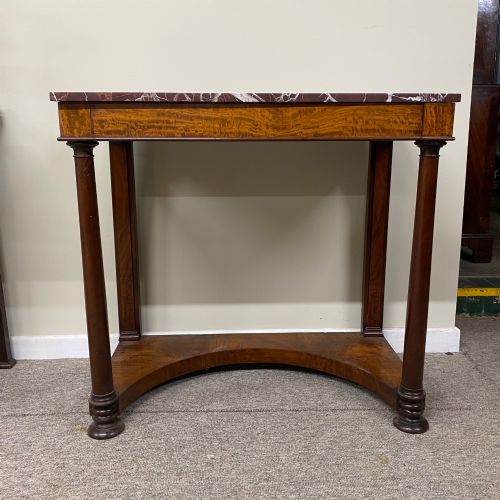
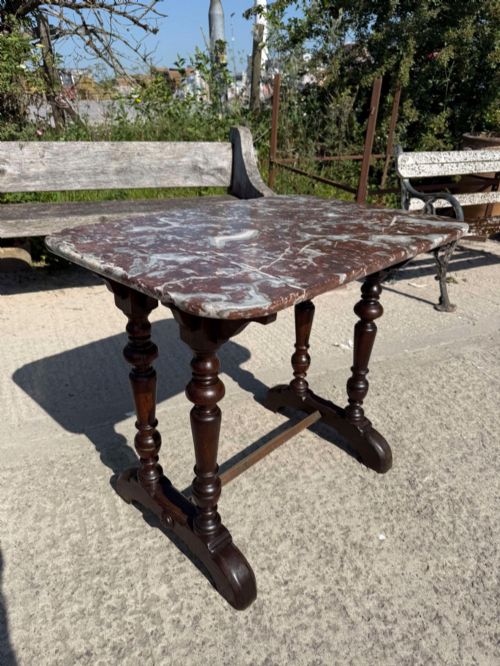
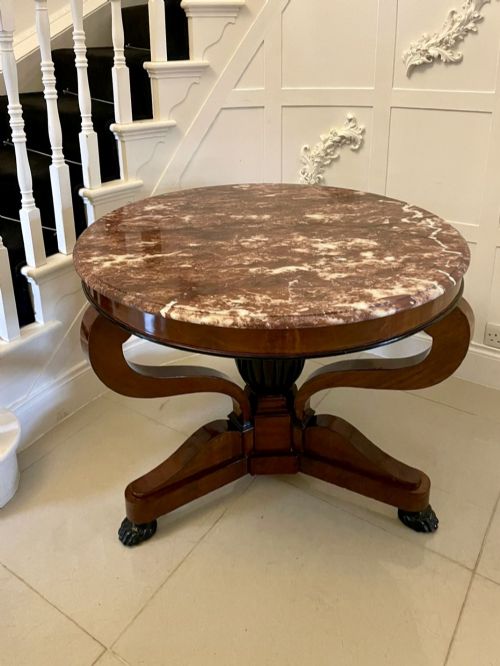
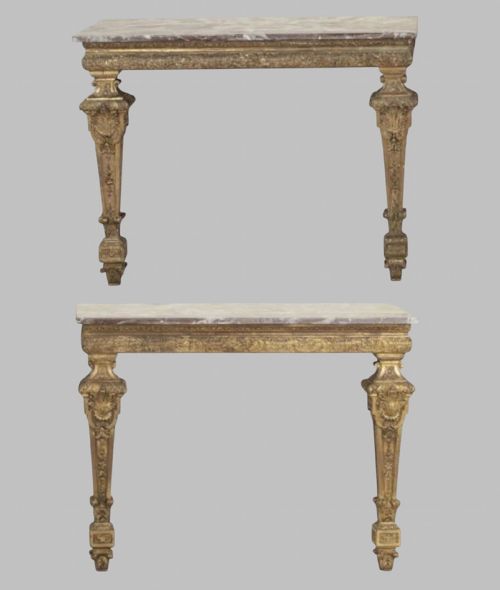
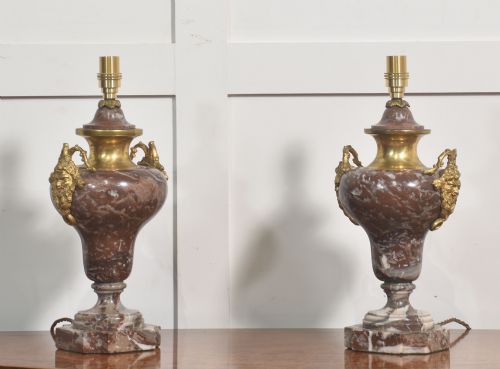
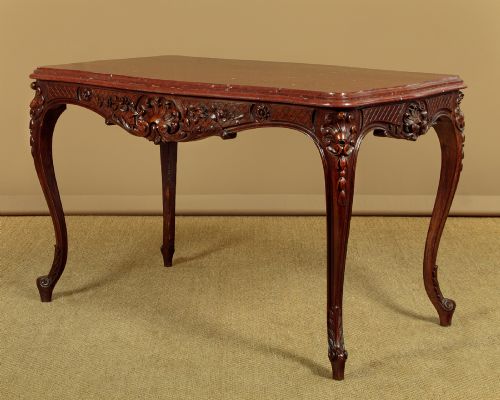
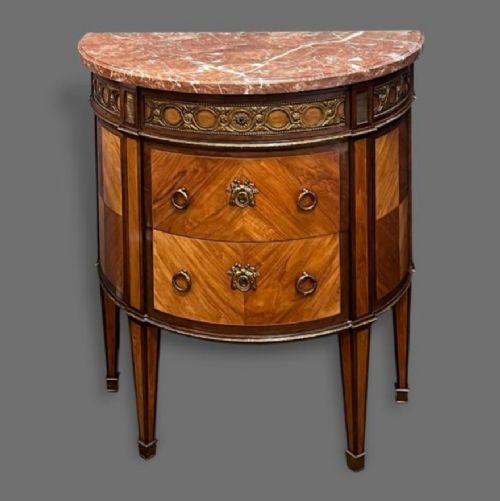
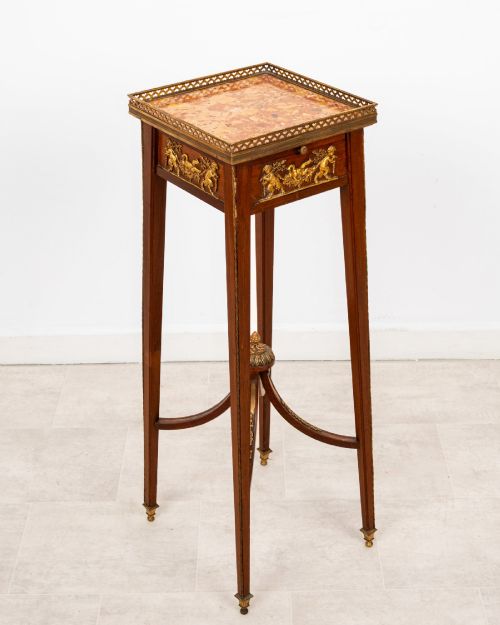
A rouge marble table brings together a vibrant, variegated red stone slab and a supporting structure of wood, gilt metal, or bronze. You will find these pieces appearing across multiple design traditions, from French parlour furnishings to Chinese hardwood stands.
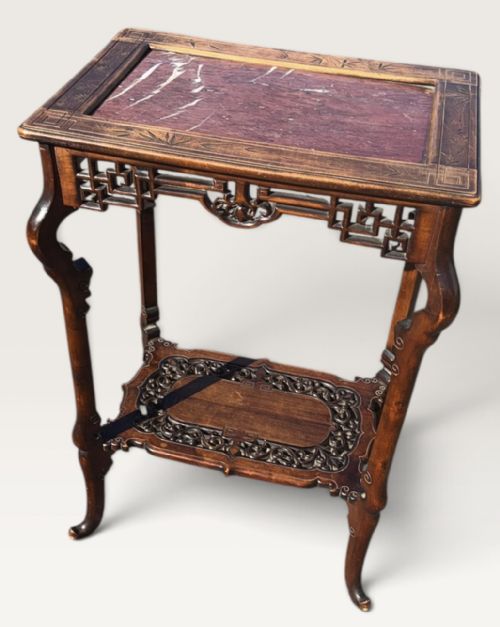
The selection ranges widely in form, spanning centre tables, console tables, side tables, and compact jardiniere or plant stands. French iterations frequently pair the stone with mahogany, walnut, or ormolu mounts, whilst Chinese pieces utilise rosewood, huanghuali, and carved hardwood.
Dating primarily from the nineteenth century into the early twentieth century, these items reflect both European revival styles and Qing Dynasty craftsmanship. The stone insert remains the unifying element across diverse forms, functioning as a smooth top for display or daily use.
Materials and construction
Makers shaped dense rouge marble into thick slabs, sawing and polishing the stone to reveal complex natural veining in shades of red, white, and grey. This distinctive marble was then set into precisely channelled wooden frames or mounted directly onto metal bases.
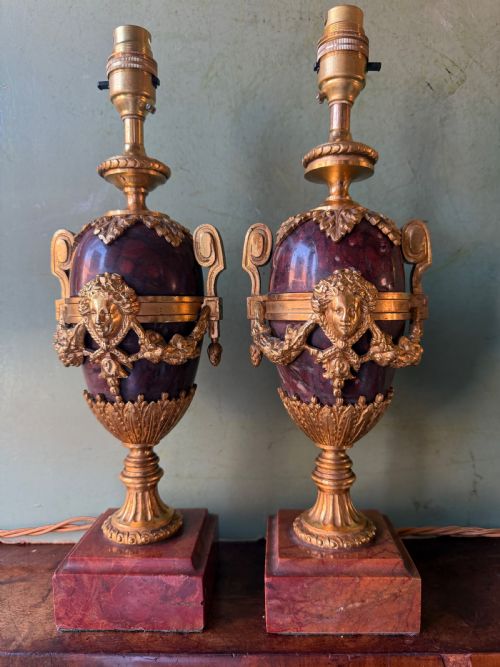
Cabinetmakers and carvers utilised dense timbers such as mahogany, walnut, rosewood, and huanghuali to construct the supporting tables and stands. In French workshops, artisans cast and fire-gilded bronze ormolu mounts to accent the corners and borders of the stone.
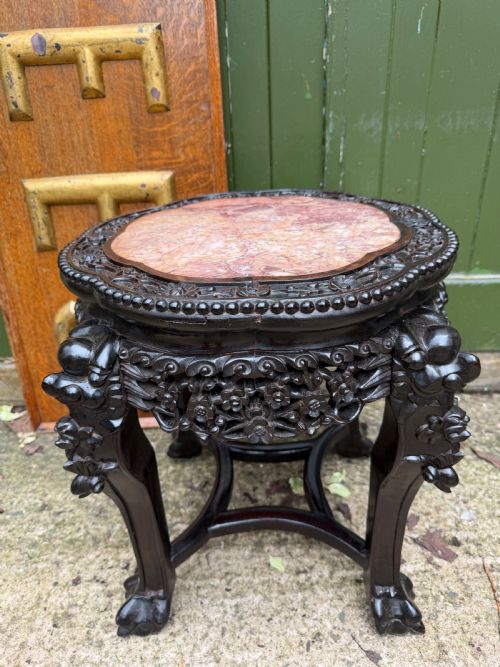
Chinese workshops employed traditional joinery in carved hardwood frames to secure inset marble panels without the use of metal fixings. This combination of heavy stone and detailed timber or bronze work required sturdy joinery to support the weight.
Rouge Marble Table Retail Price Guide 2026
Typical asking prices for rouge marble table among the pieces listed under this phrase on Sellingantiques today, from the lower quarter to the upper quarter. They describe what is for sale here now, not the wider market.
Listings demonstrate that rouge marble tops appear on both nineteenth-century French parlour furniture and Qing Dynasty Chinese hardwood stands.
Judging the range
The quality of a rouge marble table rests largely on the depth and movement within the stone slab itself, alongside the crispness of the surrounding carving or metalwork. Superior examples display richly figured marble tightly fitted to the frame without excessive cement fillers.
In wooden tables, the execution of the carving - whether fluid Louis XV acanthus scrolls or detailed Qing Dynasty floral motifs - distinguishes finer pieces from simpler utility items. Ormolu mounts and cast bronze elements show greater refinement when hand-chased after casting rather than left raw from the mould.
François Linke
The Rouge Marble Table Glossary
- Rouge marble
- A dense, polished limestone with a predominantly red ground marked by white or grey calcite veins. It provides a smooth, cool surface prized for decorative furniture tops.
- Ormolu
- Gilt bronze produced by applying a mercury and gold amalgam to cast bronze and firing it to drive off the mercury. This technique creates a rich, matte gold finish found on French mounts.
- Jardiniere stand
- A low or tall support designed to hold a plant container or urn. These stands frequently feature inset marble panels to protect the wood from water.
- Hongmu
- A category of dense, dark Chinese hardwoods utilised for fine furniture and stands. The term translates simply to red wood.
- Console table
- A wall-mounted or freestanding table supported by front legs or brackets. They often feature shaped marble tops designed to fit tight against drawing room walls.
Rouge Marble Table: Frequently Asked Questions
How do I clean a rouge marble top?
Wipe the surface gently with a soft, damp cloth using plain warm water. Avoid acidic cleaners, vinegar, or harsh detergents that etch or dull the polished stone.
Dry the marble thoroughly with a clean microfibre cloth to prevent water spots. Applying a specialist stone wax occasionally helps protect the gloss.
Were these tables used for dining?
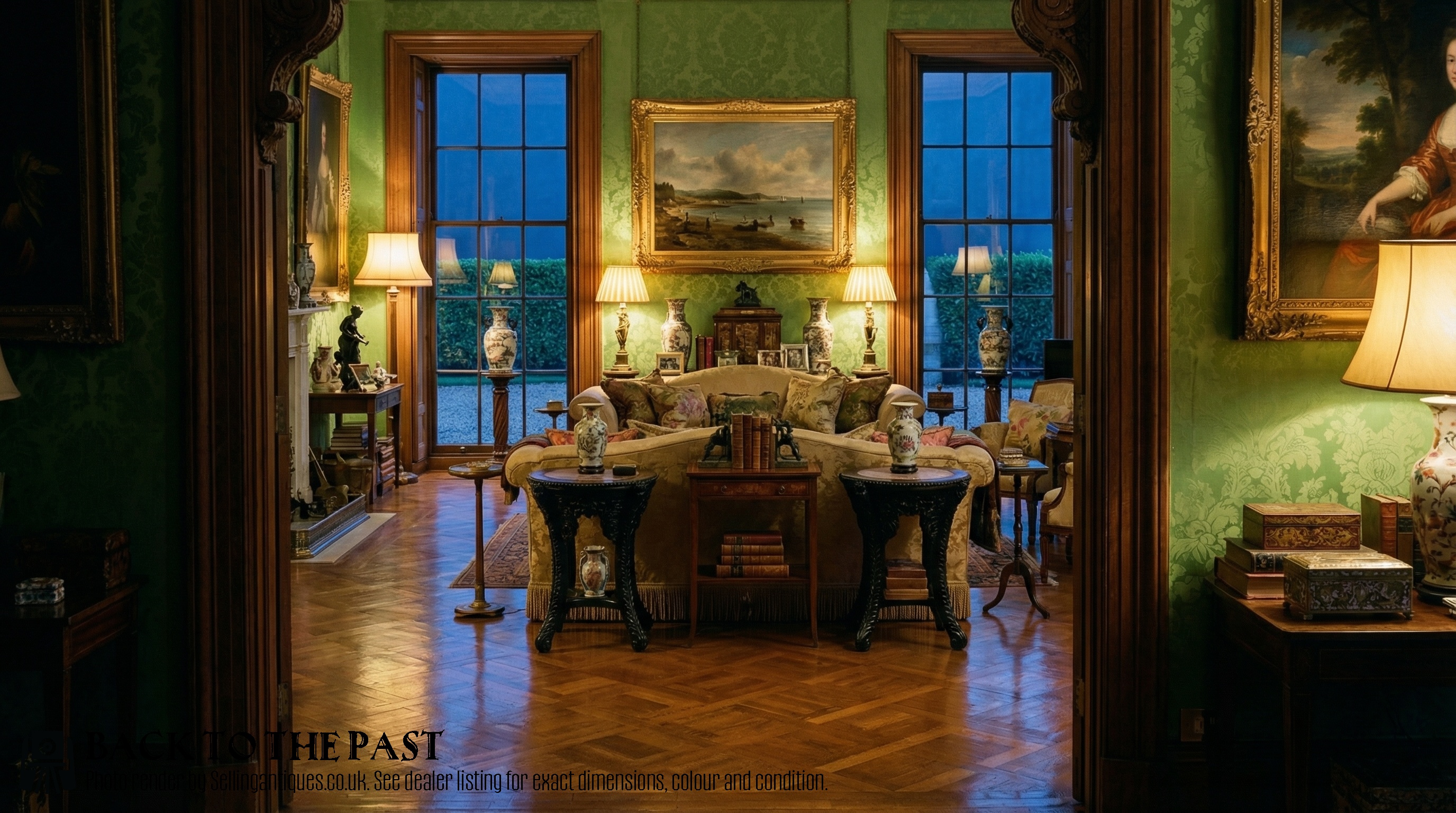
Most pieces listed as centre tables or side tables served decorative or parlour functions rather than heavy dining use. Their polished stone tops functioned well for displaying lamps, clocks, and small decorative objects.
Smaller stands were specifically built to elevate plants, porcelain urns, or table lamps. Their sturdy stone inserts safely handled the weight and minor spills from potted plants.
How do I tell French and Chinese styles apart?
French examples typically draw on European revival periods like Louis XV or the Victorian era, incorporating gilt bronze mounts, walnut, or mahogany. Their carved details often feature asymmetrical scrolls, shells, and acanthus leaves.
Chinese pieces utilise dense rosewood, huanghuali, or ebonised hardwood frames carved with restrained floral or geometric panels. The marble inserts fit flush into deep timber recesses following Qing Dynasty traditions.
Is rouge marble fragile?
Rouge marble is a hard limestone that withstands normal daily placement of lamps and decorative objects. However, it remains susceptible to chipping along sharp edges and staining from acidic liquids like wine or fruit juice.
Because the stone is heavy and brittle, care must be taken when moving the table to prevent the slab from flexing or cracking within its frame.