
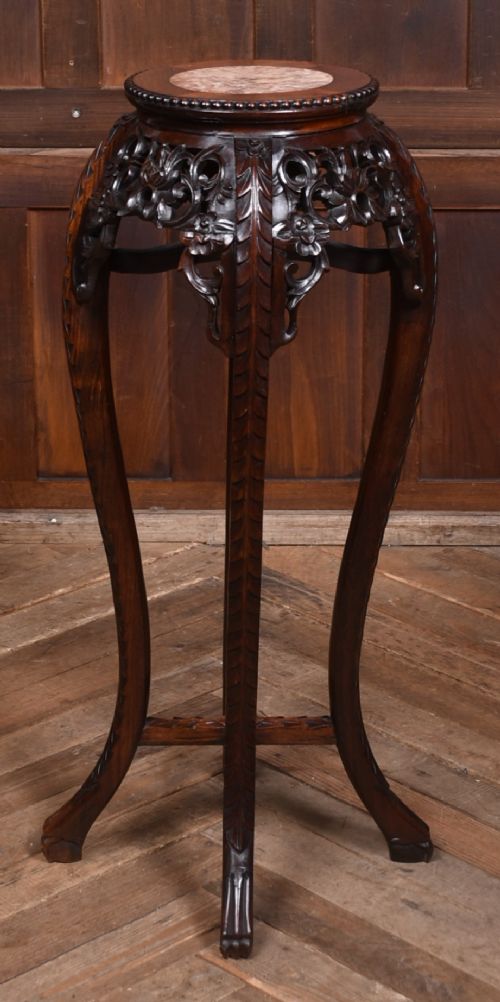


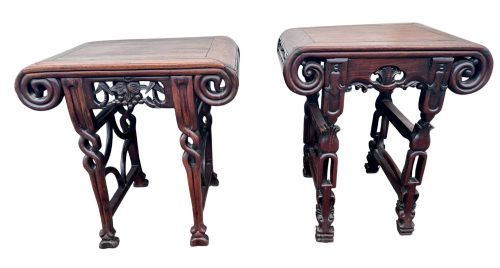


Chinese Carved Pedestal Stands
Chinese carved pedestal stands elevate heavy ceramics and interior planting while displaying intricate joinery from the nineteenth and early twentieth centuries.
Chinese Carved Pedestal Stands
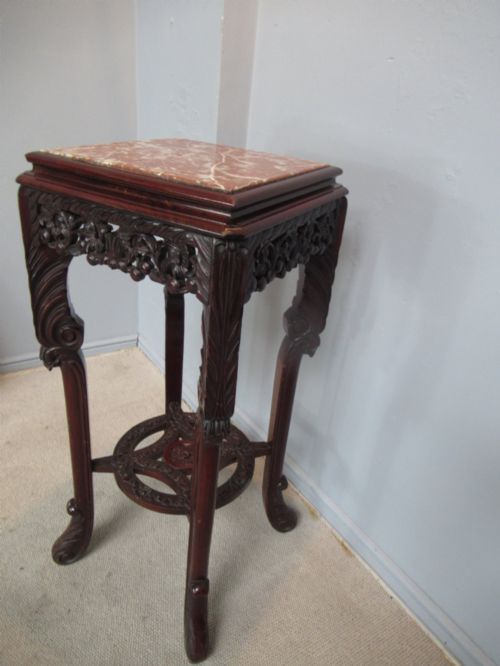
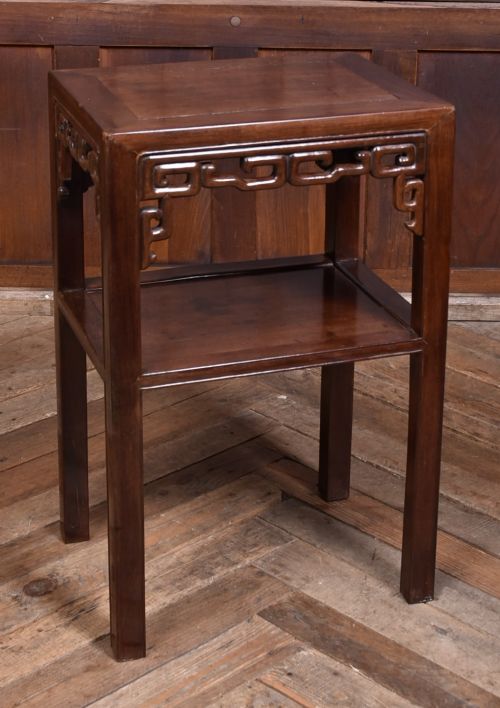
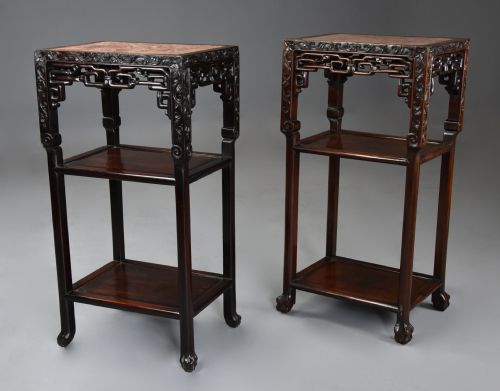
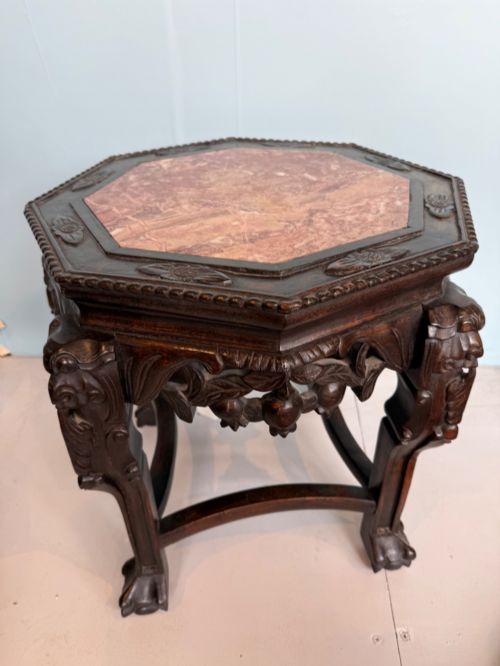
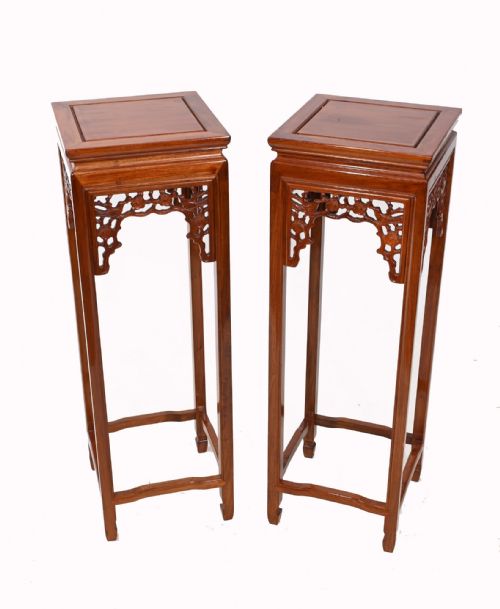
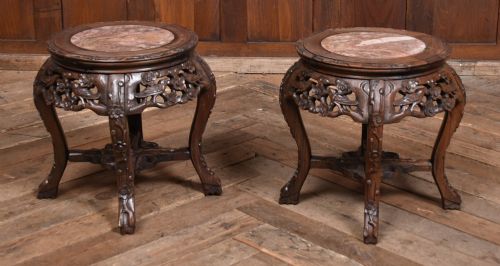
Chinese carved pedestal stands appear primarily as nineteenth-century hardwood supports designed to elevate porcelain planters, vases and bronze vessels within domestic interiors. These furnishings take several forms, including round pot stands, square jardiniere tables and tall torchères dating from the late Qing dynasty.
Most examples seen here are constructed from dense imported timbers and frequently feature inset stone tops made of rouge marble or quartz. Makers designed these pieces to serve both practical botanical functions and decorative display roles across diverse rooms.
Materials and construction
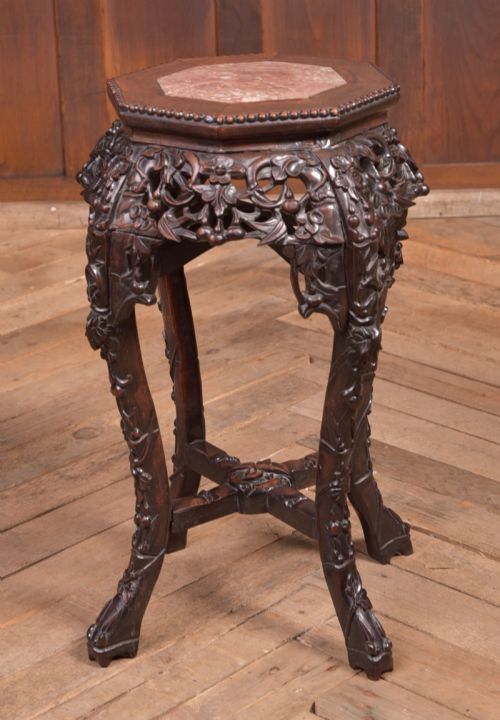
Craftsmen utilised heavy tropical hardwoods such as padouk, rosewood, huali wood and general oriental timber, chosen for their capacity to hold deep, undercut relief carving. These materials withstand the structural demands of supporting heavy stone inserts without warping.
Joinery methods relied on precise interlocking frames rather than simple metal fasteners, allowing the wood to accommodate natural expansion. Surfaces often received hand-rubbed wax finishes to highlight the natural grain, or occasional applications of lacquer and polychrome paint.
Rootwood specimens utilise organic, gnarled tree formations where craftsmen deliberately worked around natural knots to create eccentric plant tables.
Judging quality
Quality rests in the depth and crispness of the hand-carved foliage, dragons or scrolling motifs, where master carvers achieved distinct separation from the background panel. Lower grades display shallow, mechanical stamping or lack the sharp undercut edges found on finer specimens.
The integration of the inset marble or stone top dictates overall refinement, with superior items showing tight, flush fits without filler materials. Heavier, dense timbers and well-preserved structural integrity separate everyday utility tables from exceptional decorative works.
The Chinese Carved Pedestal Stands Glossary
- Jardiniere stand
- A low or medium table specifically engineered to hold heavy ceramic plant containers and water reservoirs. These tables often incorporate protective marble inserts to guard against moisture.
- Torchère
- A tall, slender pedestal stand designed to elevate a single lamp, candleholder or display vase. They utilise elongated proportions and stable base structures.
- Padouk
- A heavy, durable reddish-brown tropical hardwood favoured by traditional cabinetmakers for its strength and rich colour. It takes a high polish and supports deep relief carving.
- Huali wood
- A fragrant and highly figured Chinese hardwood prized during the Qing dynasty for high-status furniture. Its complex grain patterns contribute significantly to the visual appeal of stands.
- Mother of pearl inlay
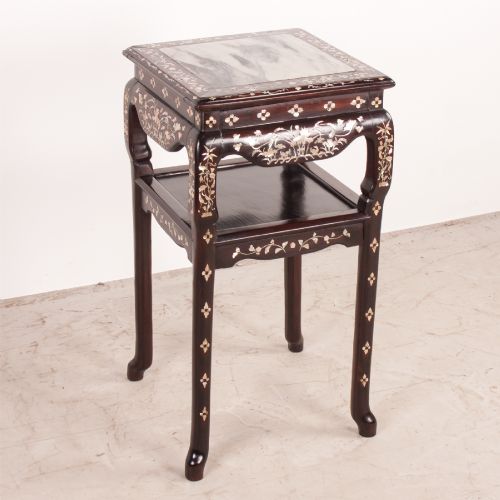
- A decorative technique embedding thin shimmering shell fragments into prepared recesses within the timber surface. It creates contrasting geometric or floral patterns against dark wood.
Chinese Carved Pedestal Stands: Frequently Asked Questions
What were Chinese pedestal stands used for?
These furnishings primarily supported heavy porcelain fishbowls, ceramic planters, bronze vessels and decorative sculptural displays inside scholar's studios and reception rooms.
They also functioned as occasional side tables for lamps, tea sets and scholarly objects within traditional households.
How do I identify a Qing dynasty stand?
Qing period stands typically exhibit dense tropical hardwoods, traditional mortise and tenon joinery, and naturalistic carvings of prunus, dragons or scrolling foliage.
Dating relies on stylistic markers and material weight rather than maker's marks, which rarely appear on export furniture of this type.
How do I clean a hardwood stand?
Maintain the timber surface by dusting regularly with a soft, dry cloth and applying high-quality beeswax sparingly to nourish the grain.
Avoid placing these tables near direct heat sources or moisture to protect the traditional joinery and stone inserts.