


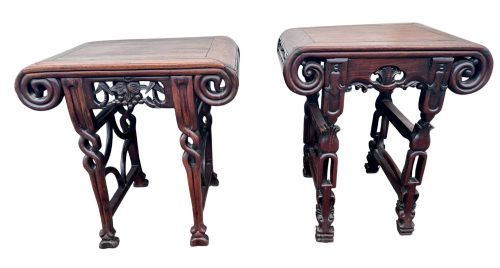
Hardwood Pedestal Stand
These hardwood pedestal stand pieces elevate plants and vases, bringing rich timber grains and carved detail into a room.
Hardwood Pedestal Stand
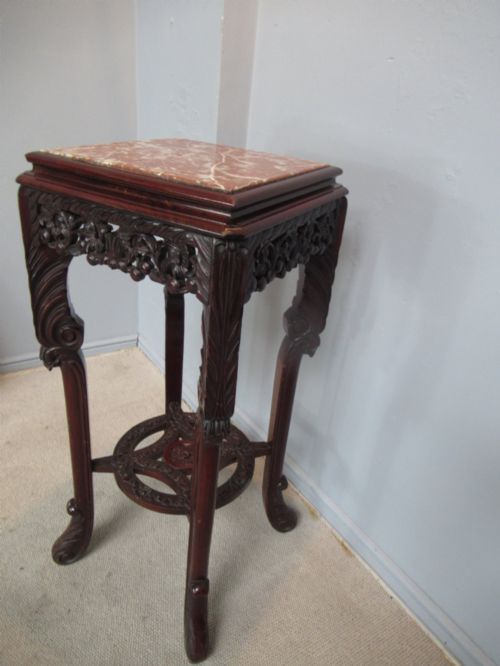
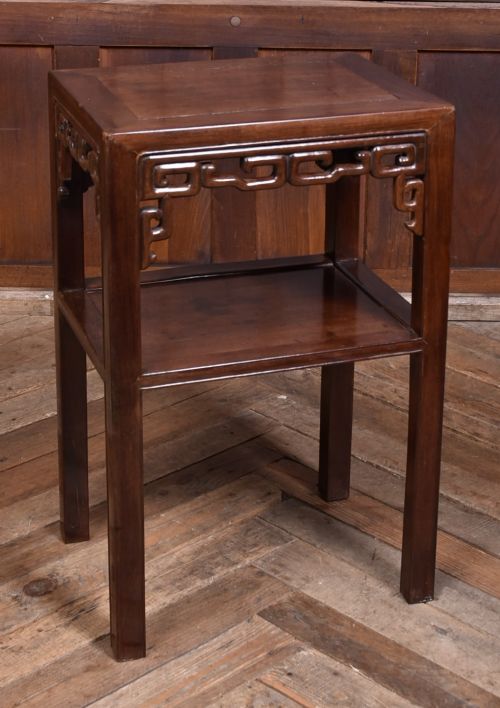
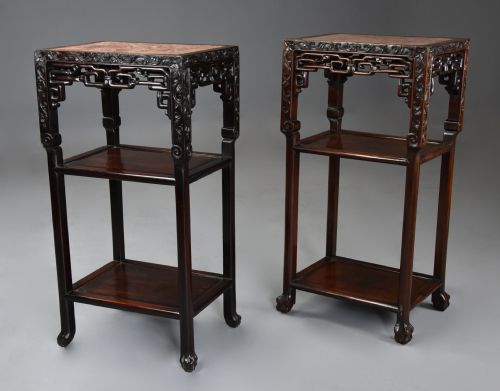
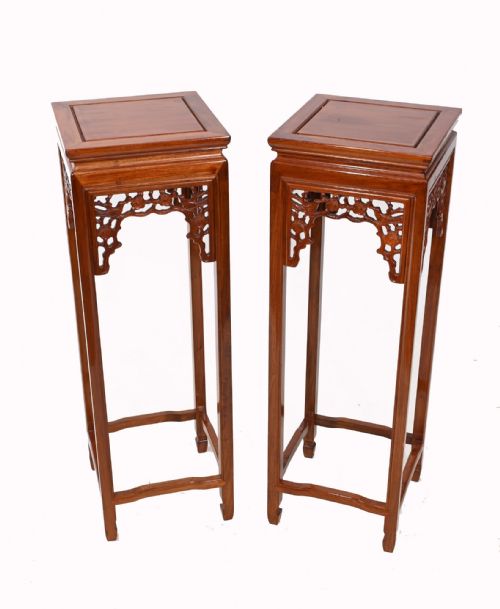
A hardwood pedestal stand provides an elevated surface designed specifically to display plants, urns, and decorative vessels within a room. When exploring this selection, buyers frequently encounter pieces originating from nineteenth-century Chinese workshops alongside Victorian domestic furniture.
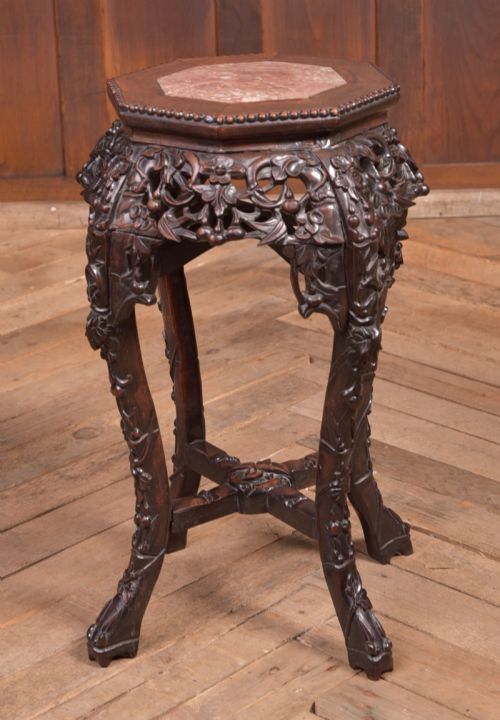
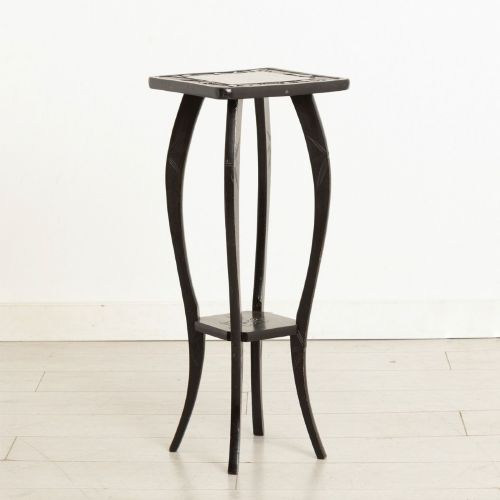
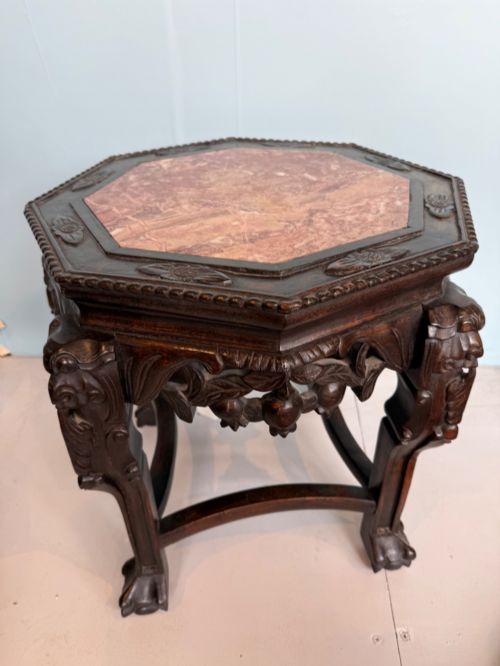
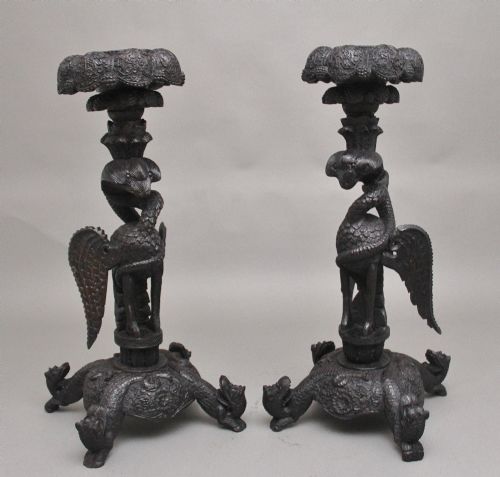
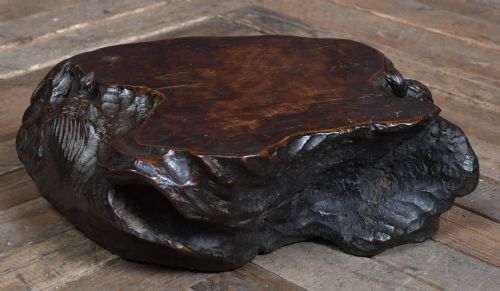
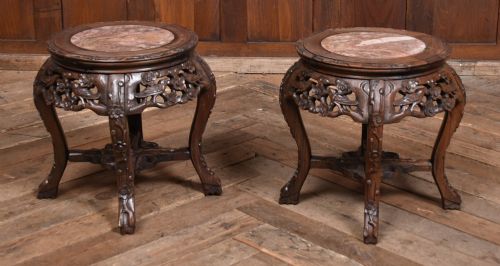
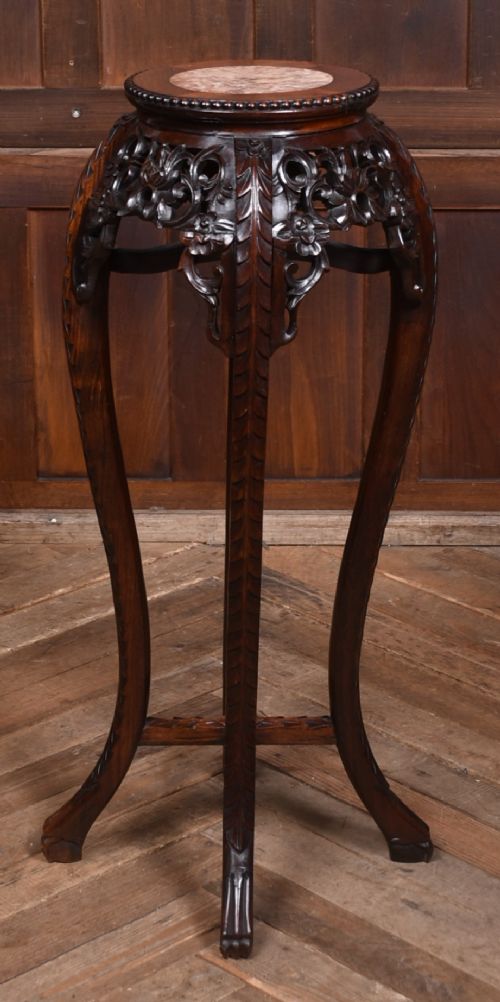
The dominant forms appearing here include compact pot stands, tall torcheres, and marble-topped tables intended for ornamental display. These objects combine practical height with intricate carving, reflecting traditional craftsmanship from diverse regional origins.
How they were made
Craftsmen utilised dense timbers such as rosewood, padouk, teak, and mahogany, selecting them for their strength and deep natural colour. These durable materials allowed artisans to execute complex hand-carved motifs without compromising the structural integrity of the narrow legs and supports.
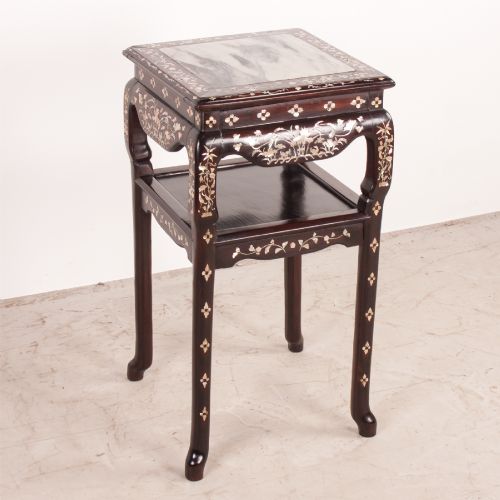
Many examples incorporate inset marble slabs or contrasting mother of pearl inlay within the wooden framework to create varied surface textures. Joinery techniques relied on precise interlocking joints rather than metal fixings, ensuring stability for heavy ceramic planters.
Listings feature nineteenth-century Chinese export pieces, Victorian ebonised occasional tables, and Anglo-Indian carved torcheres constructed from rosewood, padouk, and teak.
What varies in quality
The distinction between standard and superior pieces rests on the depth and crispness of the hand-carved ornamentation. Finer examples display undercut foliage and animal motifs with sharp definition, whereas lesser items show softer, shallower relief work.
Material selection also dictates overall merit, particularly the grain quality of the rosewood or padouk and the absence of repairs to the inset marble tops. Well-balanced proportions and heavy timber weight indicate superior workshop production.
Liberty of London
The Hardwood Pedestal Stand Glossary
- Torchere
- A tall, slender stand designed to hold a light source, plant, or decorative vase. These pieces typically feature elongated legs and a compact top surface.
- Jardiniere stand
- A specialised table created to support a plant container or flower pot. They frequently incorporate water-resistant inset tops made of marble or tile.
- Padouk
- A heavy, durable tropical hardwood prized for its reddish-brown colour and stability. Artisans utilised this timber extensively for nineteenth-century carved display furniture.
- Ebonised wood
- Timber treated with a dark finish to imitate expensive ebony. This technique was popular in Victorian manufacturing for decorative occasional furniture.
- Anglo-Indian
- A descriptive term for furniture made in India by local craftsmen using British stylistic influences. These items often feature dense, elaborate vegetal carving.
Hardwood Pedestal Stand: Frequently Asked Questions
What is a hardwood pedestal stand used for?
These stands function primarily as elevated platforms for heavy ceramic planters, bronze urns, and decorative porcelain vases. Placing vessels at height protects delicate flooring and draws the eye upward.
Historically, scholars and collectors utilised smaller versions to display treasured scholarly objects or bonsai specimens. Today, they serve a similar decorative purpose in living spaces and hallways.
How do I identify Chinese export stands?
Chinese export stands typically feature dense tropical hardwoods like rosewood or padouk combined with traditional mortise and tenon construction. Stylistic markers include pierced apron carvings, cabriole legs, and inset marble panels.
Many nineteenth-century examples display motifs derived from Qing dynasty design, such as prunus blossom or key-pattern borders. Their weight and joinery distinguish them from later reproductions.
Are marble top stands water resistant?
The inset marble panels provide a durable, wipe-clean surface that withstands occasional moisture from potted plants. This practical addition protects the surrounding wooden frame from water damage during watering.
However, extreme saturation can still seep into the surrounding timber rebates, so liners remain advisable underneath live plants.
How do I care for antique hardwood furniture?
Maintain the timber by dusting regularly with a soft, dry cloth and applying occasional beeswax to nourish the grain. Avoid placing pieces near direct heat sources or strong sunlight to prevent wood splitting.
Marble inserts require simple cleaning with a damp cloth and mild soap, avoiding acidic cleaning agents that etch the polished stone surface.