
Pair of End Tables
A matched pair of end tables provides symmetry and surface space by a sofa or bed, drawing on centuries of cabinet-making traditions.
Pair of End Tables
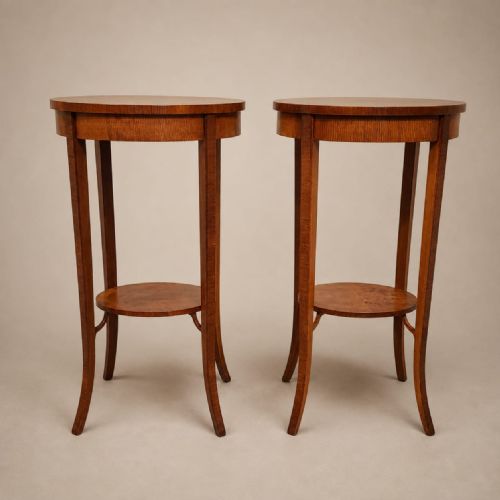
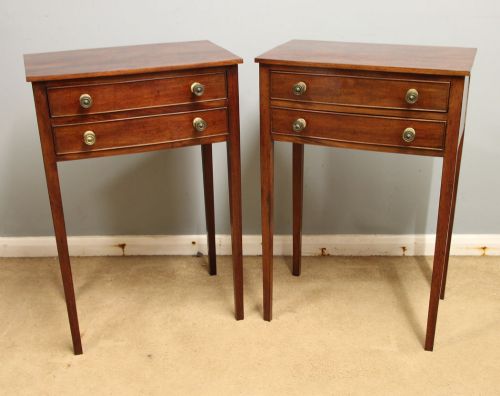
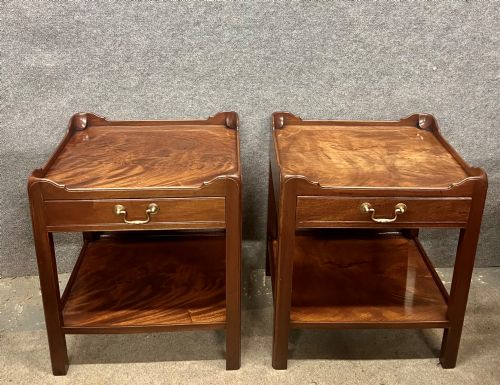
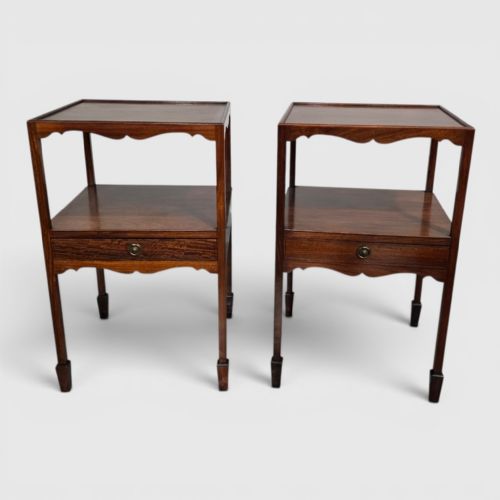
A pair of end tables encompasses low occasional furniture designed to sit beside seating or beds, serving as lamp tables, bedside cabinets, and small console surfaces. The items encountered most frequently on this page date from the nineteenth and twentieth centuries, reflecting diverse periods from Georgian revivals to Art Deco designs.
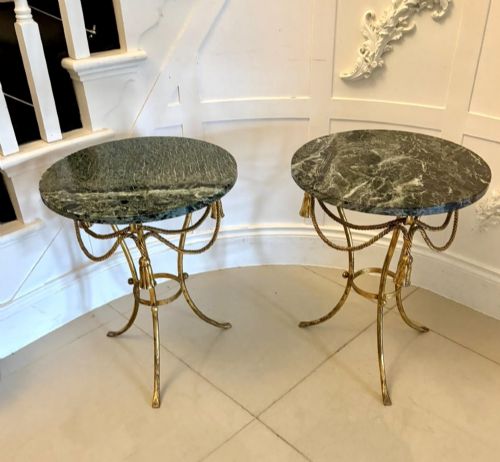
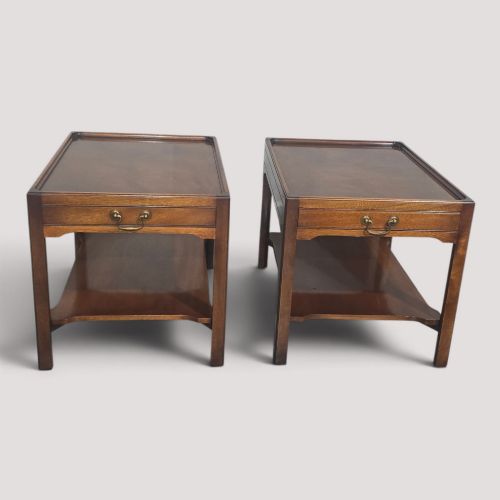
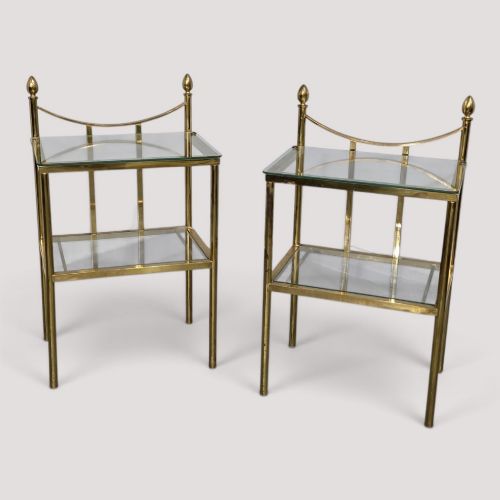
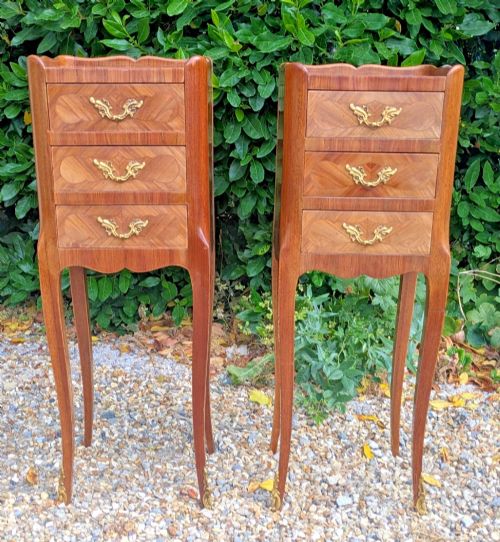
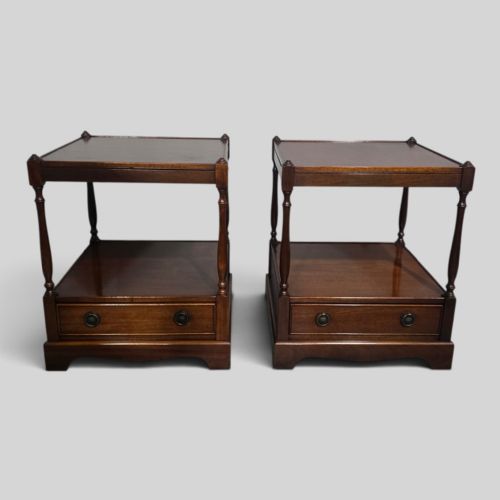
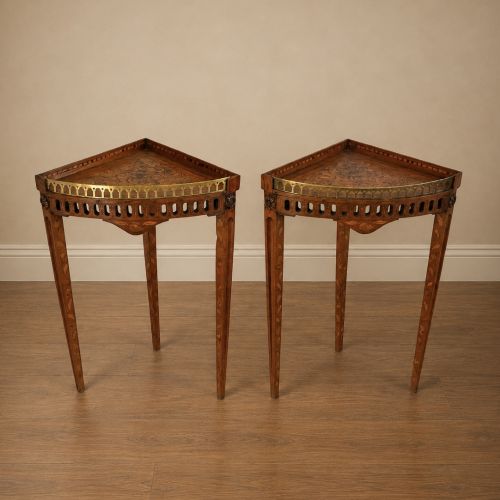
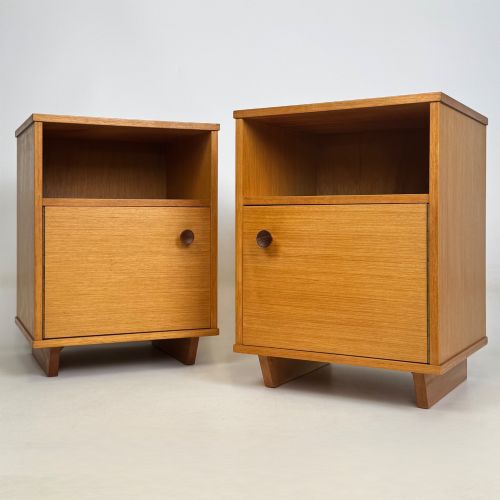
Makers and manufacturers adapted these forms for various domestic settings, producing pieces in compact proportions suitable for corners, beside beds, or flanking larger console arrangements. Formats range from traditional mahogany lamp tables to glass and brass etageres and French marquetry cabinets.
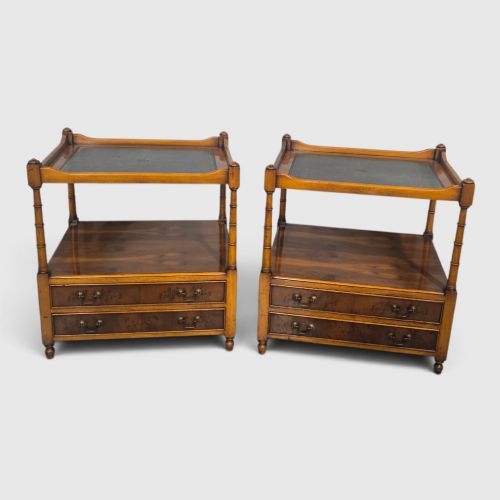
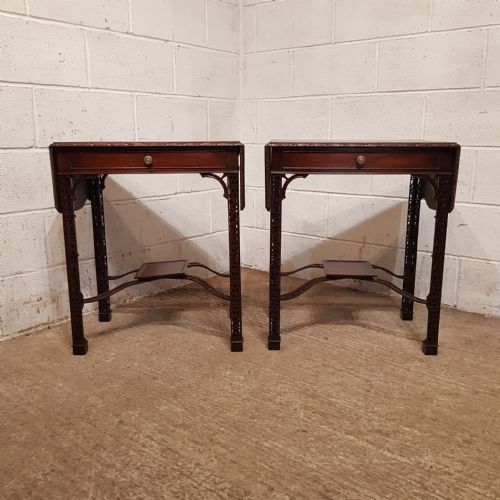
Structural variations include drop-leaf mechanisms, two-tier configurations, demi-lune shapes, and D-end formats originally intended for modular dining arrangements. Buyers select these matching pieces to create balanced visual arrangements in reception rooms and bedrooms.
Materials and construction methods
Cabinet-makers relied heavily on solid and veneered timbers, predominantly mahogany, walnut, and oak, often enhanced with marquetry inlay in satinwood or decorative grain patterns like burr walnut. Workshops integrated structural metals such as brass galleries, gilt metal mounts, and cast iron frames, particularly within Edwardian and Art Deco iterations.
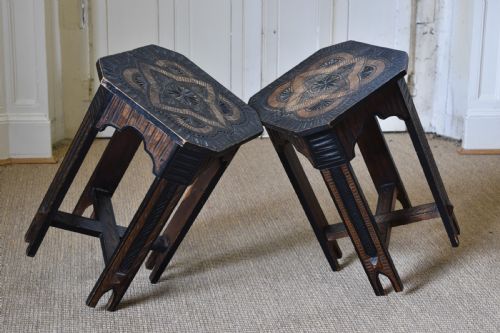
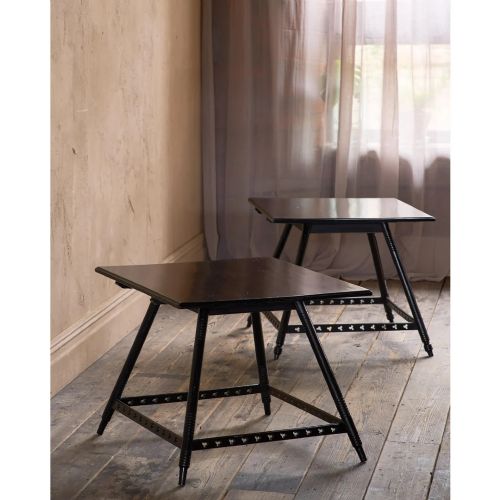
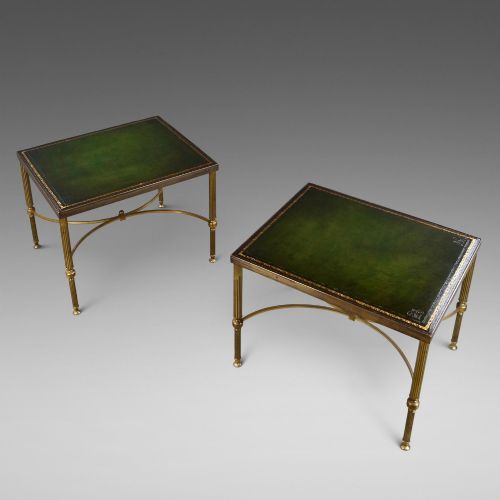
Surface treatments and finer details involved chip carving, leather inserts, marble tops, and ebonised finishes, supported by techniques like quarter-veneering. Joinery standards dictate the longevity of these tables, with traditional framing methods visible across nineteenth and twentieth-century examples.
Some versatile pieces double as Kashmiri bookends or serve morning tea before transforming back into living room furniture.
Evaluating craftsmanship and distinction
The distinction between standard commercial output and superior craftsmanship lies in the selection of timber veneers, the crispness of carved details such as ribbon swags or paterae, and the integration of secondary materials like marble and brass. Higher-tier examples demonstrate meticulous attention to proportional balance and structural integrity across both tables in the set.
Attribution to documented makers or specific retail houses elevates the standing of certain pieces, distinguishing generic revival furniture from distinguished workshop production. The harmony of the match between the two individual tables further dictates their desirability for collectors.
Mallett·Liberty and Co·Archibald Knox
The Pair of End Tables Glossary
- Demi-lune
- Half-moon shaped furniture designed to stand flush against a wall. These tables often function as console or end pieces in narrow spaces.
- Marquetry
- Decorative veneer work arranged in pictorial or geometric patterns using various coloured woods. Craftsmen applied this technique to tabletop surfaces to add visual complexity.
- Etagere
- A set of open shelves for displaying small objects or lamps. These tiered occasional tables appeared frequently in brass and glass formats during the early twentieth century.
- D-end
- A table form featuring one curved semi-circular end and one straight edge. Pairs of these units frequently divided into smaller side or console tables.
- Gallery
- A raised ornamental border surrounding the edge of a tabletop. Made typically of perforated brass, it prevented items from sliding off the surface.
Pair of End Tables: Frequently Asked Questions
What is a pair of end tables used for?
These matching surfaces support lighting, books, and decorative items while flanking a sofa, bed, or fireplace. They offer functional placement within a room while maintaining symmetrical interior design.
Historically, similar small tables adapted to various domestic duties, moving between reception rooms, hallways, and bedrooms as household needs required.
How do I tell different periods apart?
Stylistic markers and materials provide the clearest indication of age, moving from eighteenth-century mahogany and marquetry to Edwardian cast iron and Art Deco mirrored surfaces. Examining structural joins and veneer types helps verify the manufacturing era.
Revival styles from the Victorian and Edwardian eras often reinterpret earlier Georgian forms, making attention to construction methods essential for accurate dating.
Are matching tables always identical?
Many listings describe matched pairs rather than pieces built simultaneously as a single set. Minor variations in timber grain or dimensions can occur while preserving a unified visual harmony.
Cabinet-makers historically produced modular components, such as D-end dining segments, which naturally translated into symmetrical side tables over time.
How do I care for antique wood surfaces?
Maintenance involves keeping wooden tables away from direct heat sources and strong sunlight to prevent timber warping and veneer cracking. Regular dusting with a dry cloth preserves the finish without harming historical polishes.
Leather tops and brass mounts require specialised, gentle cleaning agents to avoid degrading the original materials over decades of domestic use.