



Regency Style Lamp Stand
A regency style lamp stand brings classical balance and purposeful illumination to a room, drawing on architectural forms from the nineteenth century and later revivals.
Regency Style Lamp Stand
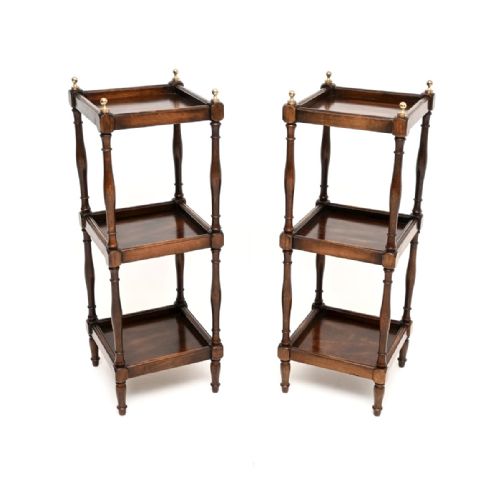
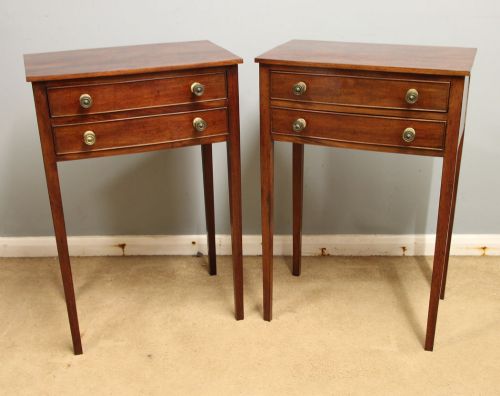
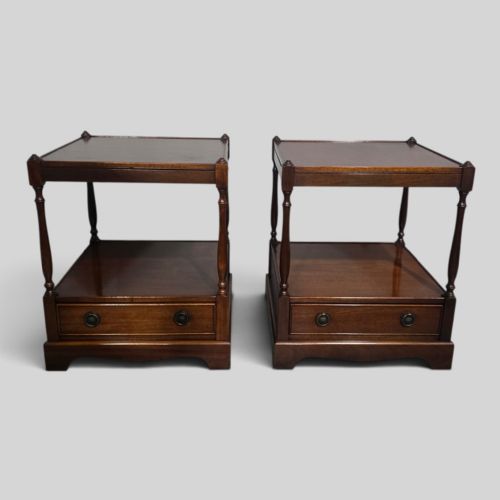
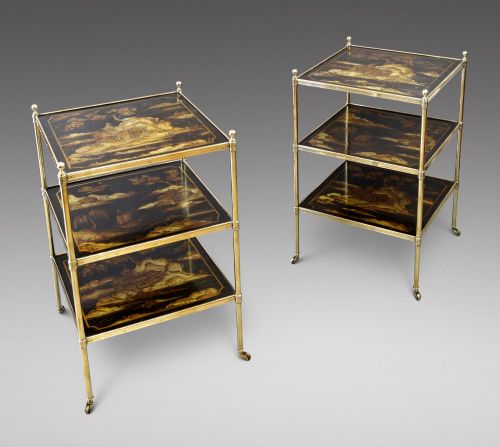
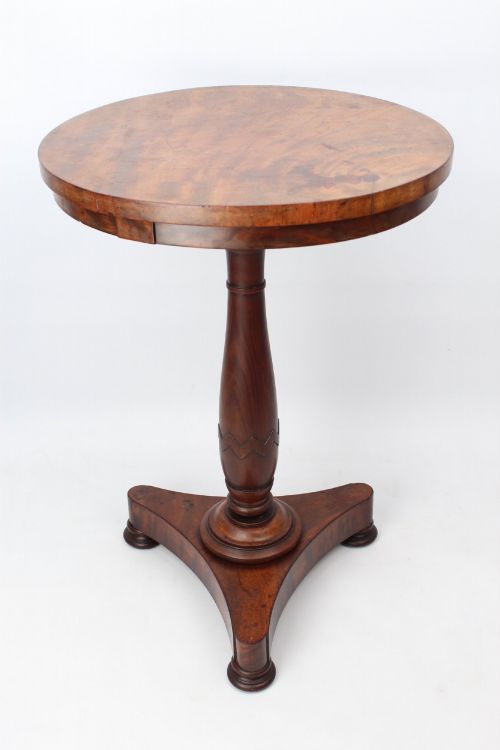
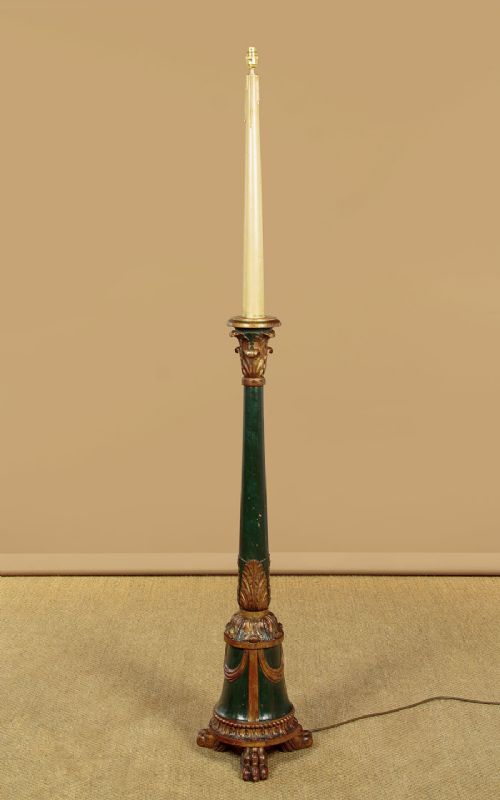
A regency style lamp stand encompasses both elevated lighting columns and small occasional tables designed to support a light source. The pieces span genuine nineteenth-century origins as well as twentieth-century revivals from the nineteen-tens through to the nineteen-thirties.
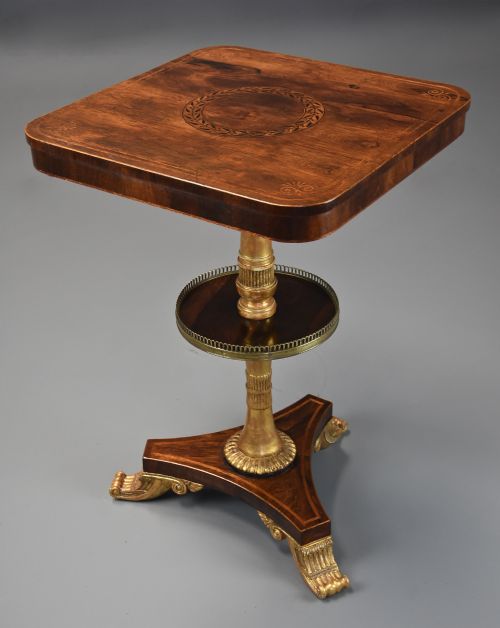
Mahogany and rosewood tripod tables dominate the table forms, alongside brass standard lamps and gilt wood creations. These items serve multiple functions as side tables, wine tables, and floor-standing illumination supports within a traditional interior scheme.
Materials and Construction
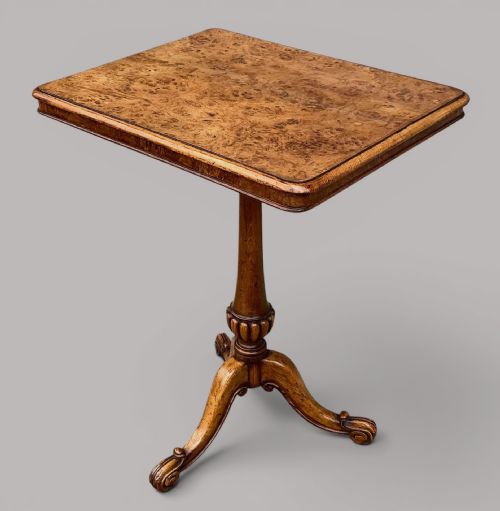
Cabinetmakers and metalworkers utilised dense timbers such as mahogany and rosewood, often pairing them with brass columns, gilt bronze, and marble tops. Timber tripod tables rely on turned pedestals and splayed legs for stability.
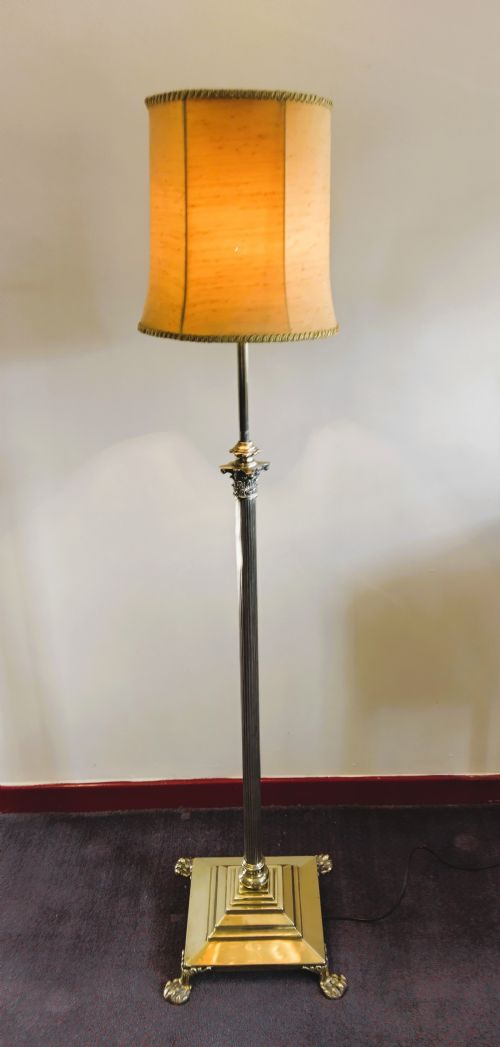
Brass standard lamps incorporate adjustable height mechanisms and weighted bases. Giltwood and parcel gilt finishes provide the decorative surface treatment characteristic of the neoclassical aesthetic.
Judging Quality
The distinction between tiers rests upon the choice of timber grain, the crispness of carved or cast detail, and the integrity of the structural joints. Selected burr oak and figured rosewood elevate a piece above standard utility items.
Proportion and weight dictate the presence of quality in metal standards and timber pedestals. Solid brass components and precise adjustment mechanisms denote careful manufacturing over mass production.
George Bullock·George Smith·Gillows
The Regency Style Lamp Stand Glossary
- Tripod table
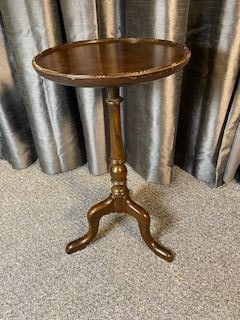
- A small freestanding table supported by a central pillar and three legs. This form appears frequently in mahogany and rosewood across the nineteenth century.
- Standard lamp
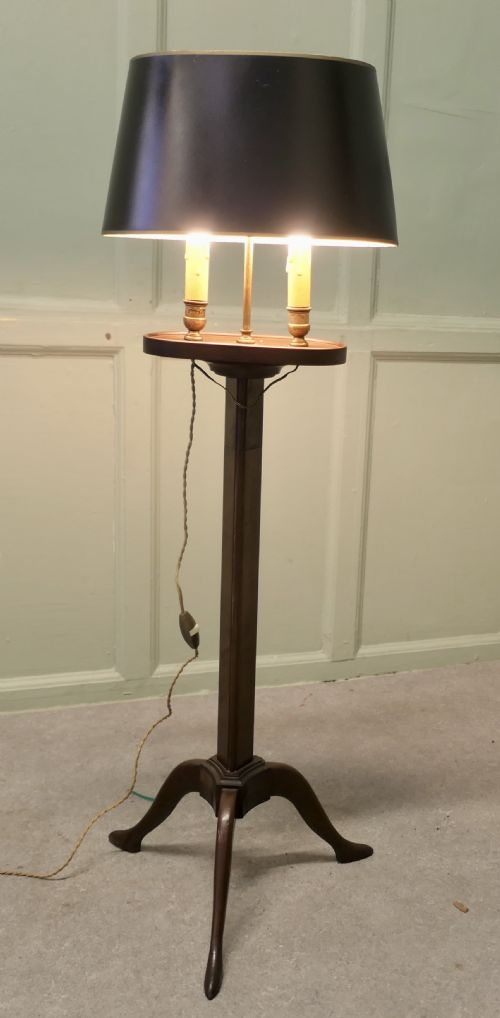
- A tall floor-standing lamp designed to illuminate a room from a fixed position. Examples survive in solid brass, gilt bronze, and painted wood.
- Bouillotte lamp
- A shaded light fixture originally designed for card games, often adapted as a floor or table lamp. The design typically incorporates adjustable twin candle arms.
- Giltwood
- Timber treated with gold leaf or gold paint to create a lustrous decorative surface. This finish frequently appears on neoclassical revival standard lamps and circular tables.
Regency Style Lamp Stand: Frequently Asked Questions
How do I date a brass standard lamp?
Examine the weight, construction of the adjustable collar, and the casting quality of the base. Nineteenth-century examples often display heavy gauge brass and hand-finished components.
Twentieth-century revivals from the interwar period introduce alternative wiring channels and standardised threading. Comparing the patina of the metal helps confirm the period.
Can these tables safely hold modern lamps?
Occasional tables and wine tables possess sturdy timber tops and rigid pillar supports designed for heavy decorative objects. They accommodate table lamps securely.
Ensure the footprint of the table base matches the weight distribution of the chosen lamp to prevent tipping.
What is the difference between a wine table and a lamp table?
Wine tables historically served beverages during social gatherings, featuring compact circular tops on slender pedestals. Lamp tables share identical proportions and tripod structures.
Many listings use the terms interchangeably because both forms suit the footprint of a reading light or small accessory.
Where should I place a standard lamp?
Standard lamps provide ambient or task lighting when positioned beside seating arrangements or in neglected corners. Floor-standing brass models anchor a room scheme.
Keep timber bases away from direct heat sources to protect the polished rosewood or mahogany finish.