

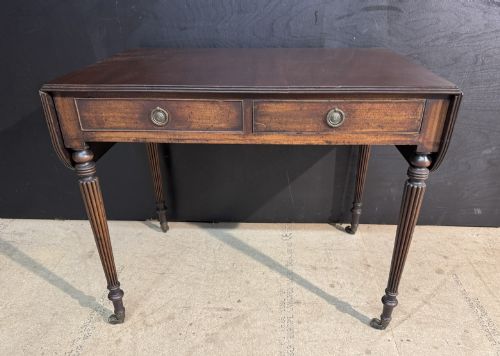
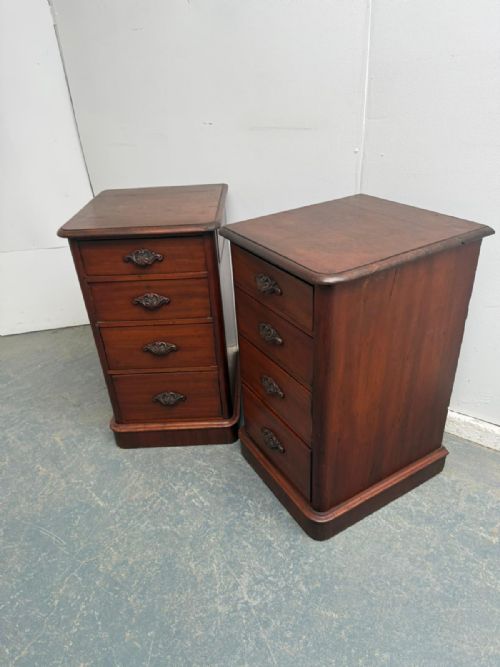
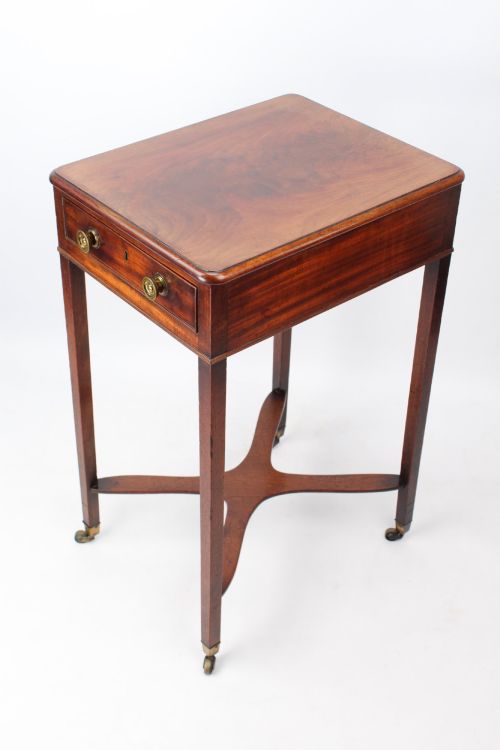
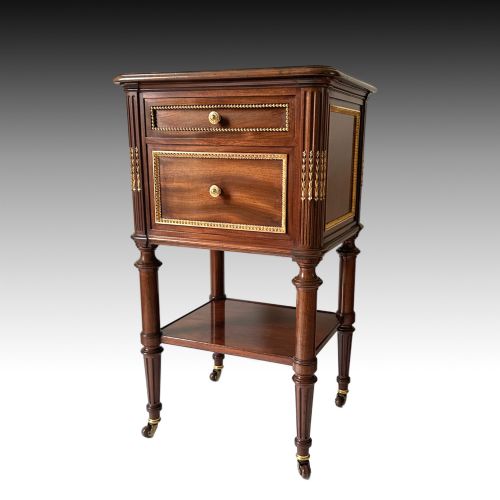
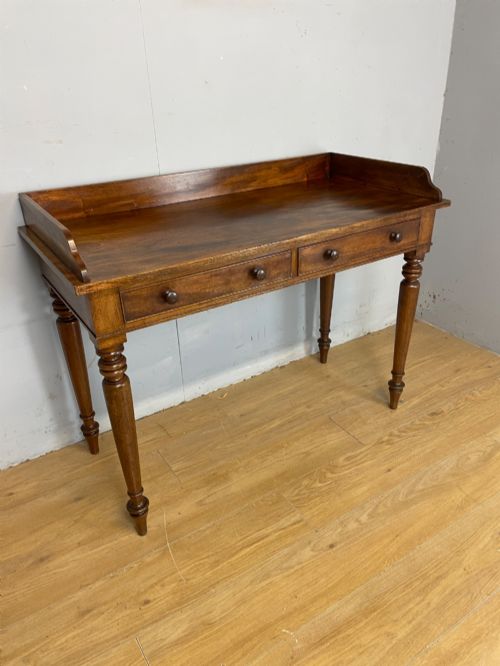
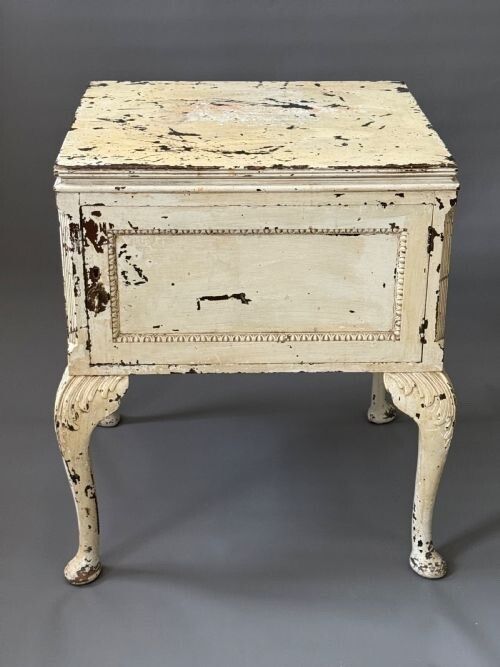
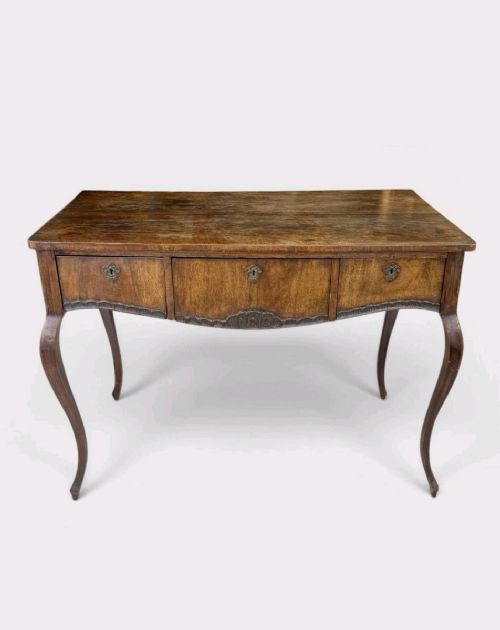
Mahogany Side Table Drawer
These mahogany side table drawer pieces combine timber and storage, appearing in Georgian, Victorian, and later periods.
What they are
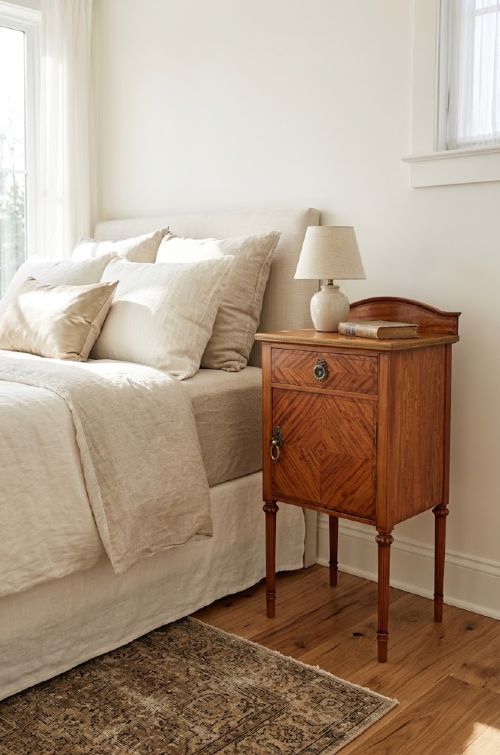
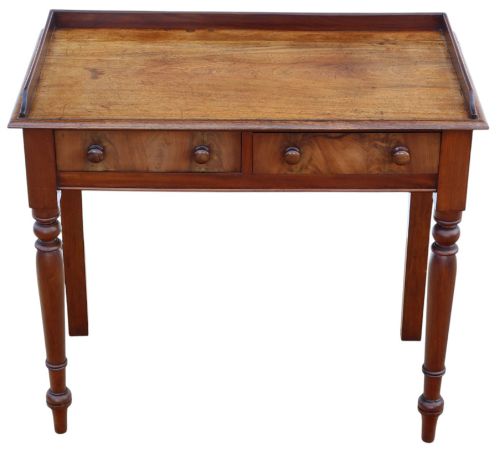
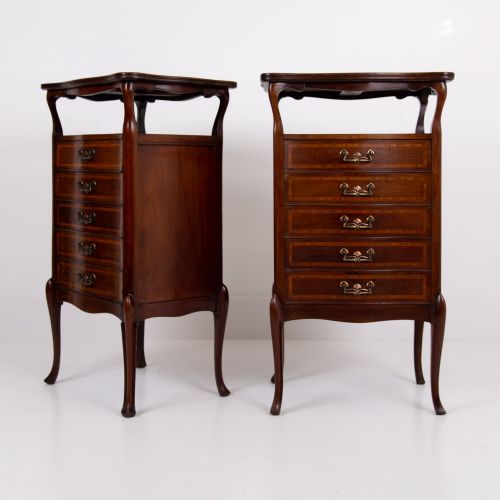
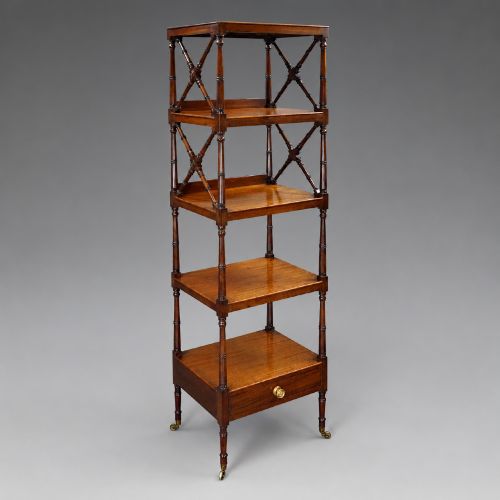
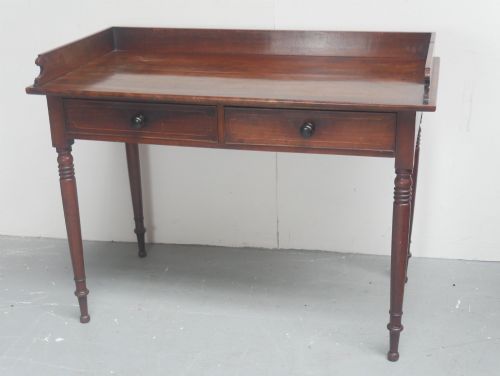
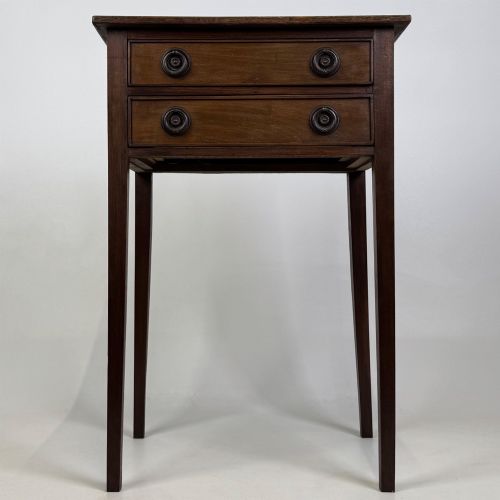
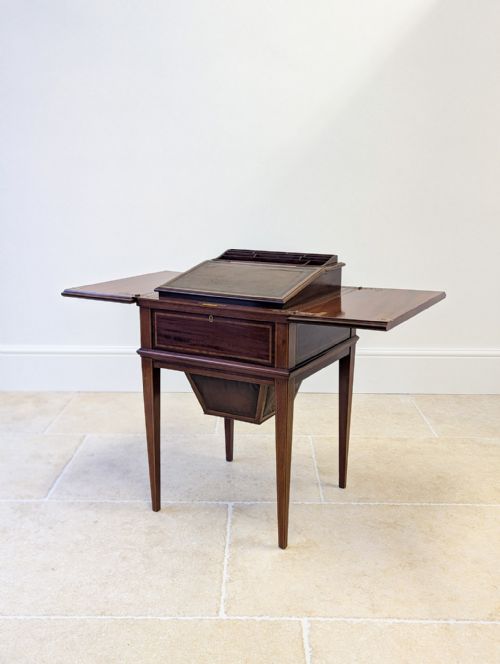
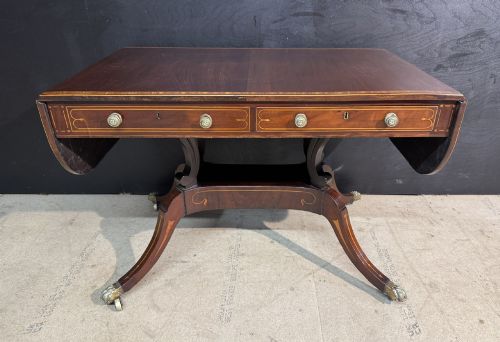
A mahogany side table drawer serves as a compact surface with integrated storage for domestic spaces. These pieces appear across Georgian, Victorian, 1910, and 1920 periods, spanning styles such as Regency, Georgian, and French Belle Epoque. Forms range from occasional tables and games tables to bedside cabinets and console writing tables.
The single drawer or multiple drawer configurations define the utilitarian nature of these items. Pieces emerge in variations like drop leaf Pembroke tables, serpentine fronts, and narrow proportions suited for hallways or chambers.
How they were made
Cabinet makers utilised solid mahogany, flame mahogany, and Cuban mahogany, sometimes combining walnut, partridge wood, ebony, and brass handles. Construction involves precise joinery to house single, two, or three drawers within the timber frames.
Surface treatments include marble tops on specific French pieces, alongside inlaid details and polished wood finishes. Structural adaptations encompass reeded legs, drop leaves, and swing drawers.
Retail Price Guide 2026
Typical UK retail prices for mahogany side table drawer, calculated from the Sellingantiques database of over a million retail prices indexed since 2003. This retail price guide relies exclusively on Sellingantiques data; no external sources or auction records are used, so the figures do not describe the wider market.
Some tables hide compartments within multiple drawers, keeping hidden secrets close to hand.
What varies in quality
Timber selection dictates the distinction between standard examples and superior pieces, particularly when utilising figured flame or Cuban mahogany. The depth of colour and the grain pattern across the top surface and drawer fronts reveal the care taken in material sourcing.
Construction refinement shows in the execution of drawer linings, dovetailed joints, and hardware like swan neck handles. The integration of auxiliary timbers such as walnut or ebony alters the visual hierarchy of the piece.
The Mahogany Side Table Drawer Glossary
- Pembroke table
- A small table with hinged drop leaves on either side, often featuring a single drawer. This form dates predominantly to the Georgian period.
- Lowboy
- A small dressing or side table with one or more drawers supported on four tall legs. The proportions remain deliberately low and compact.
- Serpentine
- A curved furniture front characterised by a convex centre flanked by concave ends. This contour requires skilled woodworking.
- Drop leaf
- A hinged flap of wood attached to the main top of a table that folds down. It allows the surface area to expand or contract.
- Cuban mahogany
- A dense, dark timber harvested in the Caribbean, prized for rich figuring and deep patination. Makers utilised this material extensively in Georgian furniture.
Frequently Asked Questions
What periods do these tables span?
The pieces originate primarily from the Georgian and Victorian eras, with examples also appearing from the 1910 and 1920 periods.
Design influences range from strict George II and George III styles to Regency and French Belle Epoque aesthetics.
How were these tables used originally?
They functioned as versatile surfaces for writing, serving, holding lamps, or storing bedside items in domestic interiors.
The integrated drawers provided discreet storage for papers, gaming accessories, or personal belongings.
Where should I place this furniture?
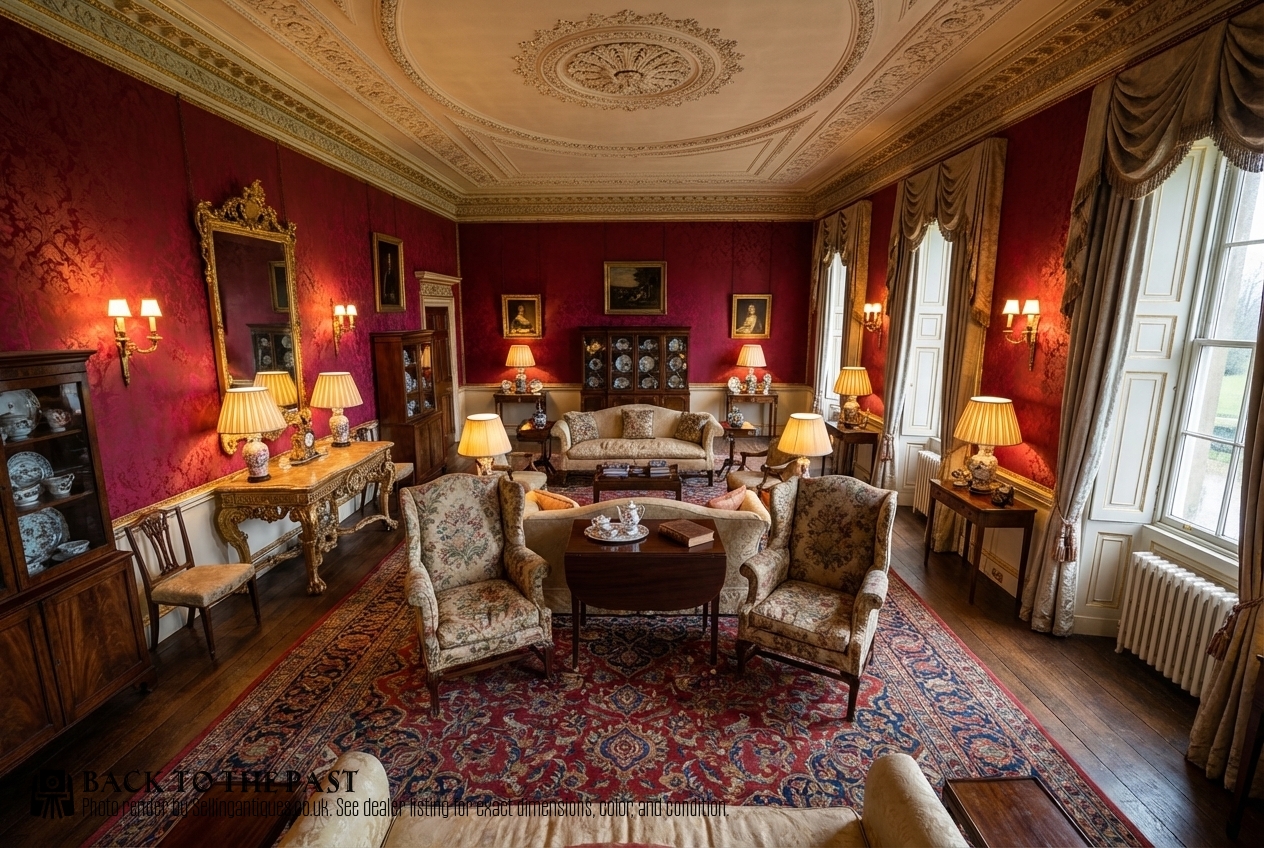
These compact tables fit well in hallways, beside beds, or as accent pieces in living rooms and studies.
Narrow proportions and single or multi-drawer formats allow them to occupy tight spaces without cluttering a room.
What woods appear in these pieces?
Mahogany forms the primary structure, with variations including flame mahogany, Cuban mahogany, and solid mahogany.
Makers occasionally incorporated walnut, partridge wood, ebony, and marble tops to enhance the design.