




Oriental Porcelain Urn Pair
An oriental porcelain urn pair brings symmetry and historical weight to a room through balanced ceramic forms.
Oriental Porcelain Urn Pair
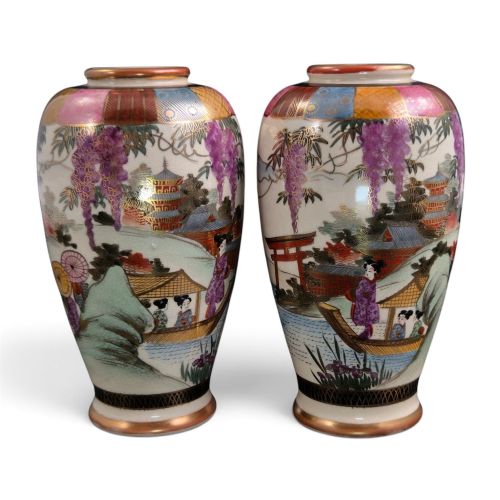
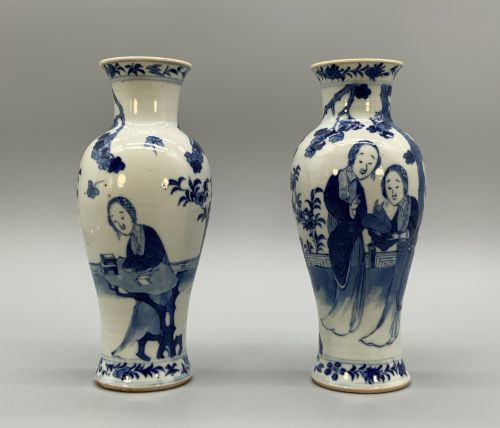
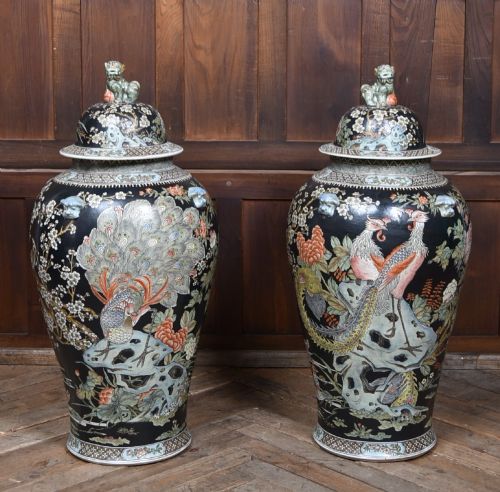
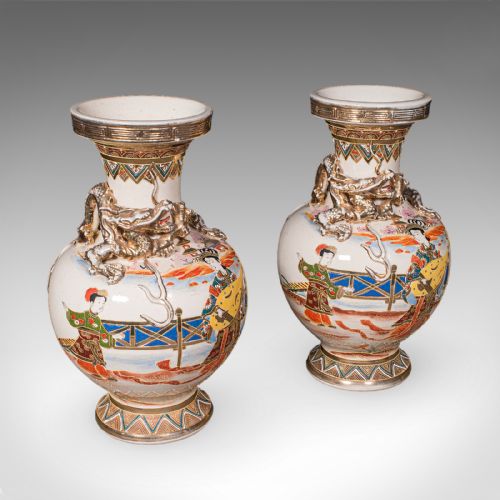
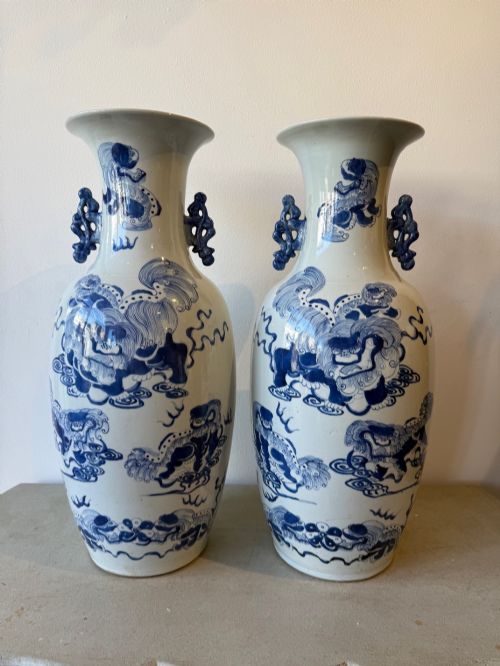
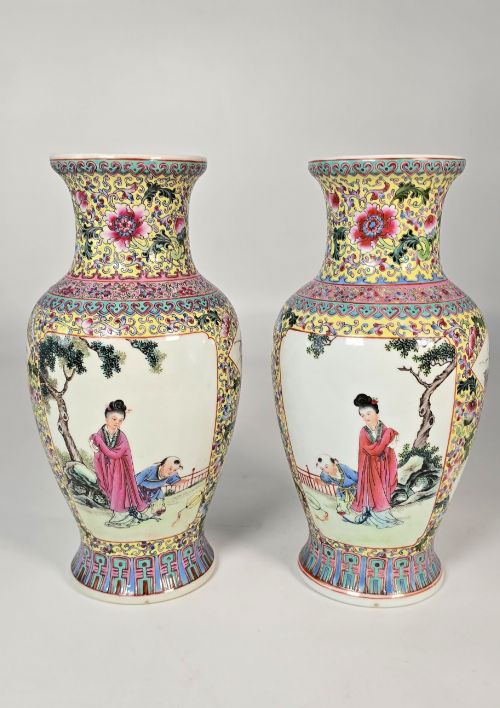
When searching for an oriental porcelain urn pair, collectors encounter balanced vessels designed for display, often taking the form of baluster vases, lidded jars, or ginger jars. These symmetrical sets originate predominantly from Japanese and Chinese workshops across the nineteenth and early twentieth centuries.
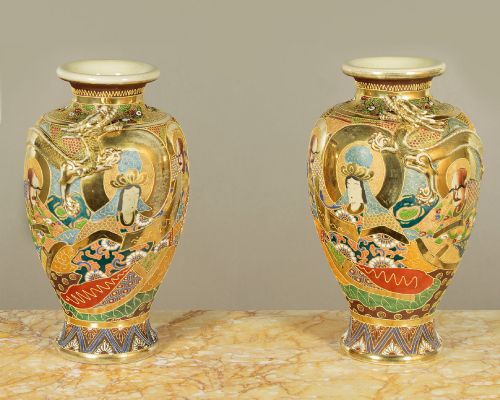
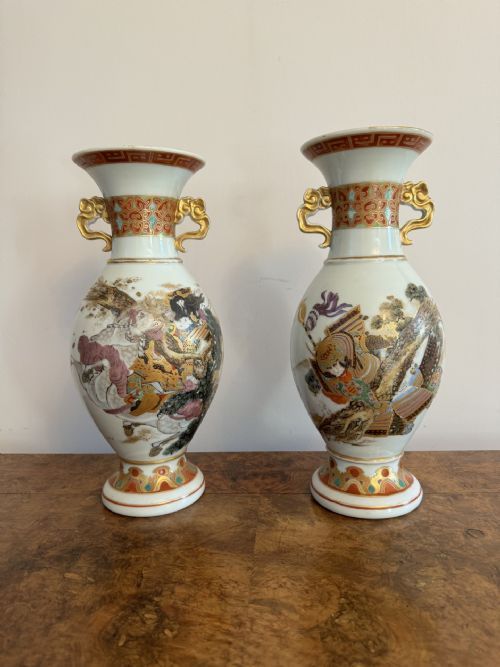
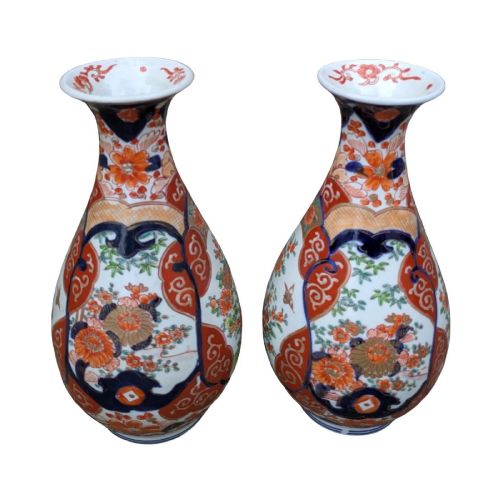
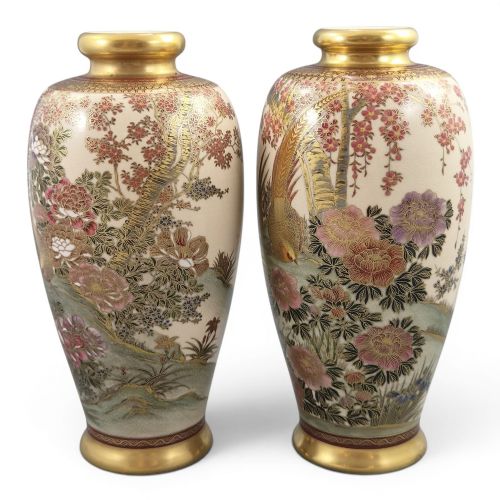
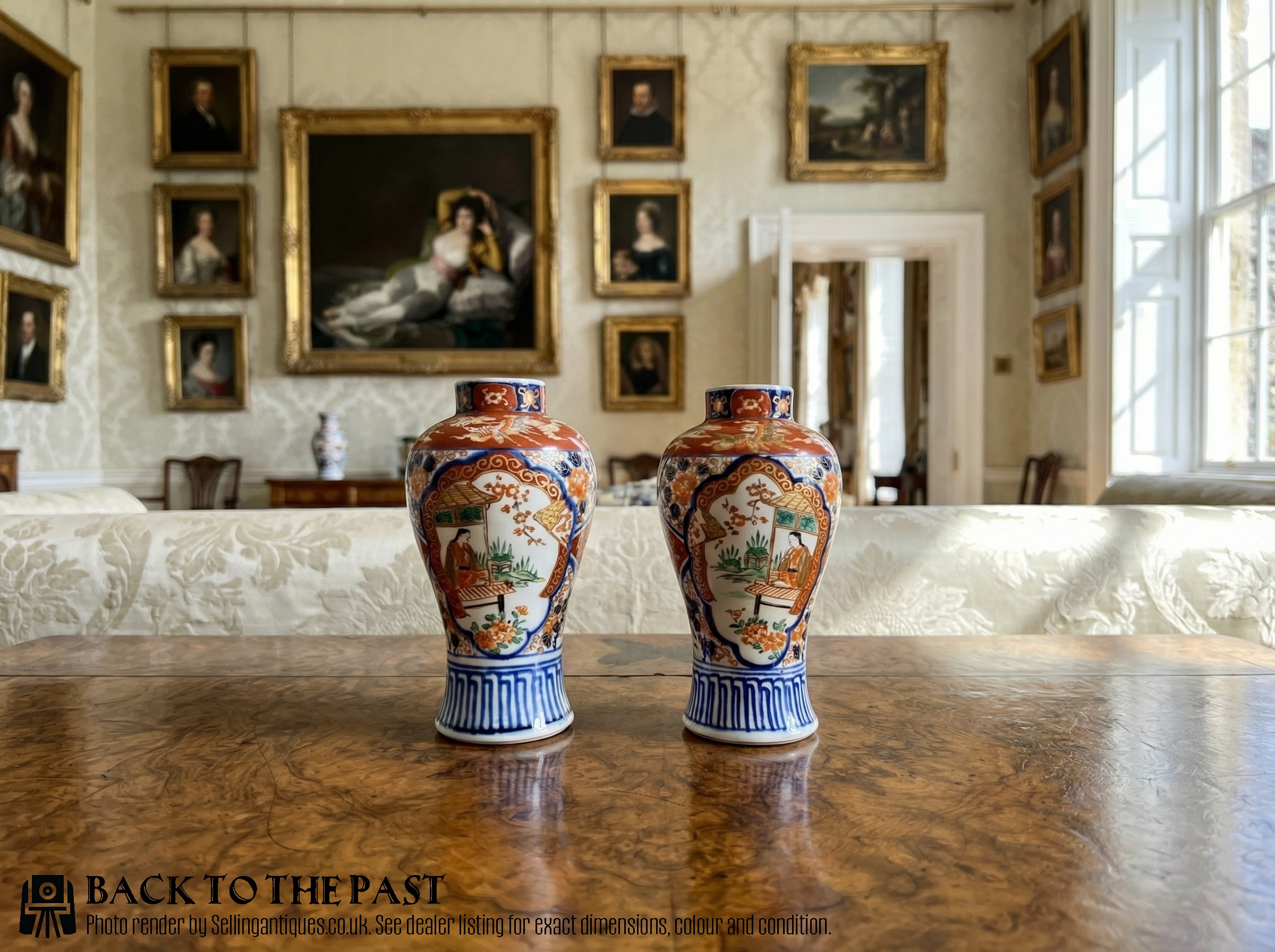
The version most commonly met on this page is the Japanese Satsuma or Imari vase pair dating from the Meiji or subsequent periods. These objects frequently combine earthenware or ceramic bodies with detailed painted scenes and traditional motifs.
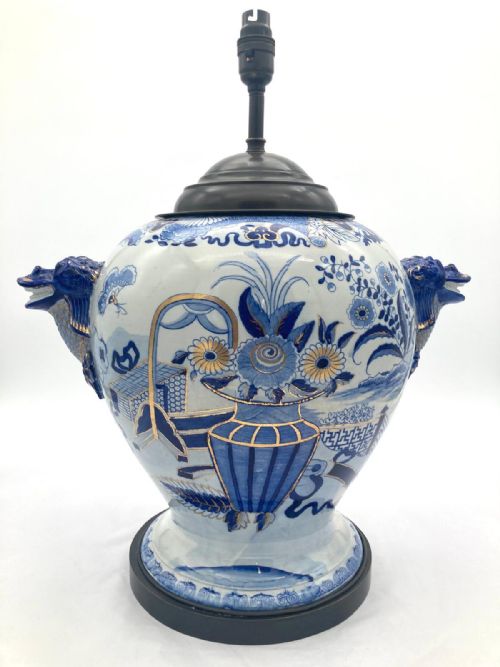
Beyond standard decorative displays, certain examples appear converted into table lamps or mounted with ormolu, reflecting how past owners adapted these large symmetrical vessels for domestic utility.
What varies in quality
The standard of painting and brushwork distinguishes basic decorative wares from pieces produced by noted makers or exhibition workshops. Finer examples display meticulous control in hand-painted figural scenes, landscape details, and complex border patterns.
The application and preservation of gold leaf and enamel work also determine the standing of a pair. Rich, well-preserved gilding and balanced proportions across both vessels indicate superior craftsmanship during production.
Some nineteenth-century giants stand over fifty inches tall, demanding sturdy furniture and careful dusting.
Manpei Kobe·Kinkozan Kyoto·Kato Sanhei·Hicks and Meigh
The Oriental Porcelain Urn Pair Glossary
- Satsuma
- A type of Japanese earthenware featuring an ivory-coloured, crackled glaze painted with enamels and raised gold. It became widely exported during the Meiji period.
- Imari
- A style of Japanese porcelain characterised by a palette of underglaze blue, iron red, and gold. Production centred around the port of Arita.
- Baluster
- A vase form with a rounded body that tapers toward the base and swells near the lower portion. This shape provides stability for large decorative pairs.
- Ormolu
- Gilded bronze mounts applied to ceramic vessels for decorative or structural enhancement. This technique appeared frequently on nineteenth-century pieces.
- Ginger jar
- A high-shouldered ceramic jar with a domed cover originally designed for storage. Later examples served strictly decorative functions in pairs.
Oriental Porcelain Urn Pair: Frequently Asked Questions
Were these urns meant to hold flowers?
Most of these large symmetrical vessels served as decorative garnitures or display items rather than functional water holders. Their painted surfaces and delicate gilding made them centrepieces for mantelpieces and large rooms.
Lidded jars and ginger containers additionally functioned as storage vessels before evolving into purely ornamental pairs displayed across nineteenth-century interiors.
How do I identify Satsuma ware?
Satsuma pieces typically feature a distinctive ivory-coloured earthenware body covered in a fine network of crackled glaze. Artisans painted these surfaces using polychrome enamels and raised gold leaf.
Many examples include signatures or mon symbols associated with specific Japanese kilns and workshops from the Meiji period onward.
What is the difference between Imari and Satsuma?
Imari pieces consist of hard porcelain decorated primarily in underglaze blue, iron red, and gold, originating around Arita. They present a glossy finish and distinct Japanese export designs.
Satsuma pieces utilise a softer earthenware body with a matte, crackled cream glaze beneath detailed enamel paintings and heavy gilding.
Can converted table lamps be restored?
Many pairs show historical conversions where wiring was added for domestic lighting during the early twentieth century. These alterations often involve drilled bases or fitted metal hardware.
Collectors evaluate whether such changes were executed carefully without compromising the structural integrity of the original ceramic bodies.