








Oriental Porcelain Display Dishes
These oriental porcelain display dishes bring rich palette work and hand-painted detail straight from nineteenth-century workshops to your walls and cabinets.

Oriental Porcelain Display Dishes
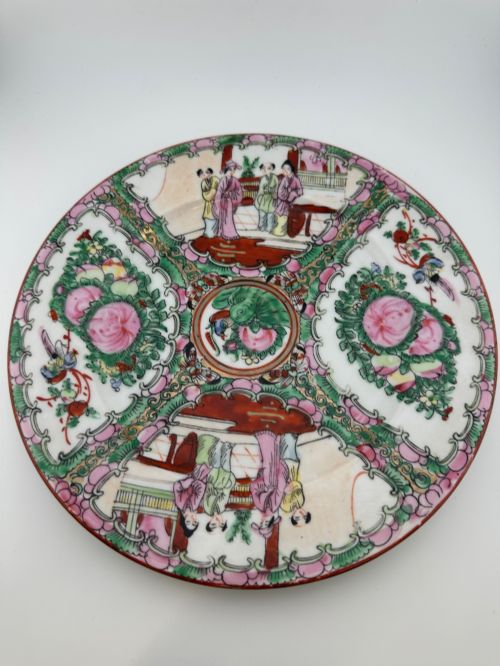
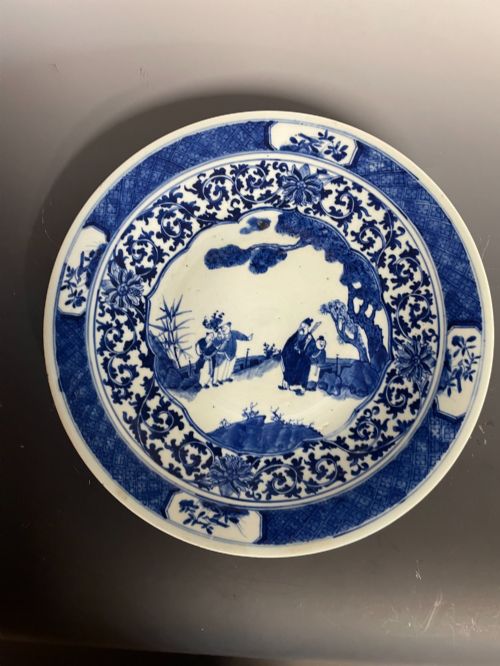
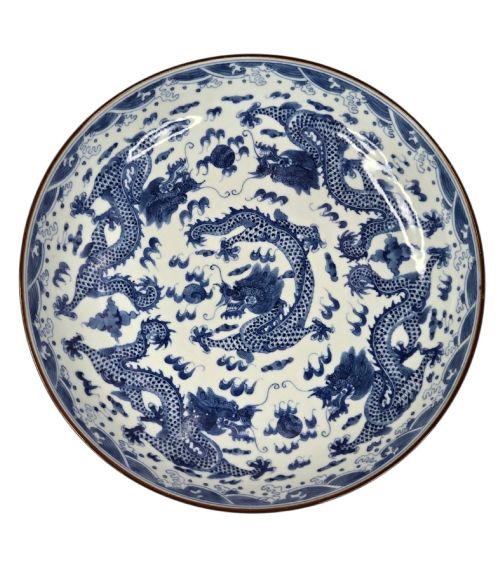
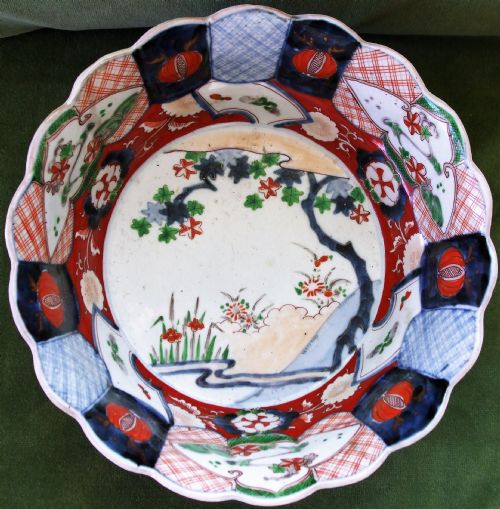
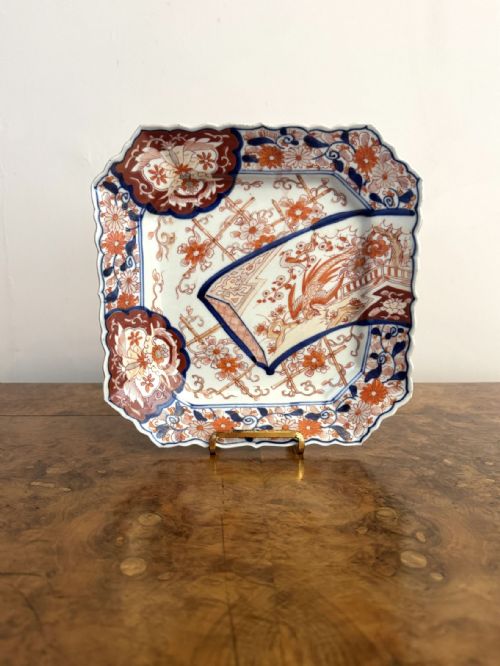
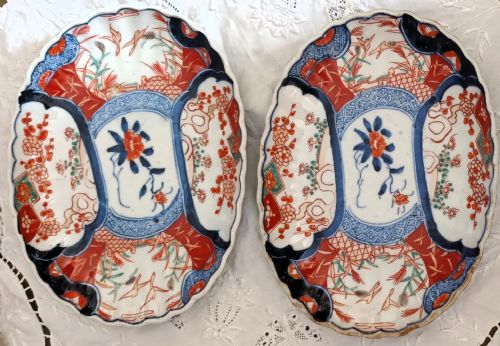
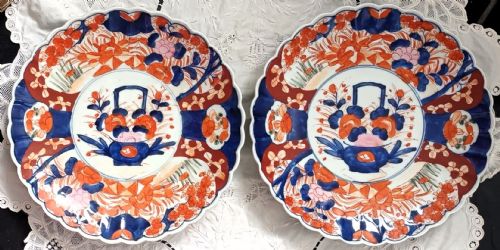
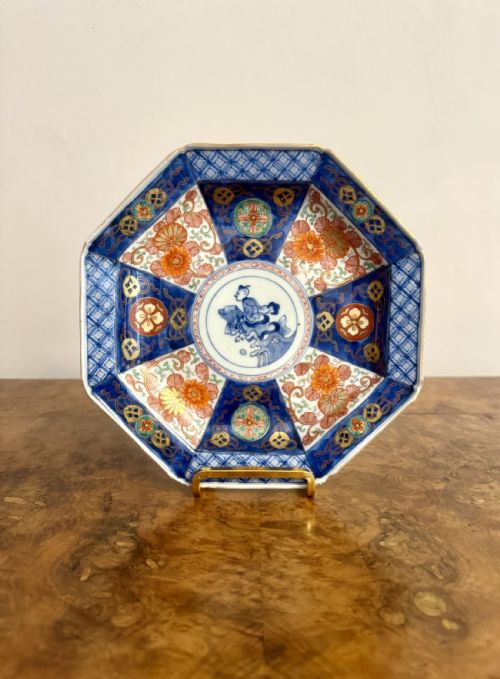
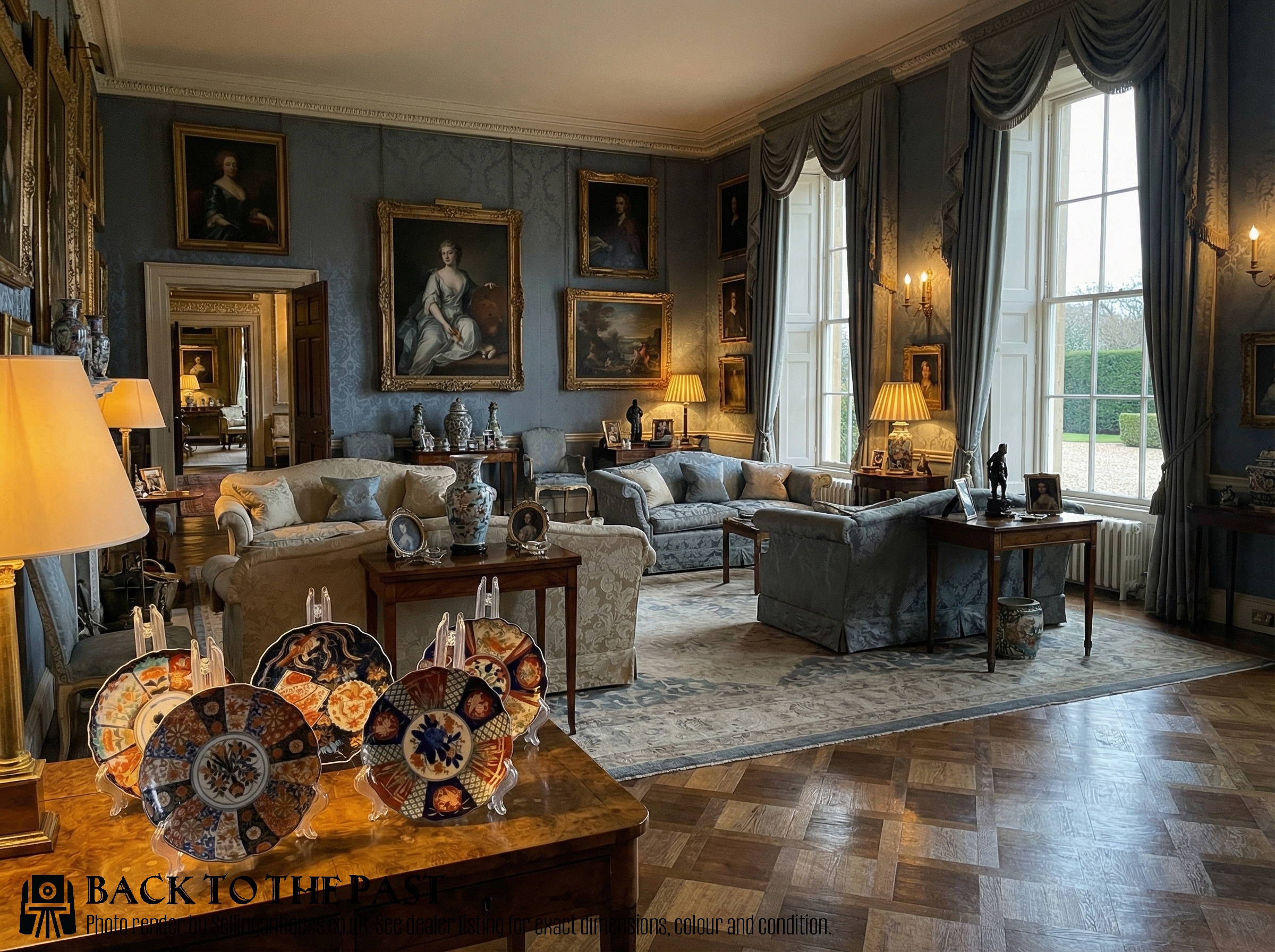
Oriental porcelain display dishes cover a broad range of decorative plates, chargers, and bowls originating from Japanese and Chinese kilns. The selection here leans heavily towards late nineteenth-century Japanese Imari chargers and plates, alongside Satsuma earthenware and Canton famille verte pieces.
Buyers encounter forms that vary from standard circular plates to scalloped, hexagonal, and square profiles designed specifically for visual impact. Most examples date from the Meiji period through to the early twentieth century, with occasional eighteenth-century Chinese items appearing in the mix.
These items serve primarily as decorative accents, often incorporating wall-mounting provisions or substantial dimensions suited to sideboard placement. The grouping bridges traditional East Asian ceramic arts and the Victorian taste for imported decorative goods.
What varies in quality
Quality rests primarily on the crispness of the hand-painted brushwork and the complexity of the design, such as depictions of the Seven Lucky Gods or detailed floral motifs. Superior examples display precise control over cobalt underglaze and rich, unrubbed applications of gold leaf and enamel.
The sophistication of the porcelain body and the regularity of the forming process also separate standard production wares from exceptional output. Pieces bearing distinct signatures from known makers or workshops generally command closer attention from collectors.
Oriental Porcelain Display Dishes Retail Price Guide 2026
Typical asking prices for oriental porcelain display dishes among the pieces listed under this phrase on Sellingantiques today, from the lower quarter to the upper quarter. They describe what is for sale here now, not the wider market.
Keep an eye out for the Seven Lucky Gods hiding amongst the floral patterns on larger chargers.

Koshida·Gyokkō·Kozan
The Oriental Porcelain Display Dishes Glossary
- Imari
- A style of Japanese porcelain featuring a distinct palette of cobalt blue, iron red, and gold, named after the port of shipment.
- Satsuma
- A type of Japanese earthenware characterised by a crackle glaze and ornate polychrome enamel and gilt decoration.
- Charger
- A large decorative plate intended for display on a wall or sideboard rather than for service at the dining table.
- Famille Verte
- A Chinese porcelain palette dominated by green enamel hues, developed during the Qing dynasty.
- Cobalt Underglaze
- Pigment applied to the ceramic body beneath the clear glaze before the high-temperature kiln firing.
Oriental Porcelain Display Dishes: Frequently Asked Questions
How do I hang a heavy charger?
Large chargers require robust, coated wire spring hangers that distribute the weight evenly around the rim without slipping. Ensure the wall fixing engages directly with masonry or a stud.
Avoid cheap plastic grips or adhesives that fail over time under the weight of thick porcelain.
What is the difference between Imari and Satsuma?
Imari pieces are true porcelain decorated in blue, red, and gold, whereas Satsuma wares utilise a cream-coloured earthenware body with a fine crackle glaze.
Satsuma surfaces often carry dense, ornate figural scenes finished with heavy gilding.
Can I use these dishes for food?
Antique display dishes should remain strictly for decorative purposes rather than culinary use. Historic enamels and gold leaf can wear away or contain materials unsuited to modern dining.
Hand-washing is essential if dust accumulates, avoiding any abrasive cleaning agents.
How do I date a Meiji period piece?
The Meiji period spans from 1868 to 1912, aligning with the reign of the Emperor Meiji. Pieces from this era often exhibit a high degree of technical skill and busier, more exuberant decorative schemes than earlier wares.
Look at the potting style and pigment vibrancy to narrow down the decade within the late nineteenth century.