





Oriental Ceramic Bottle
An oriental ceramic bottle brings centuries of kiln mastery into a room, offering striking forms from Chinese and Japanese traditions.
Oriental Ceramic Bottle
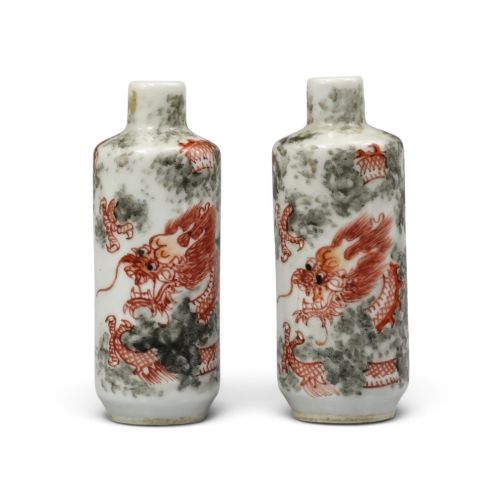
The search for an oriental ceramic bottle reveals a varied gathering of vessels, spanning compact snuff containers to large display pieces. These items originate from diverse eras, with significant representation from the nineteenth century alongside earlier examples from the seventeenth and eighteenth centuries.
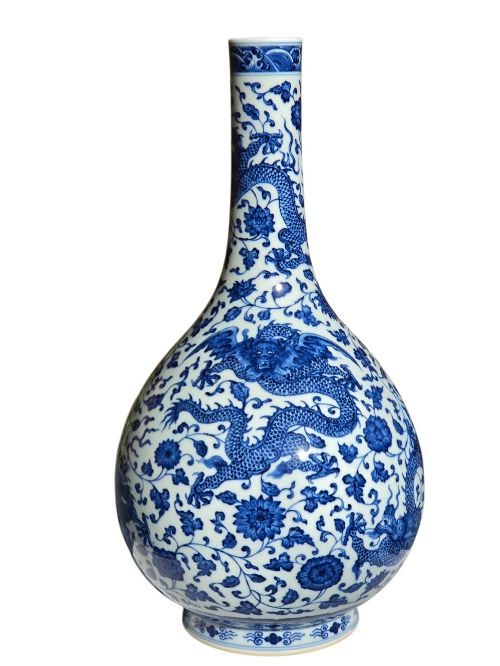
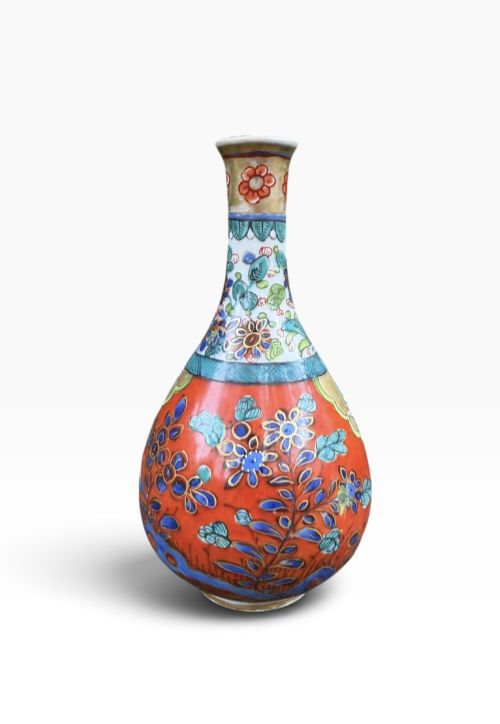
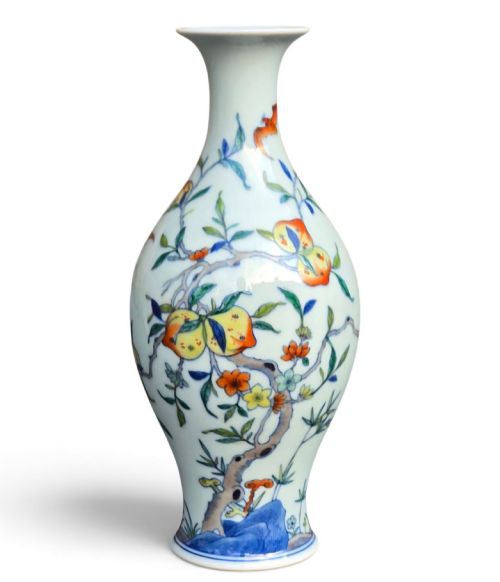
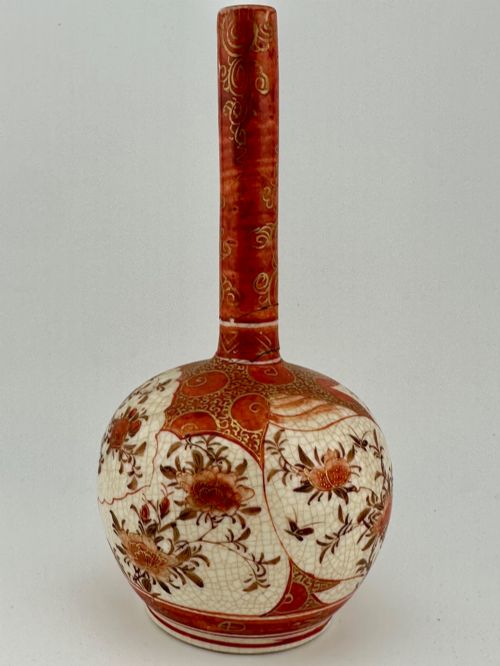
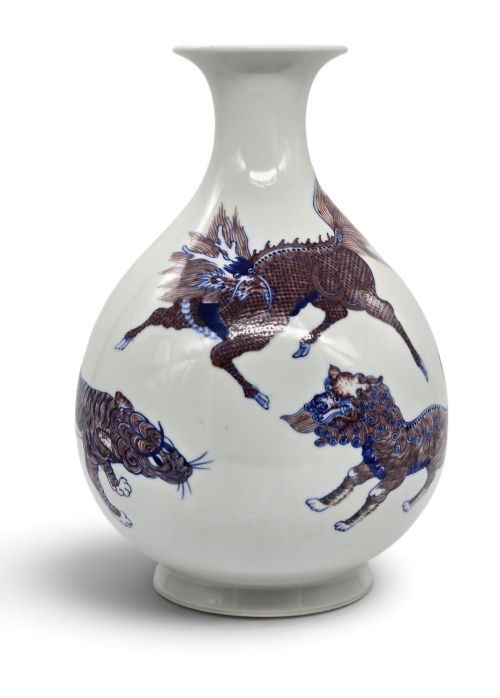
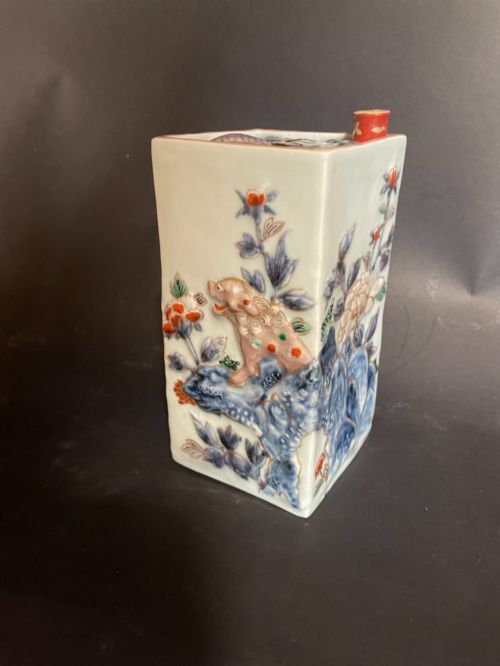
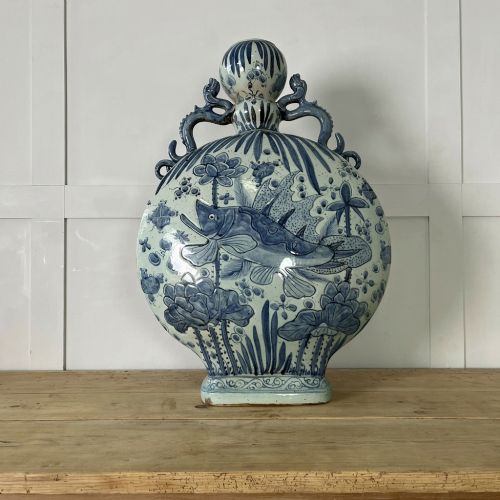
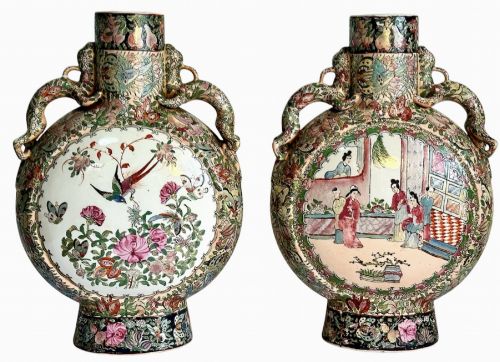
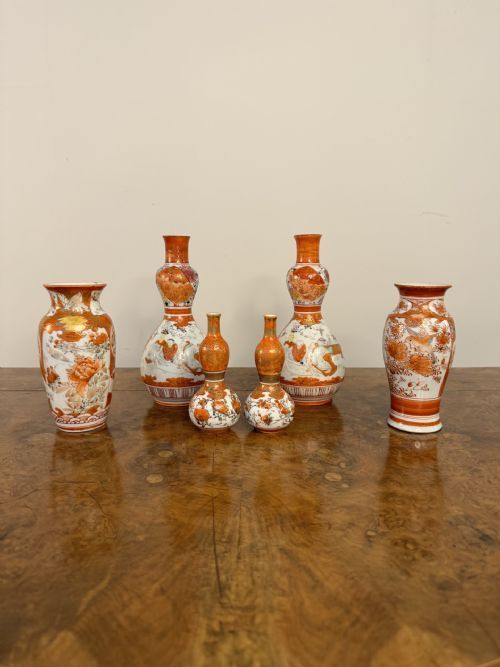
Vessels on this page take multiple forms, including garlic-mouth vases, moon flasks, double-gourd profiles, and sake flasks. Chinese and Japanese aesthetics dominate, encompassing blue and white porcelain, vibrant famille rose palettes, and distinctive Kutani wares.
Materials and methods
Potters shaped these pieces primarily in ceramic, earthenware, and fine porcelain, applying skilled brushwork with cobalt oxide, iron-red, and enamel pigments. Certain examples incorporate delicate gold leaf detailing or specialised finishes like crackle glaze and celadon coatings.
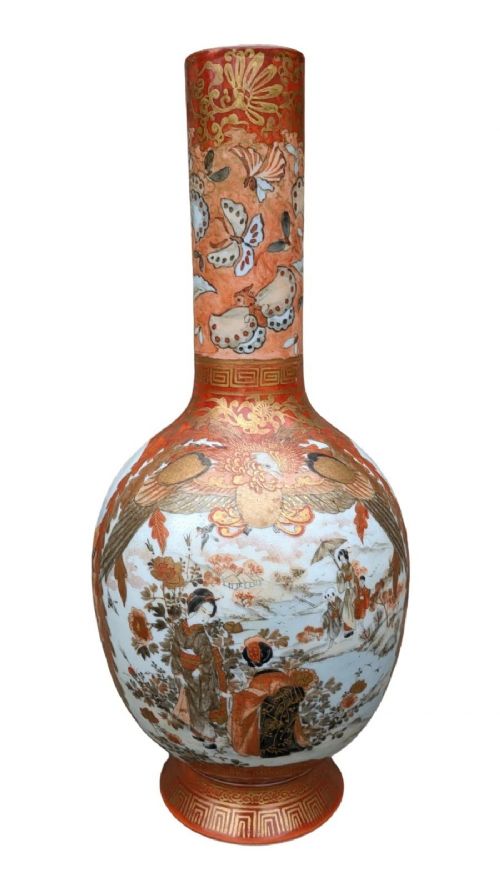
Firing techniques allowed kilns to achieve deep underglaze blue and copper-red effects, alongside monochrome surfaces such as tea dust and turquoise glazes. Surface decoration frequently depicts dragons, mythical beasts, figural scenes, and stylised flora.
Oriental Ceramic Bottle Retail Price Guide 2026
Typical asking prices for oriental ceramic bottle among the pieces listed under this phrase on Sellingantiques today, from the lower quarter to the upper quarter. They describe what is for sale here now, not the wider market.
Listings feature porcelain, earthenware, and glaze finishes spanning the 17th century through the Edwardian period.
Differentiating quality
Quality rests in the precision of the throwing and the clarity of the painted detail, whether handling intricate dragons or subtle floral incising. Finer vessels display controlled glaze application and balanced proportions that reflect the aesthetic standards of their specific period.
The presence of reign marks or seal marks contributes to an item's historical context, while the harmony between the ceramic body and the decorative scheme separates standard production from superior artistic achievement.
The Oriental Ceramic Bottle Glossary
- Famille rose
- A palette of opaque overglaze enamels introduced in Chinese porcelain during the Qing dynasty, dominated by pink and rose hues.
- Imari
- A style of Japanese porcelain featuring deep underglaze blue and iron-red highlights, frequently augmented with gilt details.
- Celadon
- A pale green or grey-green glaze achieved through iron oxide in the reduction kiln firing process.
- Double-gourd
- A traditional bottle shape formed by two joined bulbous sections, symbolising fortune and auspiciousness in East Asian design.
- Kutani
- Japanese coloured porcelain and pottery typically characterised by rich pictorial designs and iron-red or gold overglaze painting.
Oriental Ceramic Bottle: Frequently Asked Questions
What is an oriental ceramic bottle?
An oriental ceramic bottle is a traditional vessel produced in China or Japan, utilising porcelain or earthenware with glazed or painted finishes.
These pieces encompass functional containers like snuff bottles and sake flasks, as well as larger decorative vases designed for display.
How do I identify different periods?
Period identification relies on observing stylistic motifs, potting techniques, and specific glaze characteristics associated with reigns such as the Qing dynasty or Meiji period.
Markings on the base, including seal marks or reign characters, provide additional historical reference points for dating an item.
How should I display them at home?
These vessels suit placement on stable shelves, mantels, or display cabinets where adequate lighting highlights their glazes and painted surfaces.
Keeping them away from direct sunlight and high-traffic edges ensures the delicate enamels and porcelain bodies remain protected.