



19th Century Bottle Vase
These 19th century bottle vase examples offer narrow necks and bulbous bodies, combining decorative grace with historical utility for any serious collector.
19th Century Bottle Vase
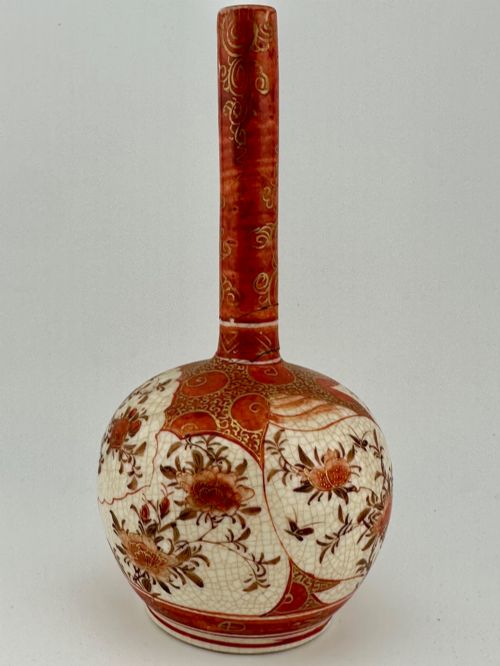
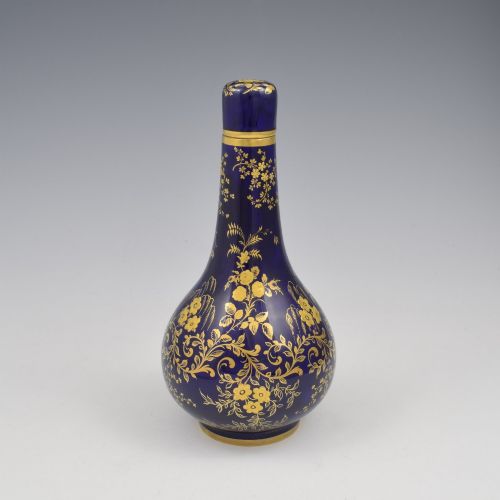
A 19th century bottle vase typically presents a slender neck rising from a rounded body, designed originally to hold single stems or liquids securely. The form spans various global traditions, appearing in porcelain, glass, and earthenware across different cultural aesthetics.
The versions encountered on this page range from English porcelain and French blown glass to Japanese Imari and Chinese export ceramics. Buyers will find both diminutive scent containers and substantial decorative vessels reflecting nineteenth-century craftsmanship.
How they were made
Makers shaped these vessels using traditional ceramic throwing, mould-pressing, and glass-blowing techniques suited to the material. Porcelain bodies required high-temperature kiln firing before artisans applied underglaze cobalt oxide, enamels, or delicate gold leaf gilding.
Glass variations involved free-blown or mould-blown methods using coloured batches or applied surface layers, whilst earthenware pieces utilised specialised glazes such as crackle effects, celadon, or metallic lustres.
19th Century Bottle Vase Retail Price Guide 2026
Typical asking prices for 19th century bottle vase among the pieces listed under this phrase on Sellingantiques today, from the lower quarter to the upper quarter. They describe what is for sale here now, not the wider market.
The listings feature porcelain, blown glass, and glazed ceramic materials across English, French, Chinese, and Japanese origins.
What varies in quality
The calibre of a 19th century bottle vase rests upon the precision of the hand-painted decoration, the symmetry of the thrown or blown form, and the preservation of surface gilding. Superior examples display crisp brushwork, even glaze distribution, and balanced proportions without distortion.
Makers' marks, prestigious factory origins, and intact original covers or stoppers elevate a piece significantly. Lower tiers often show minor firing imperfections, rubbed enamel, or losses to applied gold leaf and decorative motifs.
Sitzendorf·Derby Porcelain·Stevenson and Hancock·Flight Barr and Barr·Minton
The 19th Century Bottle Vase Glossary
- Bulbous
- Having a rounded, swollen shape, typical of the lower section of a bottle vase. This form provides stability and visual weight beneath a narrow neck.
- Celadon
- A pale green jade-like glaze originating in East Asia. It relies on iron oxide in the reduction firing to achieve its characteristic soft hue.
- Imari
- A style of Japanese export porcelain decorated in underglaze blue, iron red, and gilt. It gained immense popularity throughout European interiors during the nineteenth century.
- Famille rose
- A palette of opaque enamels dominated by pink, introduced in Chinese ceramics. Artisans used these delicate colours to render floral and figural scenes.
- Carboy
- A large, globular glass bottle traditionally used for holding liquids. Nineteenth-century examples often display bubbles and irregularities from manual blowing techniques.
19th Century Bottle Vase: Frequently Asked Questions
How were bottle vases used originally?
These vessels served various functions depending on their scale and material, ranging from holding single flower stems to storing precious oils, perfumes, and liquids. Larger ceramic and glass examples often stood independently as decorative ornaments within period interiors.
Finer porcelain and enamel pieces occupied prominent positions on mantelpieces and cabinets. Utility glass variants such as carboys and pickling jars fulfilled practical domestic and mercantile storage roles.
How do I clean a fragile glass bottle vase?
Dusting with a dry, soft microfibre cloth is generally sufficient for maintaining exterior surfaces and delicate gilding. Avoid submerging antique glass with painted or gilded details in water, as moisture can lift fragile pigments.
If interior cleaning is necessary, use lukewarm water without harsh chemical detergents. Allow the vessel to air dry completely on a padded surface.
How do I distinguish Chinese and Japanese styles?
Japanese Imari and Satsuma wares often feature distinct palette choices, such as dense iron red and gilt highlights on crackled cream earthenware. Chinese export pieces like famille rose utilise opaque pink enamels alongside detailed botanical or figural motifs.
Examining the base clay and potting style also helps identify regional differences. Chinese pieces from the period frequently exhibit refined celadon or crackle glazes tied to historic imperial traditions.
Where should I display a ceramic vase?
Position your vessel away from direct sunlight to protect hand-painted enamel colours and delicate gold leaf details from fading. Ensure it rests on a stable, level surface where it cannot be easily knocked or displaced.
Pairing similar heights or complementary glazes creates a balanced visual display. Avoid damp environments that might compromise earthenware bodies or metal accents.