


Oriental Carved Occasional Table
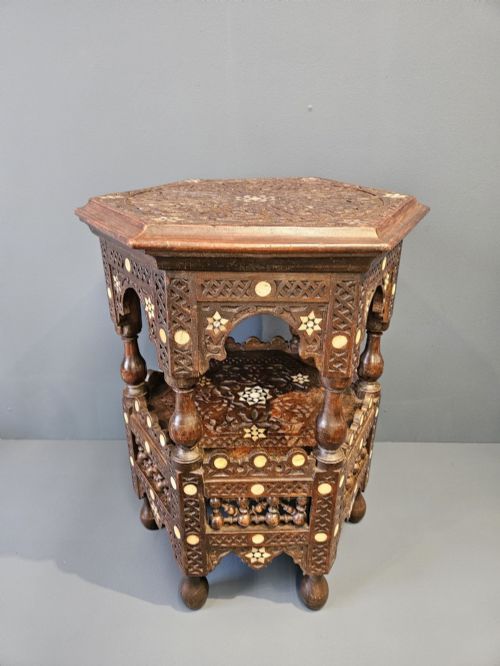
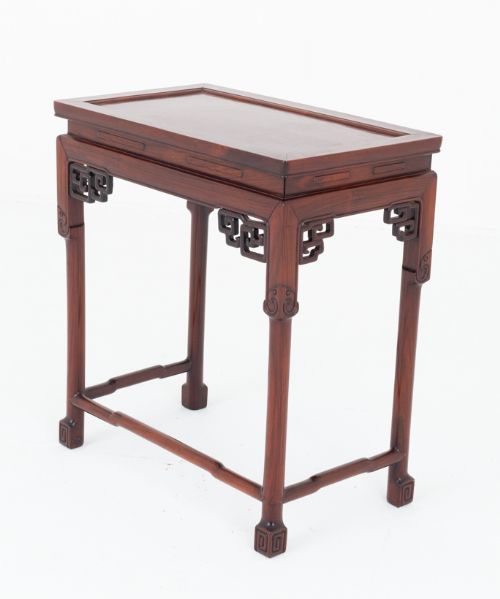
An oriental carved occasional table brings intricate craftsmanship and rich timber grain into a room, serving as a striking accent piece.

Oriental Carved Occasional Table
When you search for an oriental carved occasional table, you are looking at diverse portable surfaces originating from distinct global traditions and colonial exchanges. These items span the nineteenth century through the early twentieth century, including Victorian and Edwardian interpretations.
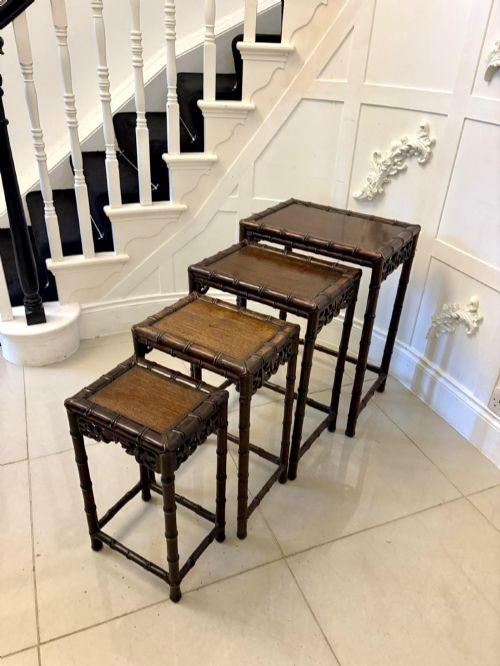
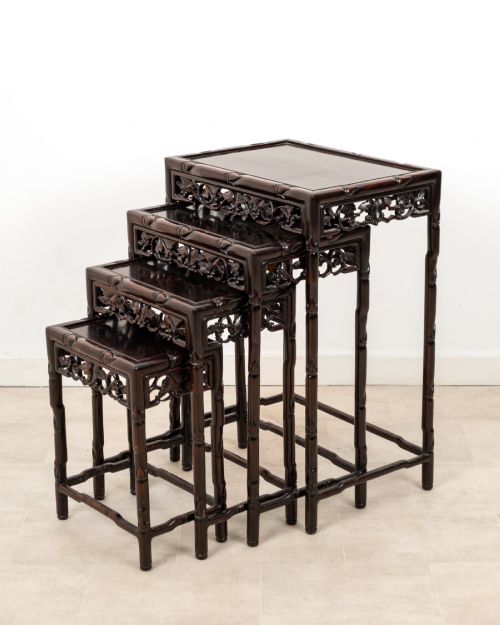
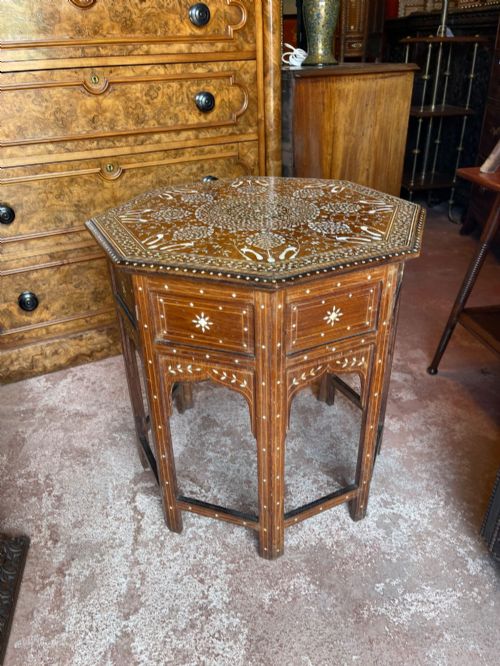
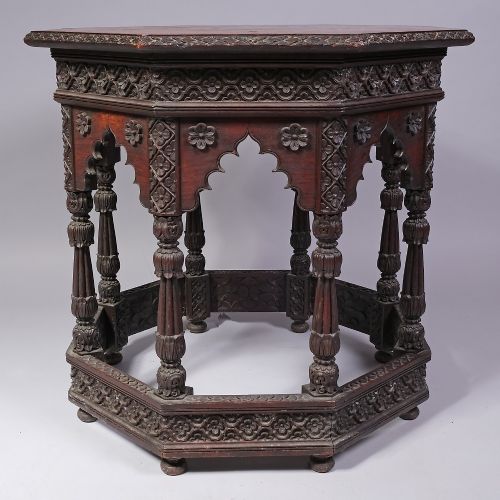
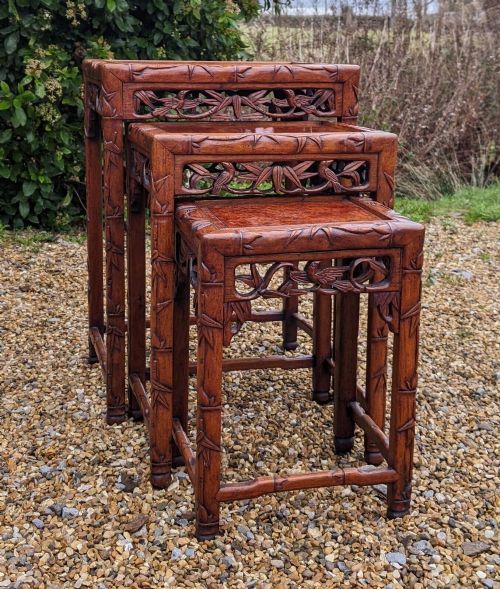
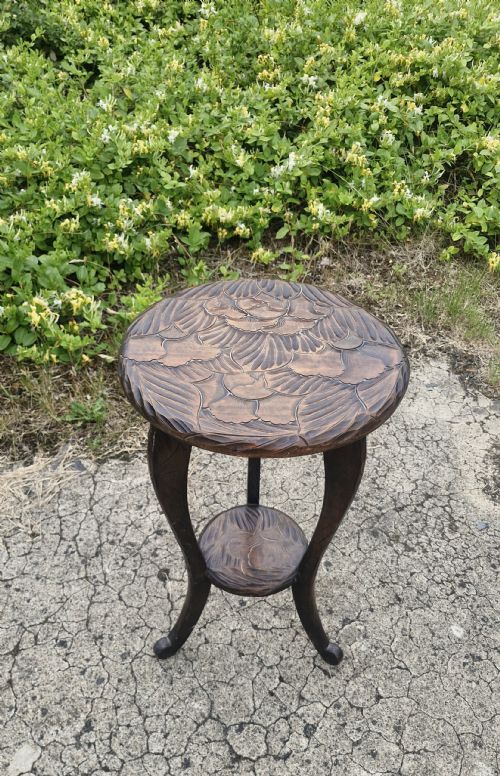
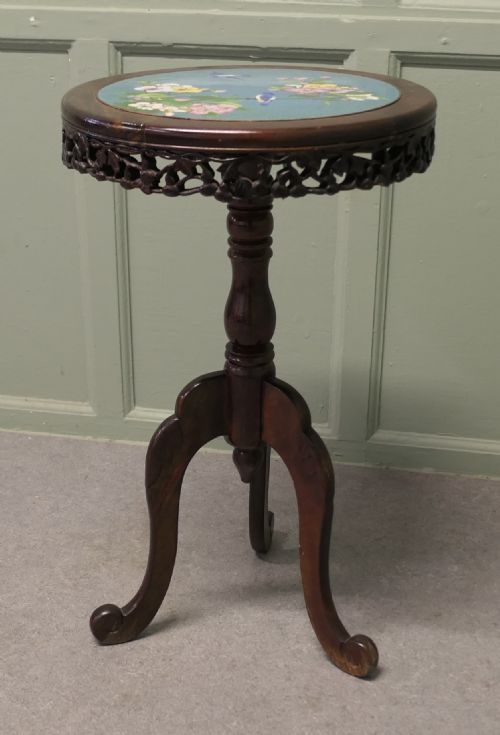
The selection ranges from nests of tables and octagonal side tables to plant stands and low jardiniere stands. Forms frequently reflect Anglo-Indian, Chinese Qing Dynasty, and Moorish Revival stylistic influences.
You will encounter pieces with specialised functions, such as coffee tables, wine tables, and lamp tables. Their origins encompass China, India, and Burma, highlighting diverse regional woodworking traditions.
How they were made
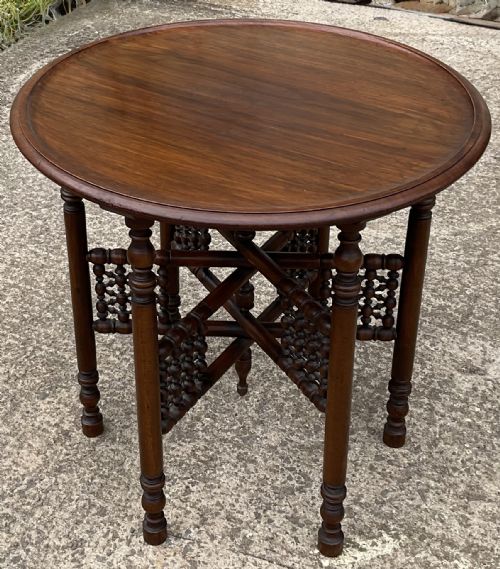
Maker's workshops utilised dense regional timbers such as hardwood, teak, rosewood, amboyna, mahogany, and huanghuali. These resilient woods provided a stable canvas for deep relief carving.
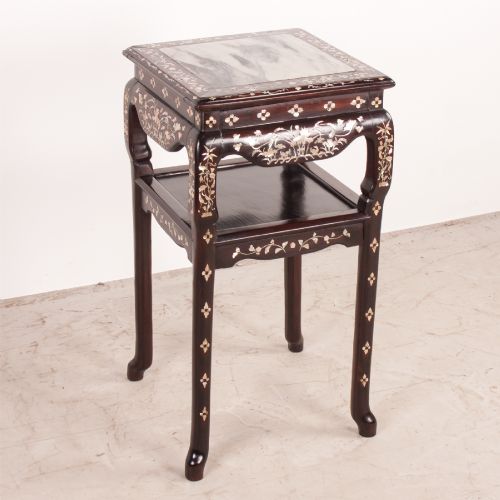
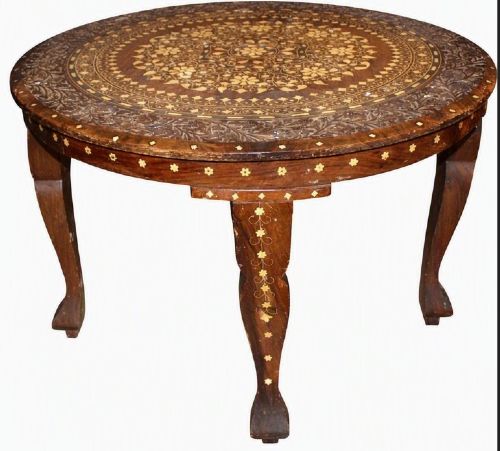
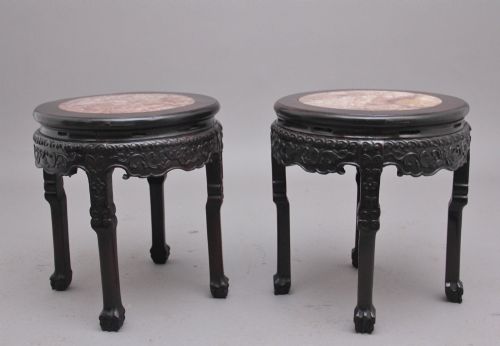
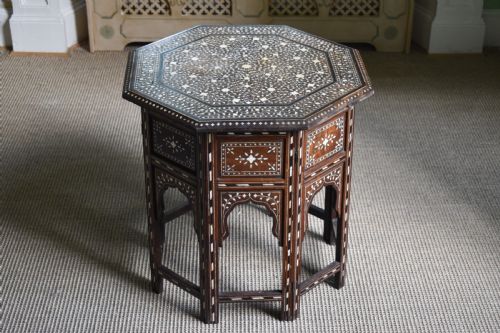
Construction techniques frequently incorporated intricate surface embellishments including bone inlay, mother of pearl inlay, brass inlay, and copper tops. Artisans also integrated inset elements such as variegated rouge marble or quartz tops into the wooden frameworks.
Listings feature hardwood, teak, rosewood, marble, bone, and brass across nineteenth-century and early twentieth-century periods.
What varies in quality
The standard of carving dictates much of the distinction across these tables, moving from shallow geometric patterns to deeply undercut figural motifs like dragons or elephant heads. Precision in the joinery of nested sets or folding mechanisms further separates standard examples from exceptional ones.
Liberty & Co·Gabriel Viardot
The Oriental Carved Occasional Table Glossary
- Anglo-Indian
- Describing furniture made in India during the British period, often combining British furniture forms with traditional Indian carving.
- Hongmu
- A category of dense Chinese hardwood, translated as red wood, often utilised for high-status Qing Dynasty furnishings.
- Hoshiarpur
- A North Indian city renowned for intricate woodcarving and micro-mosaic inlay work using bone or brass.
- Chinoiserie
- European decorative style inspired by Chinese artistic traditions, featuring motifs like birds and flowers.
Oriental Carved Occasional Table: Frequently Asked Questions
How do I style an occasional table?
Position your table beside a seating area to hold lamps, books, or decorative objects. Its portable scale allows you to move it easily between rooms as needed.
Allow the carved details and timber grain to remain visible by keeping surface styling minimal. Let the intrinsic craftsmanship serve as the primary focus of the interior.
What periods do these tables represent?
The available selection spans the nineteenth century through the early twentieth century. Examples frequently date from the Victorian and Edwardian eras.
Specific stylistic influences range from Qing Dynasty China to Anglo-Indian colonial workshops. These dates reflect both nineteenth-century production and subsequent twentieth-century revivals.
How were inlaid surfaces created?
Artisans recessed materials like bone, brass, copper, and mother of pearl directly into the solid timber base. These elements were meticulously shaped to form geometric or floral patterns.
This inlay work required high precision to ensure flush, durable surfaces across table tops and edges. Different regional centres developed distinct palettes of contrasting materials.
Are nest of tables authentic?
Nested sets appear frequently across nineteenth-century and early twentieth-century production, particularly within Chinese export and faux bamboo designs. These graduated tables slide neatly beneath one another to save space.
Examine the construction of the frames to understand how each tier correlates in size. Original sets maintain consistent timber types and matching carved motifs across all parts.