




Carved Floral Side Table
A carved floral side table brings the depth of nineteenth-century craftsmanship into a room, offering surface space paired with intricate botanical relief work.
Carved Floral Side Table
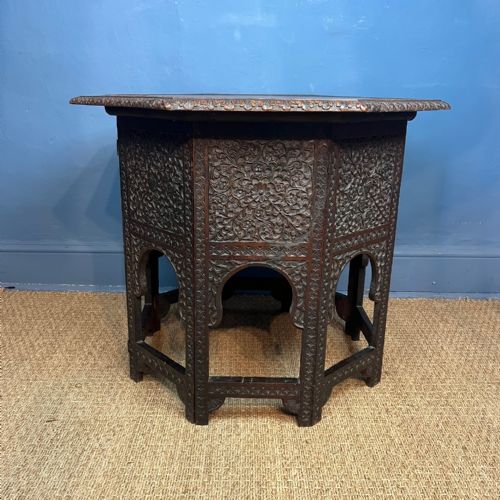
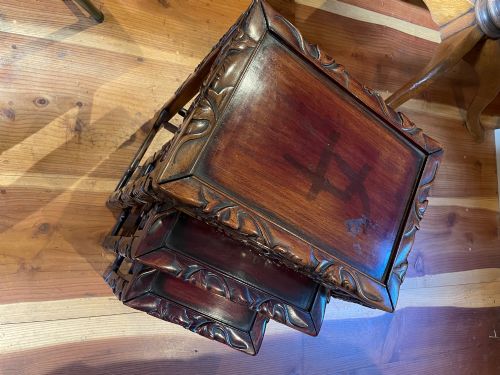
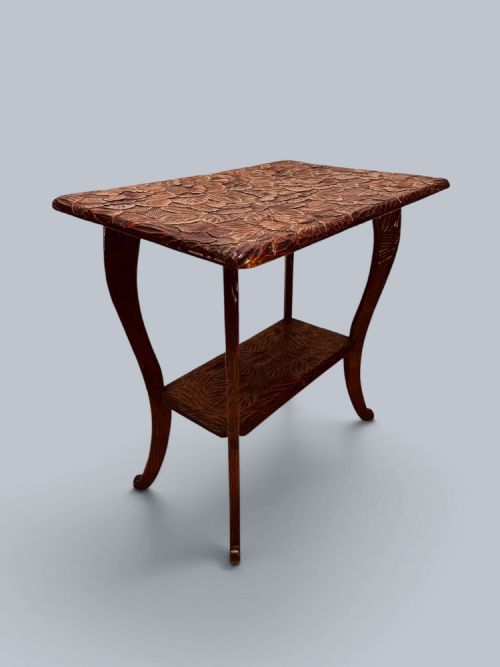
When you search for a carved floral side table, you encounter a variety of nineteenth-century and early twentieth-century occasional furniture designed for domestic use. The selection spans compact lamp tables, larger centre tables, and plant stands produced across different global workshops.
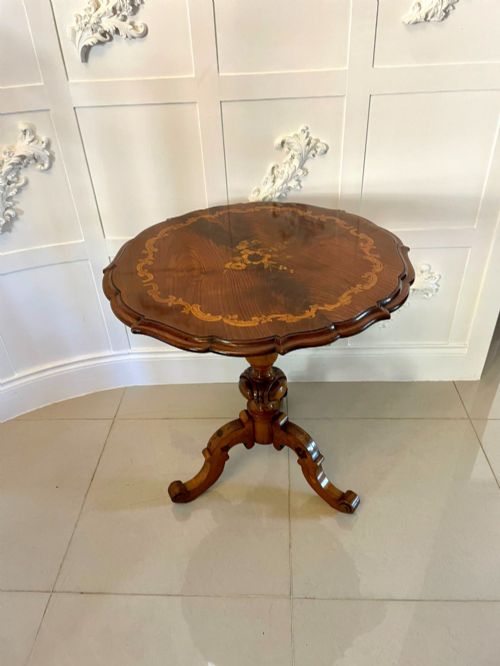
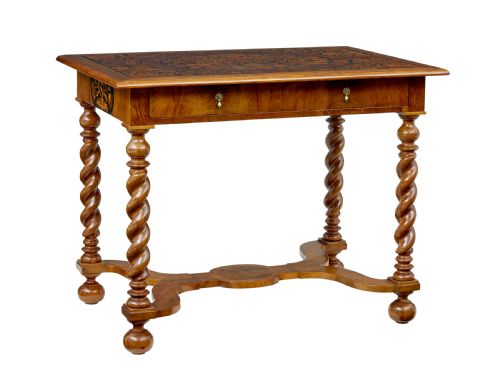
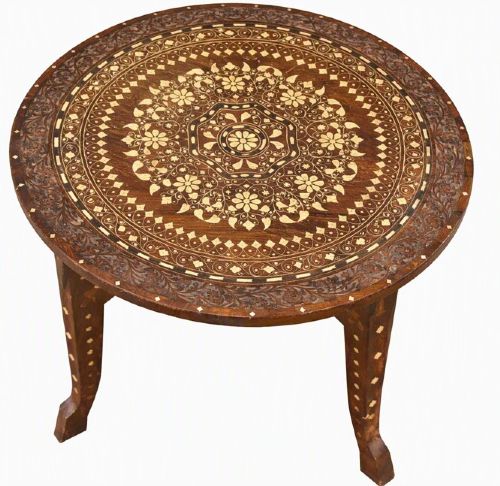
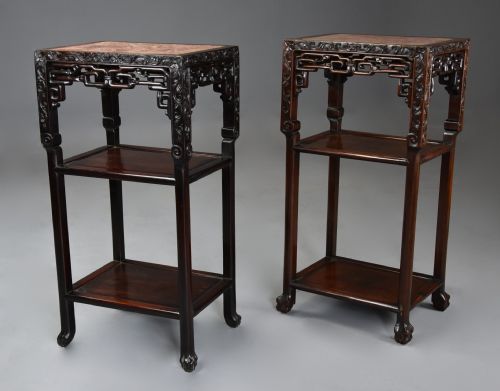
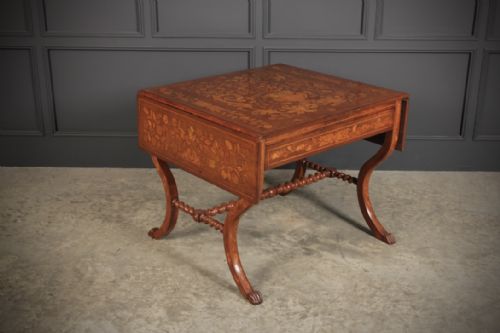
The most common versions on this page are Victorian walnut pieces featuring marquetry or relief carving, alongside Anglo-Indian and Chinese export items. These tables serve as functional display surfaces while showcasing intricate botanical motifs.
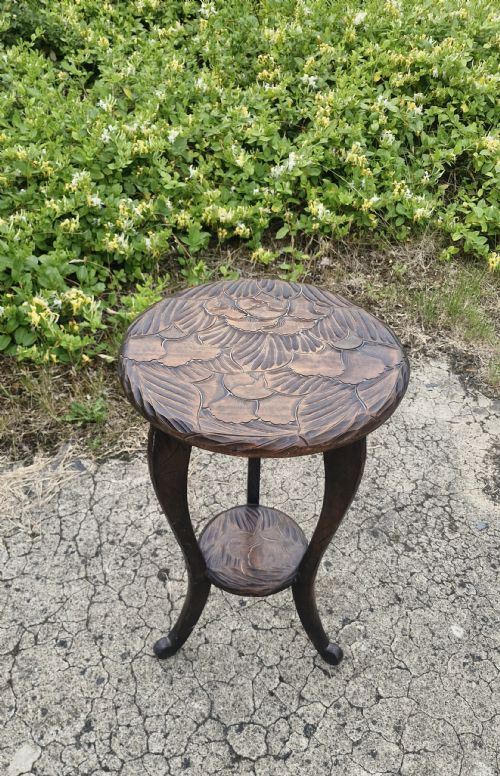
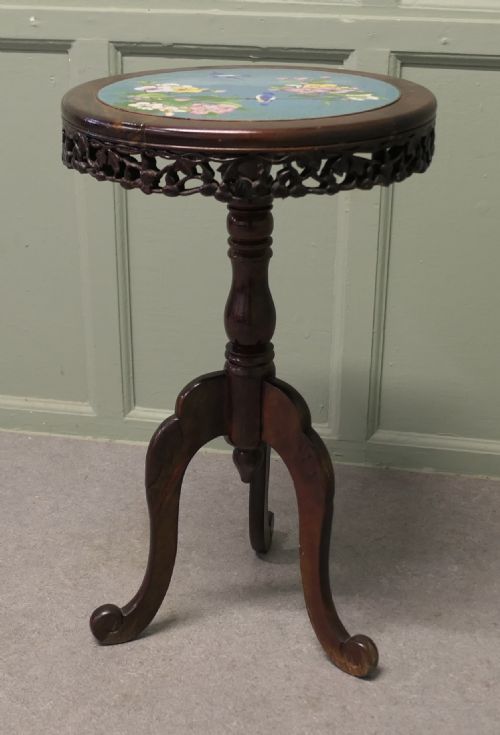
Forms range from circular occasional tables to square side tables and plant pedestals. Each piece reflects the aesthetic preferences of its period, from British revival styles to detailed oriental carving.
How they were made
Cabinetmakers utilised dense timbers such as walnut, oak, mahogany, rosewood, and exotic hardwoods as the structural base for these tables. Solid construction methods ensure stability, while contrasting veneers provide detailed geometric and floral borders.
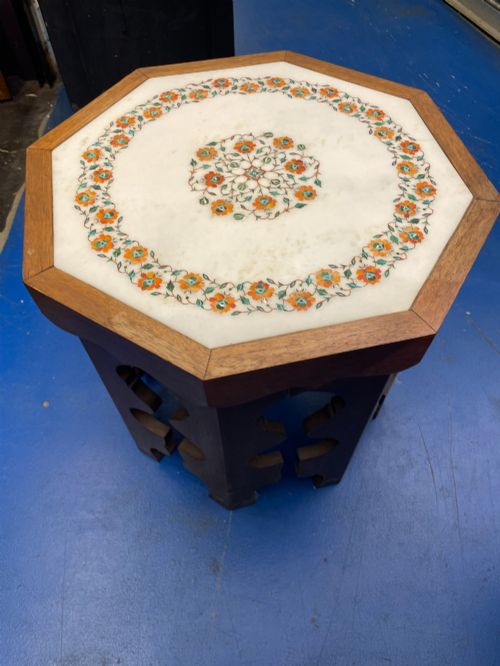
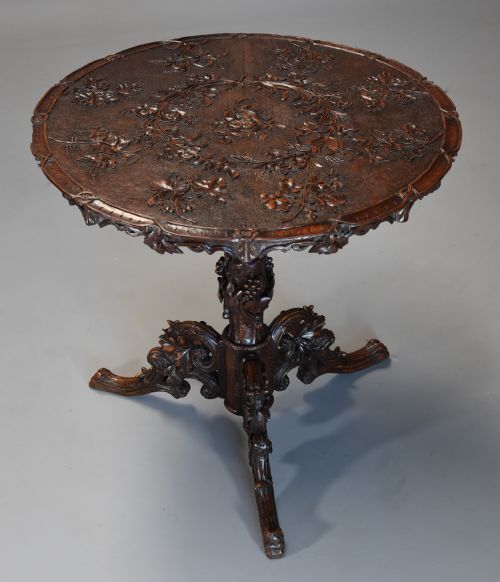
Carving and inlay techniques define the surface decoration, employing hand-chiselled floral relief, bone inlay, brass wire, and multi-timber marquetry. Certain regional pieces integrate painted finishes, marble tops, or linden wood sculpture directly into the frame.
Carved Floral Side Table Retail Price Guide 2026
Typical asking prices for carved floral side table among the pieces listed under this phrase on Sellingantiques today, from the lower quarter to the upper quarter. They describe what is for sale here now, not the wider market.
Certain tables hide secret flip-tops and nesting compartments, proving that Victorian artisans enjoyed a clever puzzle as much as a pretty flower.
What varies in quality
The depth and crispness of the hand-carving separate standard production items from superior examples. Skilled carvers achieved distinct layering and naturalistic movement in floral petals and leaves, whereas lesser pieces display shallow, mechanical stamping.
Material selection and timber figuring dictate the upper tier of the range. Matched burr walnut veneers, dense rosewood, and intact stone or marble inserts denote workshop production of higher standing.
Liberty & Co·Liberty of London
The Carved Floral Side Table Glossary
- Marquetry
- Decorative veneer work assembled in geometric or pictorial patterns. Craftsmen fitted thin slices of contrasting timber together to create floral scenes on tabletops.
- Anglo-Indian
- Furniture made in India during the British colonial period for export or domestic British residents. These items feature dense local carving and often incorporate exotic hardwoods.
- Occasional table
- A small, movable table designed for specific, intermittent household tasks rather than primary dining. They function easily as lamp, plant, or display stands.
- Chinoiserie
- European artistic interpretation of Chinese and East Asian decorative styles. The technique involves painted or lacquered floral and avian motifs on dark surfaces.
- Bobbin turned
- A style of furniture leg or stretcher shaped on a lathe into a series of rounded knobs resembling bobbins of thread. This turning method appears frequently on oak pieces.
Carved Floral Side Table: Frequently Asked Questions
Where should I place a carved floral side table?
These tables suit hallways, drawing rooms, or beside seating where their surface and carved details remain visible. Their compact footprints allow them to function as lamp stands or display pedestals without dominating a floor plan.
Ensure the placement protects delicate marquetry or inlaid bone from direct, prolonged sunlight. Ambient placement highlights the relief carving of the timber without risking heat damage to the finish.
How do I clean a carved wooden surface?
Dust the intricate floral carvings regularly using a soft, dry brush to prevent dirt accumulation in the recesses. Avoid chemical polishes that leave residue inside the carved grain.
Apply a microcrystalline wax sparingly when the timber appears dry, buffing gently with a clean cloth. This preserves the original sheen of walnut, oak, or rosewood without altering the patina.
Are marble-topped tables heavy?
Marble inserts add substantial weight to the overall piece, making these tables remarkably stable despite their slender legs. The stone sits within a rebated wooden frame designed to support the load.
When moving a marble-topped table, lift the entire structure rather than dragging it across the floor. Two people should handle larger centre tables to protect the joints from lateral strain.
How do I distinguish regional carving styles?
Anglo-Indian and Chinese export tables typically feature deep, continuous floral relief executed in dense hardwoods or exotic timber. European Victorian marquetry relies on flat, contrasting wood veneers to depict flowers and foliage geometrically.
Examining the underside and interior joints often reveals construction methods specific to regional workshops. British and continental pieces utilise different framing techniques compared to Asian export manufacturing.