



Colonial Carved Tea Table
A colonial carved tea table brings intricate woodwork and rich regional character straight to a sitting room.
Colonial Carved Tea Table
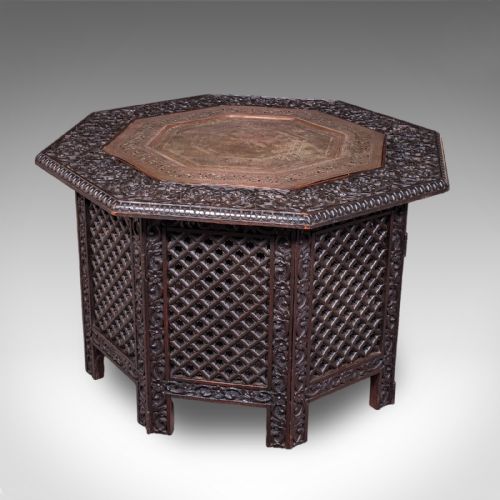
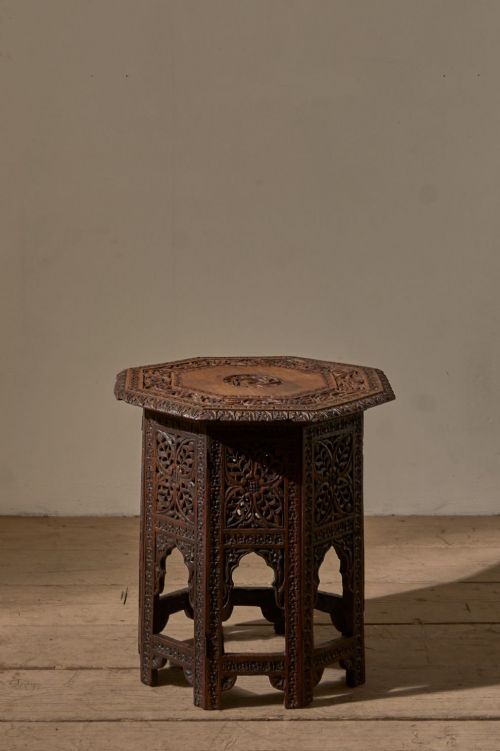
A colonial carved tea table encompasses various occasional, side, and coffee tables produced across regions such as India and Burma during the nineteenth and early twentieth centuries. These pieces combine traditional local craftsmanship with British domestic forms, resulting in distinct tea and side tables designed for colonial households.
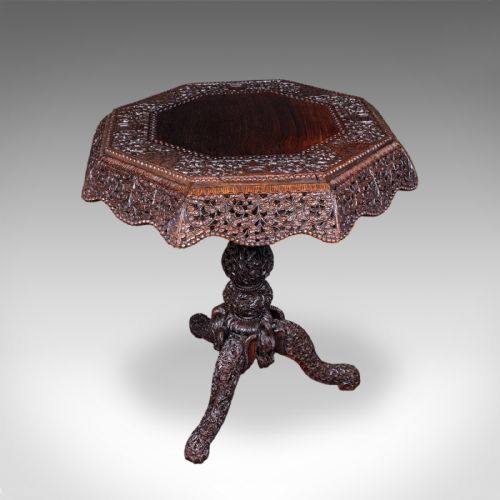
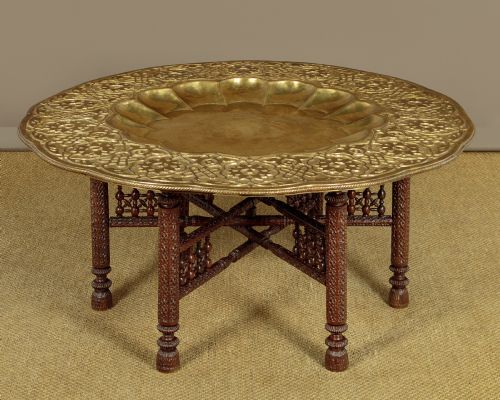
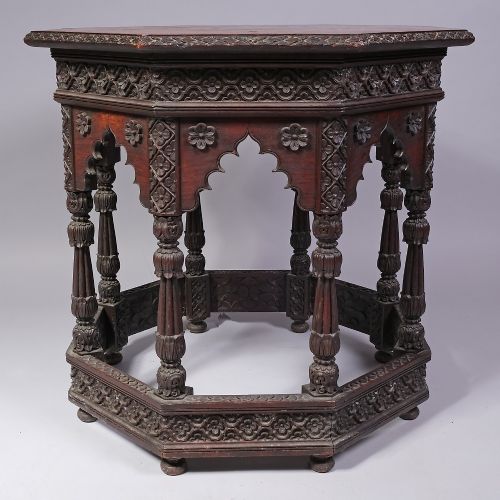
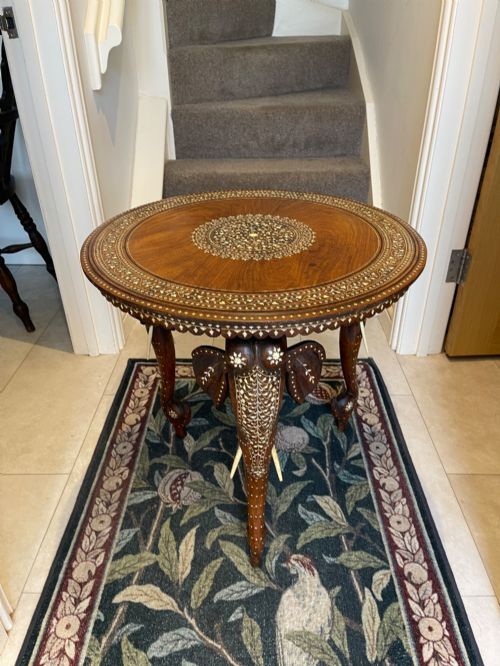
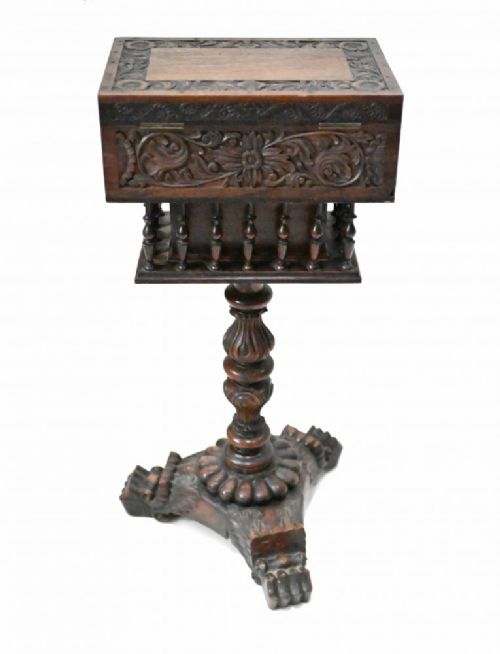
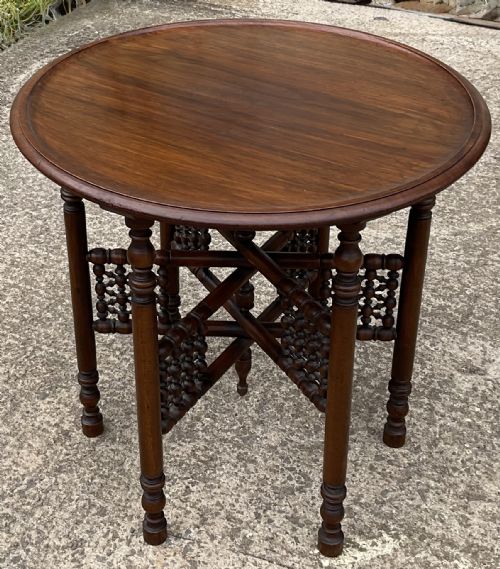
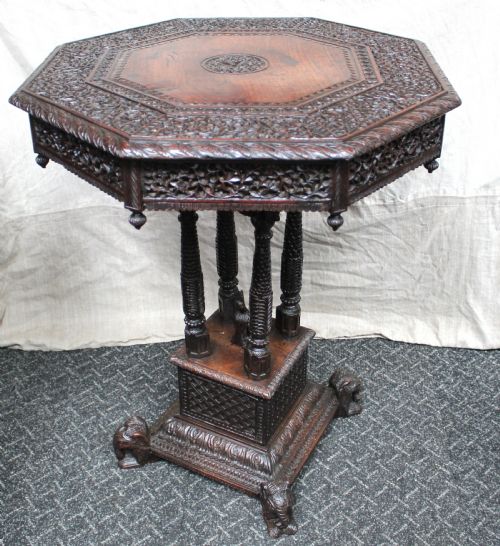
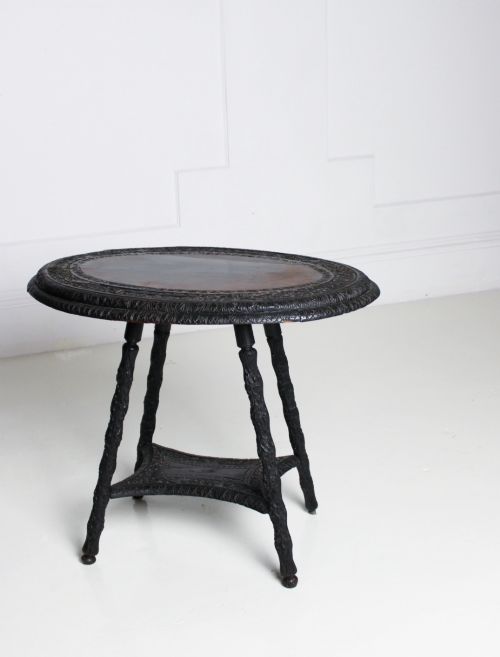
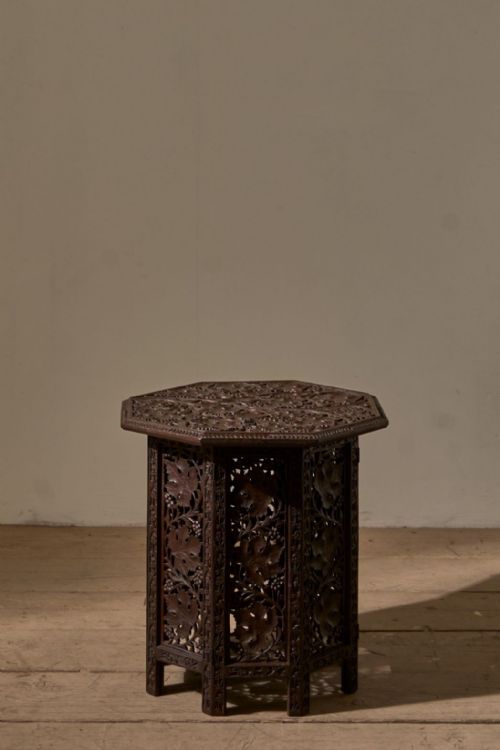
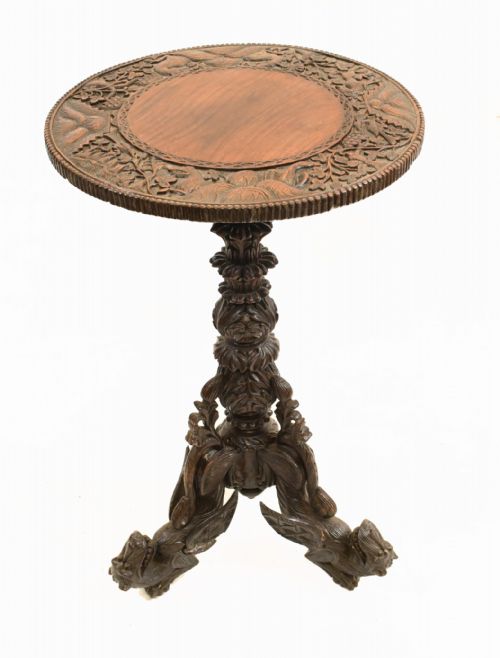
Octagonal and circular tops dominate the available selection, often featuring folding or tilt-top mechanisms for practical use. Buyers frequently encounter low tables, pedestal bases, and specific regional designs incorporating animal motifs like elephants.
The aesthetic bridges several styles, including Anglo-Indian, Anglo-Burmese, and Portuguese Baroque influences. Woods such as teak, padauk, and rosewood serve as the primary structural materials for these tables.
Materials and construction methods
Carpenters utilised dense tropical timbers including padauk, teak, rosewood, and hardwood to build sturdy frames capable of withstanding intricate carving. These heavy woods provide the durable foundation necessary for deeply recessed relief work and turned pedestals.
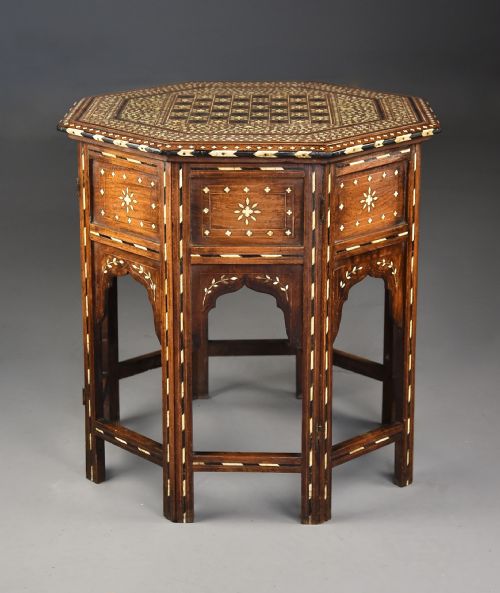
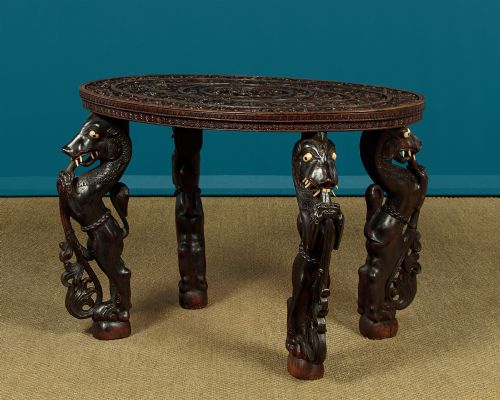
Artisans applied elaborate surface decoration through deep chisel carving, piercing, and contrasting inlay work using brass, bone, mother-of-pearl, and copper. Foliage, dragon motifs, and figurative elements appear across the timber surfaces, while some tables incorporate metal trays or lacquer finishes.
Colonial Carved Tea Table Retail Price Guide 2026
Typical asking prices for colonial carved tea table among the pieces listed under this phrase on Sellingantiques today, from the lower quarter to the upper quarter. They describe what is for sale here now, not the wider market.
Listings span the nineteenth and twentieth centuries, featuring woods like teak, padauk, rosewood, and ebony combined with brass and bone inlay.
Assessing craftsmanship and execution
The depth, crispness, and complexity of the hand carving distinguish finer examples from simpler production. Superior tables display sharp undercut relief work and balanced symmetry in repetitive leaf or animal designs, whereas lesser pieces show shallow or blurred surface stamping.
The integration of contrasting materials dictates the refinement of the piece. Precisely fitted brass, bone, or mother-of-pearl inlay embedded flush with the dark hardwood indicates higher workshop standards compared to erratic placement or plain timber surfaces.
The Colonial Carved Tea Table Glossary
- Anglo-Indian
- Pertaining to furniture made in India during the British colonial period, typically combining British furniture forms with traditional Indian carving techniques.
- Padauk
- A heavy, durable reddish-brown tropical hardwood frequently utilised by makers in colonial workshops for side and occasional tables.
- Teak
- A dense, weather-resistant Asian timber chosen for its stability and rich grain in nineteenth-century campaign and tea tables.
- Teapoy
- A small table traditionally used to hold tea caddies, evolving in the colonial period into various occasional and side table formats.
- Tilt-top
- A hinged table top that pivots to a vertical position for storage when not in use.
Colonial Carved Tea Table: Frequently Asked Questions
How do I distinguish Anglo-Indian from Burmese tables?
Anglo-Indian tables frequently showcase dense floral or geometric chip-carving alongside brass or bone inlay, often executed in hardwoods like padauk or teak. Burmese tables tend to display deep, heavily undercut relief work featuring figures, foliage, and animals without metal inlay.
Both styles emerged from nineteenth-century colonial production centres but maintain distinct regional carving traditions.
Where were these tables originally used?
British families and colonial administrators utilised these tables in sitting rooms, verandahs, and campaign settings across India and Burma. They served practical functions for serving tea, holding lamps, or displaying decorative items.
Today, they adapt easily as low coffee tables or accent pieces in contemporary living spaces.
Are these tables solid timber?
Most examples utilise solid tropical hardwoods such as teak, rosewood, padauk, and ebony to accommodate the deep relief carving required by the style. The density of these woods ensures structural integrity despite heavy surface piercing.
Construction methods typically involve pegged or joined frames designed for durability.