


Orange Red Ceramic Urn
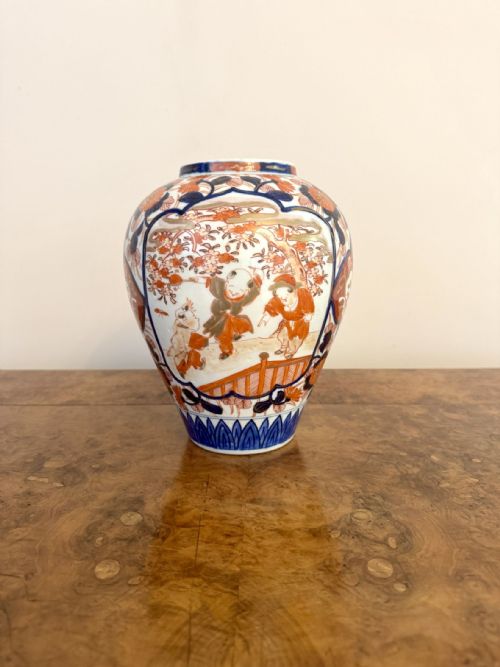
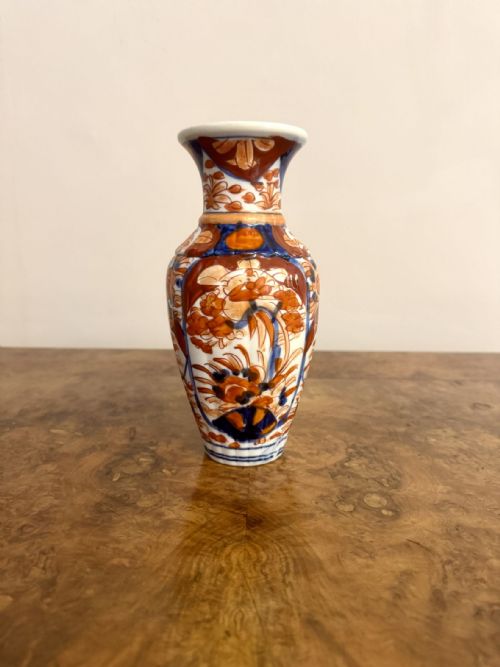
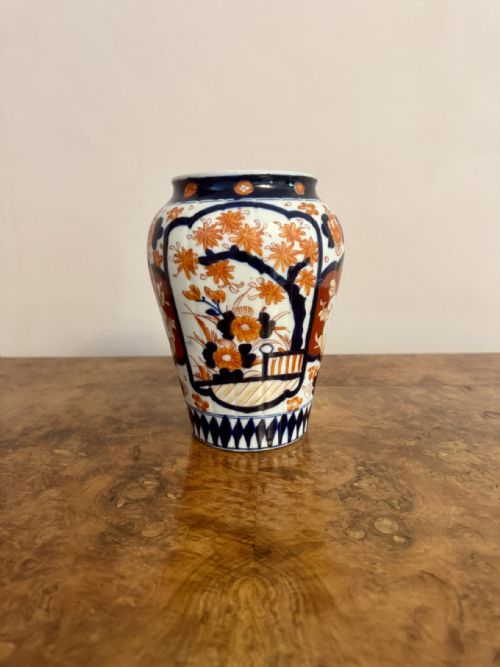
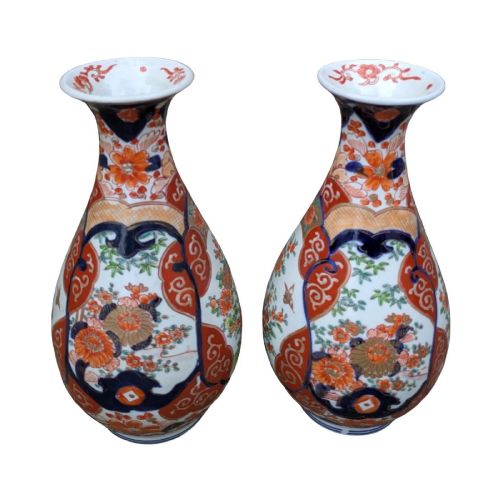
These orange red ceramic urn pieces are substantial Japanese porcelain vessels decorated in vibrant palettes, prized for bringing rich colour and historic presence to a room.
Orange Red Ceramic Urn
When searching for an orange red ceramic urn, buyers encounter traditional Japanese porcelain vessels originating from the nineteenth century through the early twentieth century. These pieces predominantly take the form of Imari and Kutani vases, ginger jars, and lidded urns shaped by historical Japanese ceramic traditions.
The selection here draws heavily from the Meiji period and the broader Victorian and Edwardian eras, encompassing single display pieces alongside matched pairs and garnitures. Forms range from standard baluster profiles to double gourde vessels and large floor vases featuring lion handles or wooden stands.
How they were made
These items are shaped from porcelain and finished with heavy glaze, incorporating hand-painted motifs that define the aesthetic of the period. Artisans applied cobalt blue alongside iron red and enamel pigments, often integrating gold leaf, gilt, and gilding to highlight intricate surface patterns.
Techniques such as moriage appear on specific Kutani pieces, building raised paste decorations that create tactile relief across the ceramic surface. Wood is also utilised for complementary display stands accompanying the larger vessels.
Current listings feature nineteenth-century porcelain and pottery spanning the Meiji, Victorian, and Edwardian periods, utilising enamel, gold leaf, and glaze.
What varies in quality
The standard of a piece rests upon the crispness of the hand-painted brushwork and the richness of the palette, particularly the depth of the iron red and cobalt blue pigments. Finer examples display meticulous control over intricate patterns and delicate gilding.
Scale and completeness also dictate distinction, with matched pairs, garnitures of three, and covered ginger jars or lidded urns holding greater presence than single or modified items. The application of specialised relief techniques like moriage further distinguishes the upper tier of works.
The Orange Red Ceramic Urn Glossary
- Imari
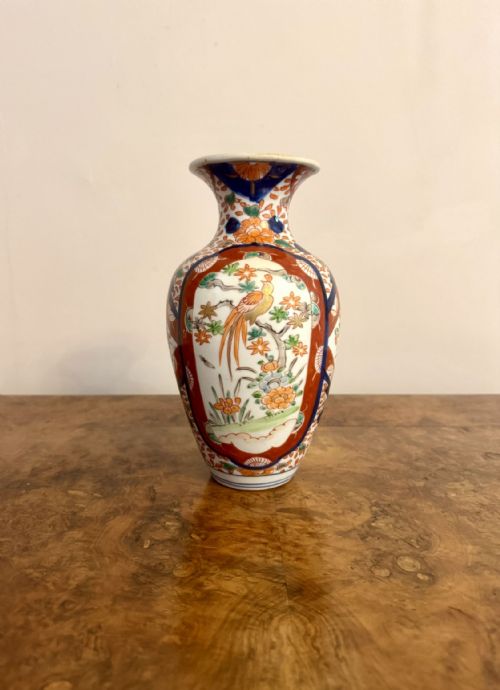
- A traditional style of Japanese porcelain originating from Arita, typically characterised by a palette of cobalt blue, iron red, and gold. These pieces often feature densely patterned panel designs.
- Kutani
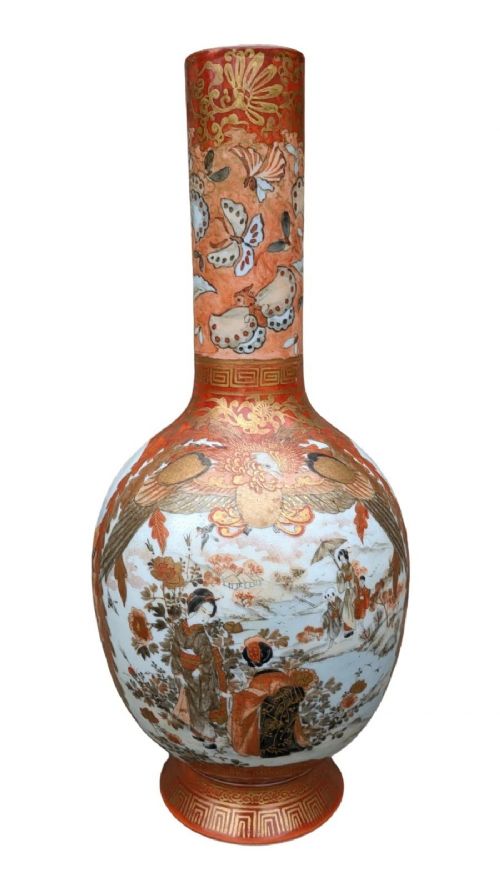
- A distinct style of Japanese coloured porcelain known for vibrant pictorial designs and expressive use of iron red and gold. Works from this tradition frequently depict figures, birds, and natural landscapes.
- Moriage
- A Japanese ceramic technique using piped clay to create raised, beaded, or textured decorative patterns. This method adds a distinct three-dimensional quality to the surface.
- Gilt
- A thin layer of gold applied to the surface of the porcelain to accent details and motifs. This decorative finish catches the light and enhances the visual richness of the vessel.
- Meiji Period
- The era in Japanese history spanning from 1868 to 1912, marked by significant artistic output for export. Pieces from this time demonstrate exceptional technical skill and traditional ornamentation.
Orange Red Ceramic Urn: Frequently Asked Questions
How were these porcelain urns used?
These vessels served primarily as decorative display items within traditional interiors, often showcased on tables, mantelpieces, or dedicated stands.
Covered jars and lidded urns also functioned to hold dry goods or simply to complete symmetrical garniture sets on display.
How do I date an Imari vase?
Dating relies on examining the characteristics of the porcelain body, the depth of the glaze, and the specific tones of the iron red and cobalt blue pigments.
Inscriptions on the base or stylistic traits associated with the Meiji period and the nineteenth century also help establish the chronological origin.
Are these pieces functional or decorative?
The majority of these items were created as ornamental works of art rather than for utilitarian household use.
Their intricate painted surfaces and delicate gilding make them unsuited for holding liquids, though some larger floor vases and table lamps serve structural purposes in a room.
What is the difference between Imari and Kutani?
Imari porcelain is defined by its tripartite palette of underglaze blue, iron red, and gold, featuring intricate symmetrical patterns.
Kutani ware leans toward more pictorial storytelling scenes, utilising bold red and gold enamel work alongside raised moriage decoration.