


Oriental Porcelain Vase Stand
An oriental porcelain vase stand lifts heavy ceramics off the floor and holds them securely in place.
Oriental Porcelain Vase Stand
When searching for an oriental porcelain vase stand, collectors encounter supportive bases designed to accompany large floor vessels, umbrella stands, and table ceramics. The pieces on this page span the nineteenth century and early twentieth century, originating from Chinese and Japanese workshops.
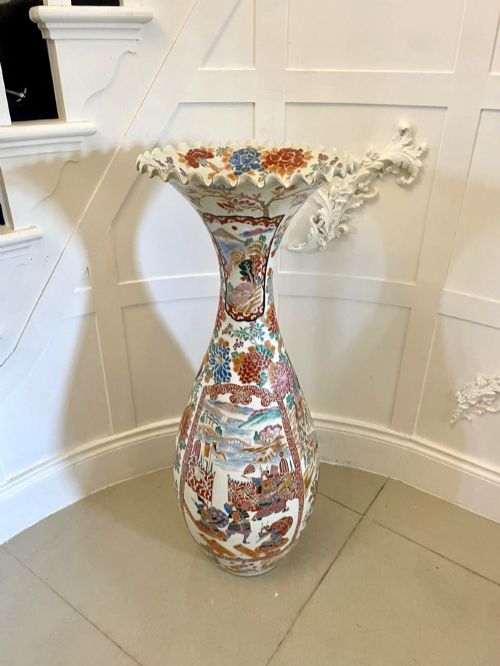
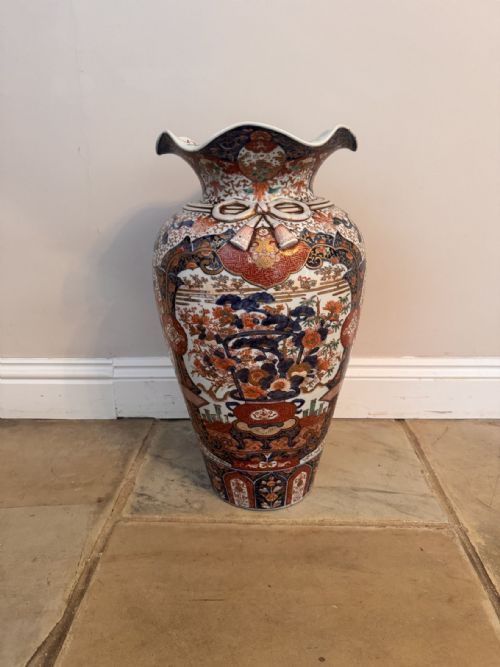
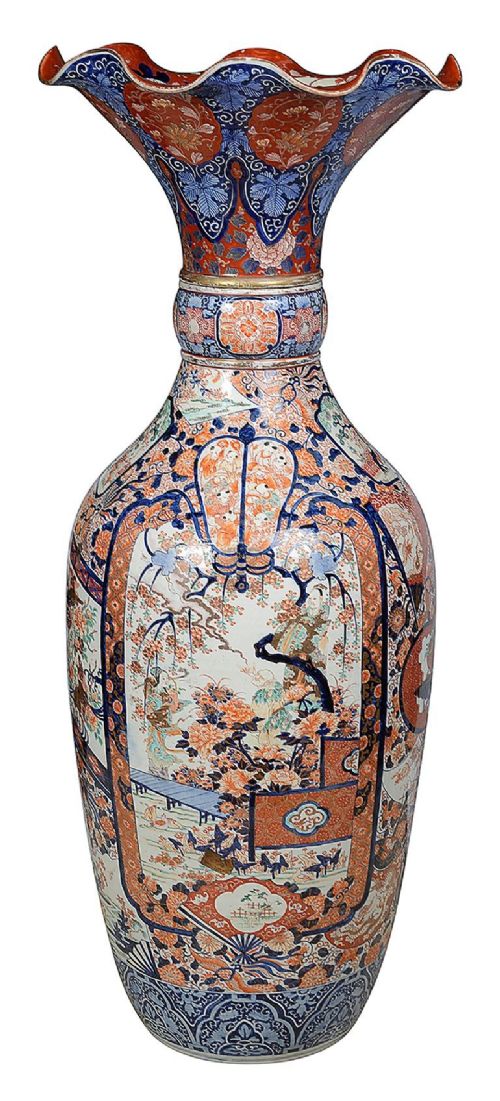
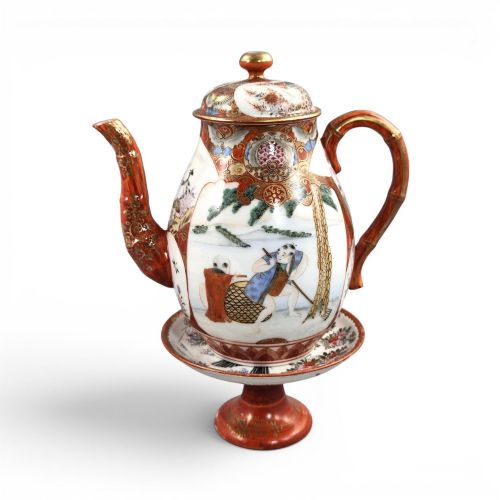
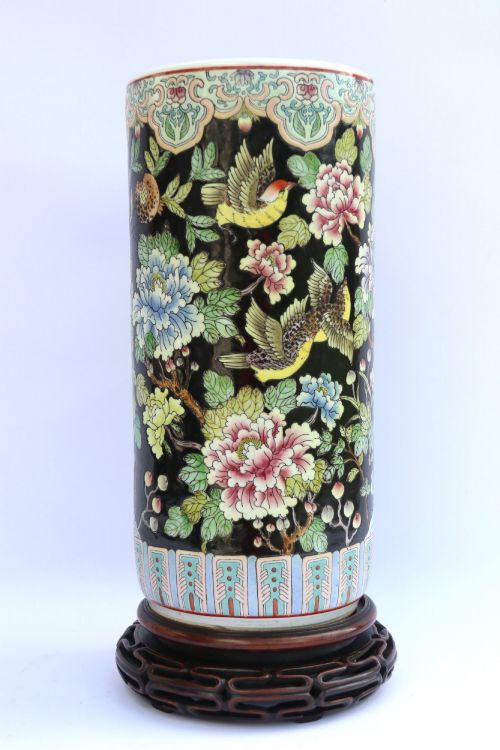
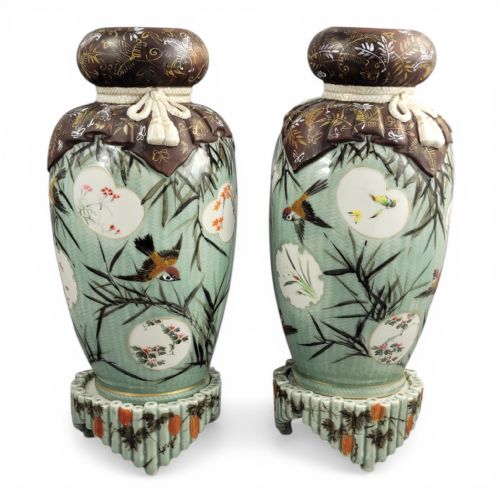
Most entries pair ceramic vessels directly with matching wooden bases or integrated porcelain stands. These items accommodate distinct forms such as Japanese Imari floor vases, Kutani tea wares, and Canton rose medallion umbrella stands.
Materials and construction methods
Maker workshops utilised robust hardwoods to build sturdy vase stands capable of supporting heavy ceramic loads without tipping. For the vessels themselves, artisans shaped porcelain and ceramic bodies before applying detailed glazes and overglaze enamel finishes.
Surface decoration frequently incorporated gold leaf detailing, moriage relief work, and lacquer over black paint. Kiln workers fired these pieces during the Meiji period and Qing dynasty to achieve durable vitrified surfaces.
Available forms range from compact tea table items to monumental floor standing vases and umbrella stands.
Distinctions in execution and grade
The division between standard items and superior examples rests upon the precision of the woodwork and the complexity of the ceramic painting. Finely painted overglaze enamels and crisp moulding demonstrate greater technical control by the maker.
Original matching sets display a higher degree of harmony between the vase and its stand compared to later assembled pairings. Heavier hardwood construction and intricate carved details distinguish the superior supports from simpler utility frames.
Kato Sanhei·Fukagawa
The Oriental Porcelain Vase Stand Glossary
- Imari
- A style of Japanese export porcelain decorated in underglaze blue, iron red, and gold. This palette appeared frequently on nineteenth-century floor vases and decorative vessels.
- Kutani
- Japanese coloured porcelain known for pictorial designs and relief work. Pieces from this tradition often incorporate moriage elements.
- Hardwood
- Dense timber species utilised for making sturdy furniture and vase stands. These woods provide the structural strength needed for heavy ceramic vessels.
- Overglaze enamel
- Pigments applied over a fired and glazed ceramic surface before undergoing a second, lower-temperature kiln firing. This technique produces vibrant polychrome imagery.
- Moriage
- A Japanese ceramic decorating technique where slip is piped onto the surface to create raised dotted or textured patterns. It adds a tactile dimension to the finished vessel.
Oriental Porcelain Vase Stand: Frequently Asked Questions
What is an oriental porcelain vase stand used for?
These supports elevate heavy ceramic vessels off the floor or table surface to display them properly. They protect delicate floor vases and umbrella stands from accidental bumps and dampness.
In period interiors, matching stands provided visual balance to monumental Japanese Imari or Chinese Canton pieces. They anchor tall floor vases firmly in position.
How do I identify Meiji period porcelain?
Meiji period ceramics typically date from 1868 to 1912 and often feature dense overglaze enamel patterns. Look for stylistic traits such as intricate Kutani painting or heavy moriage relief decoration.
Many pieces from this era were made specifically for export and display exceptional technical skill in their firing and glaze application.
Are the vase stands original to the vases?
Some listings feature matching original porcelain or hardwood stands created specifically for the paired vessel. Other configurations bring together period ceramics and independent timber supports.
Examining the fit and wear patterns helps determine whether a stand has accompanied a particular vase for generations.
How do I care for antique porcelain and hardwood?
Keep porcelain vessels and their wooden stands away from direct sunlight and sudden temperature changes. Dust timber frames gently with a dry cloth and avoid harsh chemical cleaners.
Heavy floor vases require stable placement on level flooring to ensure the supporting stand bears the weight evenly.