

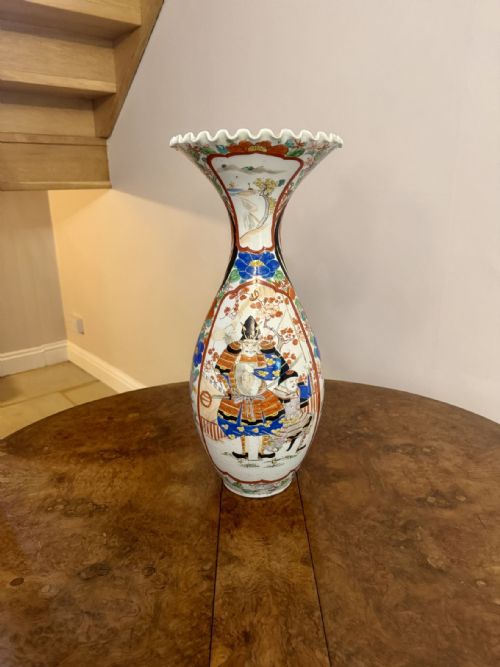
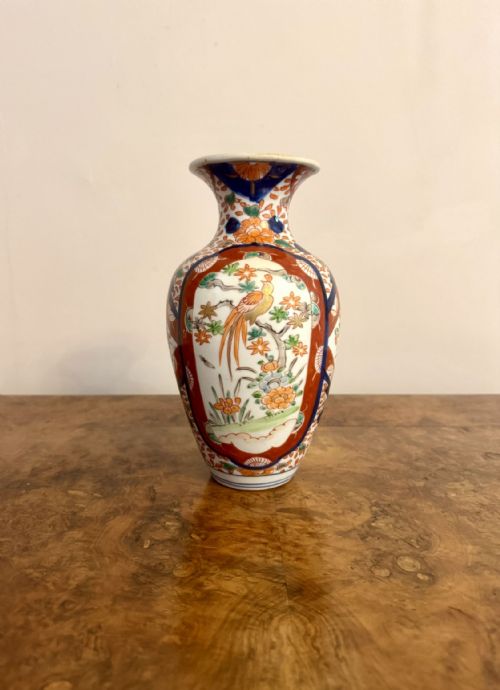


Orange Imari Porcelain Urn
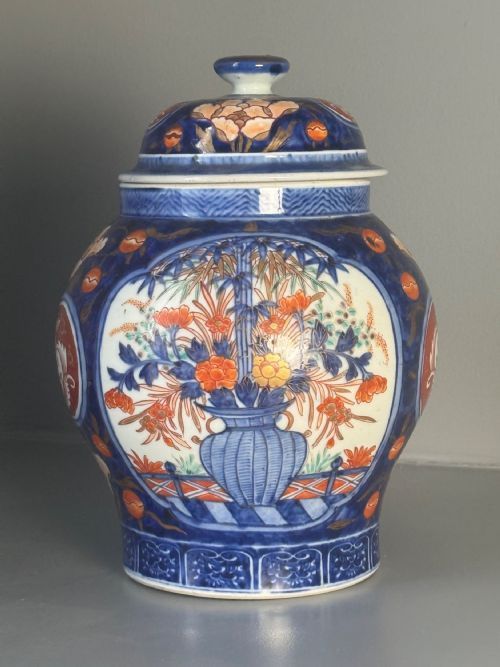
An orange imari porcelain urn brings vibrant Japanese and English palette traditions into a room, offering striking decorative presence.
Orange Imari Porcelain Urn
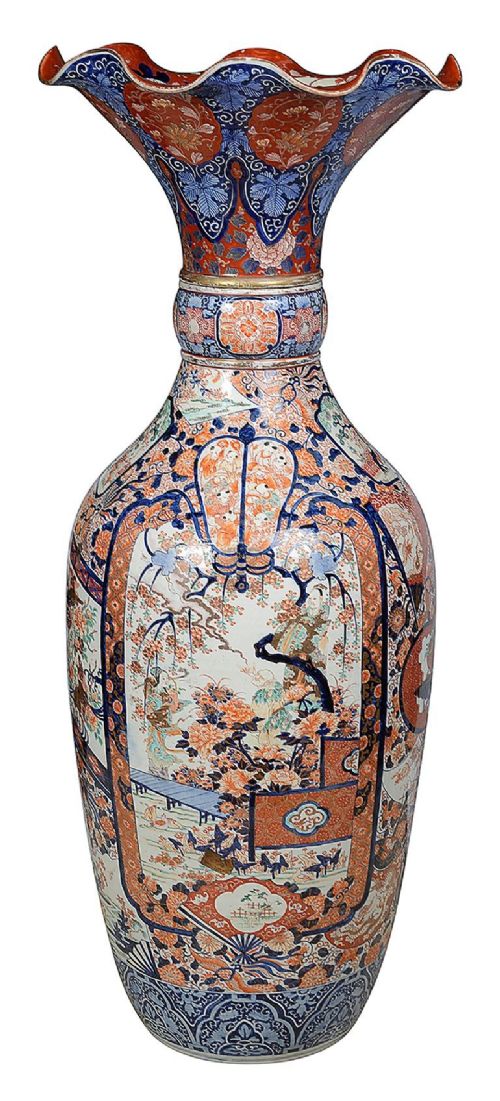
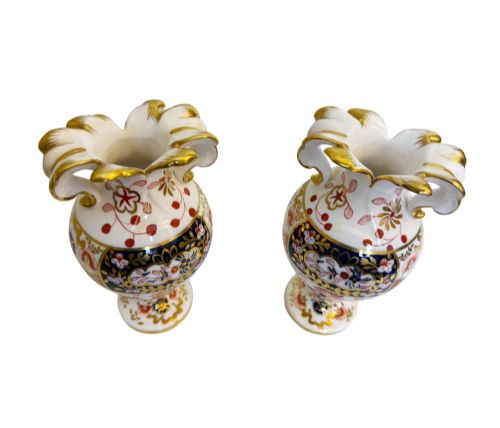
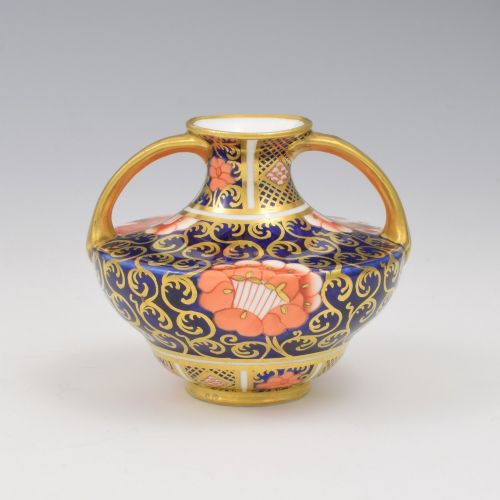
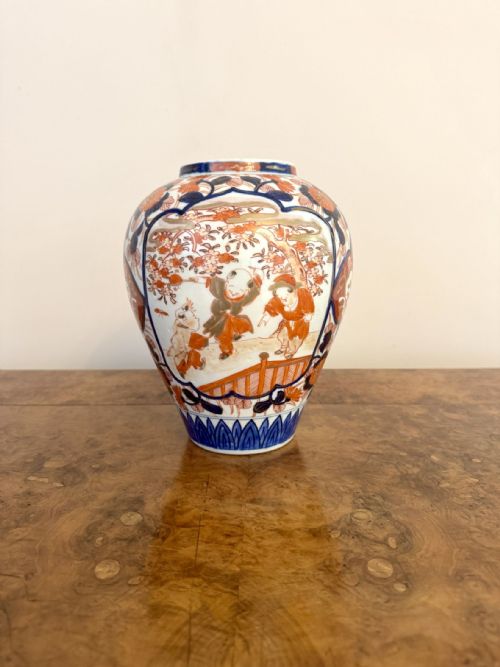
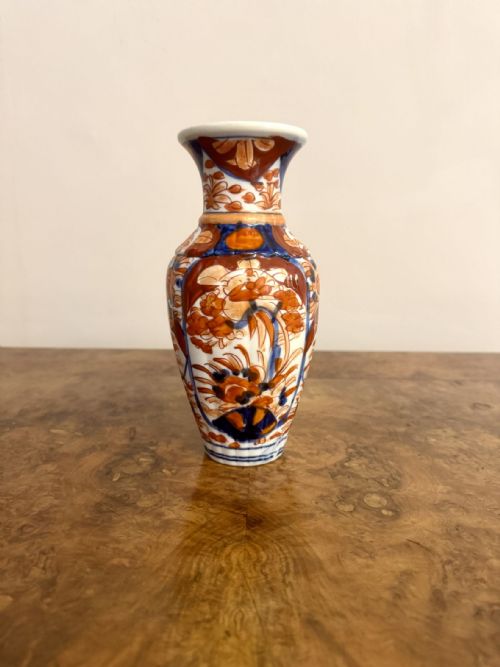
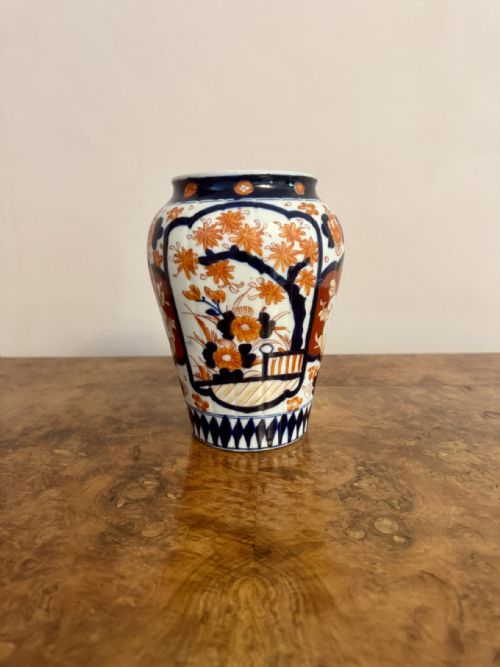
An orange imari porcelain urn represents a crossover of ceramic forms, encompassing Japanese export pieces alongside English interpretations from factories like Spode and Worcester. Buyers seeking this phrase encounter lidded jars, floor-standing vessels, and handled vases shaped across the nineteenth and early twentieth centuries.
The selection leans heavily toward Japanese Meiji period manufacture, alongside Georgian and Edwardian examples. Forms range from miniature vessels to large floor-standing containers.
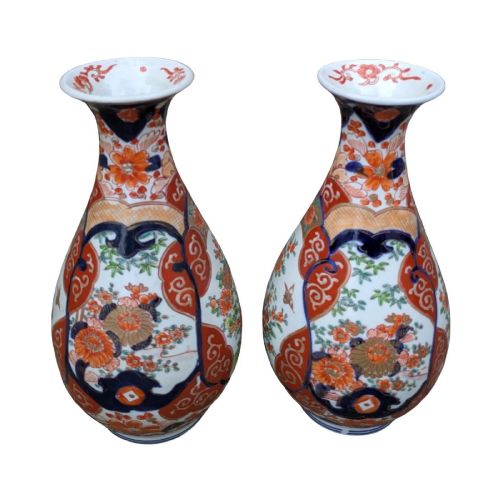
Vessels appear singly or as pairs and garnitures, functioning historically as ornamental centrepieces in period interiors.
How they were made
Potters shaped these vessels from porcelain and bone china, applying rich glaze and enamel decoration. Artisans utilised gold leaf and gilding to accentuate the painted motifs.
Firing techniques allowed cobalt blue and iron-red enamel pigments to fuse beneath or above the glaze. Wood mounts occasionally appear on associated stands or lids.
Some towering floor vases stand nearly five feet tall, demanding an appreciative nod from anyone walking past.
What varies in quality
Quality rests in the crispness of the enamel painting and the density of the gilding applied across the ceramic surface. Superior examples display balanced symmetry in baluster, octagonal, or double-gourd profiles.
The refinement of the porcelain paste and the clarity of the underlying glaze distinguish standard production vessels from exceptional factory outputs.
Spode·Chamberlain Worcester·Royal Crown Derby·Flight Barr And Barr
The Orange Imari Porcelain Urn Glossary
- Imari
- A style of ceramic decoration originating in Japan, characterised by a palette of cobalt blue, iron red, and gilt highlights. European factories later adopted this distinct aesthetic.
- Garniture
- A set of three or more matching vases or urns designed to be displayed together on a mantelpiece or cabinet.
- Baluster
- A vase form with a rounded body that tapers toward the base and swells above. This shape provides stability for large decorative vessels.
- Gilding
- The application of gold leaf or gold powder to the ceramic surface to highlight handles, rims, and painted panels.
- Meiji Period
- A Japanese historical era spanning from eighteen sixty-eight to nineteen twelve, associated with detailed export ceramics.
Orange Imari Porcelain Urn: Frequently Asked Questions
How should I display an imari urn?
Place the vessel on a sturdy table or mantelpiece where natural light can catch the gilt highlights and enamel colours without risking accidental knocks.
Pair matching vases symmetrically or let a single large floor-standing piece anchor an empty corner of the room.
Are these urns waterproof?
Most antique porcelain urns and vases were created for ornamental display rather than holding water and fresh flowers.
Using them dry protects the historic glaze, enamel, and delicate gilding from moisture damage over time.
How do I identify the period?
Examine the style of decoration, potting weight, and any factory marks stamped or painted on the base of the porcelain.
Japanese Meiji pieces often feature denser patterns, while Georgian and Edwardian English pieces reflect European neoclassical or revival shapes.
Did English and Japanese makers collaborate?
English potteries did not collaborate directly with Japanese kilns, but rather studied and copied the popular imported aesthetic.
Factories in Worcester and Derby adapted the traditional palette onto their own porcelain and bone china bodies.