
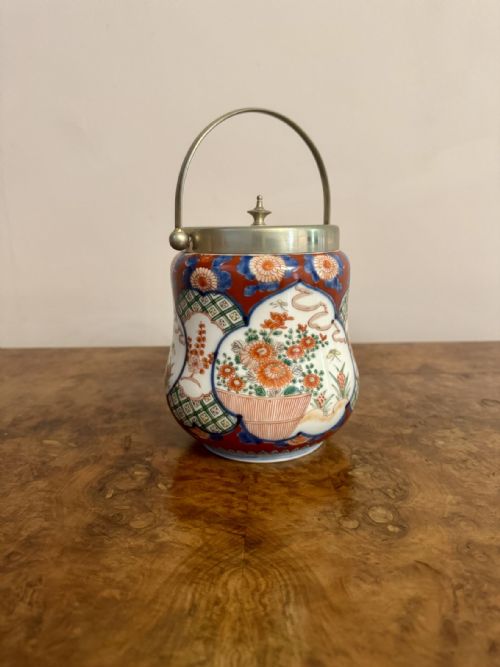
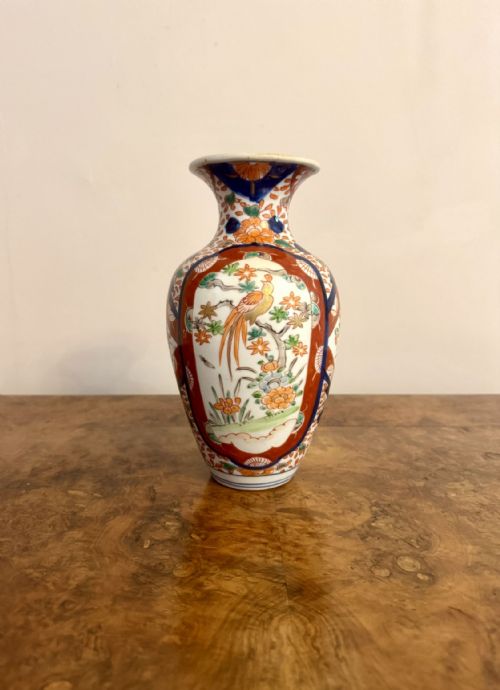


Japanese Floral Porcelain Jar
A Japanese floral porcelain jar brings striking colour and intricate pattern into a room, drawing the eye instantly to centuries of ceramic tradition.
Japanese Floral Porcelain Jar
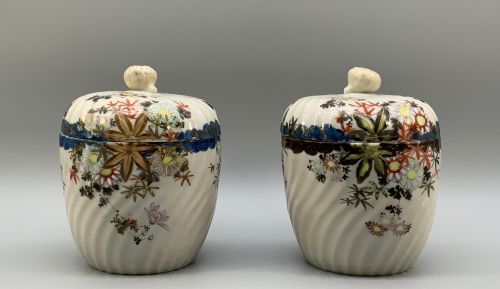
A japanese floral porcelain jar encompasses covered ginger jars, lidded vessels, biscuit barrels, and floor-standing vases originating from Japan across the eighteenth, nineteenth, and early twentieth centuries.
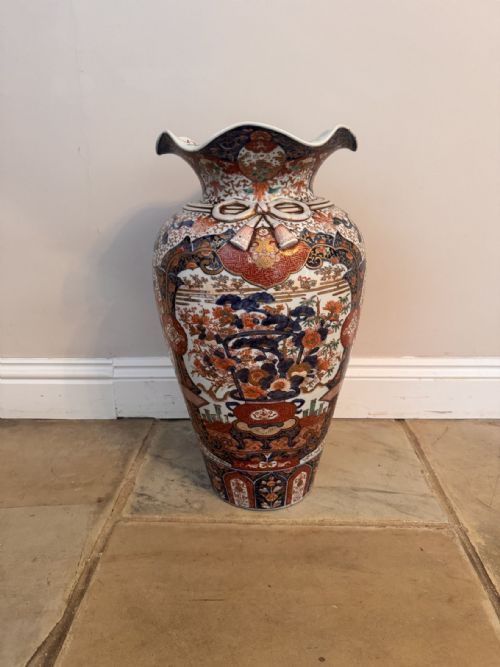
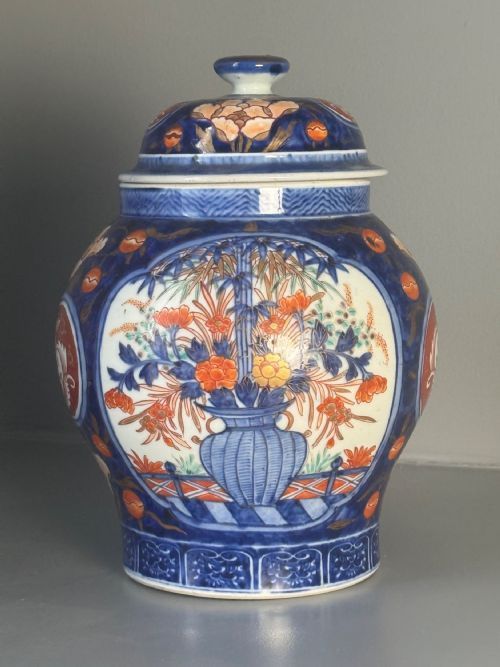
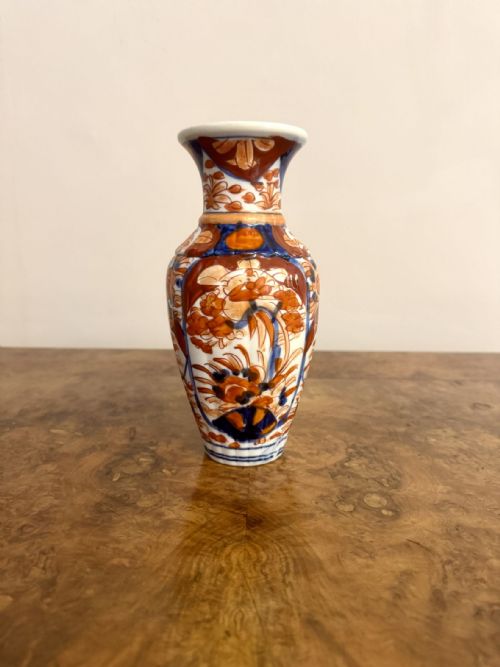
The pieces appearing on this page lean heavily towards nineteenth-century production, particularly the Meiji period and Imari styles characterised by rich cobalt blue and iron red palettes.
Forms range from double gourd silhouettes and fluted bodies to large covered ginger jars and tall floor vases, often decorated with floral motifs and foliage.
Materials and Manufacture
Potters shaped these vessels from fine porcelain, applying detailed enamel glazes and occasionally gold leaf to accentuate the intricate botanical patterns.
Decoration relied on underglaze blue and overglaze enamel work, fired at high temperatures to achieve the vibrant colour combinations seen in Imari and Kakiemon wares.
The listings span porcelain, enamel glaze, gold leaf, and silver plate across the 18th, 19th, and early 20th centuries.
Assessing Quality
Quality rests upon the precision of the hand-painted floral decoration and the clarity of the enamel glazes applied over the porcelain body.
Pieces that demonstrate superior execution feature crisp cobalt tones, well-defined iron red details, and harmonious proportions across lidded jars and double gourd vases.
The Japanese Floral Porcelain Jar Glossary
- Imari
- A traditional Japanese style of porcelain decorated in underglaze blue, iron red, and gold. This style originated in the town of Arita and became widely exported to Europe.
- Kakiemon
- A style of Japanese enamel porcelain featuring asymmetrical floral designs on a milky white ground. It represents an influential aesthetic in early ceramic production.
- Meiji Period
- The era of Japanese history lasting from 1868 to 1912, noted for a significant output of decorative arts exported to Western markets.
- Ginger Jar
- A porcelain vessel with a rounded body and a matching cover, originally used for storage but valued primarily for display.
- Double Gourd
- A vase shape formed by two bulbous sections stacked vertically, resembling the traditional East Asian fruit.
Japanese Floral Porcelain Jar: Frequently Asked Questions
What were Japanese floral jars used for?
These vessels served practical storage purposes for spices, tea, or ginger before evolving into purely decorative display pieces.
Over time, European collectors prized them for interior decoration, placing them on mantelpieces or cabinets to introduce colour and pattern.
How do I identify Imari style?
Imari pieces typically display a distinctive colour palette combining deep cobalt blue, iron red, and accents of gold leaf.
Designs frequently incorporate floral panels, foliage, and intricate geometric borders painted directly onto the porcelain body.
Are these jars waterproof?
Most antique porcelain jars hold water successfully, though collectors often use inner glass liners for fresh flower arrangements to protect the glaze.
Older lidded jars and ginger jars function best as decorative ornaments rather than daily vases.
How should I display them?
Pairs of lidded jars look effective when placed symmetrically on a sideboard or mantelpiece, while larger floor vases stand alone in an entryway.
Ensure they sit on stable surfaces away from heavy foot traffic to protect the hand-painted enamel and gold leaf details.