


Japanese Imari Covered Urn
A Japanese imari covered urn brings together iron-red and cobalt blue porcelain to anchor a room with centuries of distinct kiln tradition.
Japanese Imari Covered Urn
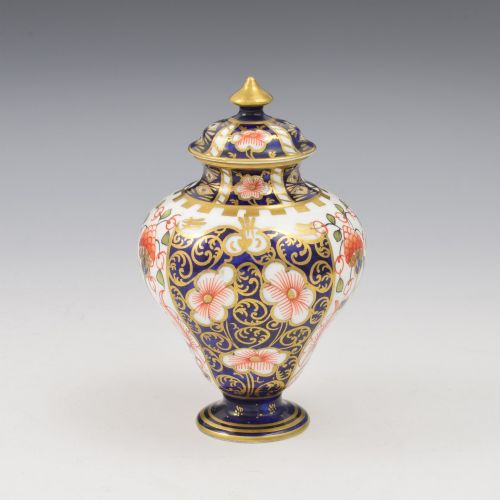
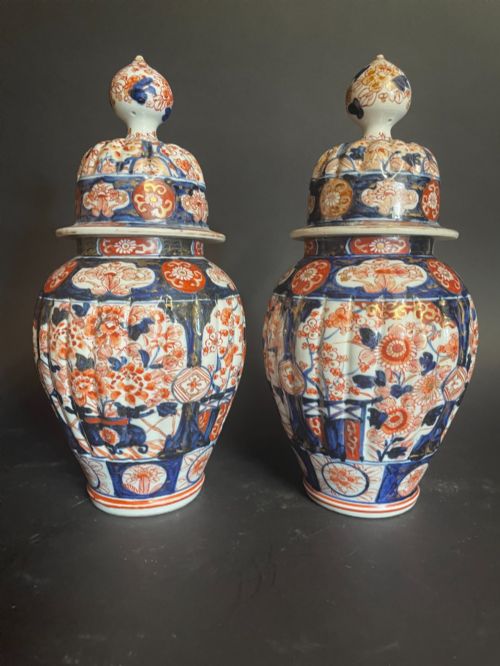
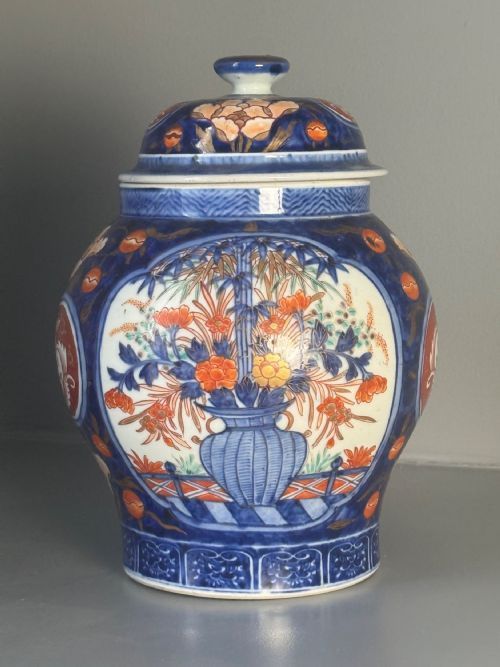
A Japanese imari covered urn is a lidded vessel of porcelain, combining forms like baluster vases, ginger jars, and incense burners. These pieces range from substantial nineteenth-century Japanese exports to later European interpretations made in the same palette.
The pieces appearing on this page span the seventeenth century through to the early twentieth century, taking in both the Edo and Meiji periods alongside Victorian and Edwardian iterations. Buyers will encounter pairs and single vessels, often decorated with floral panels and traditional motifs.
Origin points visible in the records include Arita in Japan, alongside European makers such as Royal Crown Derby and Samson working in the established Imari manner. The forms serve both decorative and functional roles as covered jars, koro, and monumental vases.
Materials and construction
The foundation of every piece is hard-paste porcelain, painted with cobalt blue under the glaze and iron-red enamel over it. Many examples incorporate gold leaf or gilt highlights applied over the glaze to catch the light.
Firing took place in high-temperature kilns, with additional low-temperature firings required to set the enamel colours and gilding. Ormolu mounts appear on select European adaptations, adding cast brass framing to the porcelain body.
Materials recorded across the inventory include hard-paste porcelain, cobalt glaze, iron-red enamel, gold leaf, and occasional ormolu mounts.
Distinguishing quality
Quality rests in the crispness of the underglaze cobalt painting and the precision of the iron-red and gilt detailing over the glaze. Finer examples show a disciplined hand in the panel work and floral motifs, rather than rushed or heavy brushstrokes.
The weight and balance of the porcelain body, along with the clean fit of the matching cover, separate standard production wares from exceptional pieces. The richness and application of the gilding also indicate the workshop standards behind the item.
Royal Crown Derby·Samson
The Japanese Imari Covered Urn Glossary
- Imari
- A style of Japanese porcelain originating from Arita and exported through the port of Imari, traditionally characterised by a palette of underglaze blue, iron-red, and gold. This aesthetic was later copied by European kilns.
- Koro
- A traditional Japanese incense burner featuring a perforated cover to release fragrance. These vessels sit on short legs or stands.
- Baluster
- A vase shape with a rounded body that tapers toward the base and swells out again, often used for large covered jars.
- Gilt
- A thin layer of gold applied to the surface of the porcelain as decoration. It highlights specific patterns within the painted design.
Japanese Imari Covered Urn: Frequently Asked Questions
How do I date a Japanese imari covered urn?
Dating relies on stylistic markers, throwing techniques, and the vibrancy of the enamel palette. Pieces from the Edo period often display robust potting, whereas Meiji examples can exhibit finer detail and different glaze formulations.
European interpretations from the Victorian or Edwardian eras frequently reveal Western potting traits or factory marks on the base. Comparing the cobalt blue depth and the wear on the foot rim helps establish the era.
Are covers usually original to these urns?
Most surviving examples retain their matching covers, which were potted and fired alongside the base vessel. A correct fit ensures the patterns across the shoulder and lid align correctly.
Replacement lids occur due to the fragile nature of porcelain, so checking the interior rim and glaze continuity is standard practice for collectors.
Where should I display an imari urn?
These vessels suit prominent positions on sideboards, mantels, or dedicated stands where their strong colour palette can be appreciated. Their scale allows them to anchor a room as a focal point.
Placement should avoid direct, intense sunlight to protect the stability of the overglaze enamels and gilding over time.
What is the difference between Arita and Imari?
Arita is the production centre in Hizen province where the porcelain clay was mined and fired. Imari is the port from which these finished wares were shipped to domestic and international markets.
Over time, the port name became synonymous with the blue, red, and gold style produced across the Arita kilns.