

Opaque Twist Wine Glasses
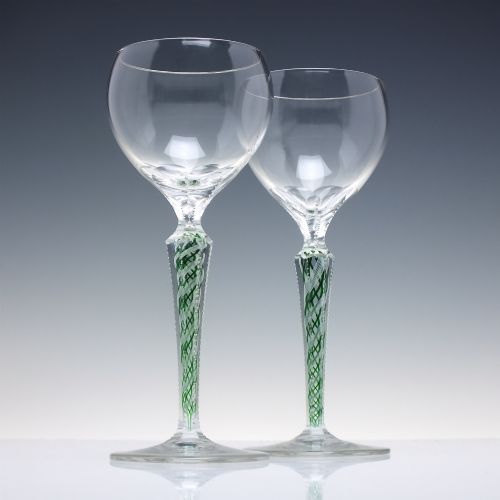
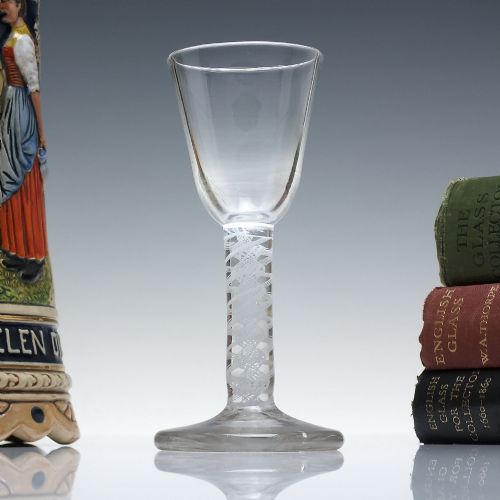
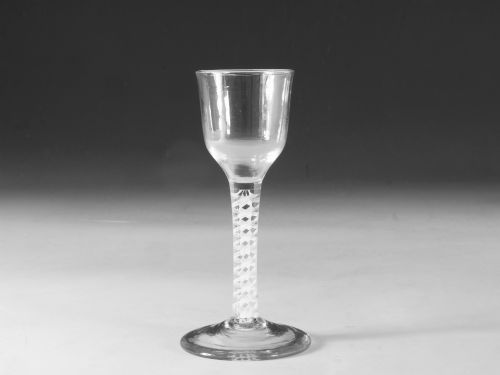
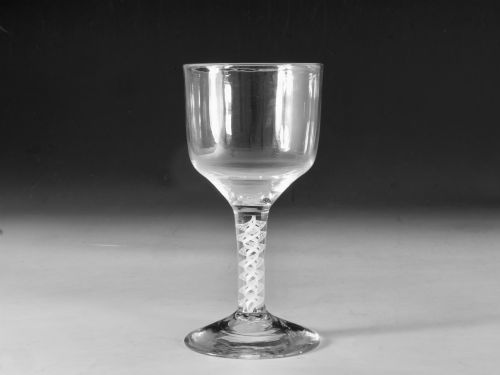
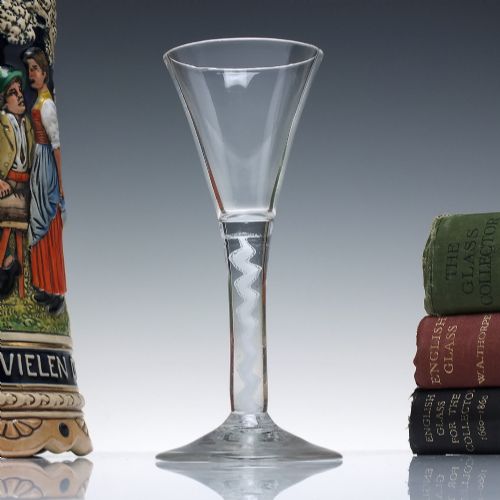
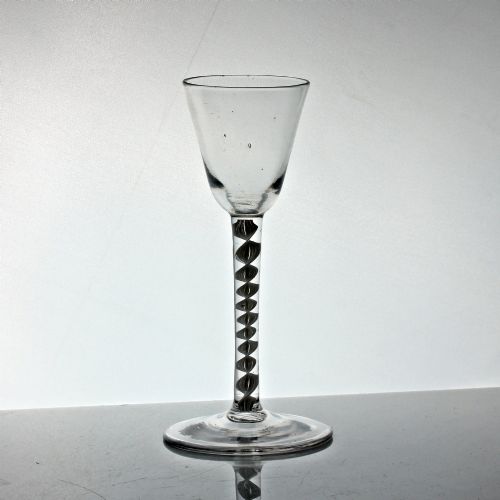
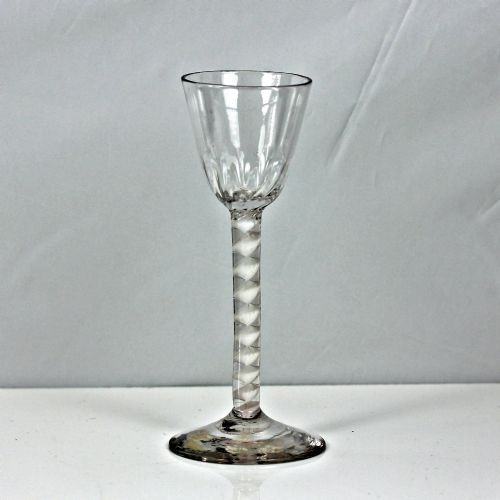
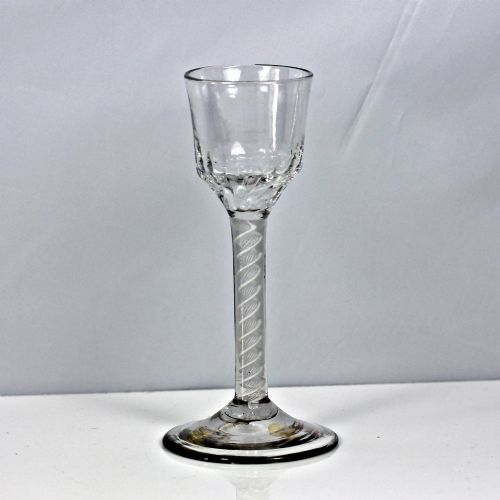
These opaque twist wine glasses are eighteenth-century drinking vessels defined by milky white enamel threads spun inside the stem.
Opaque Twist Wine Glasses
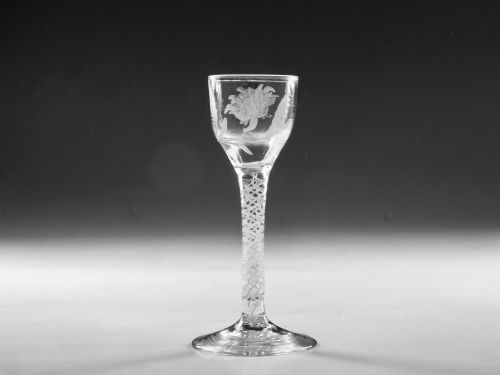
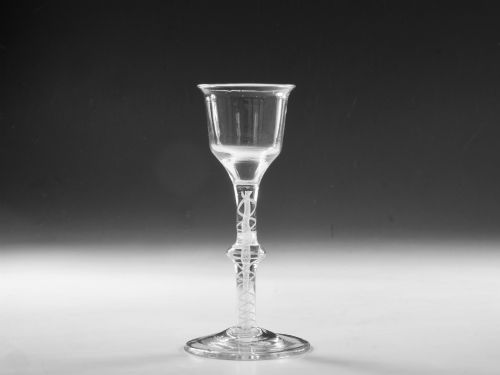
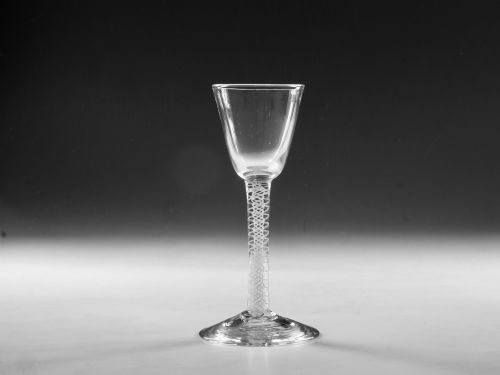
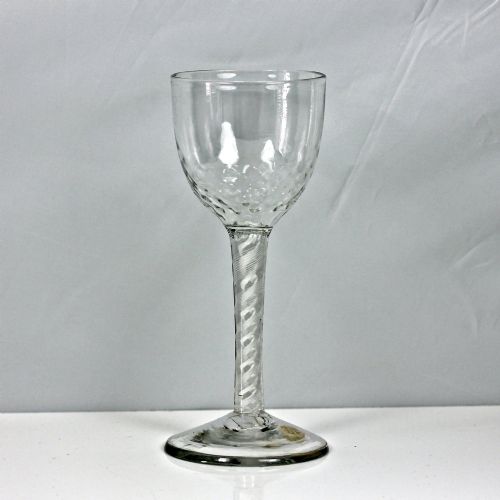
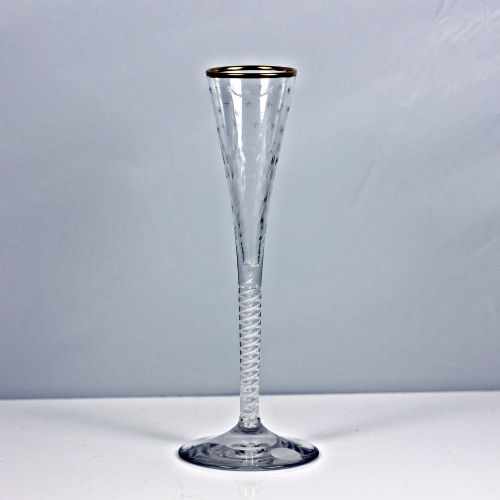
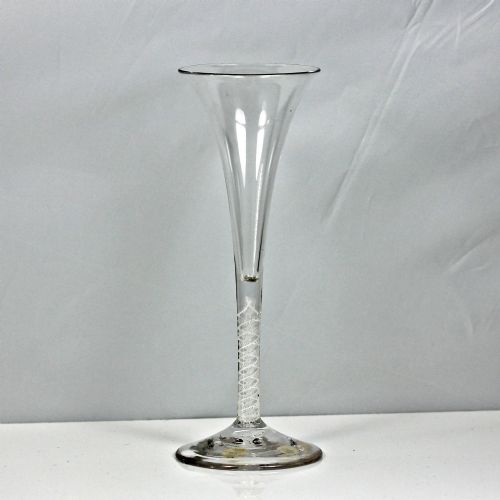
When you search for opaque twist wine glasses, you encounter English drinking vessels predominantly from the Georgian period, specifically the middle and later decades of the eighteenth century. Most examples take the form of wine glasses or goblets, paired with bowls shaped as trumpets, ogees, or rounded funnels, sometimes resting on firing feet.
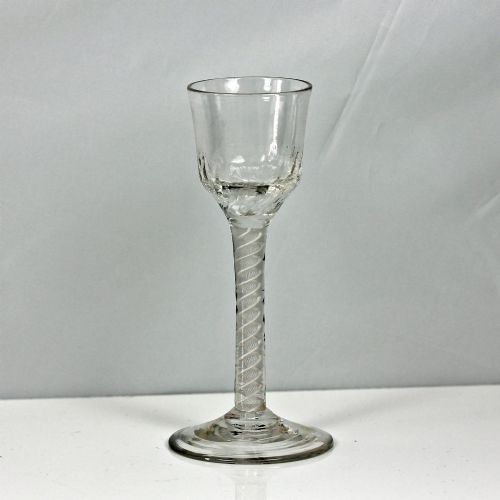
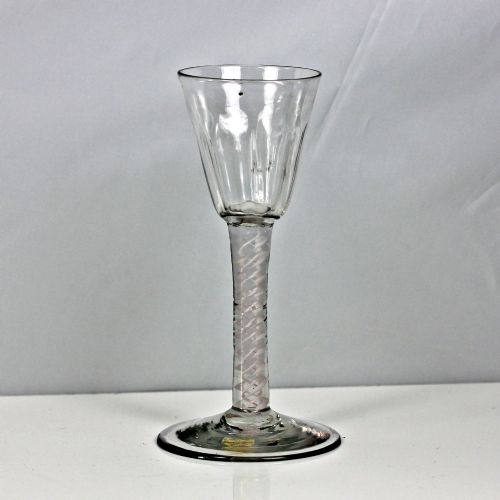
The defining characteristic sits inside the stem, where fine glass rods form single, double, or multi-spiral twists of white enamel. Alongside standard wine glasses, variants include ratafia glasses, sweetmeat glasses, and ale glasses, occasionally incorporating mixed twists or engraved bowls.
How they were made
Glassmakers created these stems using lead glass or lead crystal, incorporating white enamel to produce the characteristic opaque twists. Molten glass was manipulated to encase or draw out the enamel rods into complex spiral patterns before the stem was attached to the bowl and foot.
Bowls were often shaped using moulds, resulting in flute-moulded, rib-moulded, or wrythen-moulded surfaces. Additional decorative techniques recorded in the evidence include engraving and gilding on the bowl.
Opaque Twist Wine Glasses Retail Price Guide 2026
Typical asking prices for opaque twist wine glasses among the pieces listed under this phrase on Sellingantiques today, from the lower quarter to the upper quarter. They describe what is for sale here now, not the wider market.
Listings for opaque twist wine glasses span the Georgian period, with specific examples dated between 1750 and 1770 in lead crystal and glass.
What varies in quality
Quality rests upon the clarity of the lead glass and the precision of the enamel twist within the stem. Tighter, more complex configurations, such as double and multi-spiral arrangements or triple knops, demonstrate greater technical skill from the glasshouse.
The proportion between bowl, stem, and foot dictates the visual balance of the piece. Superior examples combine crisp bowl moulding with clean, well-centred internal threads free from distortion.
The Opaque Twist Wine Glasses Glossary
- Opaque twist
- A stem formed with internal threads of white enamel glass. These threads create single, double, or multi-spiral patterns inside clear lead glass.
- Ogee bowl
- A bell-shaped drinking vessel bowl with an S-curve profile, curving inward at the rim and outward at the base. This form frequently appears on Georgian drinking glasses.
- Firing foot
- A folded or heavy glass foot designed to withstand the heat of a tavern table. They are commonly found on eighteenth-century glasses.
- Wrythen moulded
- A decorative surface pattern featuring spiralling ribs or flutes. This technique adds texture to the lower section of the bowl.
- Single series
- An opaque twist stem containing a single set of enamel threads, often a pair of spiral tapes or cables. It represents a simpler configuration than double series stems.
Opaque Twist Wine Glasses: Frequently Asked Questions
How do I date an opaque twist wine glass?
Dating relies on the stylistic combination of bowl shape, foot form, and stem configuration. Most examples date from the mid-eighteenth century during the Georgian period.
Changes in glass weight, metal quality, and manufacturing techniques help narrow the production window to specific decades.
What is a double series twist?
A double series twist contains two distinct sets of enamel elements within the stem. This usually pairs a central core of opaque white threads with an outer spiral.
Makers achieved this by combining different twists during the drawing of the stem.
Were these glasses used for wine?
While primarily called wine glasses, eighteenth-century drinking vessels served multiple beverages including ale, spirits, and cordials. Specific forms like ratafia glasses and sweetmeat glasses catered to specialised contents.
Their capacities and bowl shapes reflect the dining habits of the Georgian period.