




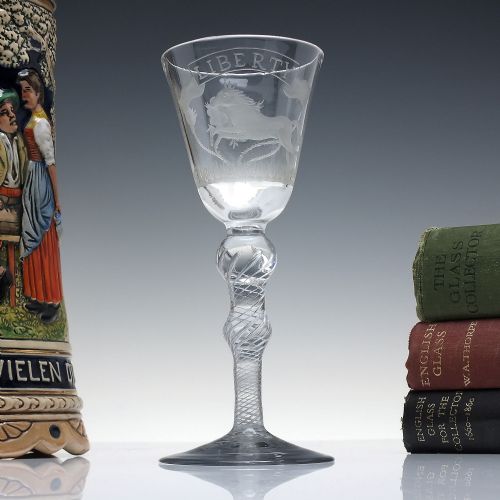
Air Twist Wine Glasses
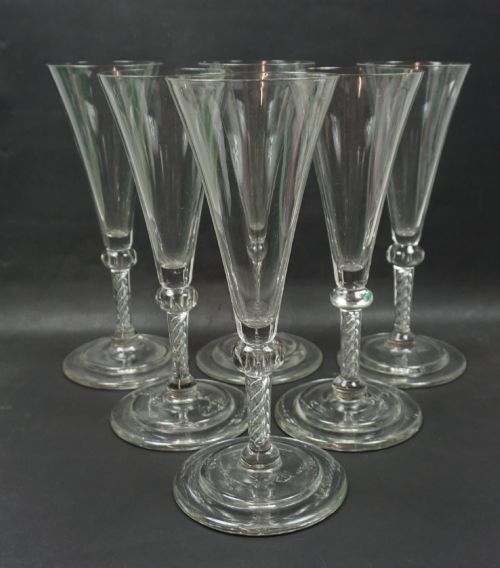
These air twist wine glasses bring delicate, spiralling internal threads of air inside eighteenth-century and later drinking vessels to your table.
Air Twist Wine Glasses
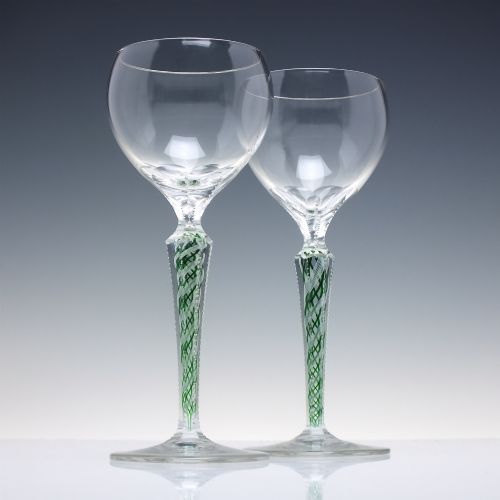
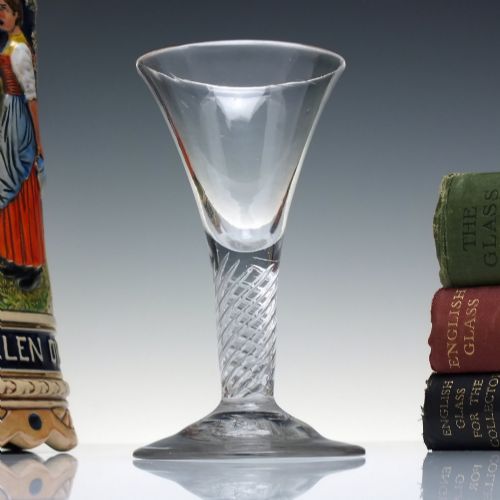
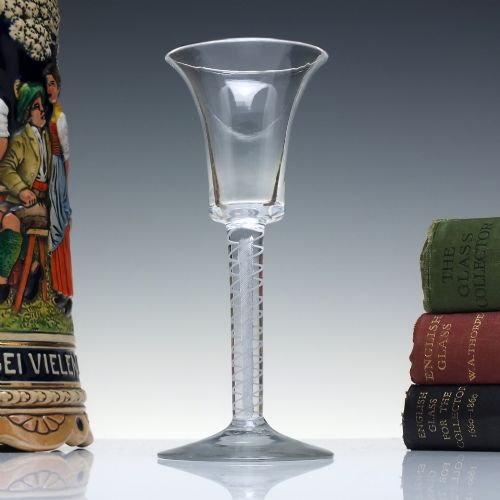
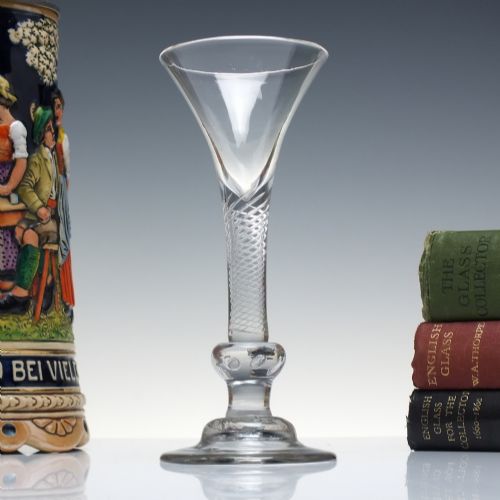
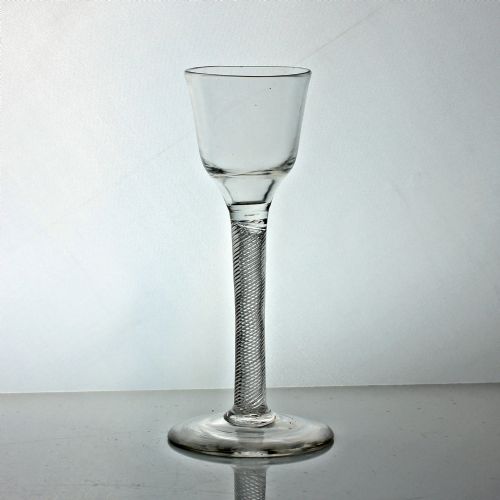
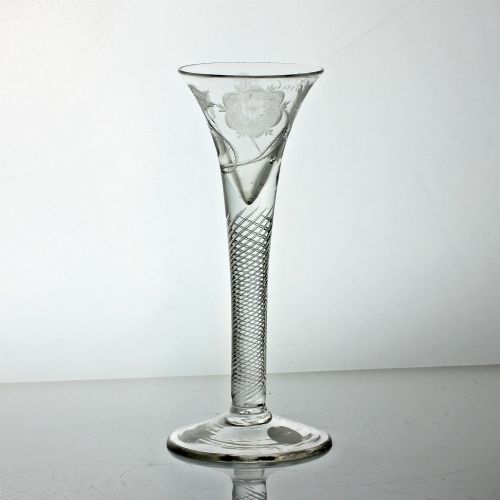
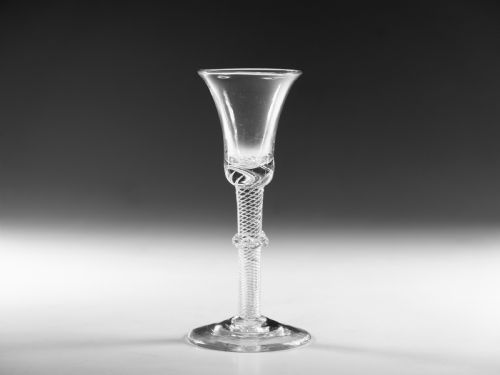
When you search for air twist wine glasses, you are looking at drinking vessels defined by elongated stems enclosing slender, entrapped air channels that spiral downward from the bowl. The version you are most likely to meet on this page is the eighteenth-century Georgian specimen, shaped with a rounded funnel or ogee bowl and resting on a plain conical foot.
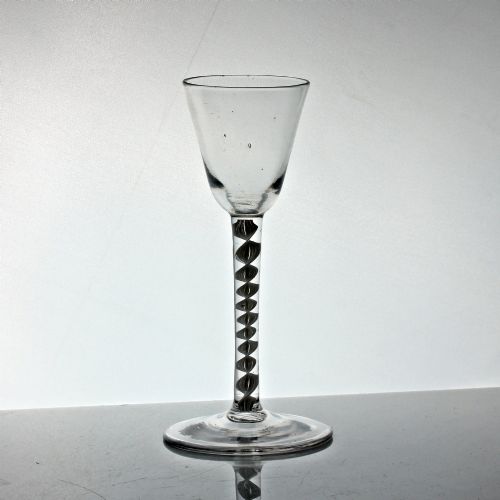
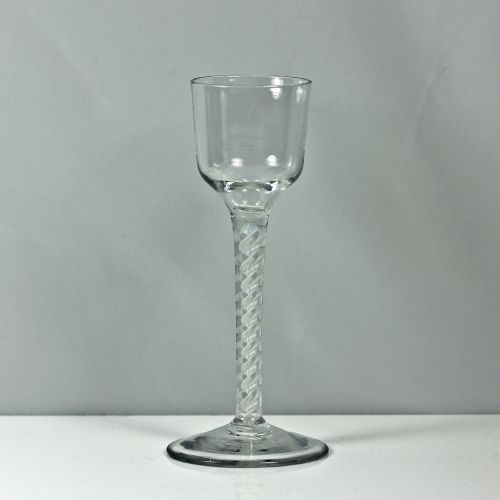
Beyond standard wine glasses, the forms span taller champagne flutes, cordial glasses, ale glasses, and whisky dram glasses. Some examples feature opaque twists or mixed twists where white enamel threads accompany the trapped air inside the clear lead glass stem.
The periods represented stretch primarily across the eighteenth century, with occasional revivals and later pieces appearing from nineteen-hundred and nineteen-thirty. These stemware pieces served functional roles at the dining table and political roles during the Georgian era, carrying Jacobite or anti-Jacobite engravings.
Materials and manufacture
The primary material underpinning these pieces is lead glass or clear lead crystal, which provided the heavy, clear foundation necessary for eighteenth-century glassmakers to pull and twist. Hand-blown glass techniques allowed artisans to draw out the stem from a bubble containing trapped air, creating internal spiral filaments.
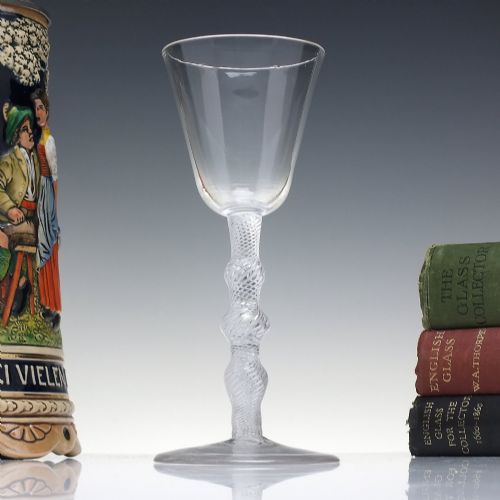
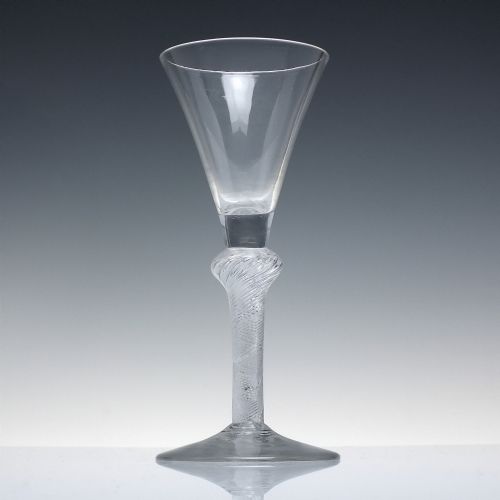
Makers manipulated the hot metal into multi-spiral air twists, single series twists, and composite stems featuring knops. Some vessels received surface decoration through wheel engraving, illustrating hunting scenes or symbolic Jacobite motifs upon the clear bowls.
Air Twist Wine Glasses Retail Price Guide 2026
Typical asking prices for air twist wine glasses among the pieces listed under this phrase on Sellingantiques today, from the lower quarter to the upper quarter. They describe what is for sale here now, not the wider market.
Object types span wine glasses, cordial glasses, ale glasses, and champagne flutes fitted with air, opaque, and mixed twists.
Assessing quality and craftsmanship
The distinction between ordinary and exceptional examples rests upon the clarity of the metal and the regularity of the internal air threads. A glass possessing high clarity without cloudiness or heavy inclusions demonstrates superior raw materials and skilful manipulation by the glassblower.
Proportion and form further separate the tier; fine specimens exhibit crisp bowl contours, balanced knops, and domed feet that complement the delicate geometry of the spiral stem. Engraved pieces derive additional merit from the depth, precision, and historical context of the wheel-cut decoration.
The Air Twist Wine Glasses Glossary
- Air twist
- A stem formation containing spiralling threads of trapped air created during the glass-drawing process. This optical effect distinguishes eighteenth-century English drinking vessels.
- Ogee bowl
- An S-shaped curve in profile, swelling outward at the rim and tapering inward toward the base. This form appears frequently on Georgian stemware.
- Jacobite
- Pertaining to the political movement supporting the exiled House of Stuart. Glasses bearing these symbols often feature secret engravings like roses and oak leaves.
- Composite stem
- A stem constructed from two or more distinct manufacturing sections, combining air twists with plain or knopped subsections. These represent advanced glasshouse techniques.
- Flint glass
- An early term for heavy, high-refractive-index lead glass developed in England. It provided the brilliant clarity required for detailed stem twists.
Air Twist Wine Glasses: Frequently Asked Questions
How do you use air twist wine glasses today?
These glasses suit special dinner settings and formal toasts where their historical presence can be appreciated. Hand washing in warm water ensures the preservation of the antique lead glass.
Because eighteenth-century bowls are typically smaller than modern vessels, they suit aged dessert wines or ports rather than heavy reds. Careful handling prevents accidental impact to the delicate stems.
What is an opaque twist?
An opaque twist incorporates white or coloured enamel glass threads inside the clear stem rather than trapped air. These threads appear alone or paired alongside air spirals in mixed twist examples.
Glassmakers produced these variations concurrently with standard air twists during the mid-eighteenth century. They offer a striking visual contrast against the clear lead metal of the bowl.
How do you date an air twist glass?
Dating relies upon evaluating the bowl form, the weight and colour of the metal, and the configuration of the stem twists. Eighteenth-century examples typically display characteristic wear to the underside of the foot and distinct pontil marks.
Later revival pieces from the twentieth century often feature heavier proportions and cleaner, more uniform metal without the subtle irregularities of Georgian production.