





Coloured Stem Glassware
These coloured stem glassware pieces bring vibrant hues to the table through rich bowls and contrasting stems from the Georgian to the Edwardian eras.
Coloured Stem Glassware
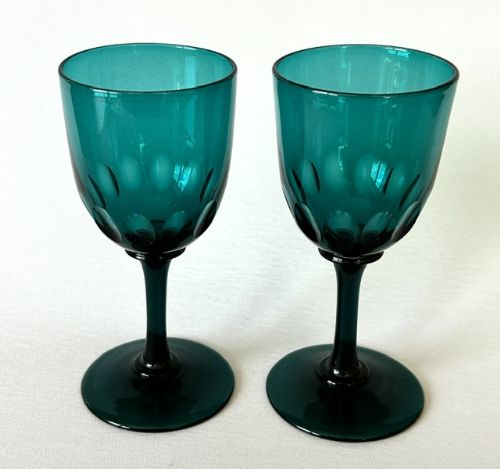
When searching for coloured stem glassware, a buyer examines drinking vessels featuring distinct tints applied to the stem or the entire body. The selection spans distinct periods, with Georgian and Victorian examples appearing most frequently alongside Edwardian pieces.
Forms range from individual wine glasses and champagne coupes to complete sets of matching dessert wine glasses. These pieces serve functional drinking roles while displaying historical manufacturing methods across various European styles.
Production Methods and Materials
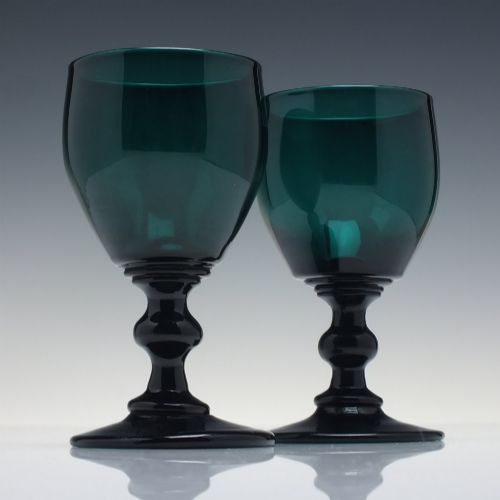
Makers utilised glass and lead crystal, incorporating techniques such as hand-blown manufacturing to shape the bowls and stems. Coloured glass, including cranberry glass, emerald glass, and amethyst, derived its hue from metallic oxides added during the melting process.
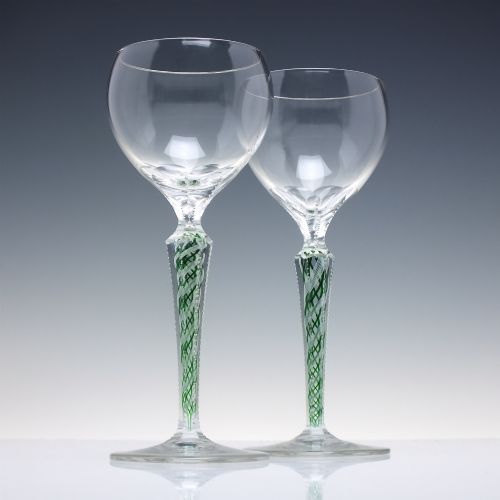
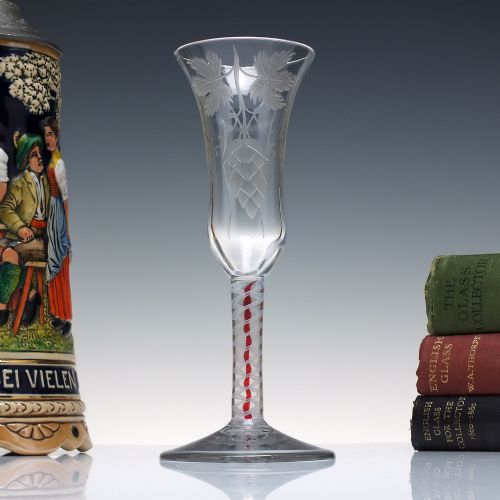
Specialised variations like cranberry glass and colour twist stems required precise thermal control by glassblowers. Clear glass components were frequently fused with coloured bowls or feet to create striking contrasts.
Coloured Stem Glassware Retail Price Guide 2026
Typical asking prices for coloured stem glassware among the pieces listed under this phrase on Sellingantiques today, from the lower quarter to the upper quarter. They describe what is for sale here now, not the wider market.
Some Victorian drinkers clearly preferred a colourful view, pairing amber bowls with amethyst stems to confuse the eye.
Distinctions in Quality
Quality differences rest upon the depth and consistency of the coloured glass alongside the precision of the hand-blown form. Earlier Georgian pieces often display greater manual handling marks in the metal compared to later Victorian sets.
The uniformity within a set of matching wine glasses determines its desirability for a collector. Clear articulation in colour twists and depth of tone in emerald or cranberry examples separate standard production from finer output.
The Coloured Stem Glassware Glossary
- Cranberry glass
- A rich red-pink glass coloured with gold chloride, popular throughout the Victorian period. It often appears in table settings and decorative stemware.
- Lead crystal
- Glass containing lead oxide, known for its increased weight, refractive brilliance, and clarity. This material allows for sharper definition when cut or engraved.
- Colour twist
- A decorative stem feature containing opaque or coloured glass threads twisted within the clear metal. This technique dates back to the Georgian era.
- Roemer
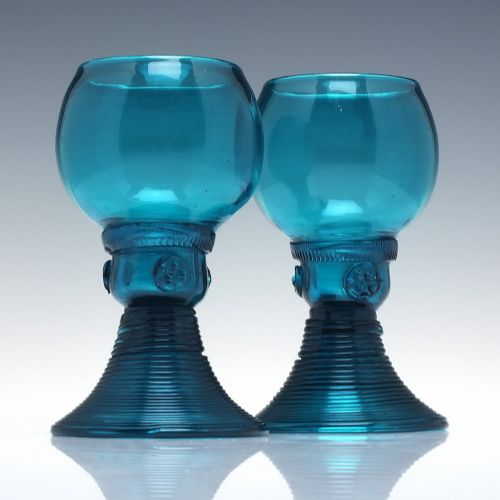
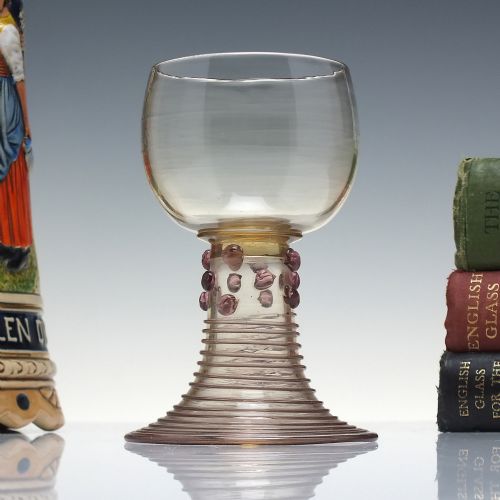
- A traditional Germanic drinking glass featuring a wide bowl atop a cylindrical stem studded with prunts. These often combine amber bowls with coloured glass feet.
- Champagne coupe
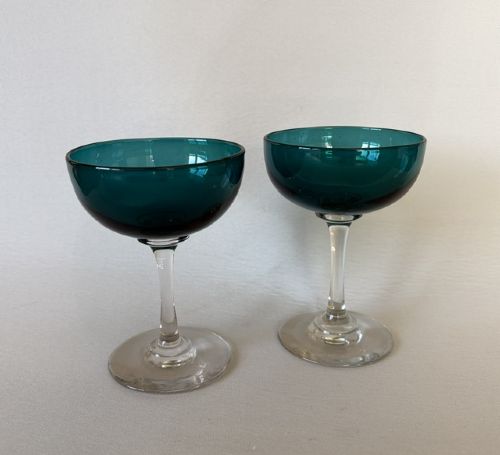
- A shallow, broad-bowled glass designed for sparkling wines, mounted on a slender stem. Victorian examples frequently incorporate coloured glass bowls.
Coloured Stem Glassware: Frequently Asked Questions
Can I use these glasses daily?
These items remain fully functional and can be used for special dinners or quiet evenings. Take care when setting them down on hard surfaces.
Hand-blown glass requires gentle handling, but careful everyday use brings these historical table pieces back to life.
What periods do these pieces cover?
The selection spans from the Georgian era through the Victorian and Edwardian periods up to the 1930s. Each era brought distinct colour preferences and bowl shapes.
Earlier pieces often feature hand-cut details and colour twists, while later Victorian sets favour uniform cranberry or emerald tones.
How can I tell Georgian glass from Victorian?
Georgian pieces often display pontil marks on the base and possess a slightly heavier, warmer handle. Their colours tend toward deeper amethyst, rich blues, and complex twists.
Victorian items frequently arrive in matching sets of six, showing brighter cranberry and emerald hues produced during industrial expansion.