


Faceted Stem Wine Glasses
Faceted stem wine glasses are tactile drinking vessels defined by geometric stems that catch the light, offering collectors a tangible link to Georgian and Victorian dining tables.
Faceted Stem Wine Glasses
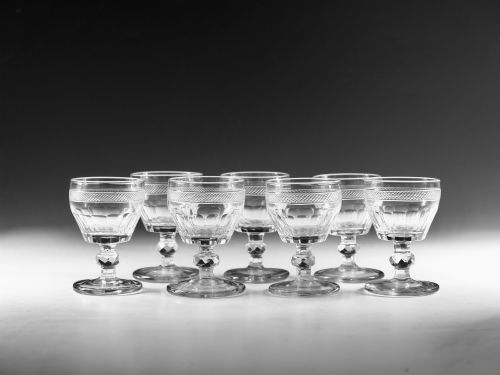
Faceted stem wine glasses comprise drinking vessels shaped with cut stems, appearing across the Georgian, Regency, and Victorian eras alongside later 20th century Bohemian and English examples. These pieces span specific forms including cordial glasses, port glasses, rummers, and larger goblets intended for wine and spirits.
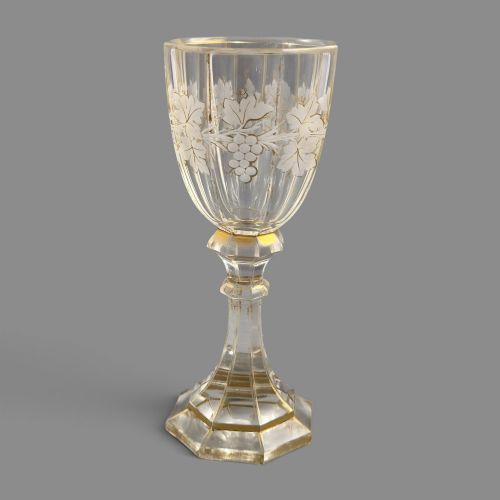
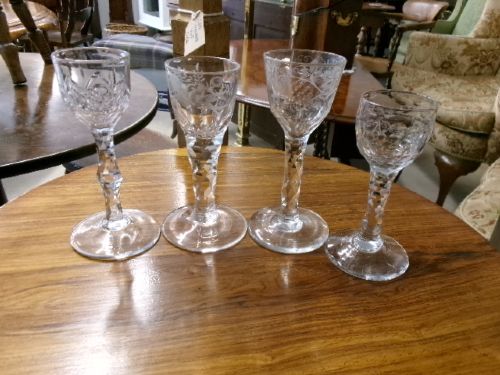
The English examples from the late 18th century frequently feature delicate engraved bowls sitting above diamond or hexagonal cut stems, often with folded or wide foot bases. Buyers will also encounter coloured liquor glasses and gilt-decorated Bohemian glassware from the 19th and early 20th centuries.
Originating predominantly from English and Bohemian workshops, these vessels serve as both functional glassware and historical drinking artefacts. The selection reflects diverse decorative treatments, from Jacobite sympathy engravings to plain bowls paired with intricate stem facets.
How they were made
Makers produced these vessels using lead glass and lead crystal, which allowed craftsmen to achieve high clarity and sharp, defined cuts on the stems. The chemical composition of the lead metal yielded a heavy handle in the hand and a resonant ring when struck gently.
Artisans formed the stems by grinding flat facets onto the glass surface using rotating wheels, creating geometric patterns that reflect light from multiple angles. Additional ornamentation involved freehand wheel engraving for bowl motifs and the application of gilding fired onto the glass surface.
Listings feature lead crystal and clear glass items spanning the Georgian, Victorian, and Regency periods.
What varies in quality
The precision and crispness of the facet cutting dictate the visual sharpness of the stem, where superior examples display exact geometrical alignment without rounding on the edges. The clarity and purity of the lead crystal itself differ, separating brilliant metal from duller or greyer glass.
Artistic execution on the bowl, such as the fineness of Jacobite engravings or the quality of the gilding, influences the overall distinction of the piece. Proportion between the bowl, the faceted stem, and the foot base also determines the visual harmony of the finished glass.
Moser Bohemian·James Giles
The Faceted Stem Wine Glasses Glossary
- Facet cut
- A decorative technique involving the grinding of flat planes into the surface of glass, particularly popular on eighteenth-century stems to catch the light.
- Lead crystal
- A high-clarity glass containing lead oxide, providing a heavier weight and a brighter refractive index than standard soda-lime glass.
- Jacobite engraving
- Secret political iconography etched onto eighteenth-century drinking glasses, often featuring roses and oak leaves to signal support for the exiled Stuart monarchy.
- Rummer
- A large, deep-bowled drinking glass common in the nineteenth century, typically used for punch, ale, or wine.
- Pontil mark
- The rough scar left on the underside of a vessel where the pontil rod was snapped off after blowing and shaping the glass.
Faceted Stem Wine Glasses: Frequently Asked Questions
Can I use these glasses for wine today?
Many collectors enjoy using eighteenth and nineteenth-century glassware for special occasions, appreciating the tactile weight and historical connection.
Ensure you handle them with care, as lead glass from these periods is softer and more susceptible to scratching than modern manufacturing.
How do I date a faceted stem?
Eighteenth-century examples generally feature longer, slender stems with precise, shallow facets, often accompanied by folded feet.
Nineteenth-century and later pieces tend to show heavier proportions, deeper cutting, and wider variations in bowl shapes and colours.
What is the difference between a rummer and a wine glass?
Rummers are substantially larger, wider-bowled drinking vessels designed for robust portions of wine, punch, or beer during nineteenth-century gatherings.
Wine glasses and cordial glasses feature smaller capacities and more delicate proportions suited to sipping fortified wines or spirits.